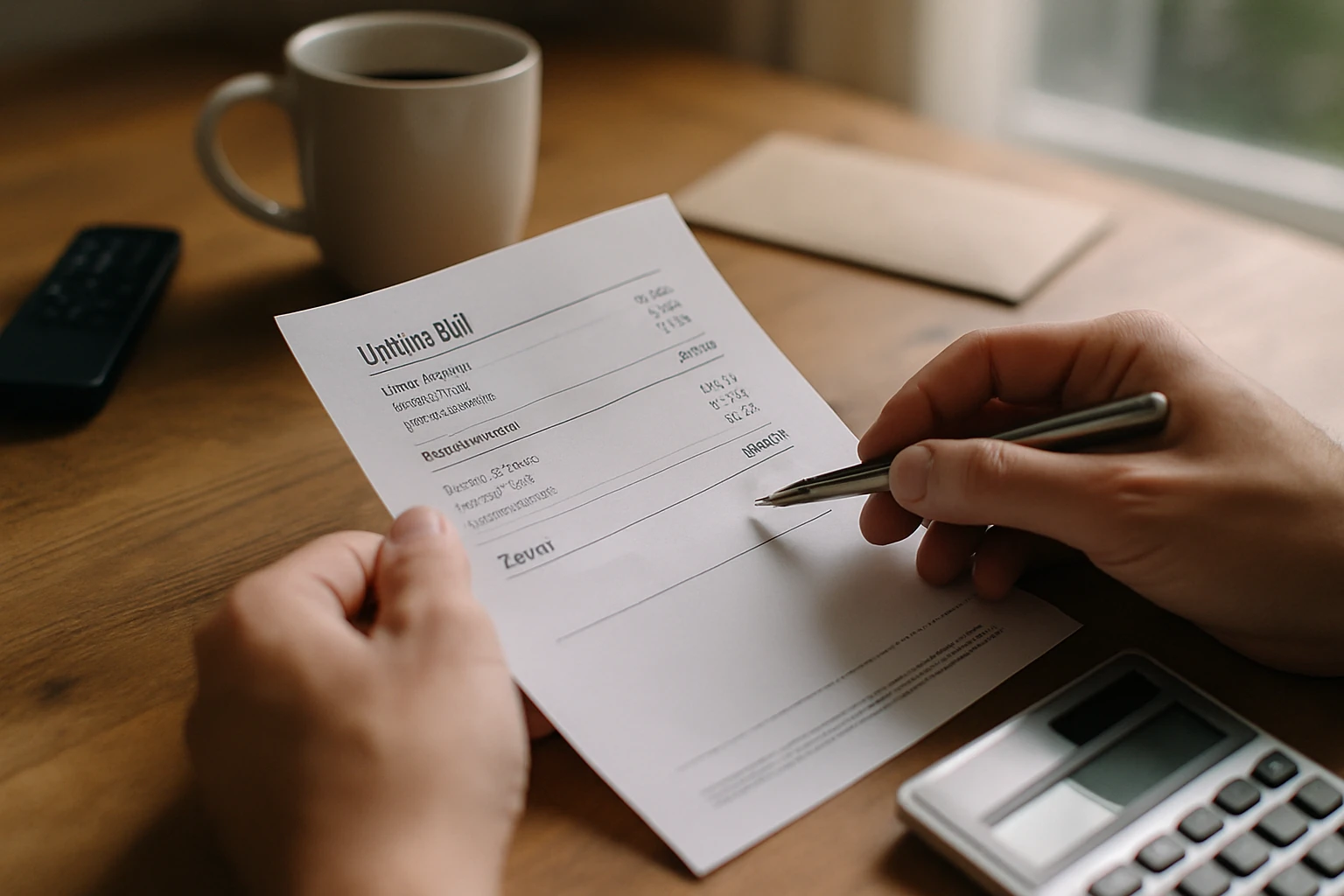
The short answer
A utility bill can be higher even when your "usage" looks similar because the total is not just usage x price. Most bills include a mix of: billing days, rate changes, fixed customer charges, and sometimes tiers or time-of-use pricing.
The fastest way to reduce confusion is to follow a simple order:days, usage per day, unit price, fixed fees, tiers.
For the overall billing model (usage vs delivery vs fixed fees), start at Utility Bills & Costs Explained.
Table of contents
The checklist (in the right order)
When people compare bills, they often jump straight to the total. That's the least informative number. Use this order instead.
Step 1: billing days (the hidden multiplier)
A longer billing cycle creates a higher total even when daily life is unchanged. Compare the number of days first.
Step 2: usage per day (normalize the comparison)
Divide usage by billing days. This turns "I used 900 kWh" into "I used 27 kWh/day," which is a fair comparison.
Step 3: unit price (did the rate change?)
If your kWh/day is similar but the total rose, look at the price per unit. For electricity plan types, see fixed vs variable electricity plans.
Step 4: fixed customer charges
Fixed charges don't care whether you used a lot or a little. That's why bills don't scale perfectly when you reduce usage.
Step 5: tiers or time-of-use pricing
Some utilities charge more after you cross a threshold or during peak hours. Two months with the same total usage can still cost different amounts if usage landed in different tiers or times.
What to look for on the statement (line items that matter)
If your bill has many lines, it helps to group them into a few buckets. A detailed walkthrough is in Electric bill breakdown: understanding line items.
Usage charges
These are the "per unit" charges: kWh for electricity, therms for gas, gallons/CCF for water. They rise when usage rises.
Delivery / distribution charges
These cover the system that delivers the service. They may include fixed and variable components.
Customer charges and fixed fees
These apply even with low usage. If you're trying to budget, these are the "always there" part of the bill.
Taxes and surcharges
Often smaller, but they can change. If your utility updated rates, surcharges may shift too.
Estimated reads and corrections (a common cause of 'mystery' swings)
If a bill is marked as estimated, your total may swing for reasons that have nothing to do with real behavior changes.
The pattern often looks like this:
- Estimated bill is slightly high or low.
- Next bill gets an actual reading.
- Next bill corrects the difference (sometimes as a "catch up").
If you want the full explanation and what to watch for, read Estimated utility bill explained.
If you're trying to avoid seasonal surprises altogether (not just estimate surprises), budget billingcan smooth monthly payments.
Common misconceptions
- "Same total usage means same total bill." Not always. Billing days, rates, tiers, and fixed fees can change.
- "If I used less, the bill must be lower." A rate change or longer billing period can offset lower usage.
- "Fixed charges are small so they don't matter." They matter most when usage is low.
Frequently asked questions
The total can rise due to longer billing cycles (more days), higher per-unit rates, tiered pricing, changes in fixed fees, or corrections from estimated meter reads. Normalizing usage per day helps isolate the cause.