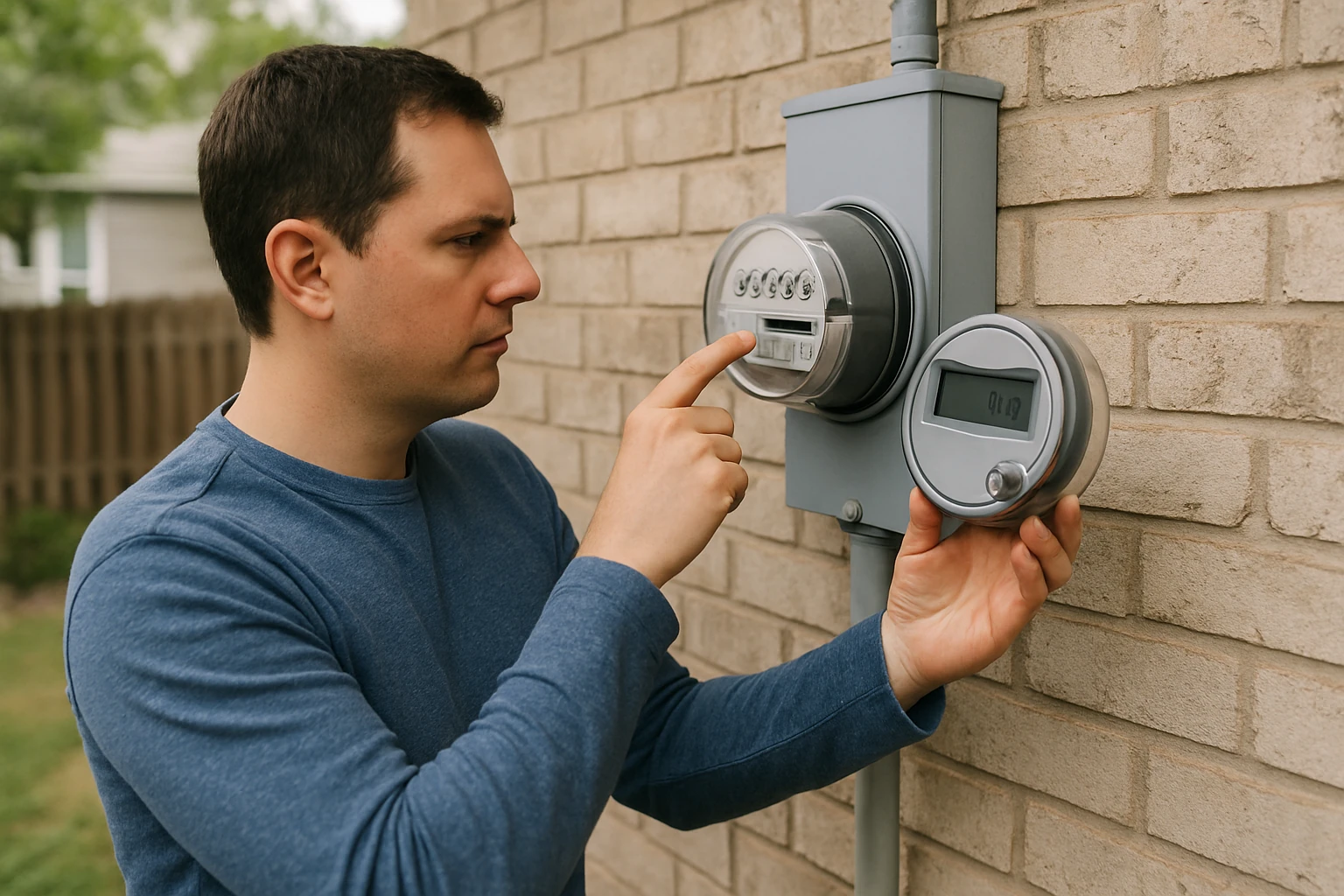
The short answer (what a kWh really means)
A kilowatt-hour (kWh) is a unit of energy. It tells you how much electricity you used over time. If you use 1,000 watts for one hour, you used 1 kWh.
The easiest way to picture it: kW is how fast you are using electricity, and kWh is how much you used in total. For more basics, see our electricity guide.
Once kWh clicks, your bill stops feeling random. You can connect everyday activities (laundry, heating, cooking) to the number you are paying for.
Watts vs. kilowatts vs. kilowatt-hours (no jargon)
These three terms look similar, but they answer different questions.
| Term | What it measures | Plain-English meaning |
|---|---|---|
| Watt (W) | Power | How fast electricity is being used right now |
| Kilowatt (kW) | Power | 1,000 watts (a convenient larger unit) |
| Kilowatt-hour (kWh) | Energy | How much electricity was used over time |
If you like analogies: kW is like a speedometer, and kWh is like an odometer. Your electric bill charges for the odometer.
Real-world examples: what does 1 kWh look like?
1 kWh is not "one appliance." It is a chunk of energy that different devices can use quickly or slowly.
- A 1,000-watt space heater running for 1 hour equals about 1 kWh.
- A 100-watt light bulb running for 10 hours equals about 1 kWh.
- A 10-watt LED bulb running for 100 hours equals about 1 kWh.
Notice the pattern? A high-watt device can be cheap if it runs briefly, and a small device can add up if it runs all day.
How to calculate kWh for any appliance (simple formula)
You can estimate kWh with one line of math: (watts / 1,000) x hours used = kWh.
Example: a 1,500-watt space heater used for 3 hours.
(1,500 / 1,000) x 3 = 4.5 kWh
If you want to estimate cost, multiply by your rate (shown on your bill): kWh x price per kWh.
If you want a bigger-picture foundation first, our main guide to electricity explained walks through how electricity is delivered and billed.
Where kWh shows up on your electric bill
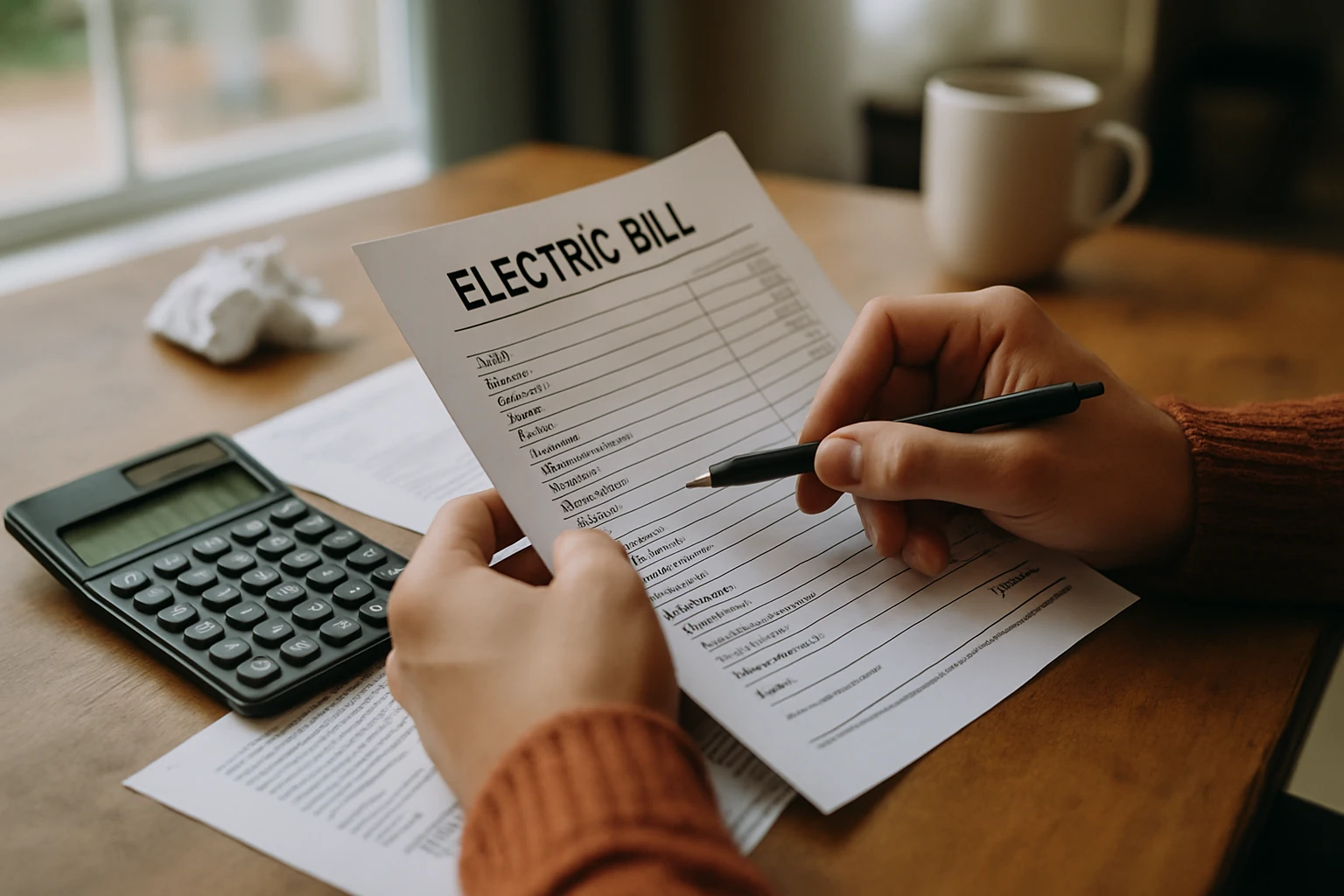
Most bills include (1) total kWh for the billing period and (2) a price per kWh for the energy portion. Many bills also include separate delivery charges and fixed fees.
If you have ever wondered why your total does not drop as much as you expected after using less electricity, fixed charges are usually the reason.
For a line-by-line explanation, seeour electric bill breakdown.
Why your kWh changes by season
In many homes, kWh rises in summer and winter because heating and cooling run longer. That is why the "same habits" can still lead to a different bill when weather changes.
If you want to connect kWh to the biggest household loads, our heating and cooling explainershows why HVAC often dominates monthly usage.
Common misconceptions that cause kWh confusion
- "Higher watts always means higher cost." Not if it runs briefly.
- "Tiny devices do not matter." They can if they run 24/7.
- "My bill is only kWh." Many bills include delivery and fixed fees too.
If you are trying to figure out a sudden spike, start withcommon reasons bills jump.
Frequently asked questions
kW measures power (how fast you are using electricity). kWh measures energy (how much you used over time). Your bill charges for kWh.