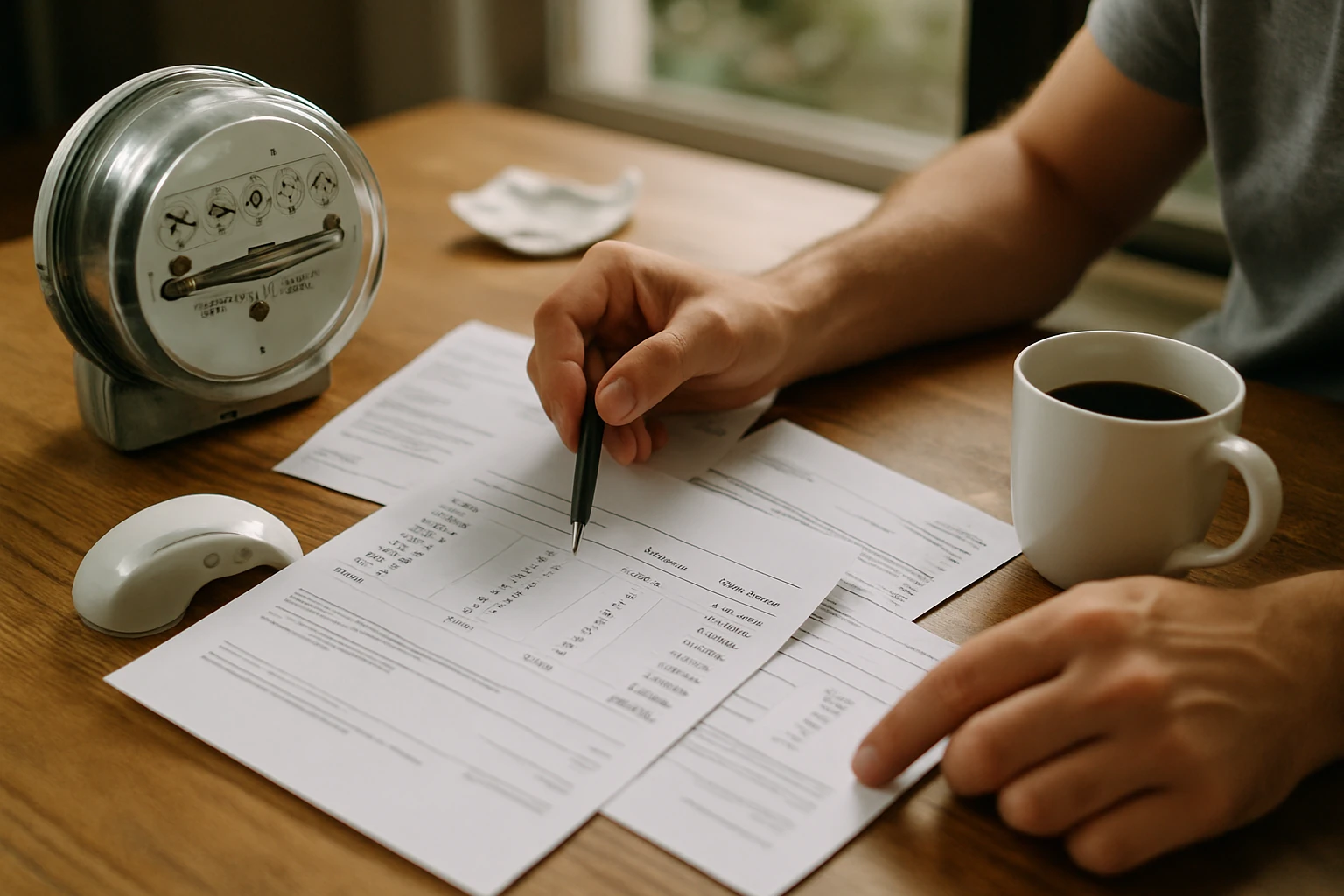
The short answer
An estimated utility bill means your provider did not use a fresh, verified meter reading for that billing period. Instead, they estimated usage based on past patterns and then billed you.
The key point is what happens next: when the utility gets an actual meter read, it usually makes a correction. Sometimes the correction is obvious (a "catch-up" bill). Sometimes it's subtle.
Most of the confusion comes from expecting each month to be perfectly accurate on its own. With an estimated read, it's more helpful to think in two-bill windows: the estimated period, then the correction period.
For the broader "how utility bills work" framework, start with Utility Bills & Costs Explained.
Table of contents
Why utilities use estimated reads
Estimated reads aren't usually a trick. They're a practical workaround when a utility can't get a clean reading on schedule.
Common reasons
- Access issues: a fenced yard, locked gate, or an indoor meter that couldn't be accessed.
- Weather or staffing: a missed route during extreme weather or operational constraints.
- Meter communication issues: some smart meters report automatically, but outages or communication failures can still happen.
- Scheduling drift: billing cycles aren't always aligned to the calendar, and read dates can shift.
If you're thinking, "Okay, but what does that mean for me?", the best answer is: the estimate is a placeholder until a verified read occurs.
How to spot an estimated read on your bill
Most bills label the meter read status directly. Look for words like estimated, estimate, or E next to the reading.
Some bills show both a start read and end read. If one or both are estimated, the utility will typically say so in the usage section.
If your bill includes the meter reading numbers and you want to compare them yourself, these guides help:
Gas meters vary by region and bill format, but the same principle applies: the bill should clearly identify whether the read is actual or estimated.
How the correction usually works (the part most people miss)
The correction is where people feel whiplash. One month is "weird," and the next month is "even weirder." But the logic is usually straightforward.
The two-bill window
When a utility estimates, it's essentially saying: "We're billing you now so the account stays current. We'll reconcile when we have a verified reading."
So if the estimate was lower than actual usage, a later bill can look high because it includes your current period plus a "catch-up" amount. If the estimate was higher, a later bill can look unusually low.
Why the total is usually accurate across time
In many cases, the utility is trying to make sure that over time, you pay for what you used. That's why it's often smarter to compareusage per day and to look across a couple billing cycles.
If you want a clear checklist for "my bill changed but my usage didn't," the companion guide is why your bill can be higher with the same usage.
How to sanity-check an estimated bill (without panic)
You don't need perfect math. You just need to answer a few practical questions that separate "normal variance" from "something worth calling about."
1) Check billing days first
A 35-day billing cycle will almost always cost more than a 28-day cycle, even with identical daily usage.
2) Normalize usage per day
Divide total usage by billing days. This makes comparisons fair. Our step-by-step walkthrough is in the billing-days guide.
3) Separate usage from rates
A bill can rise because you used more, because the price per unit changed, or because fixed fees changed. The simplest model for line items is this line-item breakdown.
4) Compare the same season last year
Many bills show last year's usage for the same month. Use that as a reality check. Heating and cooling seasons routinely create peaks.
When an estimate is a red flag
An estimated read is common. A long run of estimated reads can be a problem because it increases the chance of a large correction later.
Situations worth following up on
- Repeated estimates: multiple consecutive estimated reads with no clear reason.
- Extreme catch-up: a correction that doesn't match any plausible change in weather or household behavior.
- Meter mismatch: the bill lists a meter number that doesn't match yours.
- Unit mismatch: the bill shows a unit that doesn't align with your service (rare, but worth checking).
If budgeting is your priority (you want predictable monthly payments), you may also want to understand budget billing / level pay. It doesn't reduce usage, but it can reduce surprises.
Common misconceptions
- "Estimated means wrong." Not always. Many estimates are close, and the utility typically reconciles later.
- "A catch-up bill means they added random charges."Often it's just a correction for a prior estimate.
- "If I pay an estimated bill, I'm stuck." Paying keeps the account current; it doesn't prevent a later correction.
Frequently asked questions
It means the utility didn't use a freshly verified meter reading for that period and instead estimated your usage based on past patterns or other data.