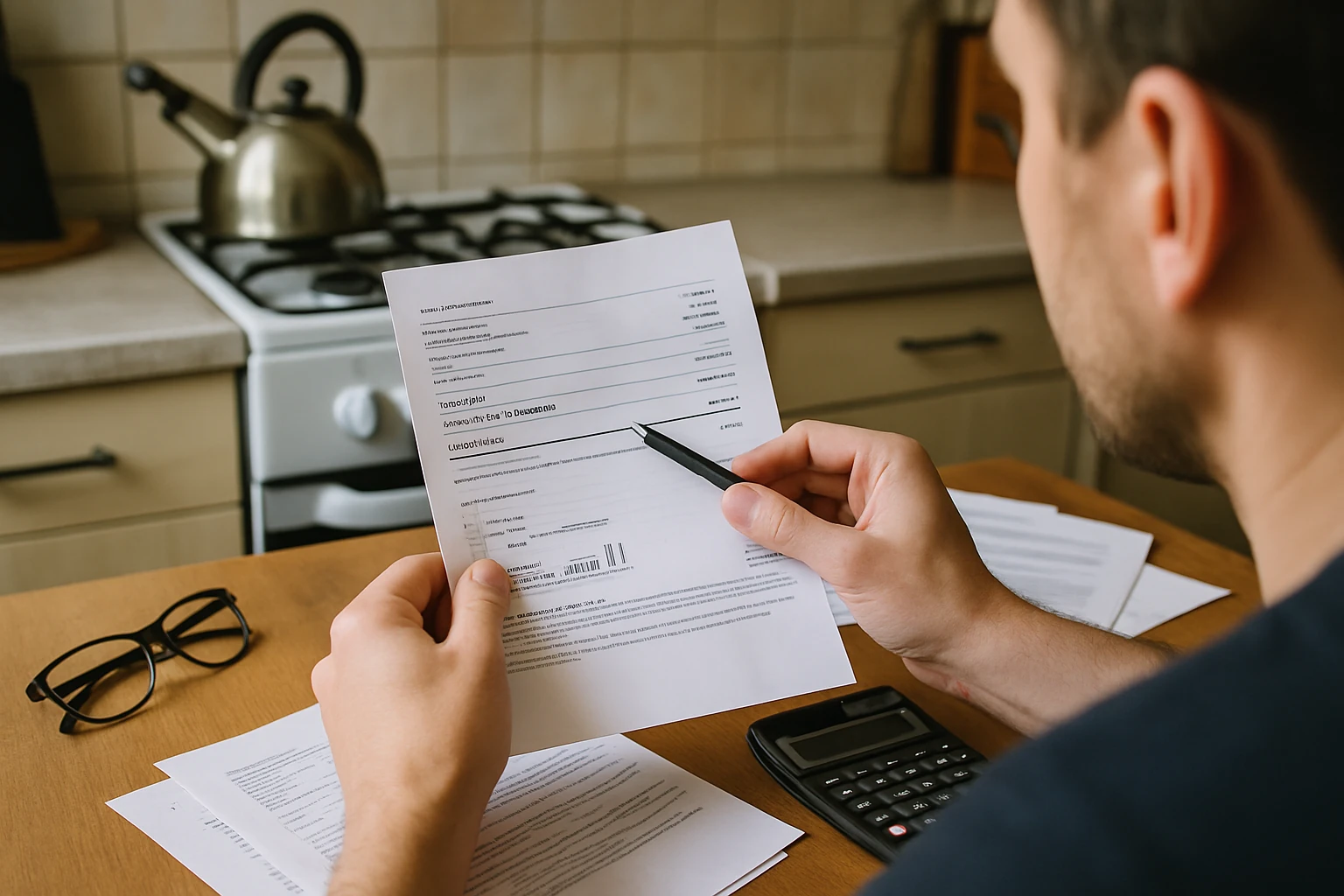
The problem: your bill has 'weird fees' you didn't ask for
Some utility bills are easy to read. Others look like a spreadsheet of mystery lines: riders, surcharges,franchise fees, regulatory charges, and more.
If you've ever thought, "Why are there so many fees--and why do they change?", you're not alone. The good news is that most of these lines fall into a few repeatable categories.
If you want the overall model first, start at Utility Bills & Costs Explained. This article zooms in on the "extra lines" so they stop feeling random.
Table of contents
The quick answer
A surcharge or rider on a utility bill is usually an extra line item used to collect a specific cost outside the base usage rate--often tied to programs, local fees, or cost tracking.
In plain English: it's a "separate bucket" for a specific purpose.
Why bills have 'extra lines' at all
If you're thinking, "Why not just roll this into one price?", that's a fair reaction.
One reason bills use separate lines is transparency: a separate line can show that a cost is being collected for a specific reason rather than being buried inside the general rate.
Another reason is flexibility: some costs change over time, and riders can be updated or reconciled without rewriting every other bill component.
Common surcharge and rider categories you may see
The exact names vary, but these are common categories.
Local franchise fees
A franchise fee is often a local fee tied to operating within a city or municipality. It may show up as "franchise fee" or similar language.
Taxes and tax-like charges
Some bills list taxes separately. Others have charges that feel like taxes because they're mandated or collected for a public purpose.
Public purpose / system benefit charges
These may support broader programs (the label varies widely). The key is that they're often collected as a separate line item.
Regulatory riders / compliance charges
Some charges exist because utilities operate under regulatory rules and cost-recovery mechanisms.
Energy cost adjustments
This is where fuel/energy trackers can appear. If your bill has a line that changes frequently, read: fuel adjustment charge explained.
Surcharge vs customer charge vs fuel adjustment (simple sorting rules)
Use these quick rules to sort most bill lines correctly:
- If it's the same amount every month, it may behave like a fixed charge (example: customer charge).
- If it changes often and is labeled adjustment/tracker, it may behave like a moving cost line (example: fuel adjustment).
- If it's tied to a named program/fee (franchise, regulatory, public purpose), it's often an "extra line" collected for a specific reason.
If you're trying to understand why your total went up without a clear usage jump, this is the best companion: bill higher with same usage.
Where these charges show up on the bill
Surcharges and riders are often listed:
- Near the bottom of the bill under "Other charges"
- Inside the delivery section
- Inside a dedicated "riders/adjustments" section
If your bill also says "estimated," keep this in mind because corrections can shift amounts between months: estimated bill explained.
How to read them without getting overwhelmed
Here's the calm way to read a "busy" bill:
- Start with usage (did you use more units or fewer?)
- Check billing days (longer cycle = bigger total)
- Identify fixed vs variable (which lines stay flat?)
- Group the extras (taxes vs program fees vs adjustments)
If you want bills to feel steadier month-to-month, budget billing can reduce surprise for some households: budget billing explained.
Common misconceptions
- "Every fee is optional." Many lines are part of the rate structure.
- "Rider means scam." "Rider" is often just a label for a specific cost bucket.
- "If I can't explain every line, the bill must be wrong."Bills can be confusing while still being mechanically consistent.
Your best "next logical read" for total changes is: why totals change with the same usage.
Frequently asked questions
A surcharge is an extra line item added to a utility bill to collect a specific cost outside the base usage rate. It may relate to local fees, programs, or other defined charges.