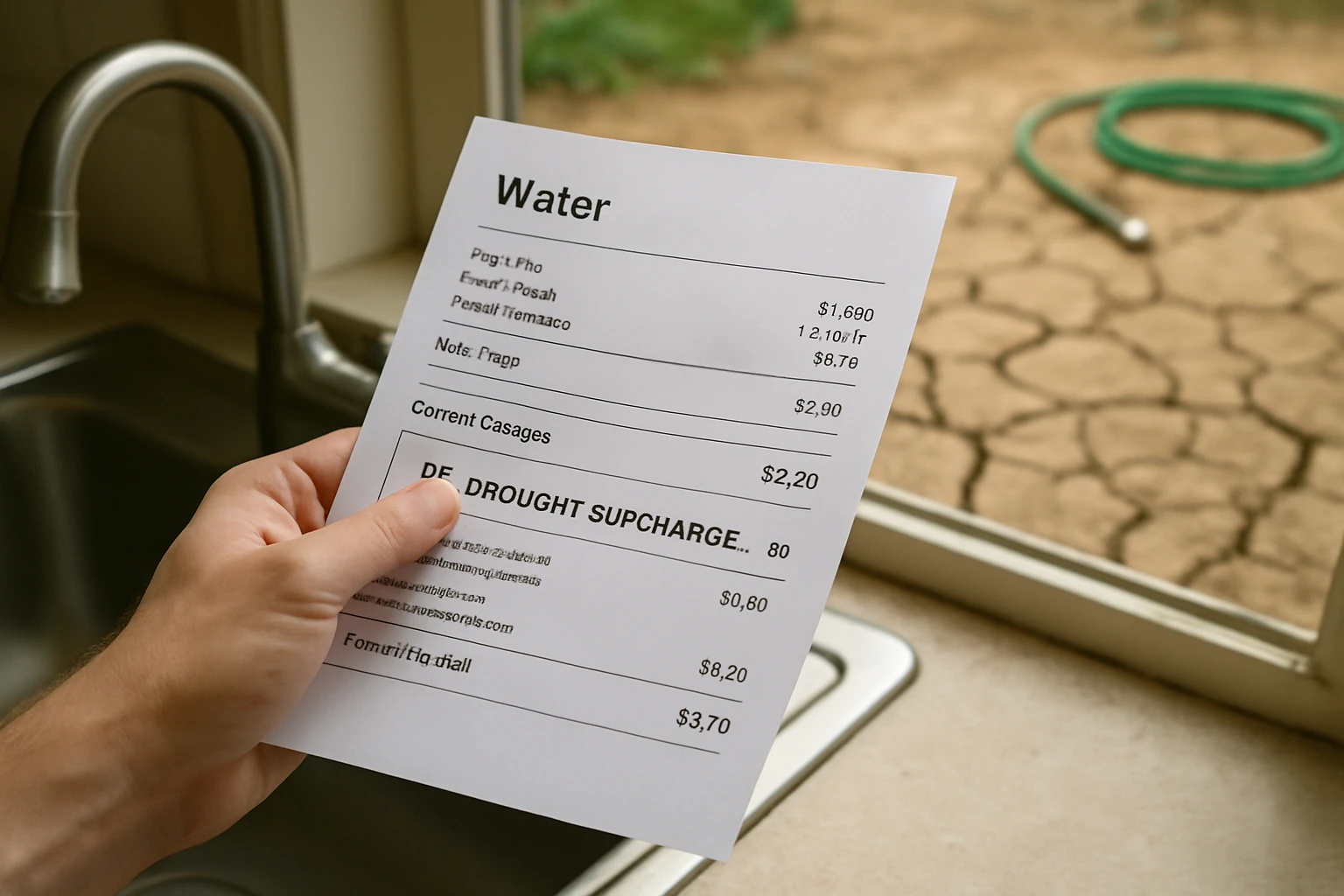
The problem: your price per unit jumps mid-bill
You did not double your water use, but the bill looks like you did. That is the usual experience with tiered rates. The unit price changes when you cross a threshold.
This guide explains how tiers are structured, why they exist, and how to keep your usage inside the lower-cost blocks. If you want the basics first, start with water service explained.
Table of contents
The quick answer
Tiered water rates charge a lower price for the first block of usage, then higher prices for additional blocks. Crossing a threshold can make the bill jump even if usage only rises slightly.
How tiered water rates work
A tiered plan splits usage into blocks, each with its own price. For example, the first 4 CCF might be billed at one rate, the next 6 CCF at a higher rate, and anything beyond that at the highest rate.

| Tier | Usage range | Example rate |
|---|---|---|
| Tier 1 | 0 to 4 CCF | $2.50 per CCF |
| Tier 2 | 4 to 10 CCF | $4.00 per CCF |
| Tier 3 | 10+ CCF | $6.00 per CCF |
If you are not sure what a CCF is, use this CCF explainer.
Why the total jumps faster than usage
The jump happens when you move into a higher tier. The extra units are priced higher, so each additional CCF costs more than the ones before it.
Another factor is billing cycle length. A longer cycle means more days of usage, which can push you into a higher tier even if your daily usage stays steady. If you see an unusual spike, compare usage per day in this guide.
Summer outdoor use is the most common reason households cross tiers. If your bill jumps in warm months, see why summer bills rise.
Where tiers show up on the bill
Most bills show a separate line for each tier, with its own usage amount and rate. Look for labels like:
- Tier 1 usage / Tier 2 usage
- Block 1 / Block 2
- Conservation rate tiers
If the line items are confusing, compare your meter readings using the meter guide.
How to stay in a lower tier
Staying in a lower tier is usually about controlling outdoor use and finding leaks early. These steps help:
- Water lawns early to reduce evaporation
- Adjust irrigation after rain instead of running on a timer
- Check for toilet leaks with a simple dye test
- Track usage weekly during peak months

If you want a sense of typical usage for your household, use average usage ranges.
Common mistakes
- Assuming the higher rate applies to all usage. Only the usage inside that tier is billed at the higher price.
- Ignoring billing days. A longer cycle can push you into a higher tier without a daily usage change.
- Missing hidden leaks. Even a small toilet leak can add enough usage to cross a tier threshold.
Frequently asked questions
Tiered rates charge a lower price for the first block of water use and higher prices for additional blocks.