Typical daily usage range
In the US, a common range is 40 to 80 gallons per person per day for indoor use. Outdoor irrigation can add significantly more, especially in dry climates or for larger yards.
The range is wide because habits and fixtures vary. A home with efficient fixtures and short showers will fall near the low end, while larger households with frequent laundry and long showers may be higher.
If you live in an apartment without outdoor watering, your daily usage is usually closer to the indoor range.
Where the water goes
| Use | Typical share |
|---|---|
| Showers and baths | 20% to 30% |
| Toilets | 20% to 25% |
| Laundry | 15% to 20% |
| Faucets | 15% to 20% |
| Leaks | 5% to 10% |
These shares vary by household. For example, a family with young kids may use more laundry, while a single adult may use more in showers.
Factors that change your baseline
The age of fixtures is a major factor. Older toilets can use 3.5 to 5 gallons per flush, while modern models use 1.28 gallons or less. Showerheads also vary from 1.5 to 2.5 gallons per minute.
Household size and lifestyle matter too. Working from home increases indoor use. Frequent cooking or home hobbies can add water usage.
Seasonal watering can dwarf indoor use. A small lawn can add several thousand gallons per month in the summer if watered regularly.
How to estimate your own usage
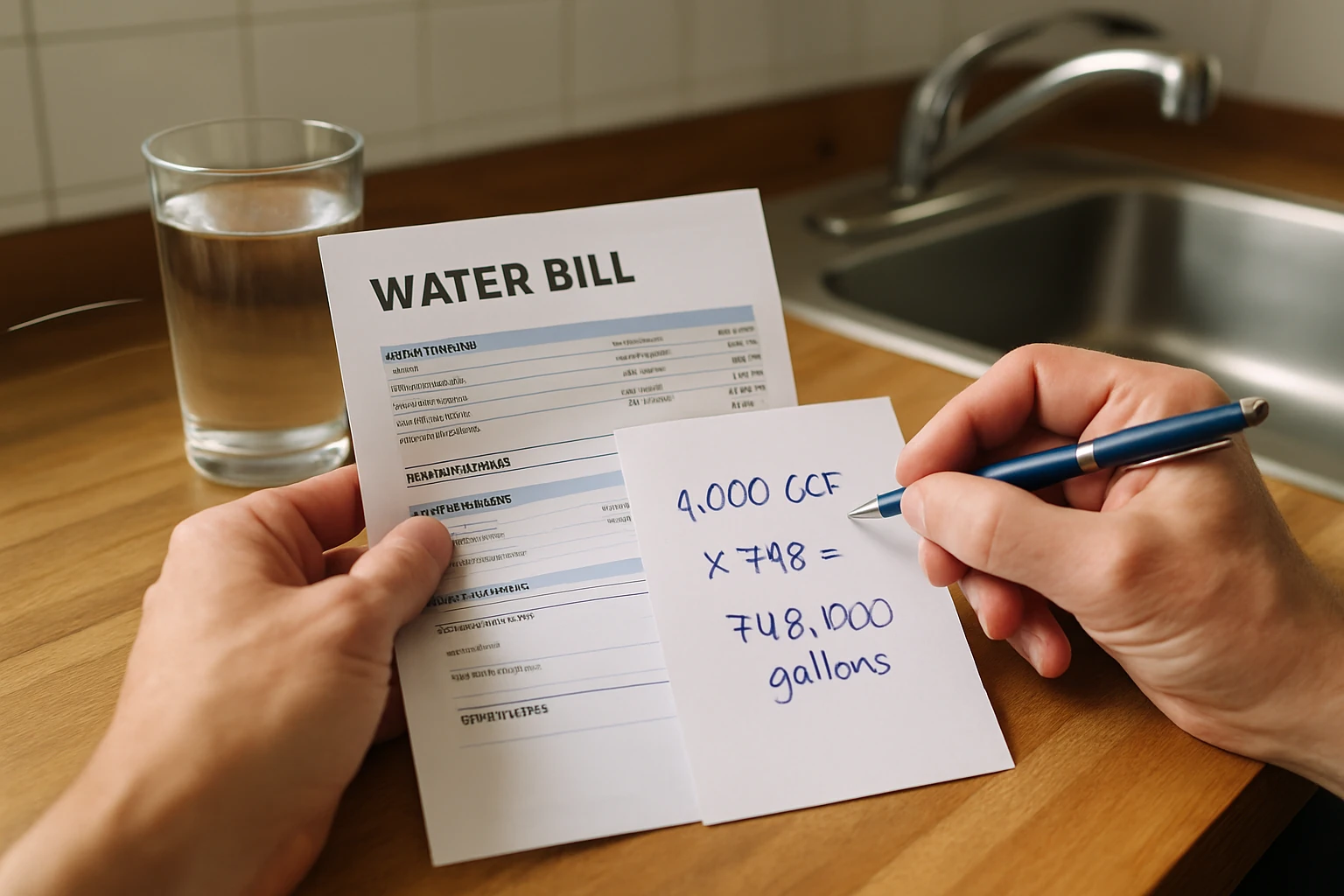
Check your bill for total gallons (or CCF). Divide by the number of days in the billing cycle, then divide by the number of people in the home. This gives a per-person daily estimate.
Example: 6,000 gallons in 30 days with two people is 100 gallons per person per day. That is slightly above the typical indoor range, but it could be normal if there is outdoor watering.
If you want a more precise number, read your meter directly. Our guide on reading a water meterwalks through the steps.
Know your fixture flow rates
Flow rates help you estimate usage without a meter. A low-flow showerhead might use 1.5 gallons per minute, while an older one could use 2.5 or more. Faucets can range from 0.5 to 2.2 gallons per minute.
If you time a shower for 8 minutes at 2 gallons per minute, that is about 16 gallons. Multiply by the number of showers per week to see how much of your total is driven by bathing.
Many utility websites list typical flow rates for common fixtures. Comparing those numbers to your habits can help you set a realistic target.
Apartment vs. house usage
Apartments often have lower usage because they typically lack outdoor irrigation and may share laundry facilities. Homes with yards and multiple bathrooms usually have higher totals.
If your apartment building uses a shared meter, your bill may be based on allocated usage rather than your personal usage. Ask how costs are calculated if the numbers seem high.
Houses with basements or older plumbing sometimes have hidden leaks in supply lines. If your usage is high and you cannot find a source, a plumber can perform a pressure test.
If your community uses submeters, request a usage report to compare your unit to the building average.
Outdoor usage can dwarf indoor use
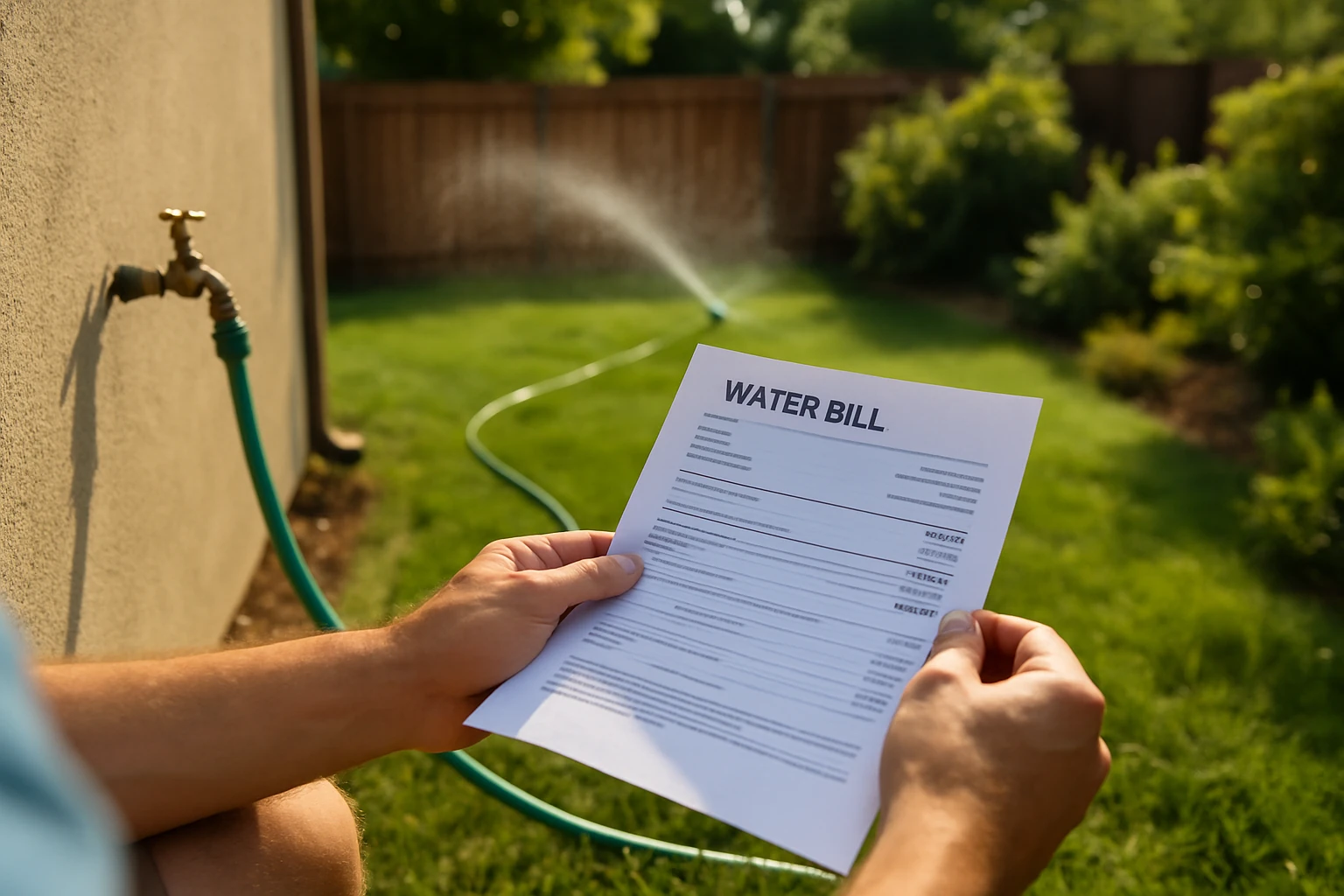
Outdoor irrigation is the biggest variable for most households. Watering a lawn or garden can add thousands of gallons per month. A hose running for 20 minutes can use 300 gallons or more depending on flow rate.
If you want to estimate outdoor use, time your sprinkler run and note the meter before and after. This makes it clear how much of your bill is tied to outdoor watering.
Consider seasonal adjustments like watering less often after rainfall or switching to drought-tolerant plants. These changes can lower your summer usage without affecting daily indoor routines.
Household changes that affect usage
A new baby, a roommate, or regular guests can increase daily water use. More people means more showers, laundry, and dishwasher cycles. The change is normal, but it helps to update your baseline when household size changes.
If your usage jumps after a move or life change, consider whether it is due to new routines rather than leaks. Tracking daily gallons for a few weeks can confirm the cause.
Setting a realistic usage target
Instead of aiming for a single number, set a range that matches your household size and season. If you are above the typical range, start by addressing leaks and high-flow fixtures. Then focus on behavior changes like shorter showers or fewer laundry loads per week.
Tracking your daily gallons for two or three billing cycles is enough to see whether changes are working. Consistency matters more than one perfect month.
If your goal is to reduce usage, aim for small steps like 5% at a time. Gradual changes are easier to maintain than a large one-time cut.
Consistent tracking makes those reductions visible.
Establish a no-use baseline
A no-use baseline shows whether leaks are affecting your totals. Turn off all water and take a meter reading, then check again after an hour. Any change indicates water is flowing when it should not be.
Establishing this baseline once or twice a year can help you catch leaks early, which keeps usage closer to the expected range.
If the baseline changes suddenly, look for toilet leaks or irrigation valves that are stuck partially open.
Ways to lower usage without major changes
- Fix running toilets and dripping faucets quickly.
- Use full loads for laundry and dishwashing.
- Install low-flow showerheads if allowed in rentals.
- Water lawns early in the morning to reduce evaporation.
- Take shorter showers by setting a timer.
Small changes can reduce monthly gallons noticeably, especially in homes with older fixtures.
Frequently asked questions
It can be high for indoor use, but it may be normal if you have outdoor watering or older fixtures. Comparing daily usage with and without irrigation helps clarify.