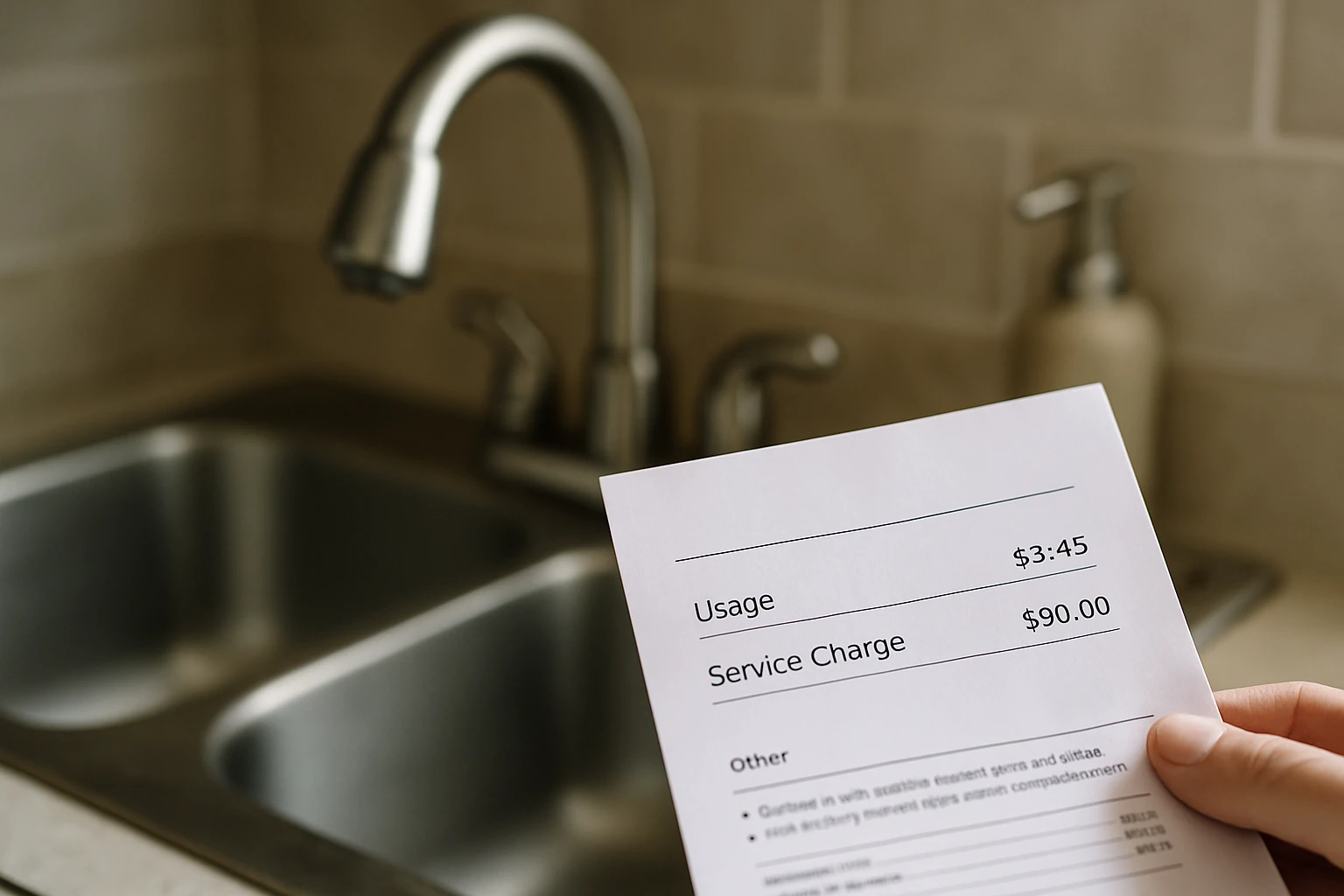
The problem: a stormwater fee shows up on a water bill
You see a stormwater fee even though you did not use more water. That is because stormwater charges are usually about drainage and runoff, not household usage.
This guide explains what stormwater fees fund, how they are set, and how to tell them apart from sewer charges. For the overall bill structure, start with water service explained.
Table of contents
The quick answer
A stormwater fee funds drainage systems, flood prevention, and runoff cleanup. It is usually based on property characteristics, not water usage.
What stormwater fees pay for
Stormwater systems handle rain runoff from streets, roofs, parking lots, and other hard surfaces. Fees help pay for:
- Storm drains and collection pipes
- Flood control projects and retention ponds
- Street sweeping and debris removal
- Waterway cleanup and compliance programs

How stormwater fees are set
Many utilities base the fee on property size or impervious surface area (roofs, driveways, patios). Common approaches include:
- A flat monthly fee for residential properties
- A fee tied to impervious area tiers
- Credits for approved drainage improvements
Because it is based on property features, the fee does not change much when your water usage changes.
Stormwater fees vs sewer charges
Stormwater fees are different from sewer charges. Sewer charges fund wastewater treatment based on water usage, while stormwater fees fund runoff management based on property drainage.
If you want to understand sewer charges, start with how sewer charges workand sewer averaging.
Ways to reduce the impact
Some utilities offer credits if you reduce runoff from your property. Common examples include rain gardens, permeable pavers, or rain barrels. Check local rules before making changes.
If your bill also looks higher because of usage, compare with spike troubleshootingso you can separate fixed fees from usage changes.
Common mistakes
- Assuming stormwater fees are tied to usage. They are usually based on property drainage, not gallons used.
- Confusing stormwater and sewer charges. Sewer is wastewater treatment, stormwater is runoff control.
- Missing credit programs. Some utilities offer credits for runoff reductions, but you must apply.
Frequently asked questions
It is a charge that funds drainage and runoff management systems, usually based on property characteristics.