The winter gas bill problem (and why it feels so confusing)
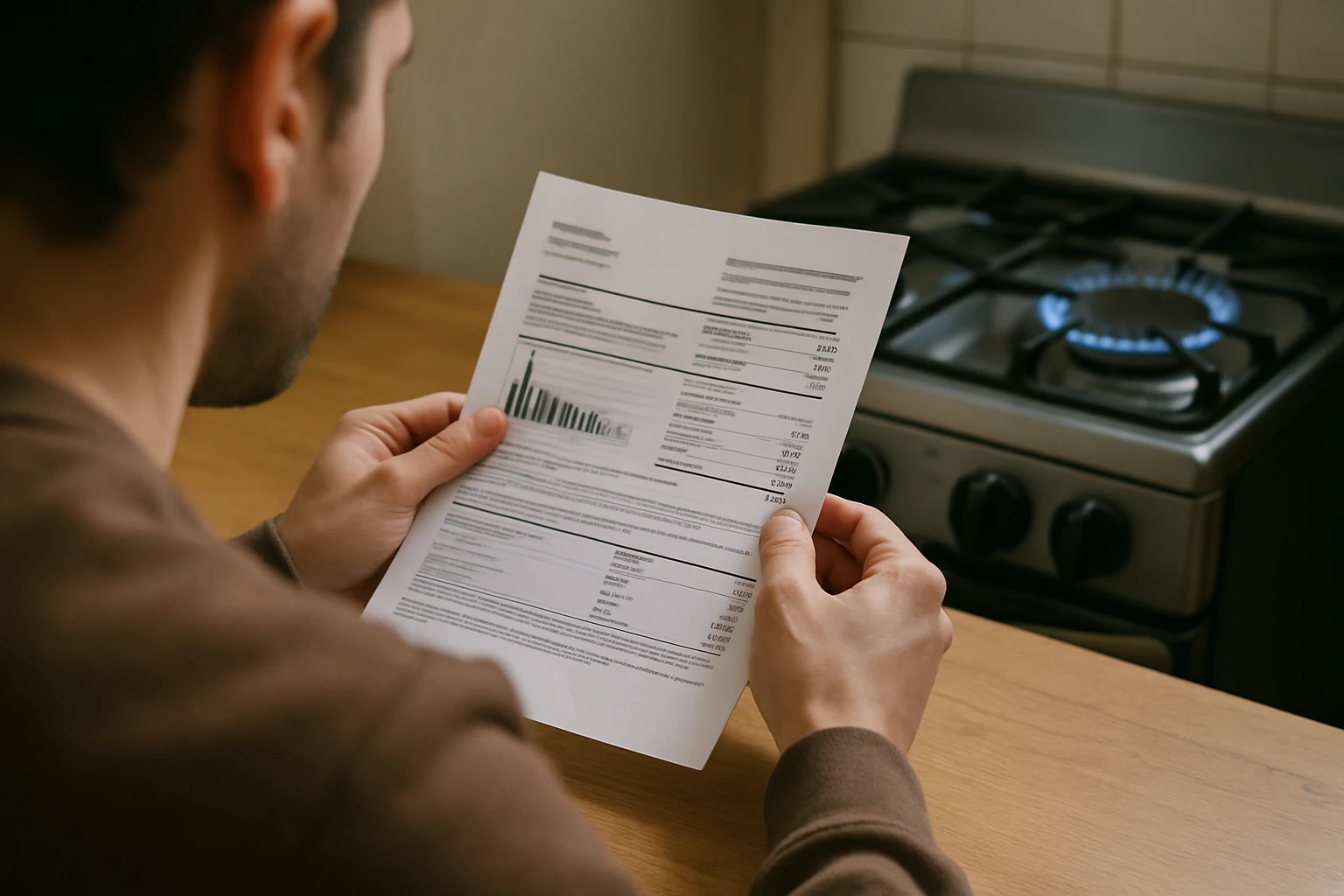
A winter gas bill has a special talent: it can make you feel like you did something wrong, even if you did the same thing you do every winter. You open the envelope, you see the total, and your brain immediately tries to solve the mystery: "Is my furnace broken? Did the utility raise rates? Did we leave a window open?"
The frustrating part is that the answer is often severalsmaller reasons stacked together. A colder week increases run time. A longer billing period adds days. A higher delivery rate shows up at the same time. And because the bill arrives weeks after the cold snap, it's hard to connect the dots.
This guide is the "make it make sense" version. You'll learn how to read your winter bill in a way that's fair (not guessy), and you'll walk away with a short list of checks that explain most spikes. For the fundamentals (therms, bill parts, and how gas service works), start with Natural Gas Explained.
First, separate "more days" from "more usage"
Before you assume something changed in your home, make sure you're comparing bills correctly. Utility bills aren't always 30 days. Depending on meter routes and holidays, your winter bill might cover 33-37 days. That difference alone can be a 10-20% swing.
The cleanest comparison is therms per day. Find the number of therms used during the billing period and divide by the number of days in the cycle. This is the quickest way to answer: "Did my household use more gas, or did the bill just cover more time?"
If you're not sure where therms are listed, our bill decoder ishow to read your gas bill (therms explained).
Estimated vs actual reads
Winter is also a season when "estimated" readings appear more often (snow, access issues, remote read hiccups). An estimate isn't always wrong--but it can shift usage between months. If one bill is estimated and the next is actual, the "actual" bill may include a correction.
If you see "estimated," treat that bill as a fuzzy data point and focus on a 2-3 bill trend, not one single month.
The big idea: winter heating drives therms
In most gas-heated homes, space heating is the largest gas load by far. It often accounts for 60% to 80% of annual gas use. That means winter doesn't just "increase" your bill--it can dominate it.
A good mental model is run time: when it's colder outside, your home loses heat faster. The furnace runs longer to replace that lost heat. Longer run time means more therms.
This is why two winters can feel similar day-to-day but produce very different bills. A few nights of extra-cold weather can drive a large share of the month's therms.
Most common drivers of a high winter gas bill
1) Colder weather than you remember
We remember winter as a season, but your furnace responds to specific temperature swings. A week that's 10 degF colder than "normal" can add a lot of runtime. If your utility provides a usage chart, compare this month's therms to the same month last year.
2) Thermostat choices (and the timing of heat)
Heating isn't just about the setpoint; it's also about when you need the heat. Mornings and evenings are common peak times because people are home and awake. If your schedule changed (working from home, guests visiting, kids home for break), your "occupied hours" may have increased. That can raise usage without any dramatic thermostat change.
The goal here isn't to give a one-size-fits-all thermostat number. It's to notice whether you're heating more hours per day than before.
3) Air leaks and insulation (small gaps, big runtime)
When cold air leaks in, warm air leaks out. Your furnace isn't "bad" in that scenario--it's doing extra work to keep up. Drafty doors, poorly sealed attic hatches, and leaky ductwork can all increase runtime. Many households discover these issues because the bill makes them obvious.
4) Furnace efficiency (AFUE) and how it affects therms
Furnace efficiency is often expressed as AFUE (Annual Fuel Utilization Efficiency). It's a measure of how much of the fuel's energy becomes usable heat in your home. Higher efficiency generally means fewer therms for the same comfort level.
Efficiency also changes with maintenance and condition. A struggling furnace can short-cycle or run longer than expected. If your home feels unevenly heated, takes longer to warm up, or you notice unusual furnace behavior, those are clues to investigate.
5) Hot water and other baseline loads
Your winter bill may include more hot water use (longer showers, more laundry, more dishes, more people home). Space heating is usually the headline, but hot water can be the "second layer" that pushes a bill from "high" to "wow."
If you want a broader context for heating costs, seegas vs electric heating cost comparison.
Sometimes the bill is higher even if usage isn't
This is the moment where people say, "But I used fewer therms than last month--why is the total higher?" The answer is usually in the line items.
Supply vs delivery changes
Your bill typically has a supply (commodity) portion and a delivery (distribution) portion. Either can change due to rate adjustments, seasonal factors, or regulatory updates. Even if your household usage is flat, a rate increase can push the total up.
If you want the cleanest breakdown of what those terms mean, readgas delivery charge vs supply charge.
Customer charges and minimums
Many gas bills include a fixed monthly customer charge. In winter it's easy to ignore because usage dominates, but it still matters. It also means that "cutting usage in half" won't cut the bill in half.
"Is this normal?" sanity checks that actually help
The goal is confidence, not perfection. These checks help you decide whether the bill is plausible or whether you should dig deeper.
Check 1: therms per day vs last year
Compare the same month year-over-year and use therms per day. If your therms/day are similar, the spike is likely weather, days in cycle, or rates--not a mystery leak.
Check 2: does the home "feel" different?
Bills often reflect comfort decisions. If the home was warmer, more occupied, or had less sunlight, usage will follow.
Check 3: document before you call
If you call your utility (or an HVAC pro), you'll get better answers if you have: billing days, total therms, therms/day, and whether the read was estimated.
Use the bill lines to diagnose the spike (supply vs delivery)
A winter spike can be caused by more therms, a higher price per therm, or both. The fastest way to separate those drivers is to look at your bill's line items.
Many bills split charges into supply (the gas you used) and delivery (the system that brings it to you). If you want a clear explanation of those categories, readdelivery vs supply charges.
Three quick questions to ask your bill
- Did therms increase (usage)?
- Did the supply price per therm change (commodity pricing)?
- Did the delivery section change (rates/fees) even if therms were similar?
If therms are up, focus first on usage drivers (weather, equipment, schedule, comfort settings). If therms are flat but the total rose, the answer is usually rate changes, billing days, or a one-time adjustment.
A winter spike playbook (what to do this week)
If your bill is high right now, you probably want actionable steps more than theory. Here's a practical sequence that balances quick wins with finding the real root cause.
1) Normalize: therms per day
Divide total therms by billing days. This prevents false alarms when a cycle is longer than usual.
2) Check thermostat schedule drift
A common winter culprit is a schedule that quietly changed: vacations, guests, work-from-home days, or a new "hold" setting. A 2-3 degF increase can be meaningful over an entire month.
3) Identify your biggest gas loads
In many homes, space heating dominates winter gas usage. But water heating, a gas dryer, or a fireplace can still matter. If you have a smart thermostat, note daily runtime and look for unusual patterns.
4) Replace or clean the furnace filter
A clogged filter can reduce airflow and efficiency and may cause longer run times. It's one of the lowest-effort maintenance steps to try early.
5) Do a draft audit on the windiest day
Walk the house and feel around exterior doors, attic access, and penetrations (cable entries, hose bibs). Drafts translate directly into heating load.
6) Tune setbacks to avoid long "recovery" runs
For many systems, modest setbacks help; extreme setbacks can lead to long runs in the morning. The best setting is the one that reduces total runtime without compromising comfort.
7) Rule out abnormal hot water usage
A running hot-water tap, a recirculation pump left on, or a hot-water leak can move a surprising amount of energy. If this sounds possible, also review your water patterns; the water hub is here.
8) Look for estimation/corrections and prior-period adjustments
Estimated reads can "catch up" later. If one month is oddly low and the next is high with no behavior change, a corrected read or adjustment is a prime suspect.
A worked example: separating days, usage, and rates
Here's a simple example to show how a bill can jump even when nothing mysterious is happening.
- Last cycle: 80 therms over 28 days = 2.86 therms/day
- This cycle: 120 therms over 33 days = 3.64 therms/day
Usage increased by about 27% on a per-day basis. That could easily be explained by a colder month, longer runtime, or a slightly higher thermostat setting.
Now add pricing changes:
- Supply price: $1.10/therm to $1.35/therm
- Delivery (variable): $0.55/therm to $0.60/therm
More therms plus a higher combined per-therm rate will produce a noticeable jump. If you want to validate the units and conversions involved, the cleanest explanation is this units guide.
Common misconceptions about winter gas bills
- "My bill doubled, so my usage doubled." Not necessarily. A longer billing period and a rate change can create a big total change without a true 2x usage change.
- "If the thermostat is the same, the bill should be the same."Weather varies. Wind, cold snaps, and how long you're home all matter.
- "Delivery charges are a mistake." Delivery is the infrastructure service. It can be substantial, especially in winter.
If the confusing part is the unit math (CCF/MCF/therms), the explainer you want isMCF vs CCF vs therms.
Frequently asked questions
In most homes, space heating is the largest gas use. Colder weather increases furnace run time, which increases therms. Winter bills can also be higher due to longer billing cycles and rate changes.