The big picture: fuel cost and system efficiency
Heating cost is driven by two main factors: the price of the fuel and how efficiently your system turns that fuel into heat. Gas furnaces are often cheaper to run because natural gas prices per unit of energy are usually lower than electricity prices. However, high-efficiency electric heat pumps can close the gap in mild climates.
Comparing costs requires looking at actual rates and equipment efficiency. A well-insulated home with a modern heat pump may spend less than a drafty home with an older gas furnace, even if gas is cheaper per unit.
It is also important to compare total bills, not just energy charges. Fixed customer charges can change the real monthly cost.
Understanding the units: therms, BTUs, and kWh
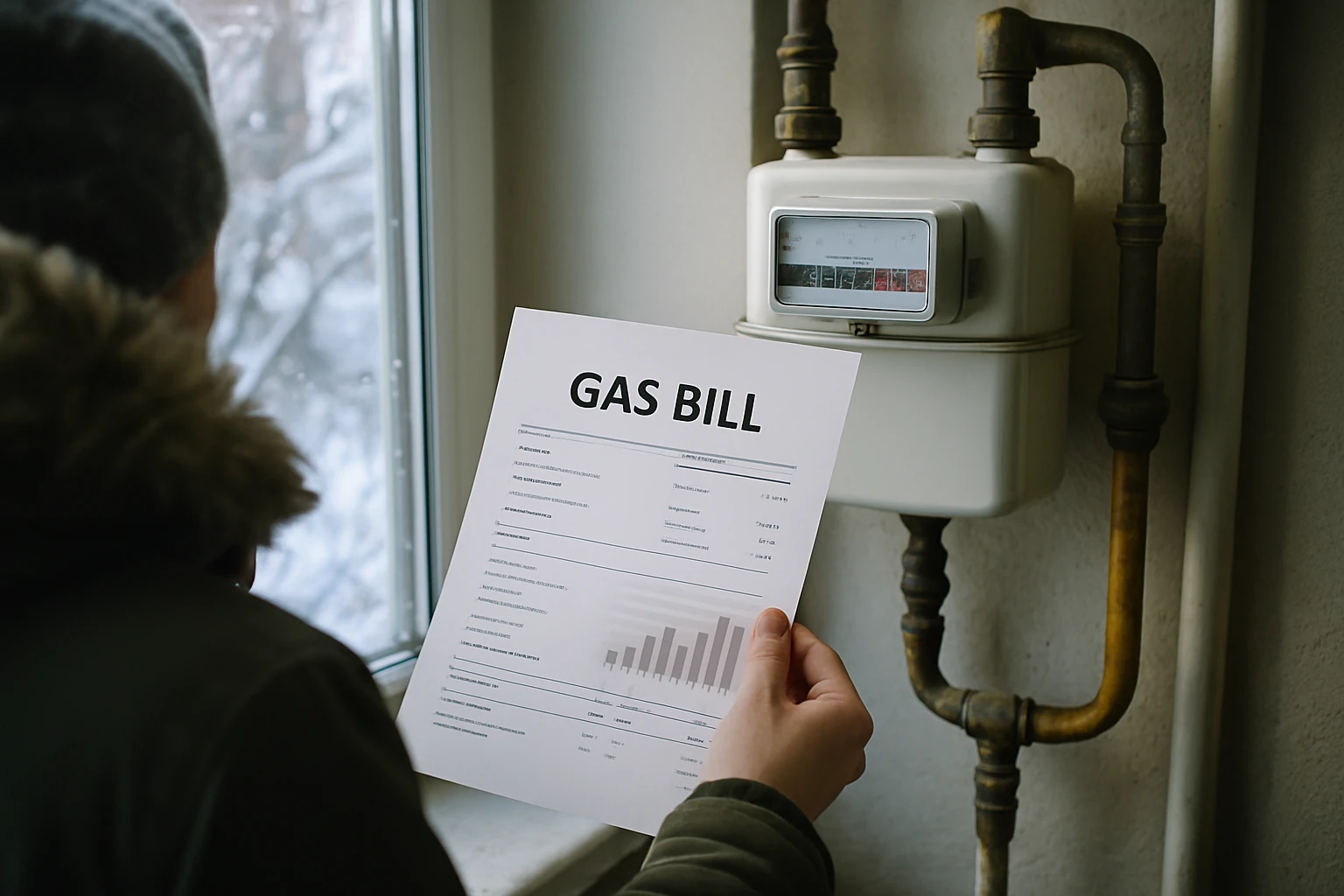
Natural gas is often billed in therms. One therm equals 100,000 BTUs. Electricity is billed in kWh. A kWh equals 3,412 BTUs. These conversions make it possible to compare the energy in each fuel.
But the usable heat depends on system efficiency. A 95% efficient gas furnace turns most of that energy into heat. A heat pump can deliver more heat than the electricity it uses, measured by its coefficient of performance (COP).
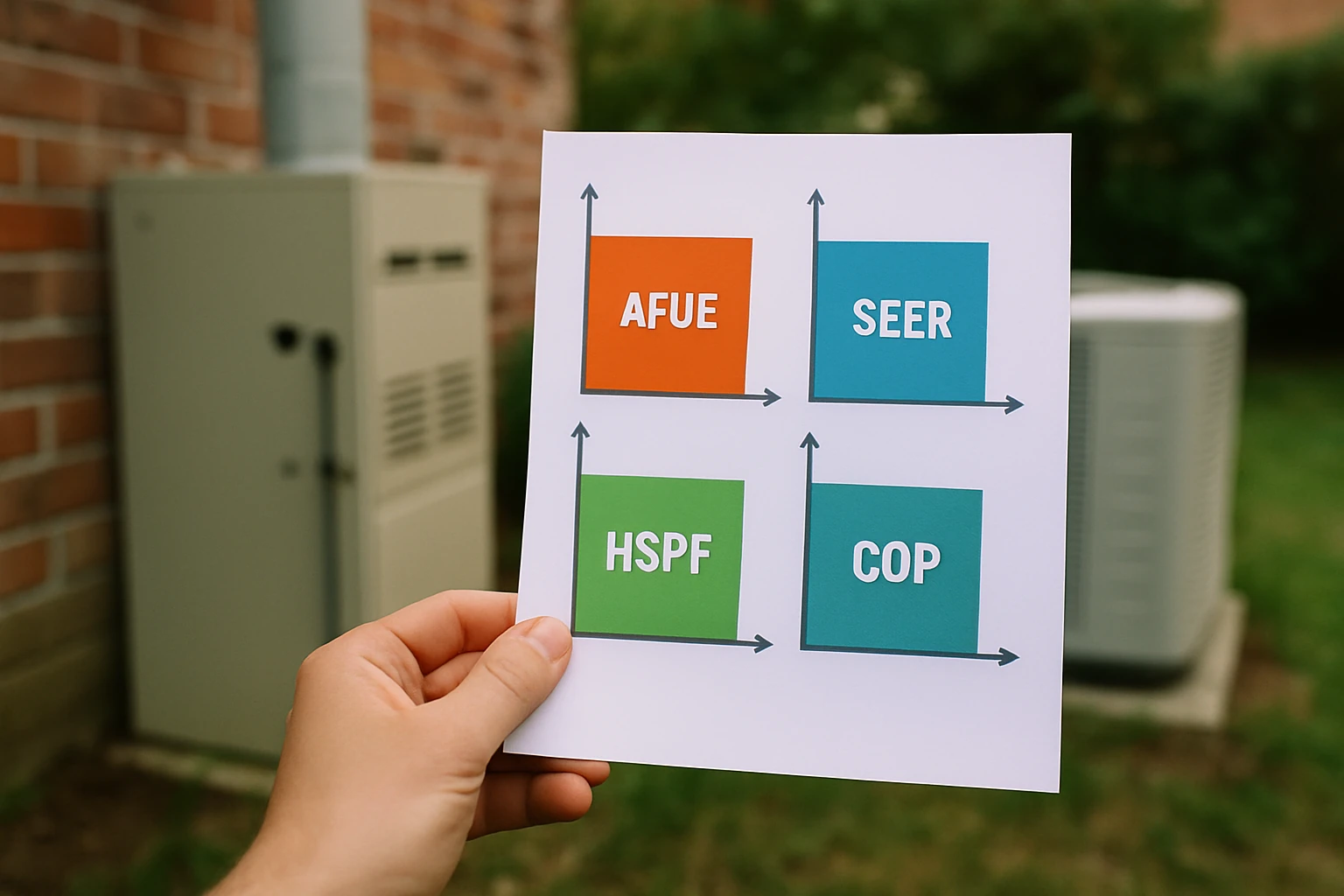
If you are comparing systems, ask for the annual fuel utilization efficiency (AFUE) for gas furnaces and the seasonal energy efficiency ratio (SEER) or heating seasonal performance factor (HSPF) for heat pumps. These ratings describe how efficiently the system performs over a season.
Example cost comparison
| Assumption | Natural gas | Electric heat pump |
|---|---|---|
| Fuel price | $1.60 per therm | $0.17 per kWh |
| System efficiency | 95% furnace | COP 2.5 |
| Cost per 100,000 BTU delivered | $1.68 | $2.00 |
This example shows gas as cheaper under these rates, but your numbers can flip in areas with high gas prices or lower electric rates. The efficiency of your system matters as much as the fuel price.
Climate and home size matter
In mild climates, heat pumps stay efficient all winter, which can make electric heating competitive. In colder climates, heat pumps may rely on electric resistance backup, which is more expensive per unit of heat. Gas systems usually maintain efficiency even in very cold weather.
Larger homes have more surface area for heat loss, so insulation and air sealing become critical. A smaller, well-sealed home can be affordable to heat with either fuel.
If you are deciding for a rental, you may not control the system. In that case, the best strategy is to understand the rate structure and focus on reducing heat loss through windows and doors.
Upfront costs and maintenance
Gas furnaces and heat pumps have different installation and maintenance costs. Heat pumps can cost more upfront, but they also provide cooling. Gas furnaces may be cheaper to install but can require separate air conditioning equipment.
Maintenance costs vary by equipment type and age. Regular filter changes and annual inspections help either system run efficiently. Ignoring maintenance often leads to higher bills regardless of fuel type.
Comfort and air quality considerations
Gas furnaces typically deliver warmer supply air, which some people prefer in very cold climates. Heat pumps deliver gentler heat that can feel cooler to the touch, even when the room temperature is comfortable.
Indoor air quality depends more on maintenance than fuel type. Clean filters, sealed ductwork, and proper ventilation matter for both gas and electric systems. If you are sensitive to dry air, a humidifier can make winter heating feel more comfortable regardless of fuel type.
Noise levels can differ too. Outdoor heat pump units can be louder than a gas furnace, while indoor blowers are similar. For some households, sound may be part of the comfort decision.
Fuel price volatility and budgeting
Gas and electricity prices can change seasonally or annually. If gas prices are rising in your region, the cost advantage of gas heating may shrink. Similarly, if electricity prices rise sharply, electric heating becomes less competitive.
When comparing costs, look at the last 12 months of utility rates. That gives a more realistic picture than a single monthly rate.
Hybrid and dual-fuel systems
Some homes use dual-fuel systems that pair a heat pump with a gas furnace. The heat pump runs during mild weather, and the gas furnace takes over during colder periods. This can balance efficiency and comfort depending on local rates.
If you are considering a hybrid system, ask for the temperature \"changeover\" setting. That setting controls when the system switches from electric to gas and can significantly affect monthly costs.
In some regions, utilities offer incentives for high-efficiency heat pumps or dual-fuel systems. Incentives do not change operating costs, but they can reduce the upfront expense.
Do not forget fixed charges
Gas service often has a monthly customer charge that you pay even if you use little gas. If you have electric heating only, you may avoid that fixed gas charge altogether. For some households, eliminating a $15 to $30 monthly gas fee is a meaningful savings.
Electricity also has fixed charges, but if you already need electricity for other appliances, those charges are unavoidable. Always compare the full bill, not just the energy rate.
What to check for your own home
- Compare your local gas price per therm and electric price per kWh.
- Confirm the efficiency rating of your furnace or heat pump.
- Review insulation levels in the attic and walls.
- Look at the monthly fixed charges for each utility.
- Consider local climate and how often you need backup heat.
If you are deciding between systems, ask for a load calculation and projected operating costs. The right choice is the one that matches your climate, budget, and comfort goals.
Reviewing a year of utility bills can also show how your current costs compare seasonally. That historical view is more reliable than a single winter or summer bill.
For a deeper look at winter electricity costs, readwhy winter bills rise.
Frequently asked questions
Not always. In regions with low electric rates or mild winters, efficient heat pumps can be competitive with gas.