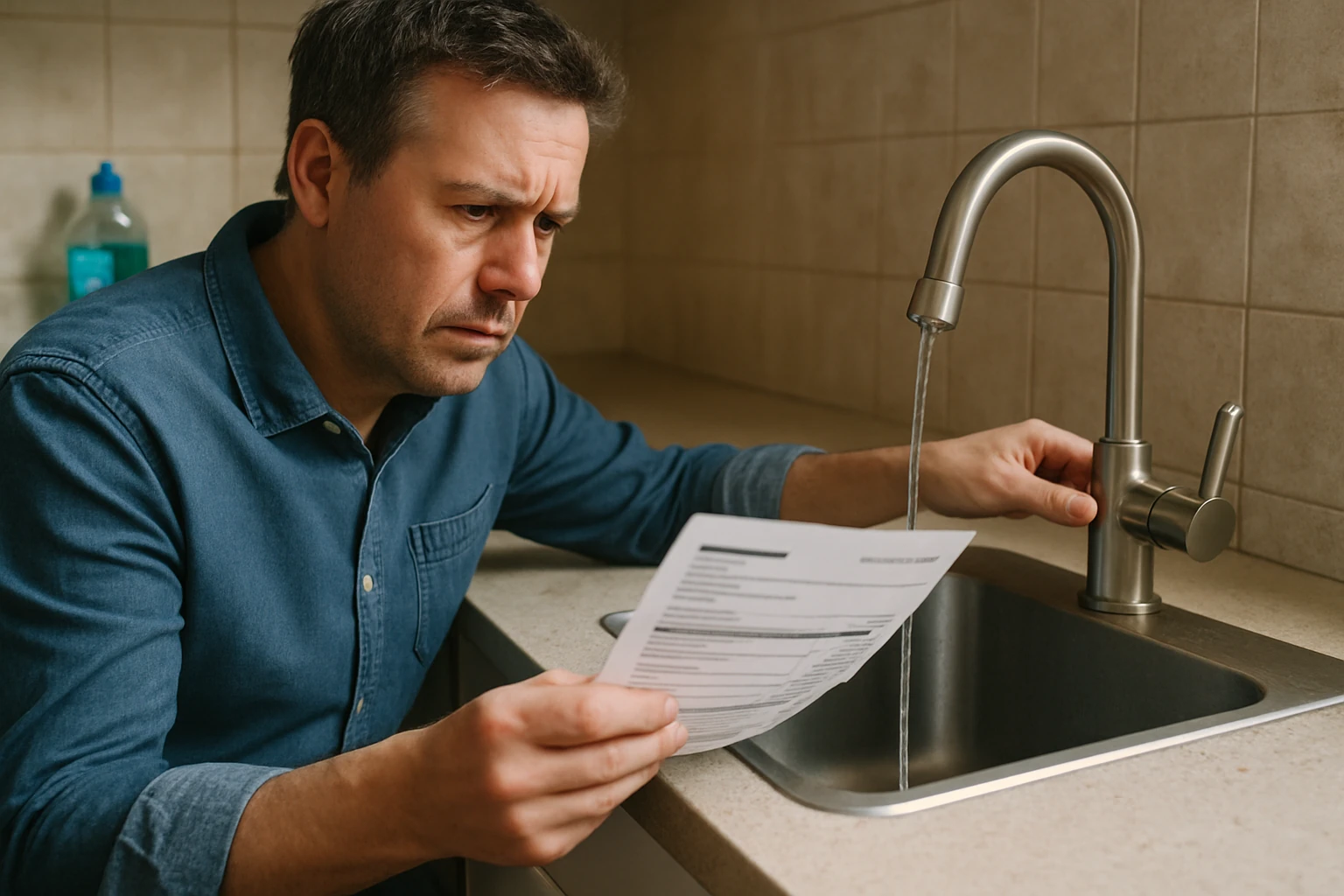
Why a running toilet is hard to notice (but shows up on the bill)
A running toilet is one of the most frustrating utility problems: it can waste a lot of water without looking "broken."
Sometimes you hear the toilet refill randomly. Sometimes you hear nothing at all. But your water meter keeps counting, and your bill is where the problem finally shows up.
If you're trying to understand the full water-bill structure, start with Water Service Explained. If you're in "why did this spike?" mode, seewhy water bills suddenly increase.
Two fast leak tests you can do today
The dye test (toilet-specific)
Add a few drops of food coloring (or a dye tablet) to the toilet tank, then wait 10-15 minutes without flushing. If color appears in the bowl, water is leaking from the tank into the bowl.
The meter test (confirms continuous flow)
Turn off all water use in the home and watch your water meter. Many meters have a small leak indicator (triangle/star) that moves with very small flows. If it moves, water is flowing somewhere.
If you want step-by-step meter reading help, seehow to read a water meter.
How a toilet leak changes your bill (water and sometimes sewer)
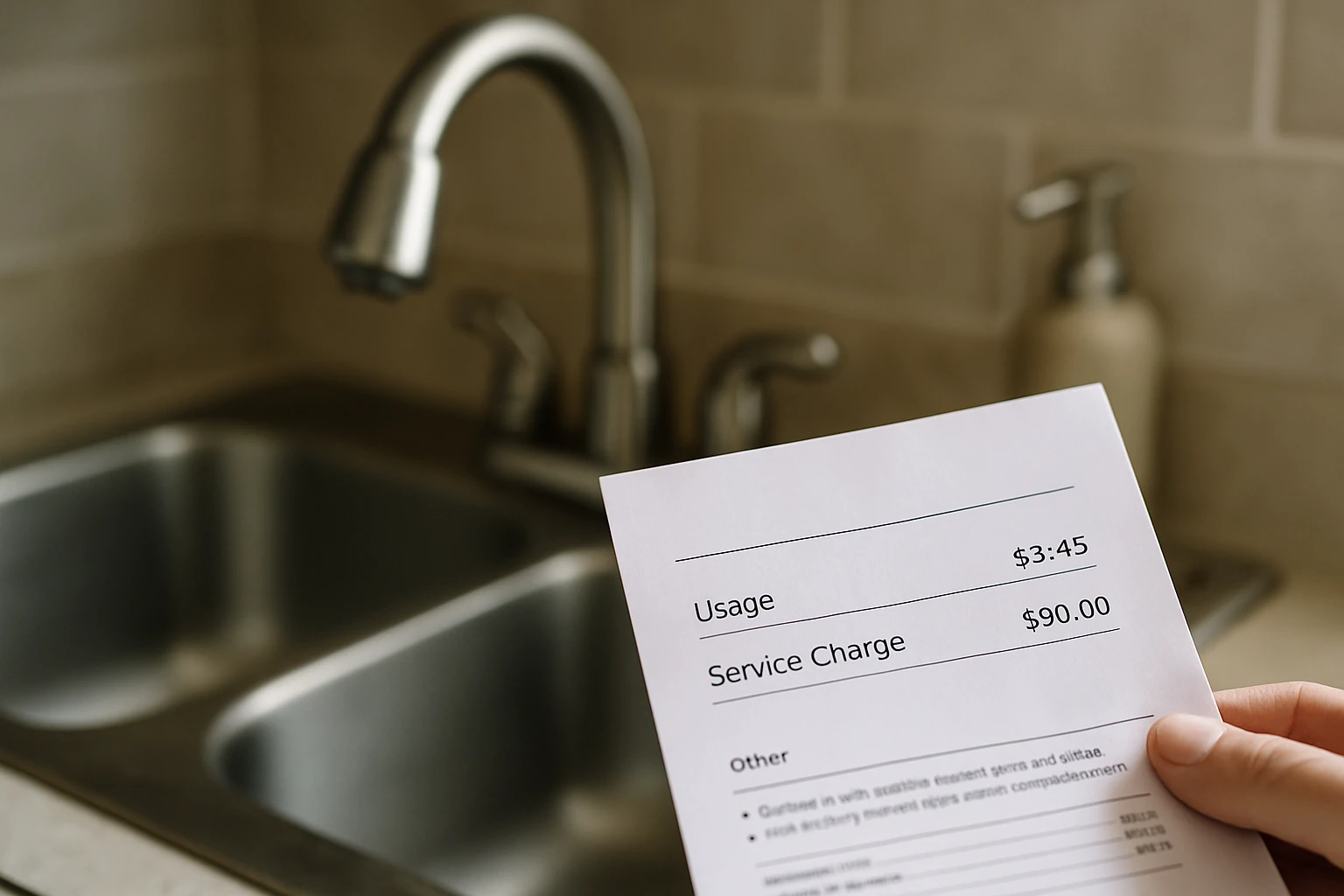
A leak adds usage every hour of every day, which can turn into a bigger bill faster than most people expect.
In many cities, sewer is tied to your water usage. That means extra metered water can raise the sewer portion too. If you've ever wondered why sewer feels high, this explains it:how sewer charges work.
A simple "back-of-the-napkin" estimate
You don't need perfect numbers. You just need a sense of scale. If your bill uses CCF, this converter helps:what CCF means.
As a rough idea, a small continuous leak can add hundreds to thousands of gallons per month. If your household usage suddenly looks far above typical, compare it toaverage water usage per personfor context.
Common causes (high level)
Most running-toilet issues come from a few parts inside the tank. You don't need to be a plumber to understand the categories:
- Flapper issues: A worn or mis-seated flapper can let water seep into the bowl.
- Fill valve problems: The valve can stick or fail to shut off cleanly.
- Water level too high: If the tank water level is above the overflow tube, water can trickle continuously.
If you're not comfortable working inside the tank, it's reasonable to call a licensed plumber. The key is that once you've proven a leak with the dye test or meter test, you're no longer guessing.
What to do next (safe options)
Once you confirm a running toilet, you have a few safe next steps:
- Re-test: Repeat the dye test after any change to make sure the leak is actually gone.
- Track usage: Take a meter photo at night and again in the morning (with no water use) to confirm the leak stopped.
- Ask about adjustments: Some utilities have leak adjustment policies if you can document repairs. Policies vary.
If you're still unsure what caused the spike, this guide walks the full checklist:why water bills suddenly increase.
Common misconceptions about running toilets
- "If it's silent, it's fine." Silent leaks are common.
- "It's only a little water." Small continuous flow adds up quickly over weeks.
- "My bill would show it right away." Bills are delayed; the leak may have started weeks ago.
Frequently asked questions
Yes. Toilets can leak continuously and waste significant water over days and weeks. Because the water meter records volume, even a quiet leak can show up as a noticeable bill increase.