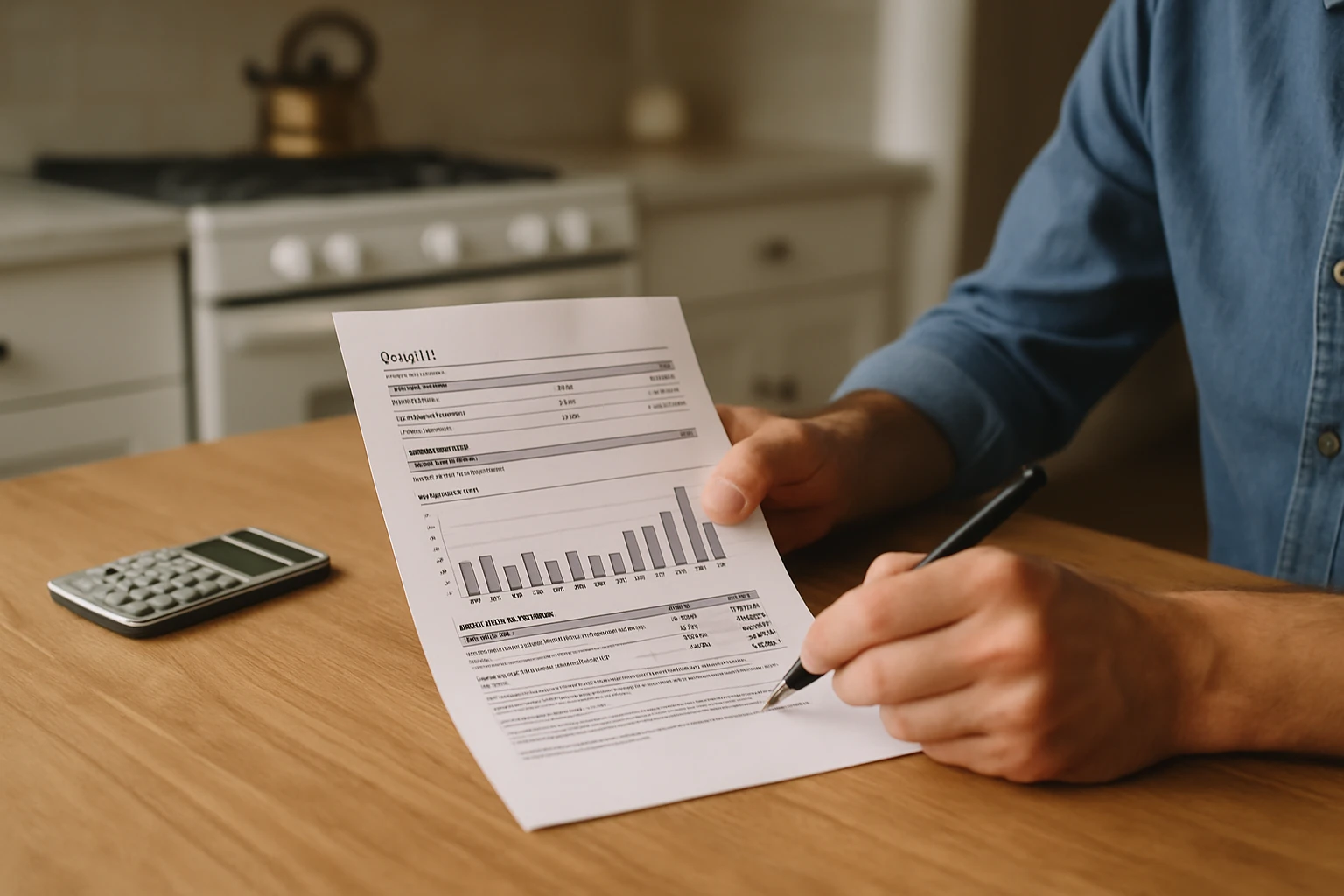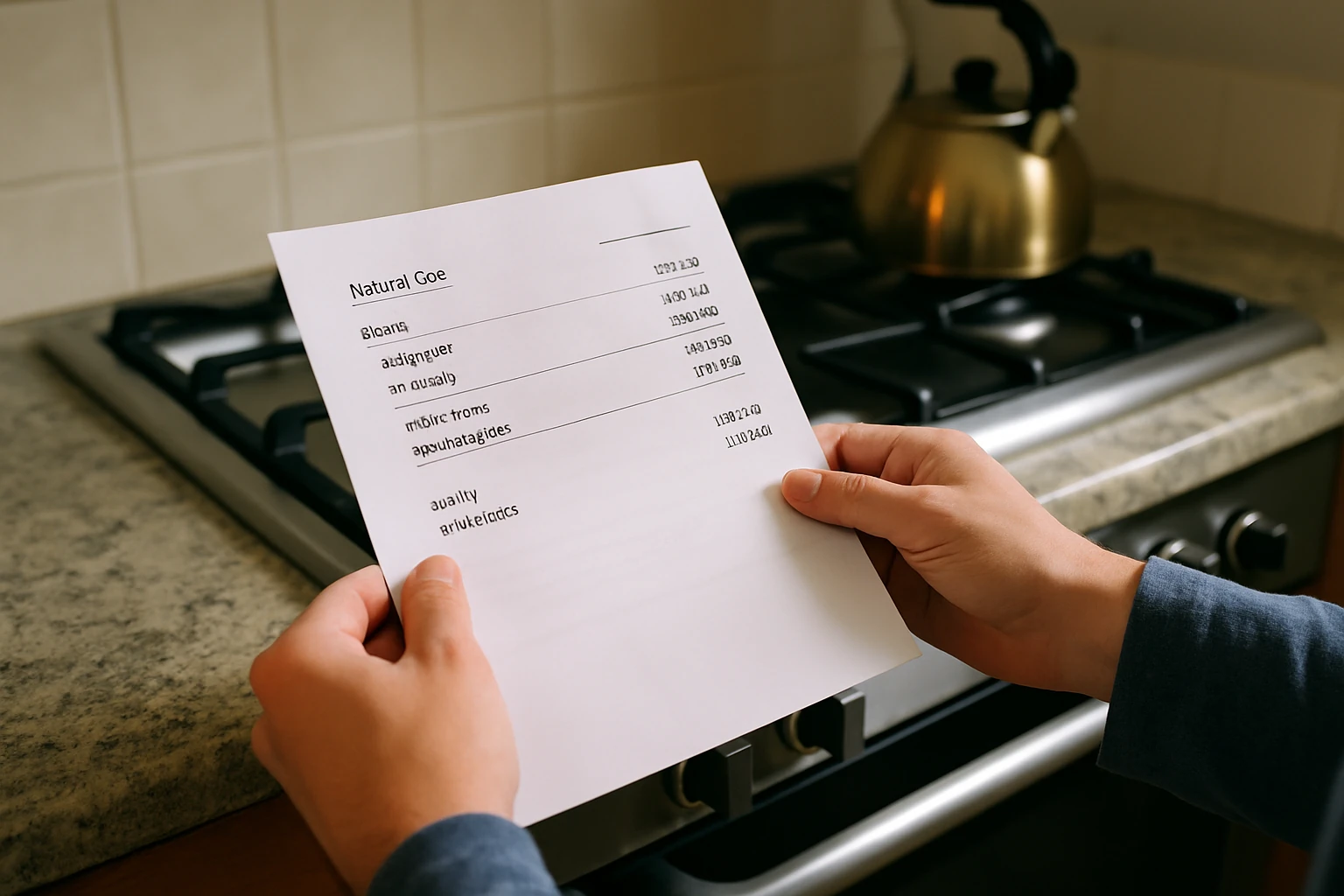
Start here: gas is billed by energy, not just by volume
If you've ever looked at your gas bill and thought, "Why are there so many units?" you're asking the right question. Electricity bills are mostly kWh. Gas bills can show cubic feet, CCF, MCF, BTUs, therms, and a mysterious conversion factor.
The key idea is simple: natural gas is a fuel, and you ultimately care about how much heat energy you're getting. Volume (cubic feet) is the "how much flowed through the pipe" measure. Therms are the "how much usable heat energy that volume represents" measure.
For the full overview of how gas service and billing works, seeNatural Gas Explained. This article zooms in on the units.
Definitions: cubic feet, CCF, MCF, BTUs, and therms
Here are the plain-English definitions you can keep in your head.
Cubic feet (ft3)
A cubic foot is a unit of volume. Many residential meters record gas in cubic feet. Volume is useful, but by itself it doesn't tell you the exact heat content.
CCF and MCF
Utilities often bundle cubic feet into larger groups:
- CCF = 100 cubic feet (hundred cubic feet)
- MCF = 1,000 cubic feet (thousand cubic feet)
If you see CCF or MCF, don't panic--it's still just volume, summarized in a bigger unit.
BTUs
A BTU (British Thermal Unit) is a unit of heat energy. It's commonly used to describe appliance output (like a furnace or water heater).
Therms
A therm is also energy. 1 therm = 100,000 BTUs. Many residential gas bills charge per therm because it's a convenient "whole-number-ish" unit for household energy use.
If you're looking at your own bill while reading this, our bill walk-through istherms explained.
The conversion factor: why it exists and what it's doing
Here's the part utilities often don't explain well: the energy content of natural gas can vary slightly. It's still "natural gas," but the exact heat value per cubic foot can change based on supply sources and processing.
Because of that, many utilities measure your volume (CCF/MCF) and then apply a conversion factor to calculate therms. That's why your bill might show something like:
- Metered usage: 85 CCF
- Conversion factor: 1.05
- Billed usage: 89.25 therms
The exact numbers vary, but the structure is common. If the factor changes month to month, that's not automatically a red flag--it can be normal.
How to sanity-check the math on your gas bill
Most confusion comes from trying to do one "perfect" conversion and getting a different answer than the bill. Instead, aim for a sanity check that answers two questions:
- Do the units on the bill make sense for the meter type?
- Does the conversion logic match what the utility says it's doing?
Step 1: identify the billed unit
Some utilities show both volume and therms. Others show only therms. If you only see therms, the conversion may happen behind the scenes.
Step 2: look for the heat content / factor
It might be labeled "conversion factor," "therm factor," "BTU factor," or "heat content." If you find it, you can usually reproduce the therms calculation with basic multiplication.
Step 3: compare usage fairly
If you're comparing months, focus on therms per day. This matters especially in winter. Our winter spike guide ishere.
Why the math can look "off" even when it's correct
These are common reasons your quick math might not match the bill exactly:
- Rounding: the bill may round therms or factors to a certain decimal place.
- Billing period timing: the meter read date may not match the calendar month.
- Adjustments: corrected reads or prior-period adjustments can shift therms.
- Separate rate blocks: some utilities apply different rates to different usage tiers.
If you also feel confused by the non-usage charges, the clearest model isdelivery vs supply charges.
A quick cheat sheet: what each unit means
Keep one simple mental model: your meter often measures volume, but your bill prices energy. These units sit on either side of that conversion.
- Cubic foot (ft3): the base unit of volume.
- CCF: 100 cubic feet.
- MCF: 1,000 cubic feet.
- BTU: a unit of heat energy (British Thermal Unit).
- Therm: 100,000 BTUs (an energy unit).
The "why" behind therms: heat content per cubic foot can vary slightly across sources and over time. Billing in therms helps align what you pay with the energy you received.
A worked conversion example (CCF to therms)
Utilities don't all present the exact same fields, but the structure is usually: volume x conversion factor = therms. Here's a concrete example using round numbers.
Imagine your bill shows:
- Usage: 45 CCF
- Heat content / therm factor: 1.03 therms per CCF
Then your therms calculation is:
45 CCF x 1.03 = 46.35 therms
If your bill shows 46.3 therms, the difference is probably rounding. If it shows something materially different, look for:
- Different read dates than you assumed
- A second factor (pressure/temperature compensation)
- A different heat-content value for that period
- Prior-period adjustments or corrected reads
The goal isn't to match the penny. The goal is to confirm you understand the unit chain and can tell whether your bill is based on volume, energy, or both.
How to compare usage fairly (month-to-month and home-to-home)
The most common mistake with gas comparisons is using the wrong denominator. A better comparison stack looks like this:
- Therms per day to account for billing days.
- Therms per heating degree day (if you track it) to account for weather.
- Therms per square foot only as a rough cross-home comparison, since insulation, leakage, and occupancy matter.
If you're comparing gas heat to electric heat, make sure you're comparing delivered heat, not just raw energy units. Furnaces and heat pumps have different efficiencies. A practical walkthrough is ingas vs electric heating cost comparison.
Finally, if you're using this unit knowledge to debug a winter spike, the actionable guide iswhy gas bills are high in winter.
Meter reading vs billed usage: why they don't always match
Another common source of confusion is comparing a meter reading to a bill line and expecting the numbers to match exactly. They're related, but they aren't always the same thing.
1) Meter reads are point-in-time snapshots
Your meter shows a running total of volume delivered (often in cubic feet). Your bill covers a billing period with a start read and an end read. If you check the meter on a random day, you're not necessarily aligned with the utility's read dates.
2) Bills may include estimated reads
If the utility estimates a read one month and then gets an actual read the next month, your billed usage can "catch up." That can make it look like the conversion factor changed or the unit math is wrong, when the real cause is timing.
3) The billed unit might be energy, not volume
Even if your meter is volume-based, your bill might show only therms. In that case, the utility is converting volume to energy behind the scenes using heat content and (sometimes) pressure/temperature adjustments.
If your goal is to understand the total bill (not just usage), tie these unit concepts back tosupply vs delivery chargesso you can see which parts scale with therms and which don't.
Why some bills show CCF and others show MCF
CCF and MCF are just different groupings of cubic feet, so why do utilities pick one over the other? Most of the time it's simply convention and readability.
- High-usage regions: MCF keeps the numbers smaller (e.g., 12 MCF instead of 120 CCF).
- Legacy billing systems: older templates may use one unit consistently across decades.
- Metering practice: the "native" meter multiplier or read format may align more naturally with one unit.
If you're thinking "CCF sounds familiar," you might be remembering water bills. That's a different utility and often a different scale. A water CCF guide is here.
The key takeaway: once you know whether the bill is showing volume (CCF/MCF) or energy (therms), the rest becomes a bookkeeping problem, not a mystery.
Common misconceptions about gas units
Frequently asked questions
MCF means 1,000 cubic feet of gas (a volume unit). Many utilities measure volume in cubic feet and then convert it to therms for billing.