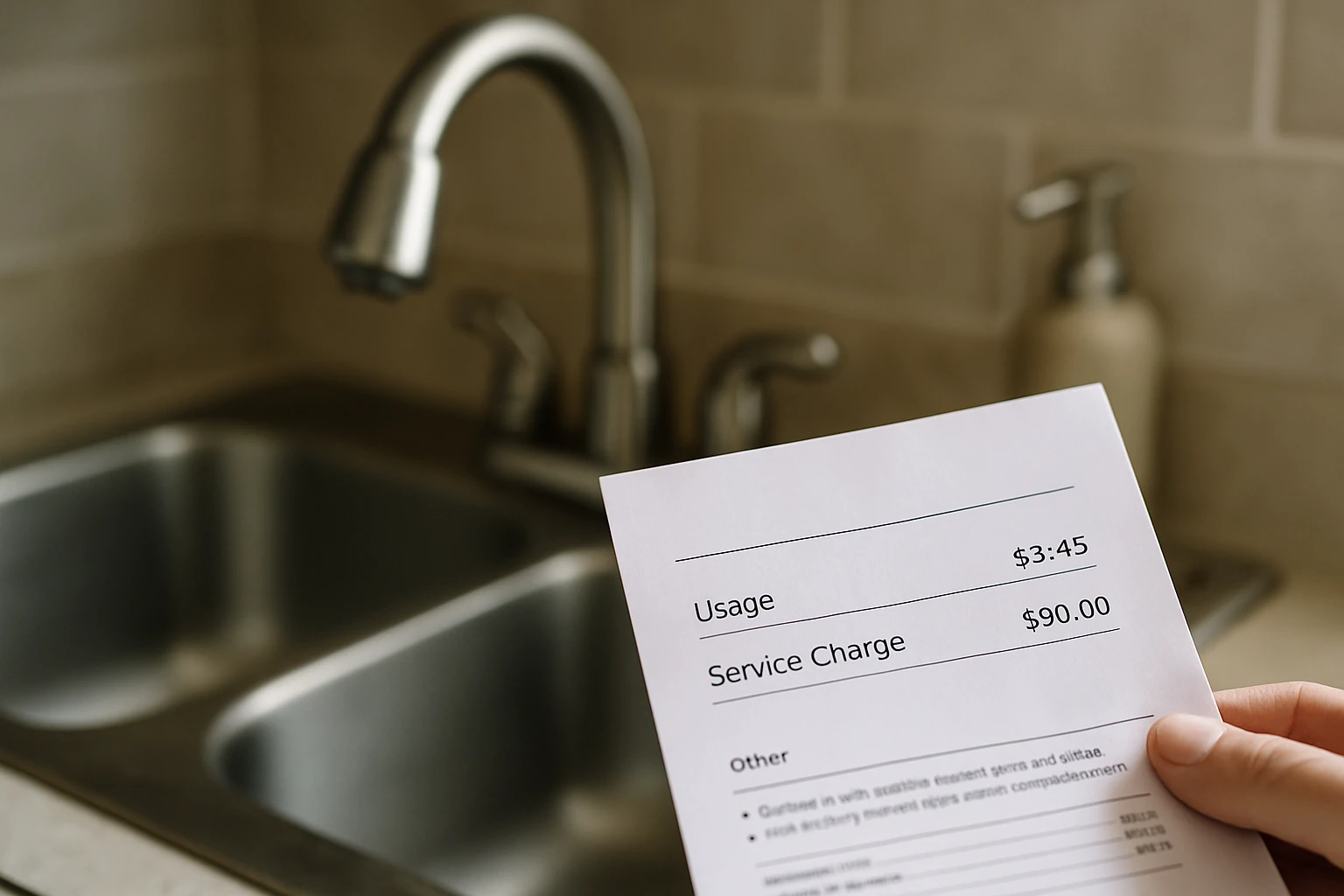
The simple idea: what sewer charges pay for
Many people expect sewer to be a small add-on. Then they see the bill and think, "Why is the sewer line so high?"
The simplest explanation is this: water service delivers clean water, and sewer service takes used water away and treats it. Treatment plants, pipes, pumps, and maintenance cost money every day, even when your household uses less.
If you want the full water-billing model first, start withWater Service Explained.
The most common ways sewer is calculated
Sewer billing varies by city, but most residential bills use one of these patterns.
1) Usage-based (tied to your water usage)
Many utilities assume most water that comes into the home eventually goes out through the sewer. So they use your measured water usage (in CCF, kgal, or gallons) as the basis for sewer charges.
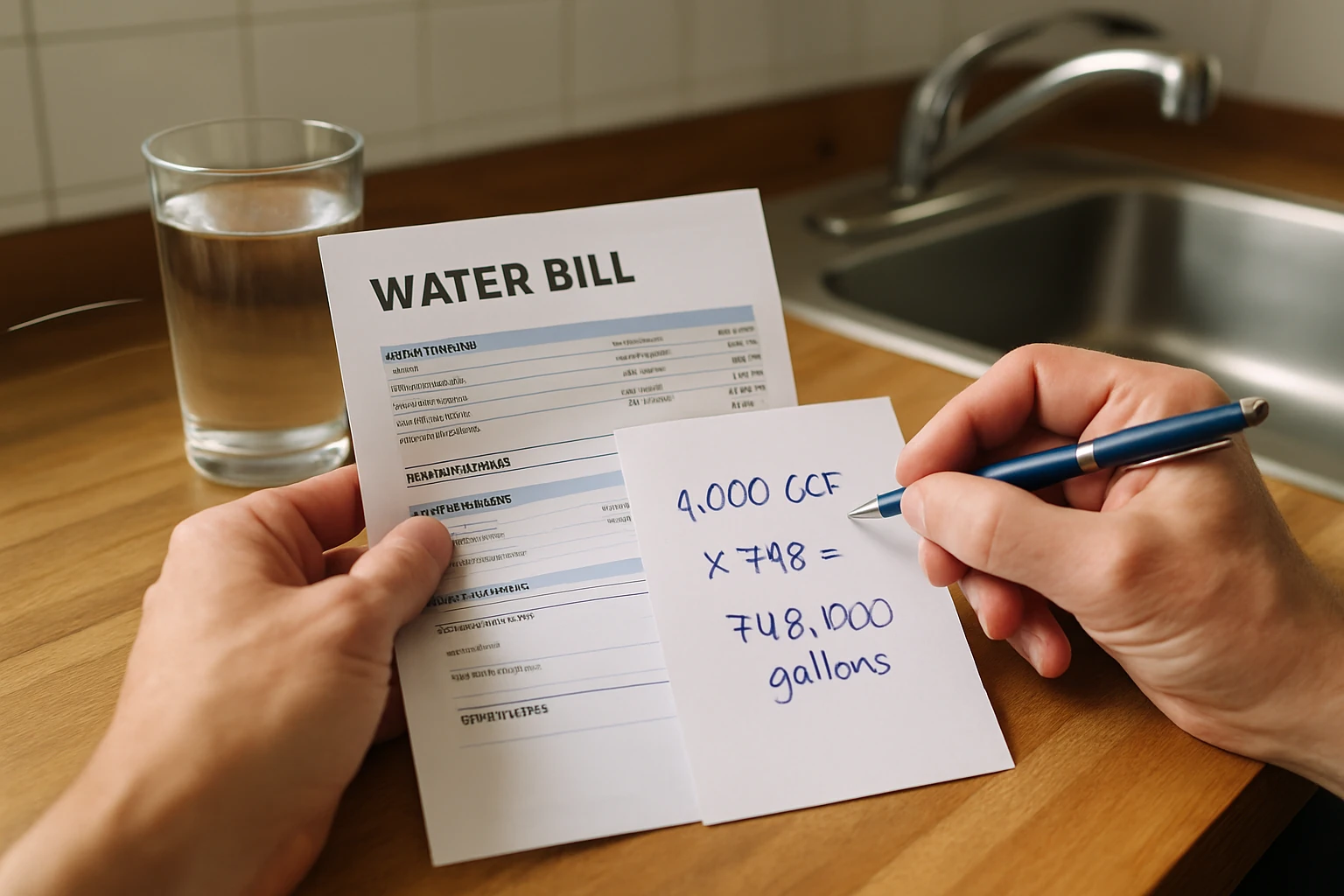
If you see CCF and want to translate it into gallons, seewhat CCF means.
2) Winter average (to avoid charging sewer for outdoor watering)
Some utilities calculate sewer charges using a "winter average" of your water usage, when outdoor watering is minimal. That way, summer lawn watering doesn't inflate sewer charges.
3) Flat fees, minimums, and caps
Many bills include a fixed monthly sewer fee, a minimum charge, or a cap on billable sewer usage. These rules are usually described in the fine print or on the utility's rate sheet.
Why sewer can cost more than water
It feels backward, but it's common. Sewer can be higher because:
- Treatment is expensive. Wastewater has to be cleaned to protect public health and waterways.
- Fixed costs are large. Pipes, pumps, and plants exist whether you use 2 CCF or 12 CCF.
- Billing structures differ. Water may have cheaper base tiers while sewer has higher fixed fees.
If your bill increased suddenly, the first step is to check whether your measured water usage increased too. This guide walks you through the common causes:why water bills suddenly increase.
What to check on your bill (so it feels less mysterious)
1) What unit is used?
Look for CCF, kgal, or gallons. If you see CCF, our quick explainer ishere.
2) Is sewer tied to usage or winter average?
If sewer is tied to usage, summer watering can raise sewer unless your utility uses winter averaging or a separate irrigation meter.
3) Are there minimums or caps?
Some utilities cap sewer at a certain usage level or apply minimum charges. That can make the "rate per unit" look strange when usage is very low.
Why leaks can raise both water and sewer
Here's the part that surprises people: if sewer is tied to your water usage, a leak can inflate sewer charges too--even if the leak never "reaches" the treatment plant.
Toilets are a common silent leak. If you want a quick test, seethis toilet leak test.
If you'd rather start from the meter and prove continuous flow, seehow to read a water meter.
Common misconceptions about sewer charges
- "Sewer is double-charging me." Usually it's charging for a different service: wastewater collection and treatment.
- "Outdoor water always counts for sewer." Sometimes it does, sometimes it doesn't. Winter averaging and irrigation meters are two common exceptions.
- "If my water is low, sewer should be $0." Sewer often has fixed infrastructure costs, so there's usually a base fee.
Frequently asked questions
Sewer service includes wastewater collection and treatment, which can have high fixed infrastructure and operating costs. Many utilities also structure sewer rates differently than water rates, so the sewer line can be higher even when usage is modest.