The short answer
Aux Heat (auxiliary heat) usually means your heat pump is running backup heat to keep up with demand--often during cold snaps, defrost cycles, or when you raise the thermostat several degrees at once.
Emergency Heat is typically a manual modeyou switch on when the heat pump itself can't run properly (for example, it's malfunctioning). In many homes, emergency heat uses the same backup heater as aux heat--but forces the heat pump to stay off.
The "why is my bill higher?" part is simple: backup heat is oftenelectric resistance heat, which can be much more expensive per hour than normal heat-pump operation.
If you want the bigger HVAC picture first, start at Heating & Cooling Explained.
Table of contents
The problem: "Aux Heat" showed up and now the bill is higher
Most people notice aux heat the same way: it appears suddenly on the thermostat, the system seems to run longer, and the next bill feels out of proportion.
The external problem is obvious: higher usage. The internal problem is the one that keeps you up: "Is something broken?"And the philosophical problem is fair: this shouldn't require a dictionary.
Here's the reassuring part: aux heat is often normalin cold weather. The goal of this guide is to help you tell the difference between "normal backup heat" and "something that needs attention."
The simple model: heat pump first, backup heat second
A heat pump is like an air conditioner that can run in reverse. Instead of making heat by burning fuel, it moves heatfrom one place to another.
In mild-to-cool weather, this is incredibly efficient. But when the outdoor temperature drops, there is less heat available outside, and the system has to work harder to move it indoors.
That's why many systems have a "Plan B": backup heat (often electric heat strips). Your thermostat can call for backup heat when it thinks the heat pump alone won't keep up.
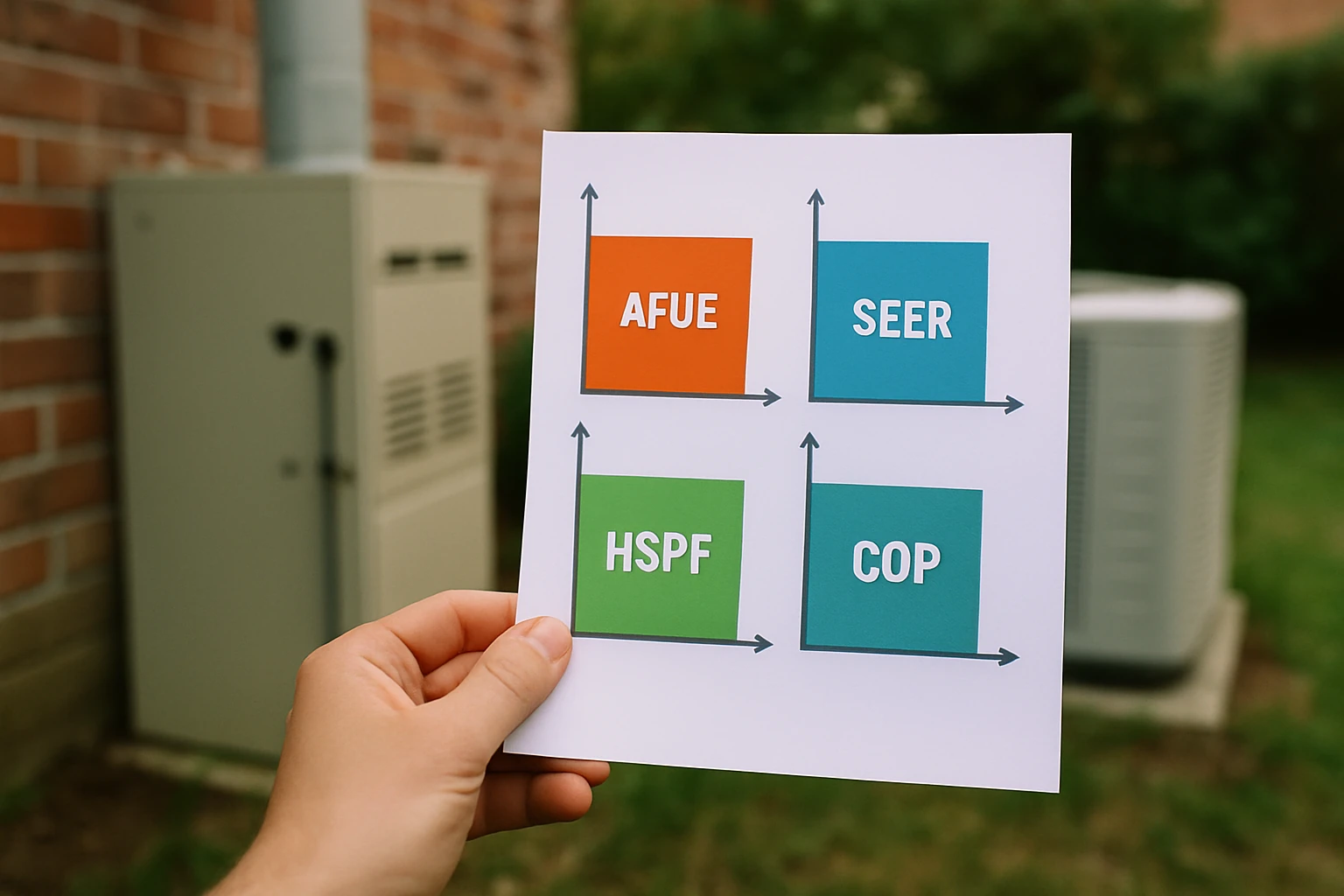
If efficiency ratings like HSPF or COP feel like alphabet soup, you'll like our plain-English ratings guide.
What Aux Heat usually means
Aux Heat usually means the thermostat is using backup heat to help the heat pump maintain the set temperature. Think of it like a helper engine.
Common triggers
- Cold snaps: the heat pump can't deliver heat fast enough.
- Big thermostat jumps: raising the setpoint several degrees may trigger backup heat to recover faster.
- Defrost cycles: in cold, humid weather, outdoor coils can ice up. The system defrosts and may use backup heat to keep indoor air comfortable.
- System settings: some thermostats are configured to use aux heat more aggressively than others.
Why it can be expensive
Backup heat is often electric resistance heat. Resistance heat is good at making heat quickly, but it's also a straightforward conversion of electricity into heat--so it can drive kWh usage fast.
If your winter electric bill spiked, the broader explanation is in Why Is My Electricity Bill So High in Winter?It explains how heating load dominates many winter bills.
What Emergency Heat means (and when it's appropriate)
Emergency Heat is usually a manual setting that tells the system: "Don't use the heat pump. Use backup heat only."
People sometimes turn it on because they see it on the thermostat and assume it's "stronger." But emergency heat is best thought of as afallback mode, not an efficiency mode.
When emergency heat is reasonable
- The outdoor unit is damaged, frozen, or not running correctly.
- You're advised to use it temporarily while the heat pump is serviced.
- The system is in a condition where running the heat pump would be harmful.
When emergency heat is usually a mistake
- You want the home to warm up faster after a setback.
- You think it will reduce energy usage in cold weather.
- You're using it as a "default" heating mode all winter.
If you're comparing gas heat and electric heat (including heat pumps), the bigger context is Gas vs Electric Heating: Cost Comparison.
What to look for (without becoming an HVAC tech)
You don't need special tools to get clarity. You just need to observe a few patterns.
1) How often does aux heat appear?
If it appears only during very cold mornings or big thermostat jumps, that's often normal. If it appears constantly even on mild days, it's a signal to look closer.
2) Does the system struggle to maintain temperature?
If the home never reaches the setpoint, the system might be undersized, misconfigured, or losing heat faster than the system can supply it.
One underrated cause is duct leakage. Lost conditioned air means longer runtime and more backup heat. See Duct leaks explained.
3) Is the thermostat "helping" too aggressively?
Some thermostats are configured with a lockout temperature (below which they use aux heat) or a "heat pump balance" setting. If aux heat is coming on earlier than you expect, it may be a configuration issue.
Bill sanity checks that reduce panic
A bill can feel "wrong" even when nothing is broken. These checks help you separate timing and pricing from true usage changes.
Check 1: kWh per day
Look at total kWh and billing days, then compute kWh per day. A longer billing cycle can inflate the total even if daily usage is steady.
Check 2: compare similar weather
Compare a cold week to a cold week, not a cold week to a mild week. If you're seeing aux heat during a cold snap, higher usage is expected.
Check 3: connect changes to behavior
Guests, work-from-home, a new baby, or a schedule change can all shift comfort decisions. Bills follow comfort.
If summer bills are your bigger pain point, the sister guide is Why Is My Electricity Bill So High in Summer?.
Common misconceptions
- "Emergency heat warms faster, so I should use it more."Emergency heat often uses resistance heat only. It can feel fast, but it's usually expensive.
- "Aux heat always means something is broken."Not necessarily. It's commonly triggered by cold snaps and recovery.
- "Cranking the thermostat heats faster."Most systems don't "ramp" like that. A bigger setpoint jump can simply trigger backup heat and longer runtime.
If you want the "ratings" side of the story--what SEER, AFUE, HSPF, and COP mean--go to the efficiency ratings guide.
FAQs
Quick answers to common thermostat questions.
Frequently asked questions
Aux heat (auxiliary heat) means your system is using backup heat to help the heat pump keep up--often during cold weather, defrost cycles, or large thermostat setpoint changes.