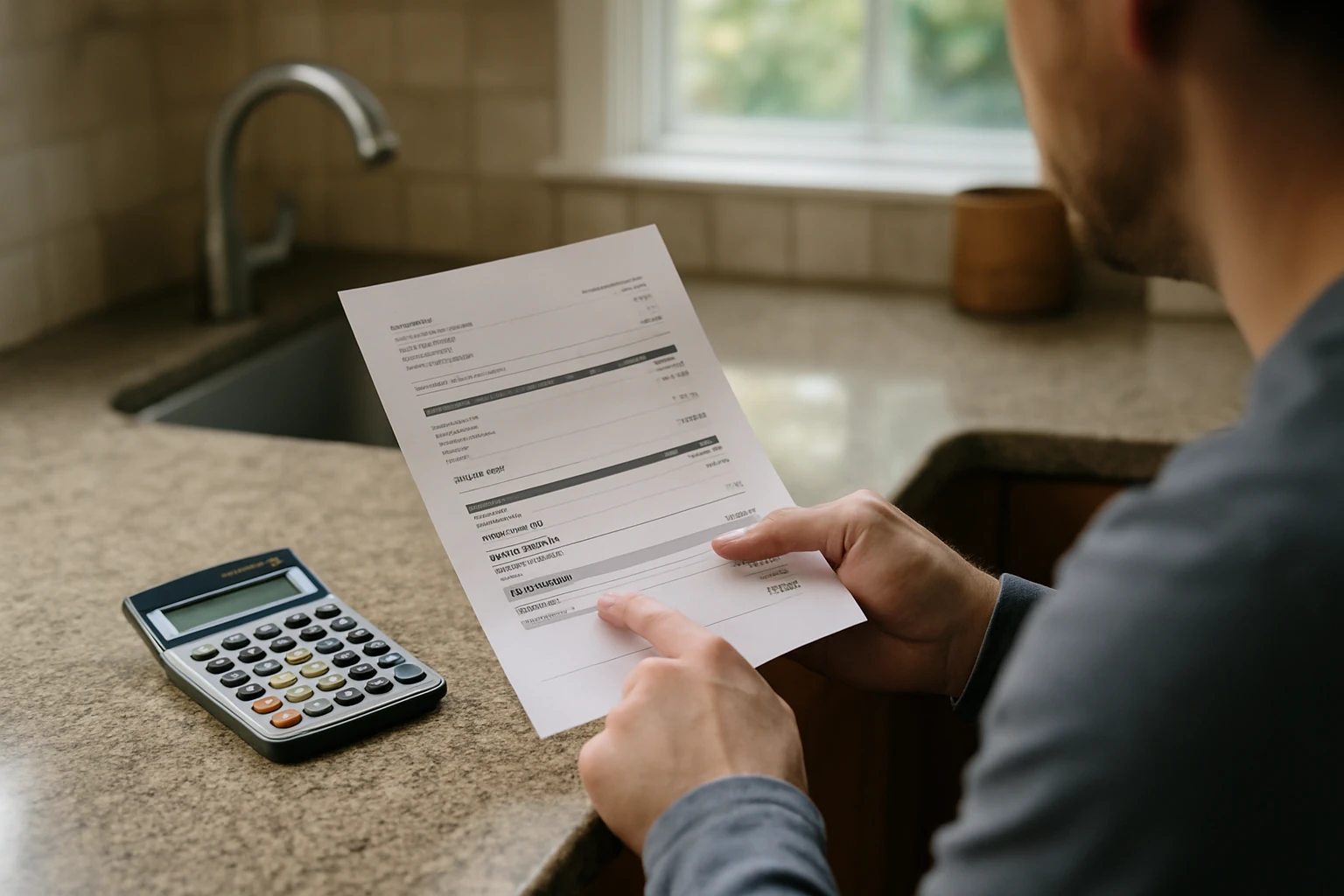
The problem: your sewer charge stays high even when your summer use drops
You cut back on outdoor watering, your water use goes down, but the sewer charge barely moves. That mismatch makes a lot of people think the bill is wrong.
In most cities, the sewer line is not metered directly. Instead, the utility estimates your wastewater based on a winter average or a fixed seasonal formula. Once you understand that system, the charge makes more sense.
If you want the big picture first, start with Water Service Explained.
Table of contents
The short answer
Sewer averaging means your sewer charge is based on your winter water use, not your current month. The logic is simple: winter use mostly goes down the drain, while summer use often goes outdoors.
That is why your sewer line can stay steady even when your summer water use drops.
How sewer averaging works
Many utilities set your sewer charge based on average water use during a winter period, often called the winter quarter. That winter average is then used for the rest of the year.
Why winter?
Winter water use is mostly indoor. Indoor use usually becomes wastewater, so it is a decent proxy for sewer flow.
Different approaches utilities use
- Winter average: averages a set of winter bills.
- Annual average: averages the last 12 months.
- Fixed allowance: a set base plus usage beyond it.
If you want a deeper breakdown of the sewer line itself, see how sewer charges work.
Where it appears on the bill
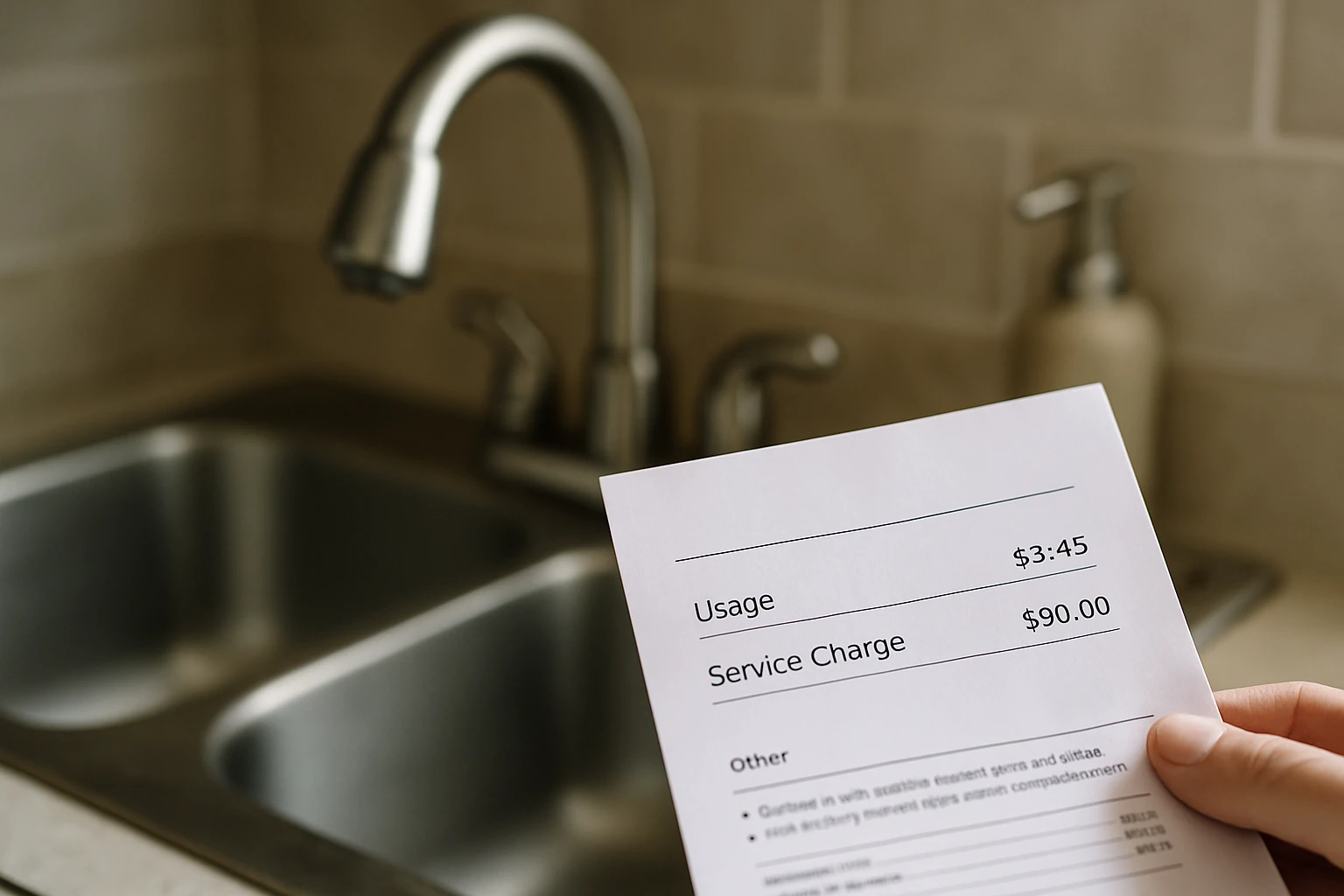
Sewer lines are often labeled as "Sewer", "Wastewater", or "Sanitary". Some bills show a separate sewer usage quantity (CCF or gallons), even though that number is calculated, not directly metered.
If the unit is unfamiliar, start with what CCF means on a water bill.
Your bill may also include a separate base fee. That is a different line than sewer averaging. See water service charges explained.
What can raise your average
The winter average can creep up when something unusual happens during the averaging period.
- Silent leaks: a running toilet can inflate the average.
- Move-in spikes: new occupants often use more water at first.
- Outdoor use in winter: rare, but it counts if it happens.
- Estimated reads: a correction later can raise the average.
If you suspect a leak, check the water meter leak indicatoror the quick test in is your toilet running.
How to estimate your sewer charge
Find your winter usage average in CCF or gallons, then multiply it by your sewer rate per unit. If the bill shows a base fee, add it after the usage portion.
This simple estimate helps you separate a sewer average issue from a sudden usage change. For a full troubleshooting flow, see why your water bill suddenly increased.
Common misconceptions
- "Sewer should drop when watering stops." Not if the sewer charge is based on winter average.
- "Sewer is measured directly." It is usually calculated from water use.
- "My sewer line is a mistake." It is a normal part of most bills.
If your winter bill is higher than expected, this related guide can help: why water bills rise in winter.
FAQs
Short answers to the most common sewer averaging questions.
Frequently asked questions
Many utilities set sewer charges based on a winter average or a fixed allowance, so the sewer line stays steady even when monthly water use changes.