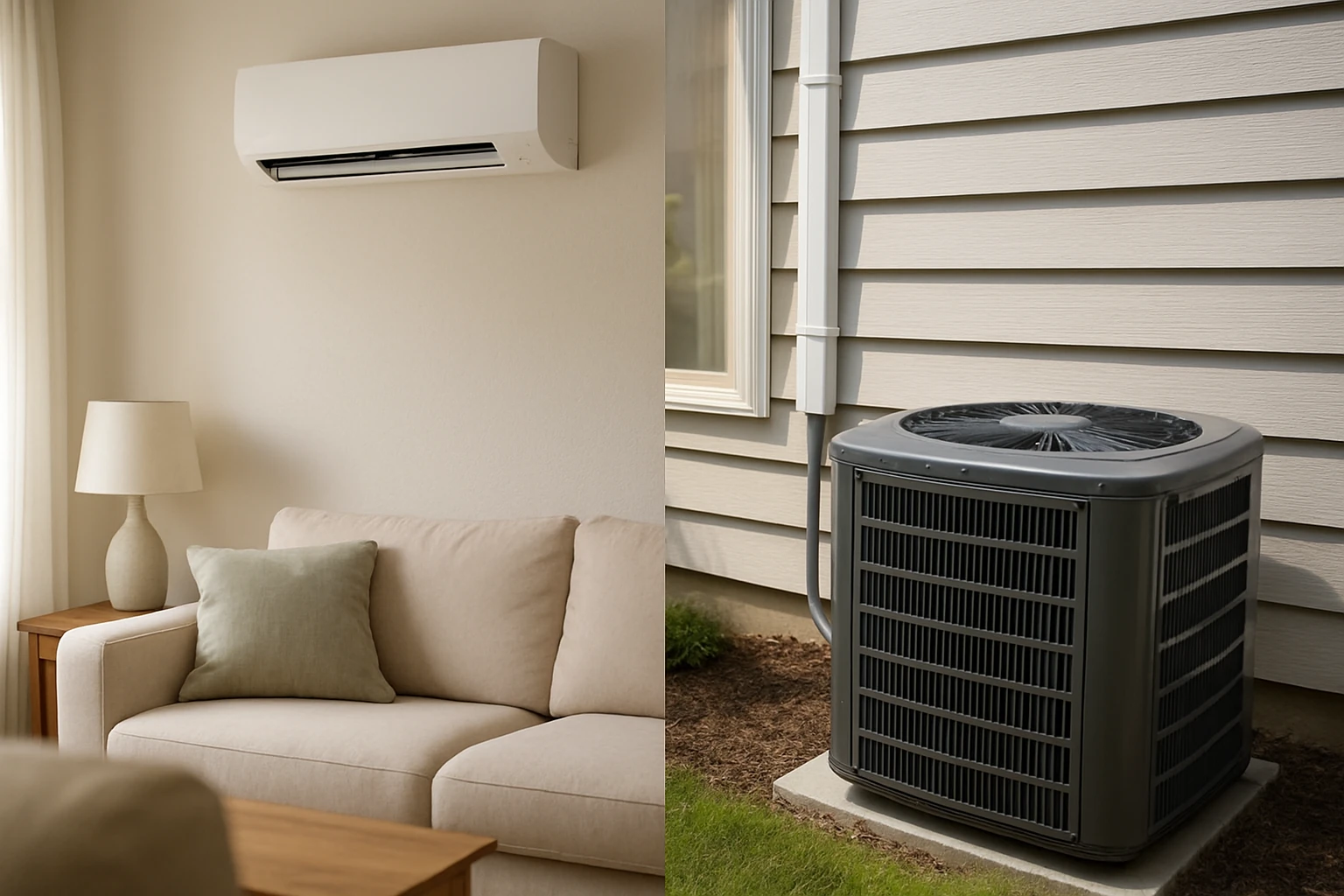
The quick answer
Single-stage systems are simple and affordable, but they cycle on and off at full power. Two-stage systems run on low most of the time and switch to high only when needed, which can improve comfort and humidity control. Variable-speed systems adjust output in many small steps and typically provide the steadiest comfort when the home and ductwork are well designed.
If ductwork is leaking or the system is oversized, even the best equipment can struggle. See duct leaks explained.
Table of contents
What single-stage, two-stage, and variable-speed mean
Single-stage
The system is either fully on or fully off. When the thermostat calls, it runs at full output until the setpoint is reached.
Two-stage
Two-stage systems have a low and a high setting. Most of the time the system runs in low stage and only uses high stage when the load is heavy.
Variable-speed (inverter or modulating)
Variable-speed systems can adjust output in many small steps. The goal is to match the home demand closely, which often means longer run times at lower power.
How these choices affect your bill
Your bill is driven by runtime and energy rates. Higher efficiency can reduce usage, but only if the system is sized and installed correctly.
Variable-speed equipment can use less power over time because it avoids frequent start-stop cycles and runs more steadily. Two-stage equipment can capture some of that benefit at a lower cost.
If your bills spike seasonally, these explain the common drivers: summer spikesand winter spikes.
Comfort and temperature stability
Single-stage systems tend to create bigger temperature swings and more noticeable bursts of airflow. Two-stage and variable systems typically keep temperatures more stable because they run longer at lower output.
Comfort is also tied to air delivery. If some rooms never feel right, the issue may be ducts or insulation rather than the equipment tier.
Humidity control and run time
Longer run times at lower output can improve dehumidification in cooling season. That is why two-stage and variable systems are often preferred in humid climates.
If your home feels cold but clammy, short cycling is a common cause. Equipment tier helps, but sizing and airflow matter more.
Noise differences
Variable-speed systems are usually quieter because they spend most of their time at lower output. Two-stage systems can be quieter than single-stage because they run on low during mild conditions.
Duct noise can still be an issue if the system is pushing too much air through undersized returns.
How efficiency ratings fit in
Efficiency ratings like SEER, HSPF, and AFUE measure different parts of system performance. A higher rating can reduce energy use, but only if the system is matched correctly to the home.
If you want a plain-English breakdown, see AFUE vs SEER vs HSPF vs COP.
Upfront cost and value
Single-stage systems cost the least upfront. Two-stage systems are a common value upgrade. Variable-speed systems cost the most and make the most sense when comfort and humidity control are top priorities.
If you are also choosing between ducted and ductless systems, compare those first:ductless mini-split vs central air.
Special notes for heat pumps
Staging matters more with heat pumps because output changes with outdoor temperature. Variable-speed heat pumps can reduce the need for backup heat and improve comfort in shoulder seasons.
If you see Aux Heat or Emergency Heat on your thermostat, read Aux Heat vs Emergency Heatfor a plain-English explanation.
Questions to ask a contractor
- How did you size the system and can I see the load summary?
- What airflow target are you setting and how will you verify it?
- Will you measure static pressure after install?
- If this is a heat pump, what is the backup heat strategy?
- Which thermostat and controls are included?
FAQs
Quick answers to common staging questions.
Frequently asked questions
Not always. Variable-speed systems can improve comfort and humidity control, but savings depend on correct sizing, duct condition, and local energy rates.