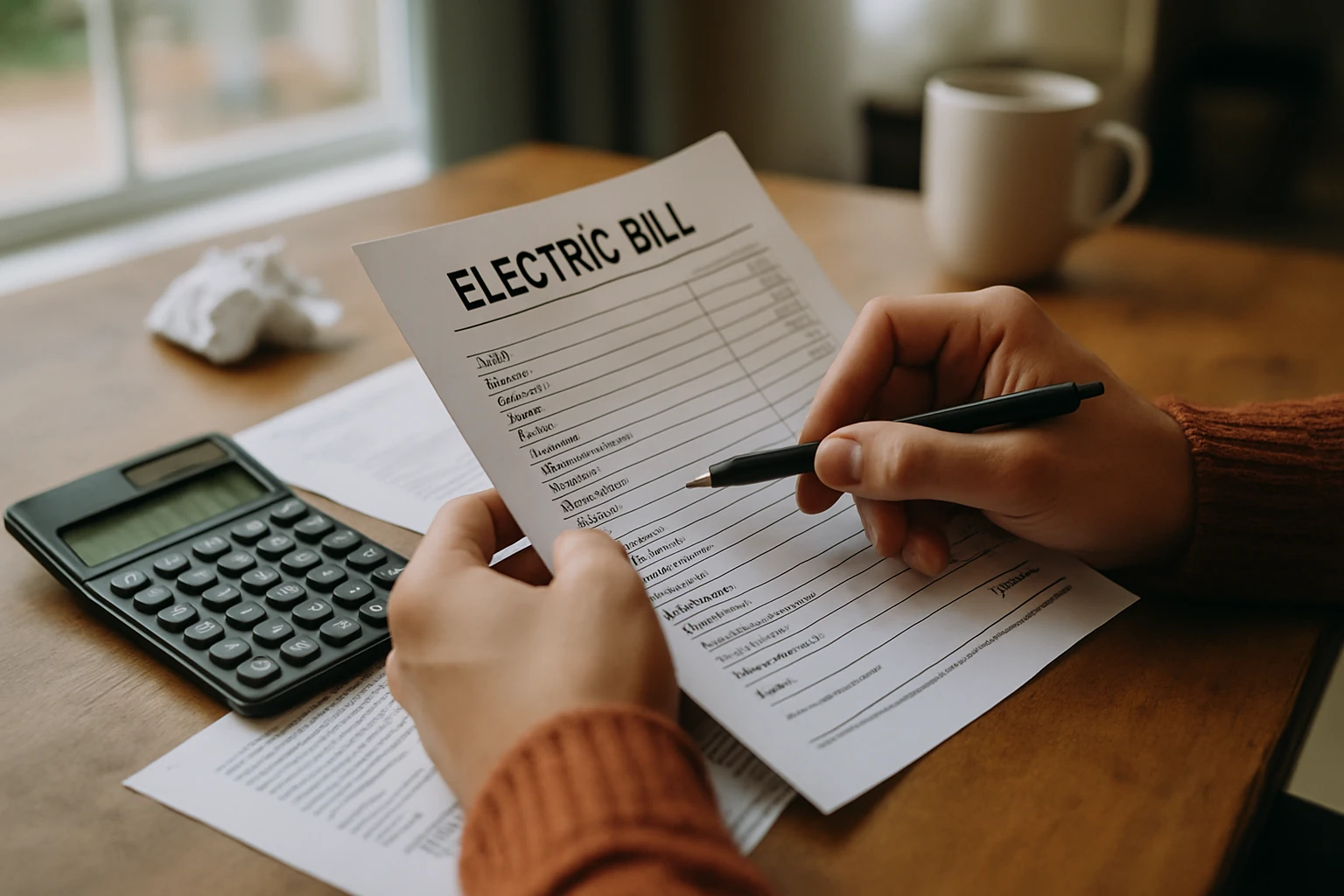
Why reading your meter is worth it
If your bill ever feels too high, the meter is the starting point. Knowing how to read it gives you a simple reality check: "Does the usage on the bill match what my meter shows?"
It also helps you spot unusual usage early. If you catch a spike mid- month, you can troubleshoot before the bill arrives.
Not sure what the meter is measuring? Read what a kilowatt-hour isfirst -- it makes the numbers feel less abstract.
Step 1: Identify your meter type
Most homes have one of these:
- Analog dial (mechanical) meter with several small dials.
- Digital meter that displays a kWh number.
- Smart meter (often digital) that can send readings automatically to the utility.
If your utility provides an online usage portal, you likely have a smart meter -- but the meter face still matters if you want to verify with your own eyes.
How to read an analog dial electric meter
Dial meters are the most error-prone because the dials alternate direction. Here is the reliable approach:
- Read the dials left to right.
- If a pointer is between two numbers, write down the lower number.
- If a pointer looks exactly on a number, check the dial to the right. If the right dial has not passed zero, use the lower number.
Take a clear photo when you read it. That makes it easier to compare with the bill later.
How to read a digital electric meter
Digital meters show a number directly, usually labeled kWh.
Some digital meters cycle through multiple screens. Wait until you see the total kWh reading (not voltage or test codes), then write down the full number.
A practical habit: take the reading at the same time of day once per week. That gives you a simple "usage trend" without any special tools.
How to use smart meter data (without getting overwhelmed)
Smart meters often give you daily or hourly usage in an online portal. That can be incredibly helpful -- but only if you focus on a few things.
- Look for your highest-usage day each week. What happened that day?
- Compare weekdays vs weekends (different routines show up fast).
- If you have time-of-use rates, watch your peak-hour usage.
If your bill varies a lot month to month, our utility bills guideexplains how rate structures can change the total.
How to calculate your usage from two readings
Meter usage is just subtraction.
| Reading | Example |
|---|---|
| Previous reading | 48,120 kWh |
| Current reading | 48,540 kWh |
| Usage | 420 kWh |
If your utility bills monthly, you can compare this calculated usage to the kWh shown on the statement. Small differences can happen if you read the meter on a different day than the utility.
How to verify your bill using the meter
When the bill arrives, find the "previous reading" and "current reading" lines. Then:
- Confirm the bill says "actual" (not estimated) if possible.
- Compare your own reading around the same date.
- If something seems off, confirm the billing period length first.
If you want to understand how the meter reading turns into line items and fees, readour electric bill breakdown.
Frequently asked questions
Monthly is enough to verify bills. Weekly readings are helpful if you are troubleshooting a spike or trying to understand your usage pattern.