You're not imagining it
You open your electric bill and your stomach drops. Nothing feels different -- you did not buy a new appliance, you did not move, and you are not mining crypto in the garage. So why does the bill look like it belongs to someone else?
In most homes, a sudden spike is rarely one big mistake. It is several small changes adding up quietly. Once you know where to look, the mystery makes sense -- and you can take control.
If you want a foundation first, see our explainer on electricity basics and how bills are built.
Seasonal changes you did not notice
Small seasonal shifts change how much electricity your home uses -- often without you realizing it. Shorter days mean lights stay on longer. Cooler nights trigger heating. Hotter days stretch AC run time. Higher humidity makes dehumidifiers and ACs work harder.
- Shorter daylight: more lighting hours
- Cold snaps: heat pumps/resistance heat run longer
- Heat waves: AC cycles extend and stack
- Humid days: dehumidifiers or AC remove moisture
Extreme weather and temperature swings
Your bill reacts more to extremes than averages. A few unusually hot days, a sudden cold snap, or a one-week heatwave can spike a bill. HVAC systems do not ramp linearly -- they run aggressively to catch up to your thermostat setting, especially in older or inefficient homes.
- Poor insulation or leaky ducts amplify the spike
- Older systems run longer for the same result
- Big thermostat swings increase runtime more than expected
Your HVAC may be working overtime
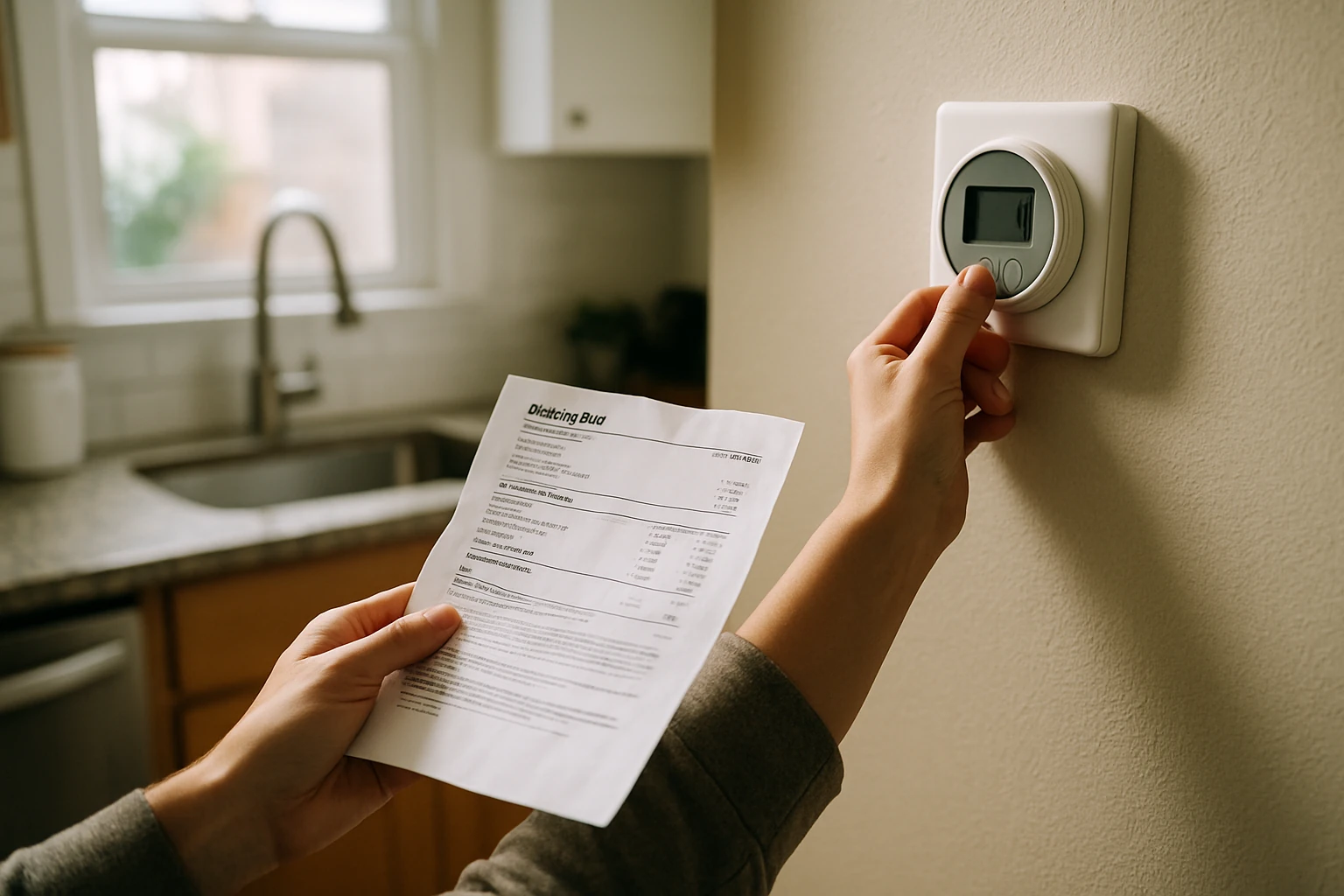
Heating and cooling is usually the number one electricity user. Small issues quietly raise costs: clogged filters, leaky ductwork, aging equipment, or a thermostat set lower (or higher) than you realize. A "just one degree" change matters more than it seems.
Learn the basics of systems and efficiency ratings in our HVAC explainer to see where the kWh go.
Phantom power and always-on devices
Homes are full of devices that draw power when "off": TVs in standby, game consoles, cable boxes, routers, smart home hubs, and idle chargers. Individually small -- together, a 24/7 trickle that never stops.

Utility factors: rates and time-of-use pricing
Sometimes your usage did not increase -- your price did. Many utilities use time-of-use (TOU) pricing where electricity costs more during peak hours. Two identical months can cost different amounts purely due to price per kilowatt-hour.
- Peak hours cost more than off-peak
- Seasonal rates can shift in summer/winter
- Supply and delivery charges may change independently
See our overview of utility bill line items for how rate plans affect totals.
Estimated vs. actual readings
A "normal" bill followed by a shocking one can be an estimate catch-up. If last month was estimated low, this month may include the make-up usage after an actual meter read. This is common if you do not yet have a smart meter that reports daily usage.
How to read your bill (plain English)
Focus on four lines: total kWh, rate per kWh, billing period length, and comparisons (last month/last year). If usage stayed flat but cost rose, it is likely a rate issue. If kWh rose, something in your home changed -- even subtly.
For kWh basics, see what kWh means on a bill.
Month-to-month comparison checklist
- Was the weather different?
- Did AC or heat run more hours?
- Did someone work from home more?
- Did we add or revive an old appliance?
- Did rates or plan type change?
- Was the billing period longer?
The clues are already on your statement -- no guesswork required.
What you can do right now
- Adjust thermostat by 1-2 degrees
- Unplug unused chargers and devices
- Run laundry/dishwashers during off-peak hours
- Use fans before lowering AC further
- Turn off lights in unused rooms
Medium-term fixes that pay back quickly
- Swap remaining bulbs for LEDs
- Install a smart thermostat and use schedules
- Seal drafts and ducts; add insulation where thin
- Replace power-hungry legacy appliances
Small upgrades compound. If HVAC is the main driver in your climate, see efficiency ratings and options.
Could solar or backup power reduce spikes?
Even with perfect habits, prices trend upward over time as infrastructure costs and demand rise. Some households use small solar or battery setups to shave peak hours and stabilize costs.
- Partial grid-tied systems
- Small arrays offsetting peak periods
- Battery backup for the highest-cost hours
Common myths
- "Nothing changed, so the bill must be wrong." -- Weather, rates, or background usage usually explain it.
- "Solar is only for big homes." -- Smaller, hybrid setups are common for shaving peaks.
- "One appliance cannot matter that much." -- Several inefficient ones running quietly can.
Final thought
A high electric bill does not mean you failed. It means your home is reacting to changes -- some visible, some hidden. Once you understand why it happened, you are no longer guessing. You are in control.
Want to go deeper? Explore the utilities glossary and our guides on electricity and bill line items to build confidence for next month's statement.
Frequently asked questions
Usually a combination of weather extremes, increased HVAC runtime, rate changes, or an estimated reading being corrected. Check kWh, rate, and billing period length to isolate the cause.