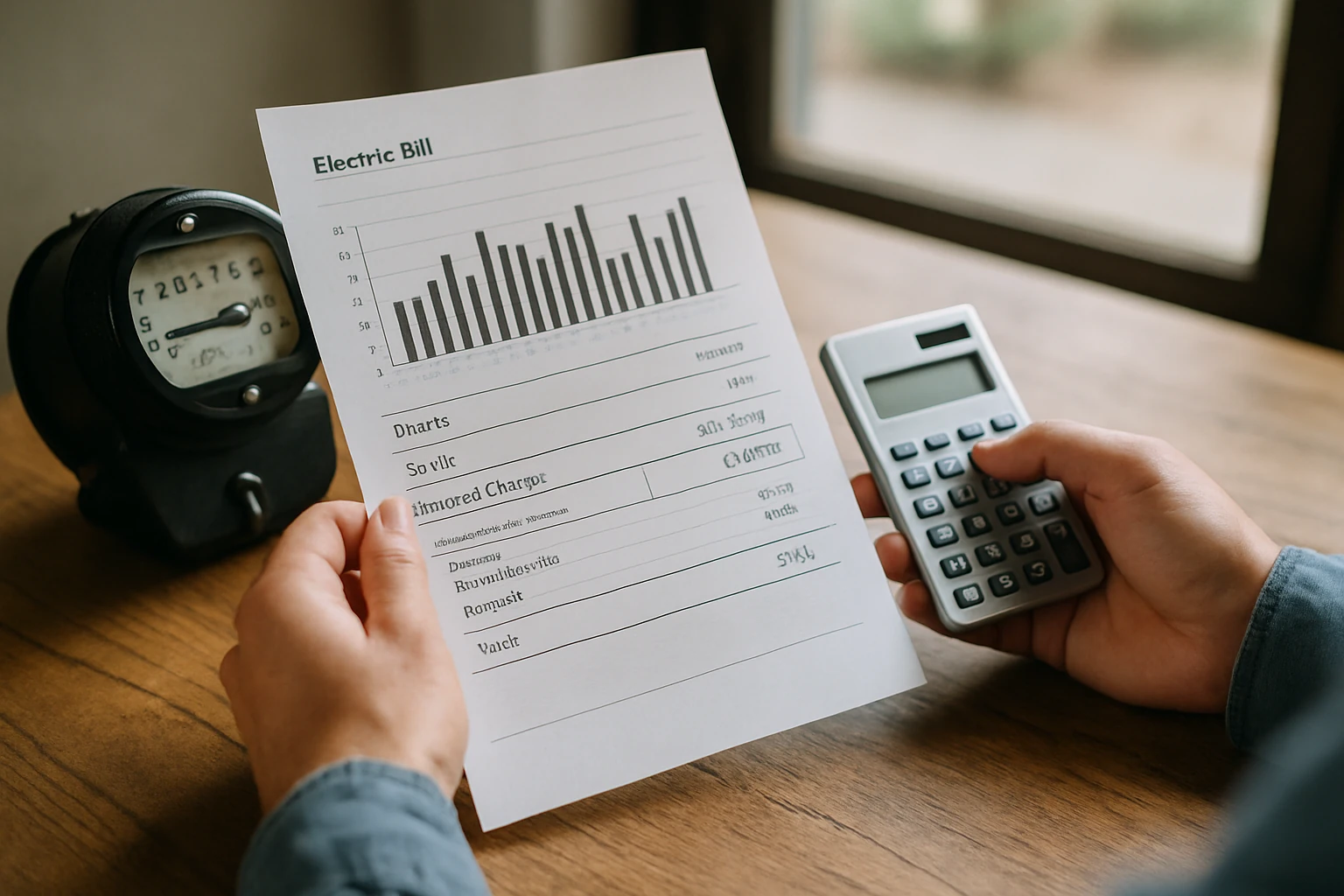
The problem: you used a little more, but the price jumped a lot
If your electric bill suddenly jumped and you did not change much, tiered pricing is often the hidden reason. You cross a threshold, and the next block of electricity costs more. It feels like a penalty, but it is just how the rate is structured.
This guide turns tiered rates into something you can see and predict. If you want the full electricity basics first, start with Electricity Explained.
Table of contents
The short answer (what tiered really means)
Tiered electricity rates mean your price per kWh changes after you use a certain amount of electricity. The first block is cheaper, and the next block costs more.
It is not that your whole bill switches to a higher price. Only the usage above the threshold moves into the higher tier.
How tiered rates work (simple example)
Think of tiers like steps. The first step is the baseline. The next step is more expensive. Many utilities set a baseline for a month and then raise the price after you pass it.
Baseline allowance and thresholds
A common structure looks like this:
- Tier 1: first 500 kWh at a lower price
- Tier 2: everything above 500 kWh at a higher price
If you used 520 kWh, only 20 kWh are billed at Tier 2. That is why understanding what a kWh ishelps the numbers feel less random.
Why the next tier costs more
Utilities often price the extra block higher to reduce peak demand and encourage conservation. It is a pricing structure, not a personal judgment. Once you see the threshold, the bill feels predictable.
Where tiers show up on your bill
Most bills list usage charges in separate lines. You might see "Tier 1\" and \"Tier 2\" or \"Baseline\" and \"Over Baseline."
If your bill has many lines, this walkthrough helps you find the right section: Electric bill breakdown.
Why the total jumps even with small changes
Two small shifts can cause a big total change:
- You crossed the tier threshold by a small amount.
- Your billing cycle was longer, so you used more days.
Ask yourself: did this bill have more days? If so, compare kWh per day, not total kWh. The checklist is in this bill-spike guide.
Also note the difference between tiered rates and time-of-use pricing. Time-of-use is about when you use power, not how much. If you see peak and off-peak lines, read time-of-use electricity rates.
If your bill also lists a separate demand charge, that is a different concept. See demand charges explained.
Common misconceptions
- "All my kWh are billed at the higher rate." No. Only the usage above the threshold is billed at the higher tier.
- "Tiered rates and time-of-use are the same." Tiered is based on total usage. Time-of-use is based on time of day.
- "Tiered rates mean the utility made a mistake."It is a common pricing structure, not an error.
If you also see separate supply and delivery charges, that is another layer of the bill. This guide keeps them clear: supply vs delivery charges.
Frequently asked questions
Tiered rates mean the price per kWh changes after you use a certain amount of electricity. The first block is cheaper, and the next block costs more.