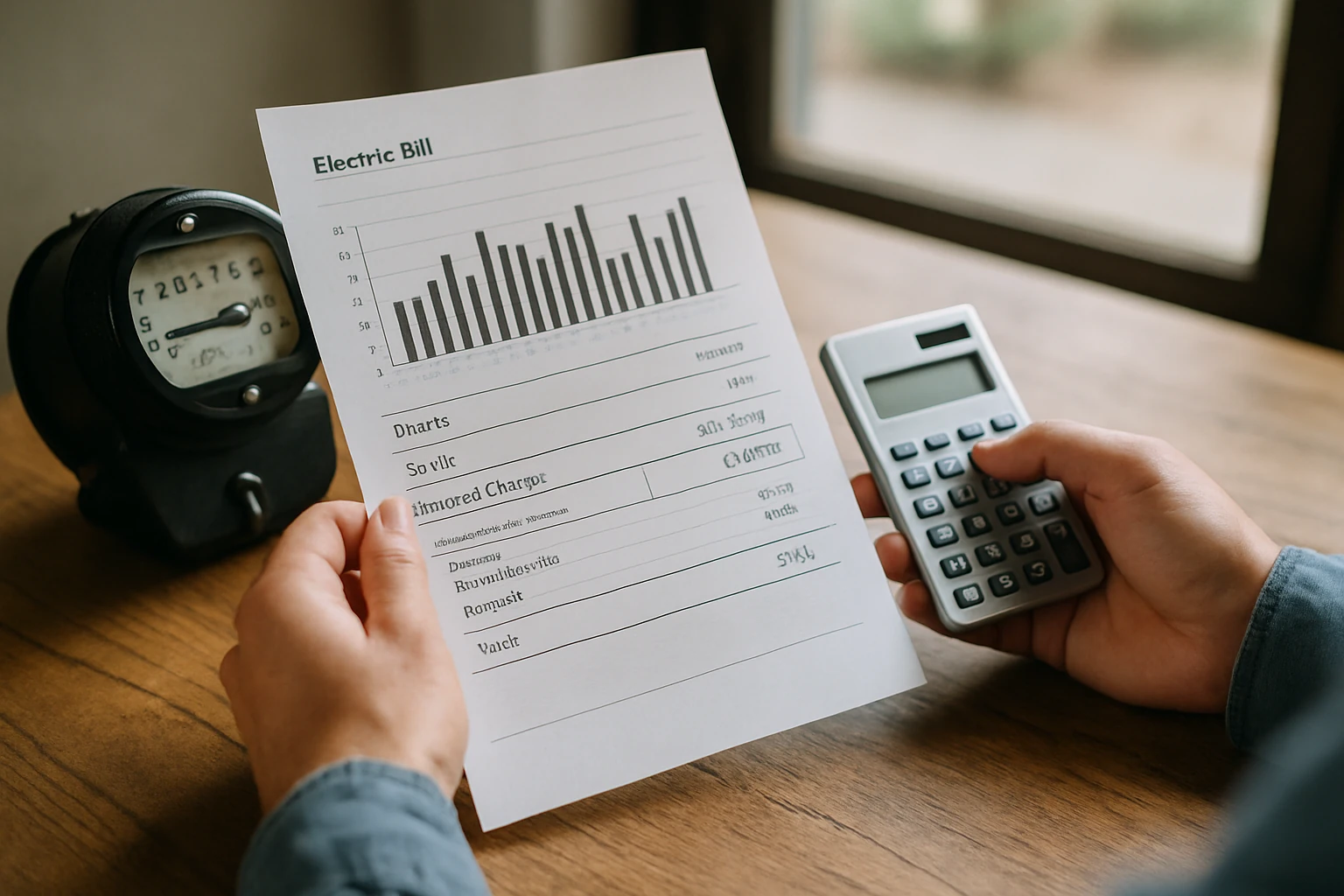
The problem: two big charges that sound the same
Many people open an electric bill and see two large sections: "Supply" and "Delivery." Both say electricity, so why are there two? That split is real, and it is one of the fastest ways to make a bill feel less confusing.
This guide separates those two buckets in plain English. If you want the full electricity overview, start with Electricity Explained.
Table of contents
The short answer (two charges, two jobs)
Supply charges pay for the electricity itself, measured in kWh. Delivery charges pay for the grid that brings that electricity to your home, plus service and maintenance.
Your bill splits them because they are different costs with different pricing rules.
Supply charges (what you are paying for)
Supply is the energy you used. It is usually priced per kWh. If the supply rate changes, the total can change even if your usage stays steady.
Who sets supply prices
In some areas, the utility sets the supply price. In others, you might see a separate supplier listed. Either way, the supply line is about the energy itself.
If you see fixed vs variable pricing on the supply line, this overview helps explain it: fixed vs variable rates.
Delivery charges (the grid and service cost)
Delivery covers the system that gets electricity to you: transmission lines, local distribution, meters, and service crews.
Transmission vs distribution
Transmission is the high-voltage network that moves power long distances. Distribution is the local network that brings it to your street and home.
Why delivery does not drop to zero
Even if usage is low, the grid still has to be available. That is why delivery charges often include fixed and variable parts.
How to compare bills month to month
Start with usage and days. Then compare supply rate and delivery totals separately. This keeps you from mixing two different drivers.
- Compare kWh used (and kWh per day).
- Check the supply rate per kWh.
- Compare delivery totals and any fixed fees.
If you need a quick map of the line items, this guide helps: electric bill breakdown.
Common misconceptions
- "Supply and delivery are the same thing." They are different costs: energy vs the grid.
- "Delivery should disappear if I use less." Delivery often includes fixed fees that do not scale with usage.
- "If supply changed, the utility made a mistake."Supply rates can change just like any price.
If your bill also uses tiered pricing or demand charges, those are separate structures: tiered rates and demand charges.
Frequently asked questions
Supply charges pay for the electricity you used. Delivery charges pay for the grid and service that bring that electricity to your home.