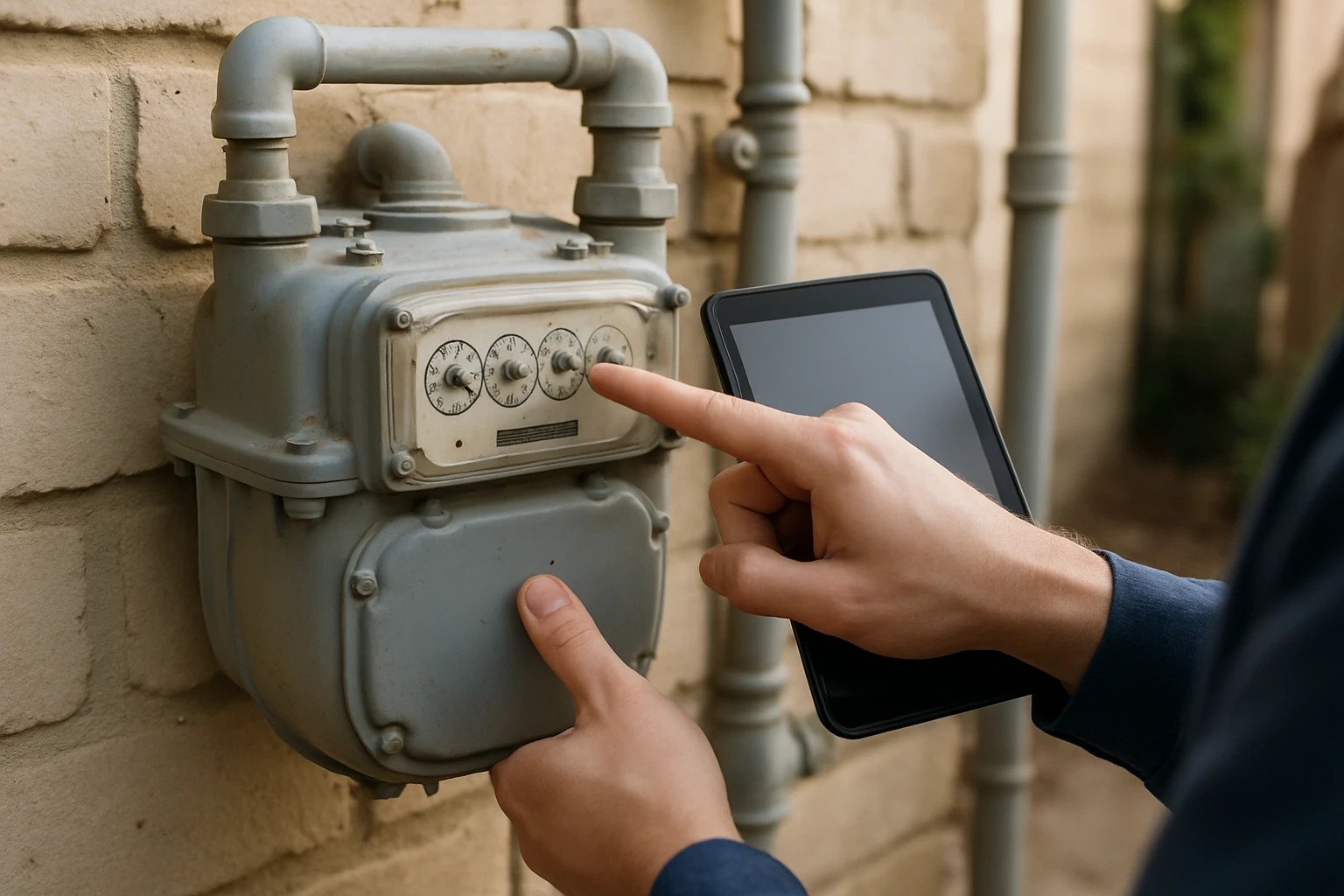
How to Read Your Gas Meter: Dial, Digital, and Smart
Read a dial, digital, or smart gas meter step by step, convert meter units to therms with the EIA heat-content factor, and verify estimated bills before they land.
13 min read
Guides in the Leak category — explained in plain English.
Read a dial, digital, or smart gas meter step by step, convert meter units to therms with the EIA heat-content factor, and verify estimated bills before they land.

Use a safe meter-and-main-valve check to identify unexpected water flow, then isolate common household sources before calling your utility or a qualified plumber.

Heat pumps run longer in cold weather, but nonstop runtime can feel worrying. Learn what is normal and what to check.
A simple budgeting guide for electricity, gas, water, and internet in your first place.

Sewer charges often use a winter average, not current water use. Learn how sewer averaging works with real city examples from Austin and San Antonio.

No lawn watering but a higher bill? Learn the most common winter causes, from leaks to longer billing cycles, freeze-thaw pipe stress, and how to check them.

If your air conditioner is running but the house is still warm, this guide walks you through the most common causes, safe checks, and when to call for service.

Most water meters have a small leak indicator that moves when water flows. Here's how to use it to spot hidden leaks and rule out false alarms.

Seeing a water service (or base) charge even when you barely used water? Here's what that fixed fee usually covers and how to sanity-check it.

Understand the most common reasons water bills spike and how to troubleshoot them.

Summer water bills often jump for predictable reasons--outdoor watering, leaks, and tiered pricing. Here's how to figure out what changed in your case.

HVAC ratings can feel like jargon. This guide explains AFUE, SEER, HSPF, and COP, what each measures, and how to compare systems without mixing apples and oranges.

A step-by-step guide to reading your home water meter and checking for leaks.

Use a simple food-coloring dye test to check whether water is leaking from a toilet tank into the bowl, then confirm the repair with your meter and bill.

CCF on a water bill means 'hundred cubic feet' — 1 CCF equals 748 gallons. Here's what your CCF number means, how to convert it, and how to tell if a hidden leak is driving up your bill.