Quick Answer
A high heating bill is usually caused by one of three things: a sudden drop in outdoor temperature forcing longer run cycles, a mechanical failure like a stuck auxiliary heat strip or a failing blower motor, or a significant increase in the unit price of your fuel. For gas furnace owners, a spike in the electric bill is often due to an aging PSC blower motor drawing excessive power, while heat pump owners often see spikes when the system relies on expensive “emergency” electric resistance backup. To find the cause, first check if your usage (therms/kWh) increased or if only the rate ($/unit) went up.
The Diagnostic Framework: Usage vs. Rate
Before blaming the furnace, you must determine if you are using more fuel or simply paying more for the same amount. Heating bills are the product of two numbers: Usage × Rate = Total Cost.
- Check the Usage: Look for “Therms” (gas), “Gallons” (propane/oil), or “kWh” (electric). If this number is higher than the same month last year, your house is demanding more heat or your system is less efficient.
- Check the Rate: If your usage is flat but the bill is up, your utility or fuel provider has raised prices. For natural gas, rates typically fluctuate between $1.00–$1.90 per therm depending on the state and season. If you are specifically seeing a gas spike, see our guide on why is my gas bill so high for rate-specific mechanics.
Ranked Cause 1: The “Auxiliary Heat” Trap (Heat Pumps)
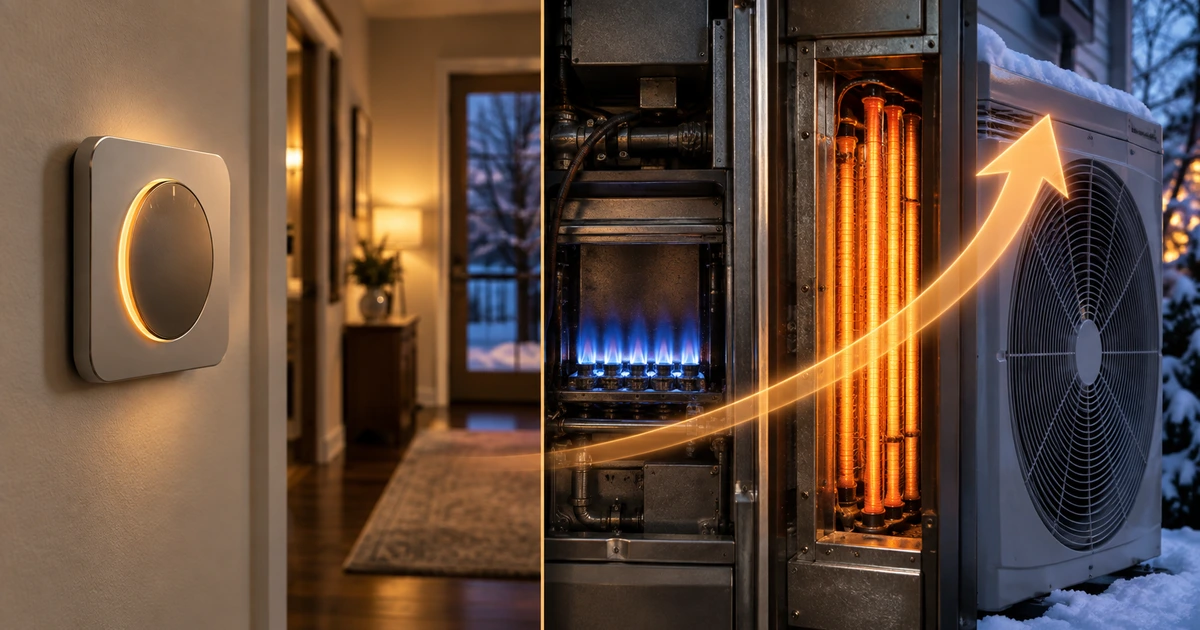
If you have a heat pump, the most common cause of a massive electric bill spike is “Auxiliary Heat” (also called Emergency Heat or Heat Strips). Heat pumps are highly efficient—often moving 3 to 4 units of heat for every 1 unit of electricity used—but they lose capacity as outdoor temperatures drop.
When it gets too cold for the compressor to keep up, the system turns on electric resistance coils. These coils have a Coefficient of Performance (COP) of 1.0, meaning they are roughly 3 to 4 times more expensive to run than the heat pump itself. If your thermostat is set too high or the outdoor sensor is faulty, these strips may run even when they aren’t needed. You can read more about this efficiency gap in our heat pump vs gas furnace savings analysis and the technical breakdown of AFUE vs COP.
Ranked Cause 2: The Blower Motor (Electric Spikes on Gas Heat)
A common mystery is why the electric bill spikes when a gas furnace is running. The furnace burns gas for heat, but it uses a large electric blower motor to push that air through your ducts.
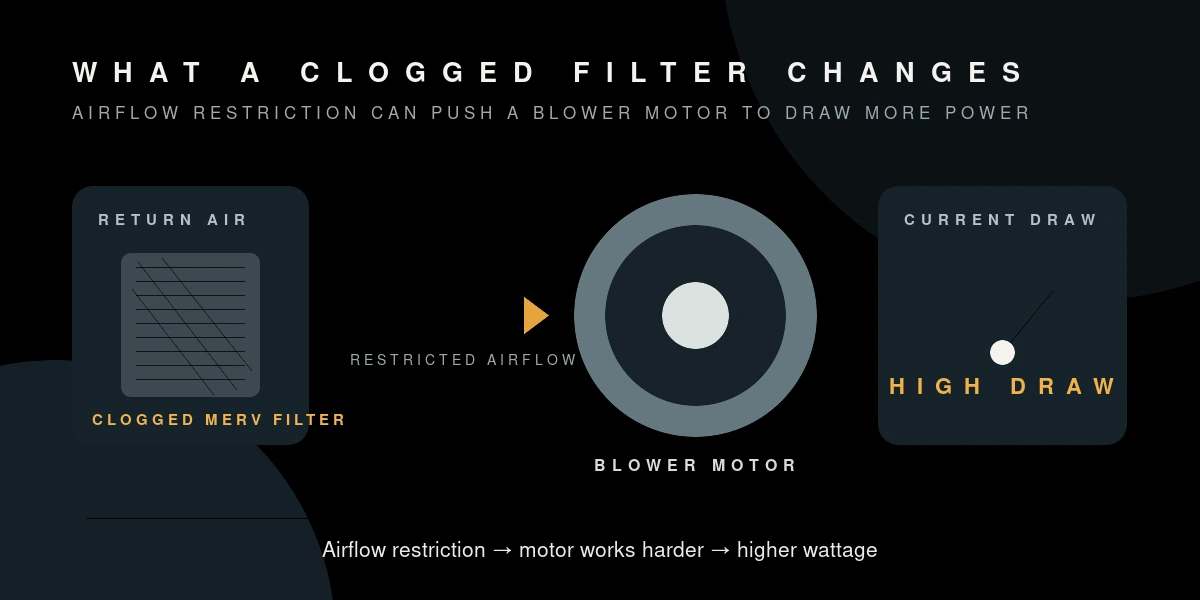
Older furnaces use PSC (Permanent Split Capacitor) motors; newer ones use ECM (electronically commutated) motors, and a clogged filter hits them differently — a distinction most explanations get wrong:
- PSC motors (most older furnaces): a clogged filter lowers the motor’s instantaneous draw slightly — but it also cuts the airflow carrying heat out of the heat exchanger. The furnace then runs longer to hit the same thermostat setting, so the blower’s total kWh for the month climbs even though its wattage reads lower. The safety limit switches cycling the burner off on overheating add their own inefficiency.
- ECM motors (variable-speed): these ramp up to maintain airflow against the restriction, so a dirty filter shows up directly as higher wattage — often a substantial increase over a clean-filter baseline.
Either way, the filter is the first $15 fix to try before suspecting the motor itself. If you want hard numbers on a plug-in device, a Kill A Watt P4400 will time any 120V appliance, though the furnace blower itself is usually hard-wired.
To keep the blower efficient:
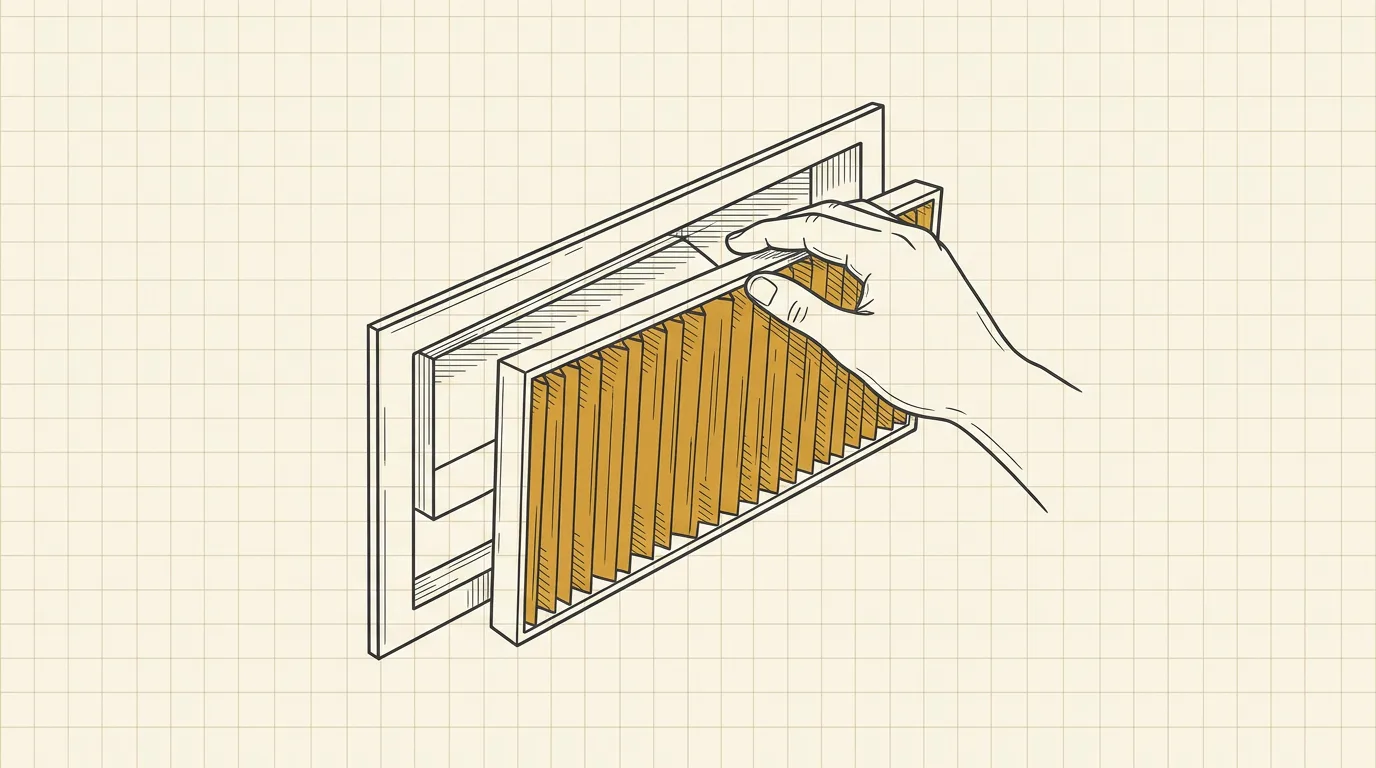
- Change your filter regularly. We recommend the best MERV 11 furnace filters for a balance of air quality and airflow.
- Schedule a furnace tune-up to check the motor’s capacitor and bearings.
Ranked Cause 3: Thermostat Behavior and “Phantom” Loads
Your thermostat is the “brain” of the system. If it is misconfigured, it can cause “short cycling,” where the heater turns on and off rapidly. This is incredibly inefficient because the system uses the most energy during the startup phase. This is similar to AC short cycling and is often caused by a thermostat placed too close to a heat vent or a drafty window.
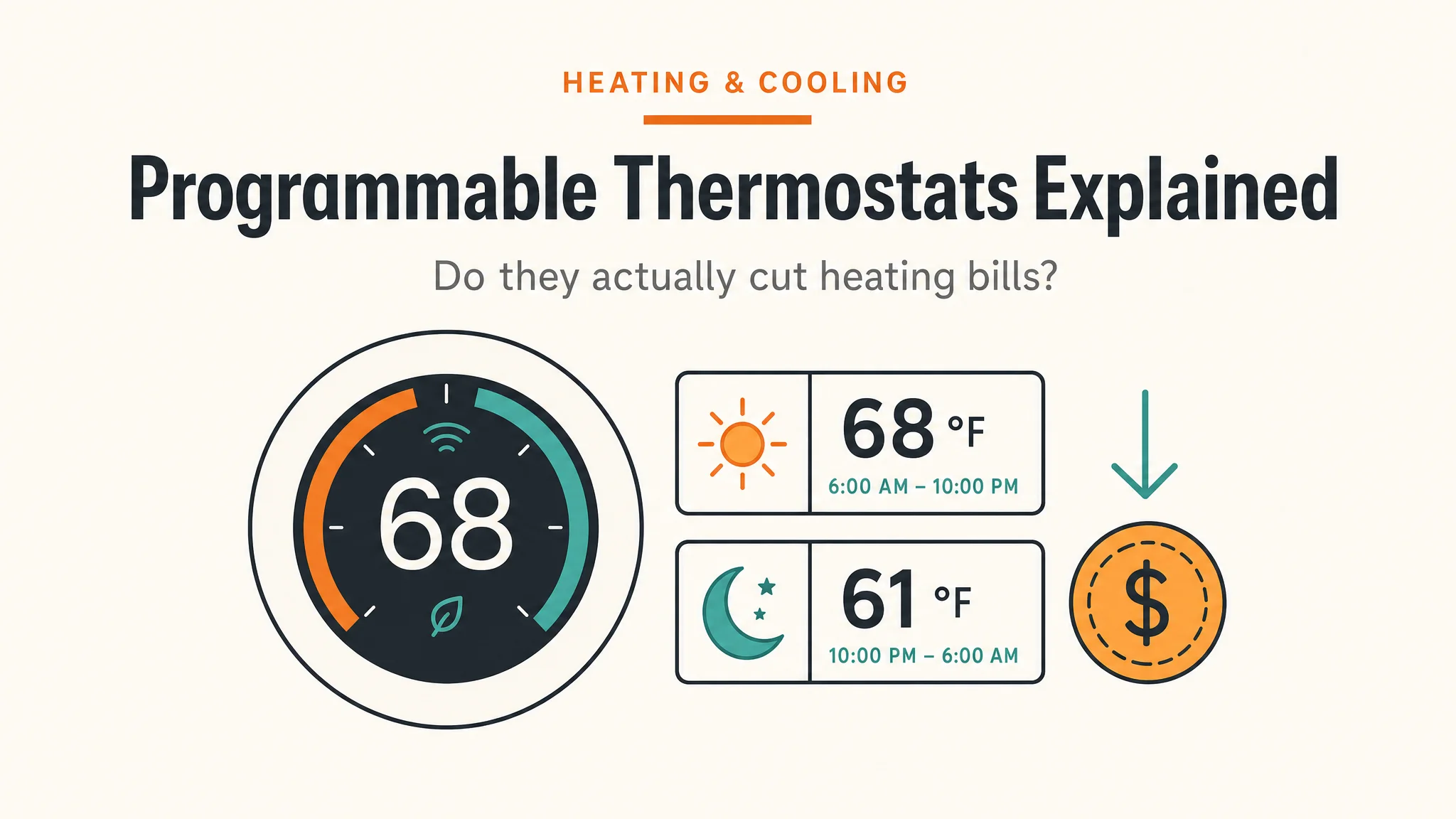
Upgrading to a smart thermostat like the Google Nest Learning Thermostat (4th Gen) or the ecobee Premium can help by using “smart recovery” to ramp up heat gradually rather than slamming on the expensive auxiliary strips. We’ve analyzed whether these programmable thermostats actually cut bills in detail.
Learns your schedule and uses advanced algorithms to minimize the use of expensive auxiliary electric heat strips in heat pump systems.
Check price on Amazon Price & availability shown on Amazon.com — we may earn a commission.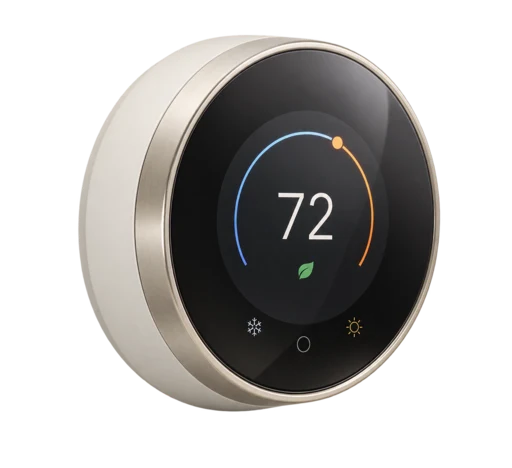
Ranked Cause 4: Envelope Leaks (The “Draft” Factor)
No matter how efficient your heater is, it will cost too much if the heat escapes immediately. Common culprits include:
- Window Drafts: Use window insulation kits to create an extra air barrier.
- Door Seals: Check for light visible under doors.
- Attic Bypasses: Unsealed holes for plumbing and wiring.
Learning how to find and seal drafts is often the highest-ROI activity for lowering a heating bill.
Comparing Fuel Costs (The Math)
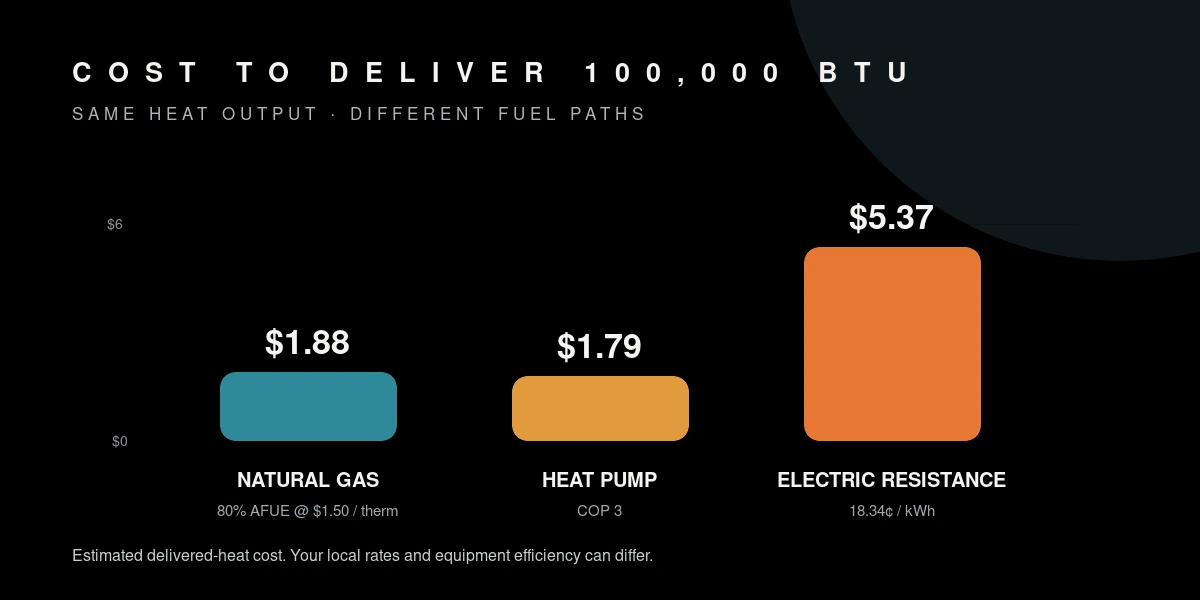
To understand if your bill is “normal,” you have to compare the raw energy cost. Using the June 2026 national average of 18.34¢/kWh and a mid-range gas price of $1.50/therm:
- Electric Resistance Heat: 1 therm = 29.3 kWh (100,000 BTU / 3,412 BTU/kWh).
- Cost per 100,000 BTU (Electric): 29.3 kWh × $0.1834 = $5.37
- Cost per 100,000 BTU (Gas at 80% AFUE): $1.50 / 0.80 = $1.88
In this scenario, heating with standard electric baseboards or space heaters is nearly 2.85 times more expensive than gas. This is why using a space heater to “save money” often backfires if you don’t turn down the central furnace significantly. For a full breakdown, see our gas vs electric heating cost comparison.
Ranked Cause 5: Weather You Did Not Feel Yet
Heating demand tracks outdoor temperature weeks before you notice it. A month that runs 5–10°F colder than the same month last year quietly lengthens every furnace run cycle, and the usage line climbs even though “nothing changed” in the house. Before assuming a mechanical fault, do the normalization check:
- Find the heating degree days (HDD) for your ZIP for this billing period and last year’s (your utility bill often prints them; NOAA’s Climate at a Glance tool publishes them by state).
- Compute usage per HDD for each period — therms ÷ HDD for gas, kWh ÷ HDD for electric heat.
- If usage-per-HDD is flat while the total rose, the weather explains it. If usage-per-HDD climbed, your house or equipment changed — keep reading.
The same logic catches the other silent driver: a longer billing cycle. A 33-day January bill against a 29-day December will read as a “spike” until you divide by days. The billing-cycle guide shows where the service dates live on the statement.
Ranked Cause 6: The Rest of the Bill (Delivery, Fees, and Room Heaters)
Two line-item effects routinely masquerade as “heating costs”:
- Delivery and riders. For natural gas, the commodity charge is only part of the story — regulated bills split supply from delivery, and delivery charges (plus riders and taxes) can rival the fuel itself. The gas bill walkthrough maps every line, and the fuel adjustment charge explainer shows how a per-kWh rider can flip from credit to charge mid-winter.
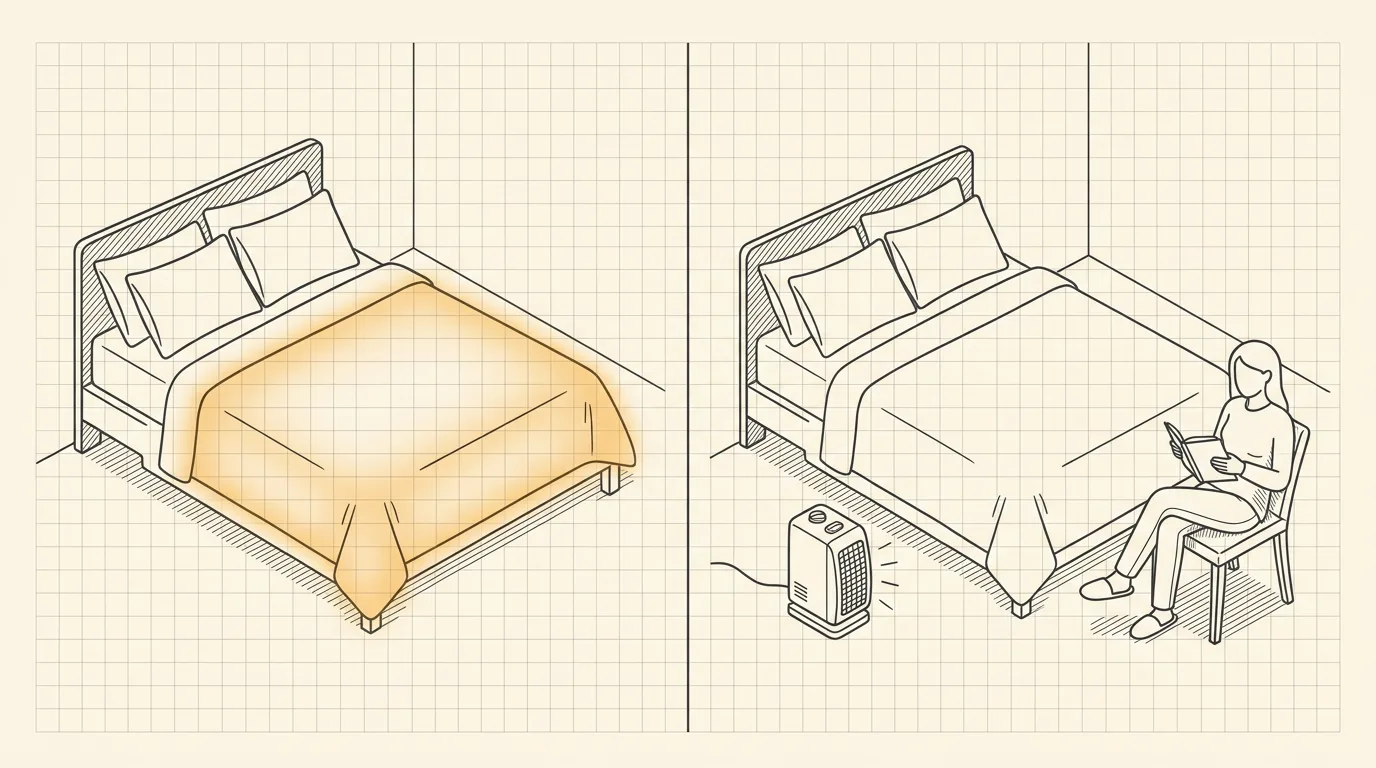
- Room heaters. A single 1,500-watt space heater running the hours a cold bedroom implies can add a startling block of kWh to an otherwise-gas household’s electric bill. The space heater guide has the honest math on when one helps and when it just moves the cost.
Propane and Heating Oil: The Delivered-Fuel Difference
If a truck fills your tank, your “rate” is a delivered spot price, not a regulated tariff — which changes the diagnostic:
- EIA’s Winter Fuels Outlook (October 2025, for winter 2025–26) forecast average U.S. heating-season expenditures of natural gas $642, electricity $1,133, heating oil $1,390, and propane $1,210. Those are national averages across homes and systems, not a prediction for your house — but they frame what “normal” looks like by fuel.
- Fill timing is the spike. Propane and oil prices swing seasonally; a January top-up can cost dramatically more per gallon than an autumn fill. If your delivered-fuel bill jumped, compare the price-per-gallon line on the delivery ticket to last year’s before suspecting usage.
- Usage still obeys the same physics. Degree-day normalization (above) works identically for gallons — and envelope leaks, thermostat behavior, and an aging burner affect a fuel-oil furnace exactly as they affect a gas one.
A Worked Example: Reading the Spike off a Real Bill
Suppose last January’s gas bill showed 90 therms and this January shows 115, at the same rate:
- Check days billed: 31 vs 31. Not the cycle.
- Check HDD: 950 last year, 1,150 this year — a colder month by about 21%.
- Usage per HDD: 90 ÷ 950 = 0.095 therms/HDD vs 115 ÷ 1,150 = 0.100 therms/HDD. Usage intensity rose ~5%, not 28%.
- Verdict: mostly weather, with a small real increase worth investigating — a filter change and a draft check are the cheap first moves, and a tune-up if the gap persists.
That five-minute division turns a scary bill into a ranked shortlist — which is exactly what the rest of this page is for.
Summary Table: Heating Bill Diagnostic
| Symptom | Likely Cause | Fix |
|---|---|---|
| Electric bill spike (Gas Heat) | Blower running longer (PSC) or harder (ECM) | Change filter; schedule a tune-up |
| Electric bill spike (Heat Pump) | Auxiliary heat strips engaged | Lower thermostat; check outdoor sensor |
| Gas bill spike (Usage up) | Extreme cold or envelope leaks | Seal drafts; check insulation |
| Gas bill spike (Usage flat) | Utility rate increase | Compare rates |
| High bill in one room only | Space heater usage | Check space heater wattage |
| Usage up, cold month | Weather (longer run cycles) | Normalize by heating degree days before assuming a fault |
| Delivered-fuel bill jumped | Propane/oil fill timing | Compare price-per-gallon on delivery tickets |
| Electric rider flipped to a charge | Delivery/rider increase | Read the fuel adjustment line |
Frequently Asked Questions
Why is my electric bill so high when I have a gas furnace?
Does a higher MERV filter increase my heating bill?
Can a smart thermostat really lower my heating bill?
For more ways to manage your home energy costs, visit our Electricity Explained hub.
Sources
- U.S. Energy Information Administration — Winter Fuels Outlook — Natural gas and heating oil price trends.
- U.S. Energy Information Administration — Electricity Monthly — Residential electricity rates (June 2026 average 18.34¢/kWh).
- Environmental Protection Agency — WaterSense Statistics — Household energy and water usage context.
- [Utility Explained Internal Corpus] — 1 therm = 100,000 BTU; 1 kWh = 3,412 BTU conversion factors.