Quick Answer
In cold weather, a gas furnace that runs long cycles — even back-to-back — is often just doing its job: when heat loss outpaces a single cycle’s output, the thermostat never satisfies. The question that saves money is whether the run-time is weather-driven (normal, fixable only with insulation and air sealing) or problem-driven (the furnace is producing less heat than it should, or the thermostat is misreading). Work the ranked list below in order: the first three causes are free to check and cover most cases; the last two need a tech. This page is about gas furnaces in heating season — if your AC or heat pump short-cycles year-round, that’s a different failure mode covered in AC short-cycling causes and fixes, and if the system runs endlessly while the house stays cold, skip straight to duct leaks: HVAC running all day.
First: how much running is normal?
A properly sized furnace in design-cold weather runs long cycles — 10 to 20+ minutes, sometimes nearly continuously during the coldest hours — because it was sized to hold the house at indoor-outdoor design temperature difference. Long cycles in a cold snap are the system keeping up, not failing. The red flags are different:
- Runs constantly but the house holds temperature → normal-for-the-weather, or thermostat set too high / heat loss too high. Bill problem, not breakdown.
- Runs constantly and the house slowly loses ground → the furnace’s delivered heat is below the house’s loss: filter, ducts, sizing, or a failing component. Fix-order below.
- Short rapid cycles (under ~5 minutes) then off → that IS short-cycling: the AC short-cycling page covers the mechanism (many causes are shared).
Causes ranked by likelihood × how cheap they are to check
1. It’s just cold (and your house leaks)
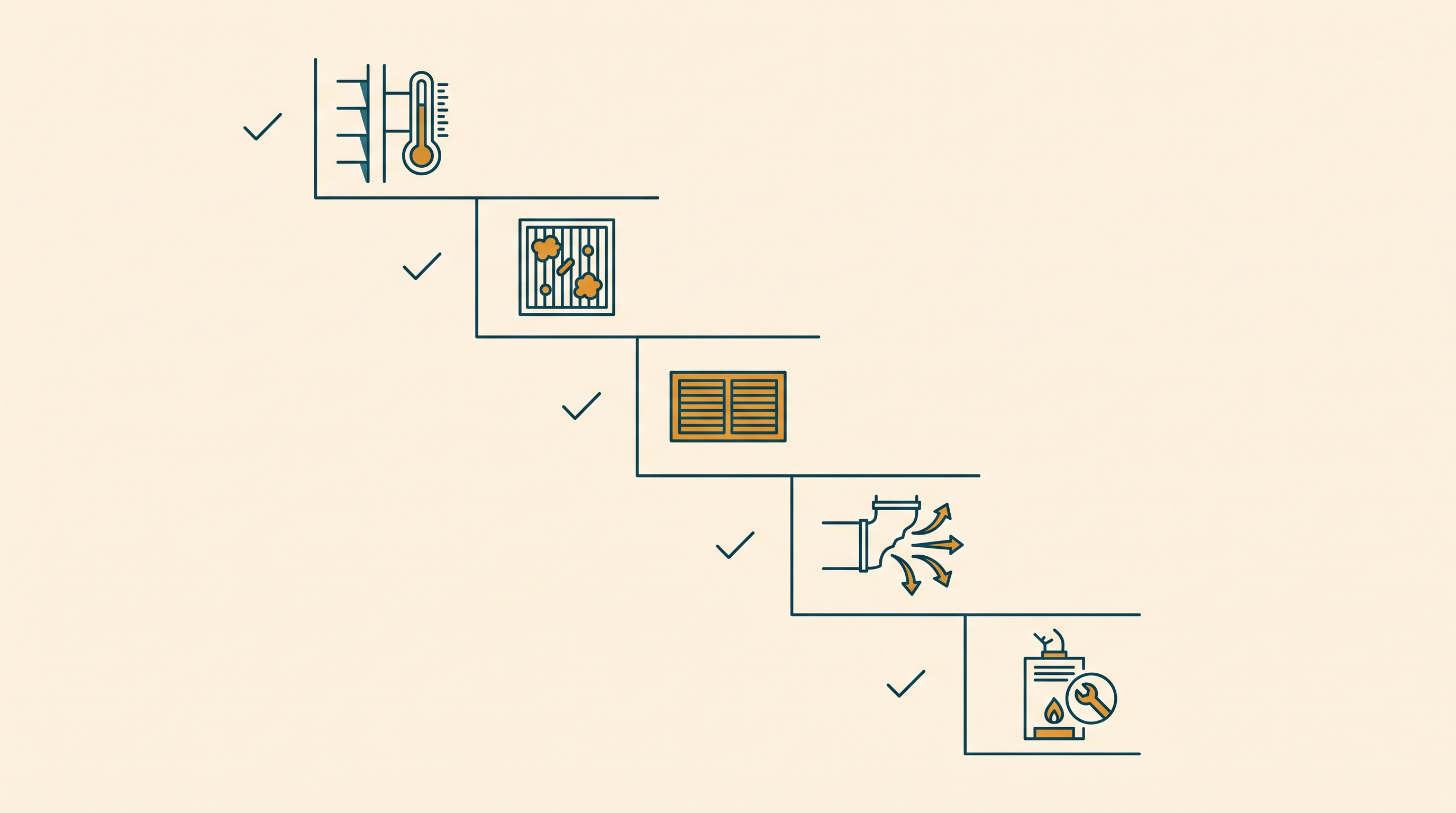
The most common “problem” is weather. If the run-time tracks the outdoor temperature and the house stays warm, the furnace is matching a real heat load. The fix isn’t in the furnace — it’s shrinking the load: air sealing and insulation cut run-hours directly (how to check for energy leaks). Free to verify: compare a mild-day cycle pattern to a cold-day one.
2. Thermostat set too high, or mounted somewhere wrong
A thermostat on an exterior wall, near a draft, in sun, or above a heat source misreads the room; the furnace chases a number the room can’t reach. Check the setting first — each °F of setpoint adds roughly 1–3% to heating fuel use per DOE’s setback guidance run in reverse[1]. Then check placement. Free.
3. Closed or blocked vents and a clogged filter
Closing too many supply registers (a popular “save money” idea that mostly doesn’t work — the honest verdict on closing vents) or a filter clogged enough to choke airflow both reduce delivered heat per cycle, lengthening run-time. Filter check is a 30-second job; do it monthly in season. DOE’s maintenance guidance puts filter replacement at the top of homeowner tasks[2].
Electrochemical sensor, plug-in with battery backup, backlit digital CO readout, UL 2034 listed. CPSC guidance: one per floor minimum, outside sleeping areas — and one in the room with the furnace.
Check price on Amazon As an Amazon Associate we earn from qualifying purchases. Price & availability shown on Amazon.com.4. Duct leakage or restriction
If the furnace runs forever and some rooms never warm, the heat is escaping between the unit and the registers — leaky ducts can waste 20–30% of conditioned air[4]. Full symptom list and fixes: duct leaks: HVAC running all day.
5. Furnace under-sized, over-sized, or aging (tech territory)
An undersized furnace simply never satisfies on design days — constant run with the house slowly cooling means the delivered BTU/h is below the load. An oversized one short-cycles instead (see neighbor page). And a furnace whose heat exchanger or burners are degraded delivers less than its rating plate says. These need a tech with a combustion analysis — this is also the moment a tune-up pays for itself. One non-negotiable: if the furnace runs constantly AND the flue, burners, or flame look wrong — or the CO alarm sounds — shut it down and call for service. CO from a malfunctioning furnace is lethal; CDC counts over 400 US deaths a year[3]. If you don’t have a CO alarm near the furnace, that’s the cheapest life-safety purchase in the house:
Electrochemical sensor, plug-in with battery backup, backlit digital CO readout, UL 2034 listed. CPSC guidance: one per floor minimum, outside sleeping areas — and one in the room with the furnace.
Check price on Amazon Price & availability shown on Amazon.com — we may earn a commission.What constant running does to your bill
Run-hours × cost-per-run-hour = the fuel line of your gas bill. A 60,000 BTU/h furnace at 80% AFUE burns about $1.15 of gas per hour of run at national averages — the full per-hour math is how much does it cost to run a furnace. The levers that matter, biggest first: setpoint (each degree up extends run-time), filter and ducts (delivered-heat efficiency), insulation (the load itself). If the bill — not the noise — is what brought you here, why is my gas bill so high ranks all eleven drivers.
The DIY-vs-call line
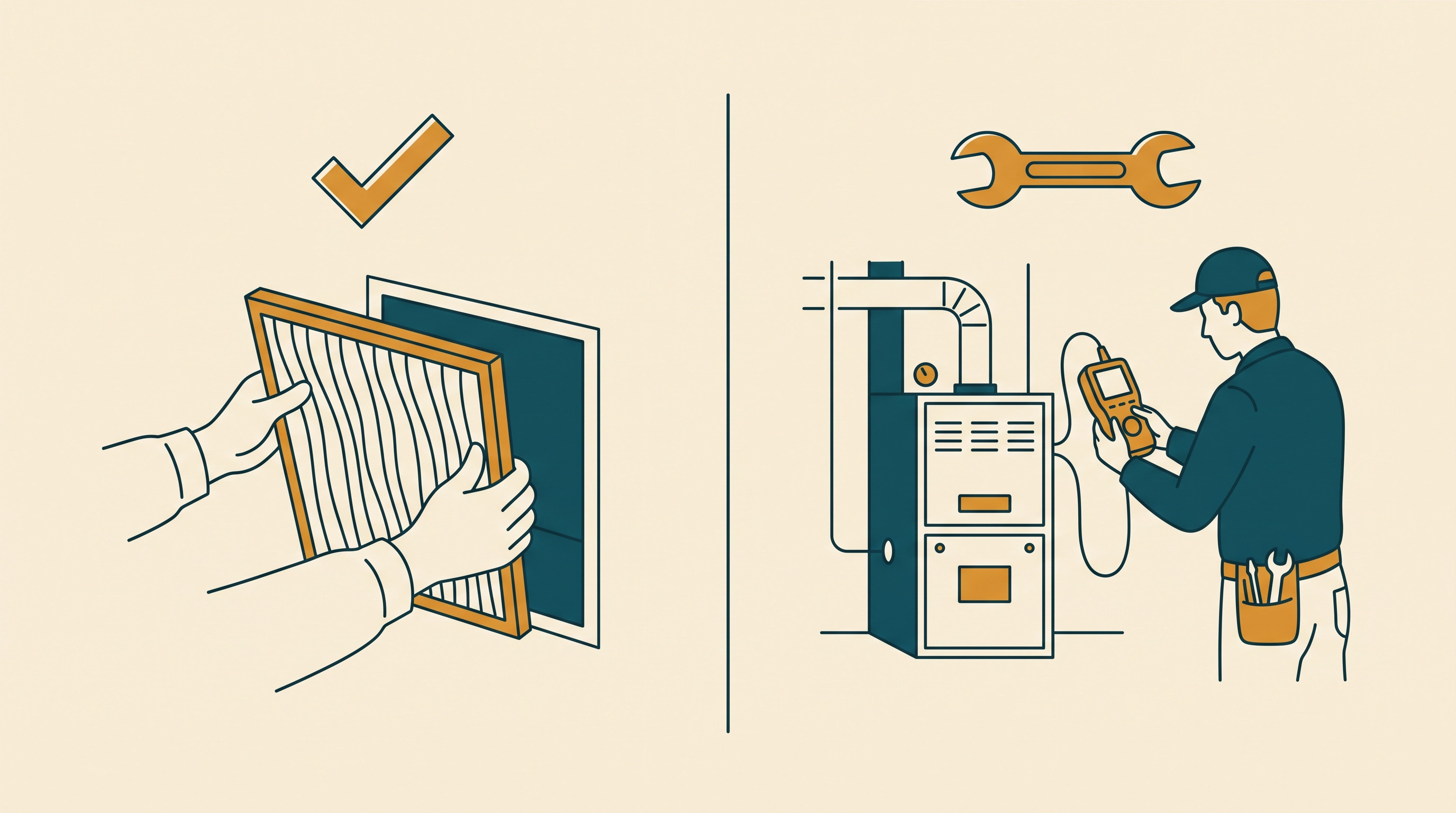
DIY (free, 30 minutes): thermostat setting and placement, filter, count closed registers, compare mild-day vs cold-day cycle behavior, verify all rooms eventually warm.
Call a tech: constant run with the house losing ground after the DIY list is clear; any burner/flame/vent abnormality; the unit is 15+ years old and this is new behavior; the CO alarm has ever sounded. Combustion analysis and heat-exchanger inspection are not homeowner jobs[2].
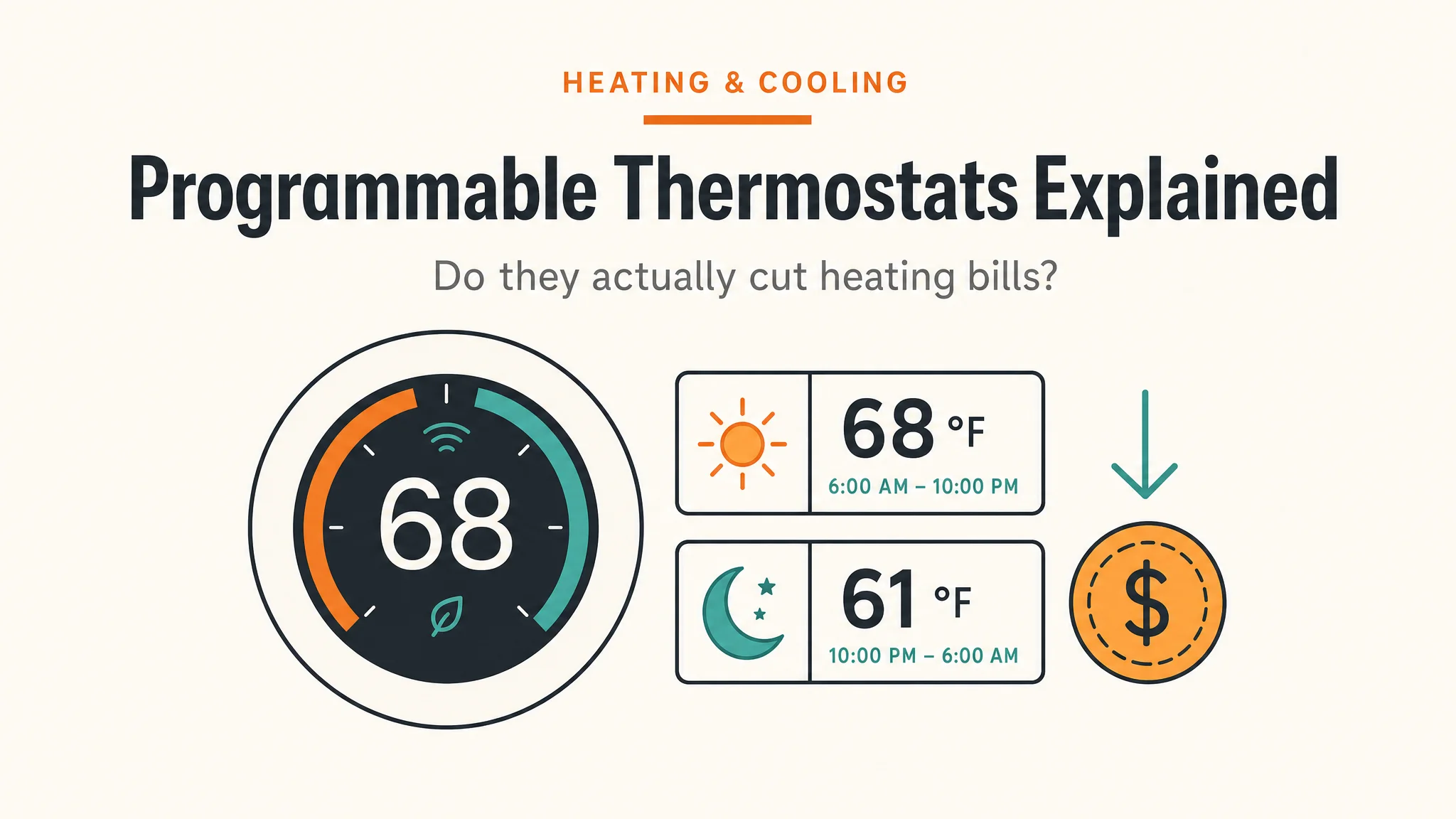
Related reads: why is my furnace blowing cold air (a different symptom, sometimes the same root cause), heat pump running all day in winter (often normal for heat pumps), and do programmable thermostats cut heating bills before buying a smart stat to “fix” this.