Quick Answer
Your January electric bill is high because winter heating demand peaks this month. Electric furnaces, baseboards, and heat pumps run near-continuously as heating degree days pile up, and heat-pump backup (“aux”) strips draw far more power than the pump alone during cold snaps. Many utilities also switch to a winter rate season on January 1, and a single estimated meter read — more common when snow or holiday schedules block meter access — can stack two months of usage into one bill.
Compare kWh, not dollars, against December first. If kWh rose with the cold, it’s weather-driven — not a malfunction. If kWh barely moved but the bill jumped, work the non-seasonal causes in our full spike-troubleshooting guide.
Is your spike a rate change or a usage change?
Enter numbers from your last two bills. The tool splits your increase into its two components — the first thing any diagnosis should check.
1. Heating Degree Days: Why January Is the Peak Billing Month
A heating degree day (HDD) is a measure of how cold a day was: for each degree the day’s average temperature sits below 65°F, one HDD accumulates. January piles up more HDDs than any other month in most of the United States — and your heating equipment’s runtime tracks those HDDs almost linearly.
That means a January bill can be 30–60% higher than an October bill with zero behavior change and nothing broken. Before assuming a fault, pull your region’s monthly HDD data (the EIA publishes degree-day data by region and month) and line it up against the kWh on your bill:
- kWh rose with HDDs → weather-driven. The fix is efficiency and rate strategy, not repairs.
- kWh flat but bill up → the cause is rate, tier, or billing mechanics — keep reading.
2. Heat Strips and Aux Heat: The Cold-Snap Multiplier
If you heat with an air-source heat pump, January has a second multiplier: auxiliary (aux) heat. Below the pump’s balance point — typically somewhere in the 25–40°F range depending on the unit — the outdoor coil can’t extract enough heat, and the system engages electric resistance strips to help. Those strips draw 2–3× the power of the compressor alone.
A heat pump quietly riding aux heat for days during a cold snap looks identical to “no usage change” on your end — same thermostat setting, same schedule — while kWh soar. Check:
The $25 diagnostic the spike guide uses. Plug the auxiliary heat circuit (or any suspect load) in and watch true watts and cumulative kWh — the fastest way to prove aux strips are the January thief before paying for an HVAC call.
Check price on Amazon As an Amazon Associate we earn from qualifying purchases. Price & availability shown on Amazon.com.- Thermostat indicator: “AUX” or “aux heat” showing frequently is the tell. (Our aux heat explainer covers the difference between aux and emergency heat.)
- Outdoor unit: if the pump runs constantly and the house still feels cold, aux is doing more than its share.
- The fix that isn’t a repair: many thermostats lock out aux until a lower outdoor temperature, or allow a smaller indoor setpoint rise per hour, cutting strip runtime dramatically. A smart thermostat with aux-lockout control often pays for itself in one winter.
The $25 diagnostic the spike guide uses. Plug the auxiliary heat circuit (or any suspect load) in and watch true watts and cumulative kWh — the fastest way to prove aux strips are the January thief before paying for an HVAC call.
Check price on Amazon Price & availability shown on Amazon.com — we may earn a commission.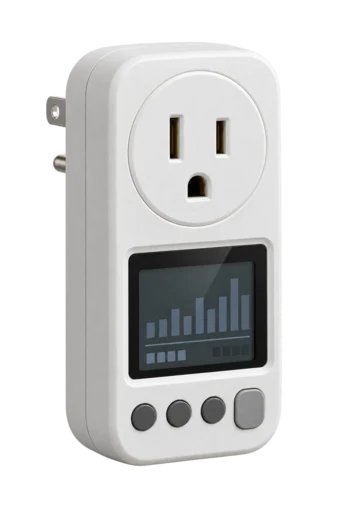
Wi-Fi smart plugs with built-in energy monitoring — logs watts, kWh, and runtime per outlet in the Tapo app. Schedule the backup heater down and watch the consumption curve flatten. Matter-compatible, 15A/1800W, ETL listed (TP-Link spec, 2-pack).
Check price on Amazon Price & availability shown on Amazon.com — we may earn a commission.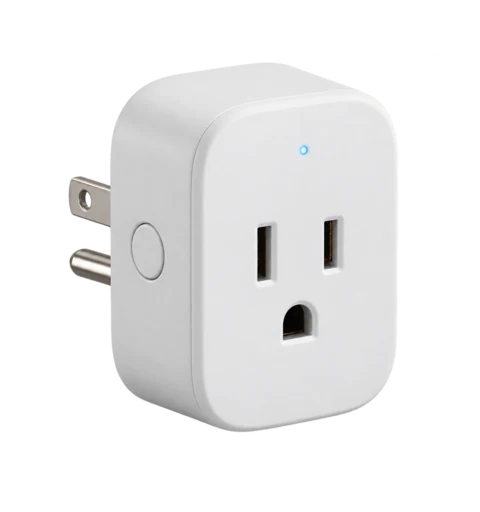
3. Winter Rate Seasonality: When the Price per kWh Changes on January 1
Many utilities run seasonal rate schedules — the same kWh simply costs more during winter months. And on tiered or baseline plans, the cheap tier often shrinks in winter, so routine heating usage crosses into higher-priced tiers faster than it would in fall.
Before assuming usage doubled, find these lines on your bill:
- The rate season label (often “winter” vs “summer” residential rate).
- The tier/baseline breakdown — how many kWh were billed at each tier’s price.
- The effective $/kWh this January vs last — our electric bill breakdown shows exactly where these lines hide.
If the price per kWh moved, no amount of behavioral change fixes it — the lever is rate-plan optimization, including whether a time-of-use plan (cheaper overnight, when heat pumps in cold climates actually run most) beats your current flat rate.
4. Estimated Meter Reads: The January Bill That Stacks Two Months
Snow-covered meters, locked gates, and holiday access windows make estimated reads more likely in January. If the utility estimated December low and read the meter for real in January, the “catch-up” usage lands entirely on the January bill — stacking close to two months of heating into one statement.
Wi-Fi smart plugs with built-in energy monitoring — logs watts, kWh, and runtime per outlet in the Tapo app. Schedule the backup heater down and watch the consumption curve flatten. Matter-compatible, 15A/1800W, ETL listed (TP-Link spec, 2-pack).
Check price on Amazon As an Amazon Associate we earn from qualifying purchases. Price & availability shown on Amazon.com.Look for the word “estimated” or “E” next to the meter reading. If you find it: read the meter yourself, compare against the estimate, and be ready for the true-up to swing the other way next month. The full verification and dispute mechanics live in Step 5 of the spike guide.
5. The Winter Combo Effect
January is where these causes stack: peak HDDs (more kWh) × aux heat (each kWh costs more to deliver) × winter rate season (each kWh prices higher) × possible estimated read (more kWh billed). Four multipliers on the same bill is why a January statement can double a November one with nothing “wrong.”
Run the triage tool above — it splits the increase into rate vs usage effects, which immediately tells you which of the four multipliers is yours.
6. Not the Weather? Hand Off to the Full Diagnosis
If kWh didn’t track the cold, the cause is one of the non-seasonal ones — phantom loads, a failing water heater, a meter fault, or wiring. Route to the 12-cause diagnosis (free checks first) and the 17-step lower-bill guide (fixes ranked by cost).
And if the problem is paying the bill rather than the usage: LIHEAP — the Low Income Home Energy Assistance Program — helps eligible households with winter heating bills and can prevent shutoffs; DOE’s Weatherization Assistance Program delivers free efficiency upgrades worth about $372 a year on average. Your local 211 connects you to both plus utility hardship funds.