Quick Answer
Short cycling — the furnace runs a few minutes, shuts down early, and repeats — is almost always the safety high-limit switch doing its job on an overheating heat exchanger, and the #1 cause is a clogged furnace filter ($11 fix). The other ranked causes: a thermostat misreading or mounted badly, a dirty flame sensor shutting the burner, an oversized furnace that satisfies the thermostat too fast, and restricted ducts or closed registers choking airflow. Short cycling is worth fixing fast for three reasons: every restart burns the inefficiency of warm-up, the start-stop hammering wears the igniter and blower, and the house never quite reaches temperature — which is why it shows up on bills as a mystery increase covered in why is my heating bill so high.
How to Tell It’s Actually Short Cycling
Normal heating cycles run roughly 10-15 minutes under design conditions (colder outside = longer cycles). The signature of short cycling:
- Runs under ~5 minutes, often 2-3 minutes, then shuts off before the thermostat setting is reached.
- Restarts within a few minutes — the pattern repeats for hours.
- The house is noisy with starts and stops but never gets properly warm.
- Some rooms stay cold because air never circulates long enough to reach them.
The opposite pattern — running continuously without stopping — is a different failure family: why your furnace is running constantly. The AC sibling of this article covers the cooling-side version: AC short cycling causes and fixes.
The Mechanism: What the Limit Switch Is Protecting
A gas furnace’s heat exchanger is designed to shed heat into moving air. If airflow drops, the exchanger’s metal temperature climbs toward the range where it cracks — an expensive failure and a carbon-monoxide risk. So a high-limit switch watches exchanger temperature and shuts the burner down when it gets too hot. The blower keeps running to purge the heat, the exchanger cools, the switch resets, the burner relights — and if the airflow restriction is still there, the loop repeats. That loop IS short cycling: the furnace isn’t malfunctioning so much as correctly refusing to overheat. The fix is always to remove the reason it’s overheating.
Ranked Cause 1: The Clogged Filter (Check This First — It’s Free to Check)
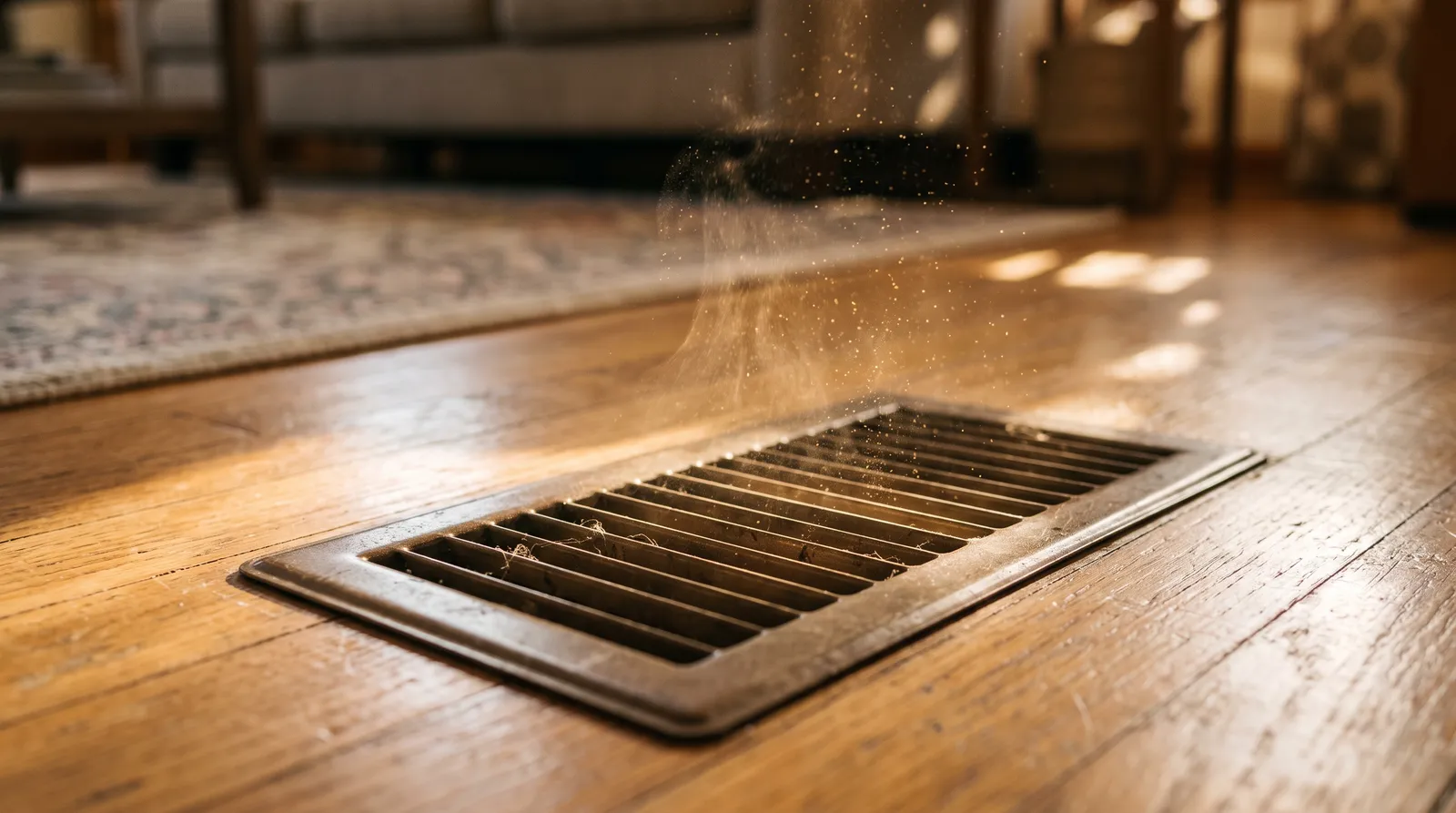
A loaded filter is the most common airflow restriction in residential HVAC and the cheapest fix on this list. Dust loads over months of runtime, the pressure drop across the filter climbs, the blower moves less air, the exchanger runs hot, the limit trips.
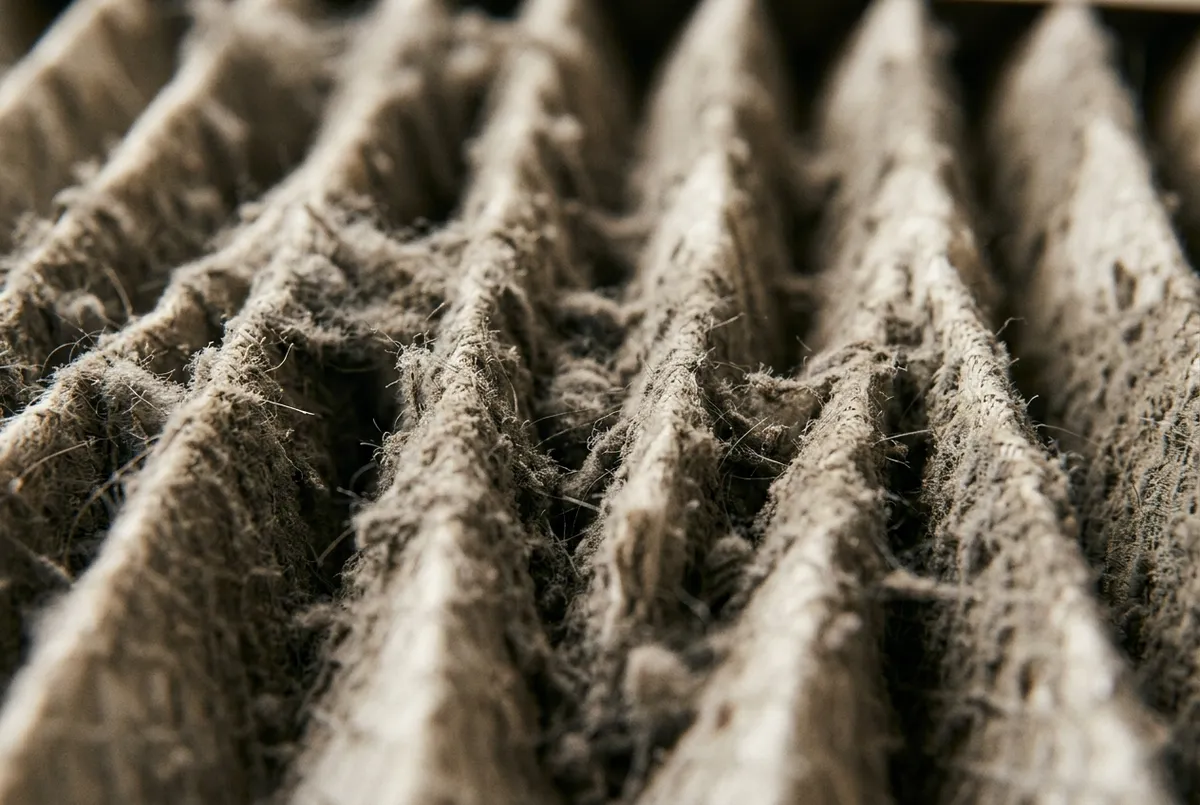
What to do: pull the filter and run one cycle with it out (briefly — never run the system for days filterless). If the cycle lengthens to normal, the filter was the cause. Replace with the same size printed on the frame — the site’s default for most forced-air homes is a pleated MERV 11:
Pleated MERV 11 (MPR 1200 / FPR 7), actual size 19.75 x 24.75 x 0.75 in — the standard residential slot. Moderate airflow resistance with fine-dust and dander capture; the balance the blower was designed for. Buy the size printed on your old filter's frame, not the shelf's nominal tag. 4.7 stars from 2,200+ ratings at the time of writing; sold and shipped by Amazon.
Check price on Amazon Price & availability shown on Amazon.com — we may earn a commission.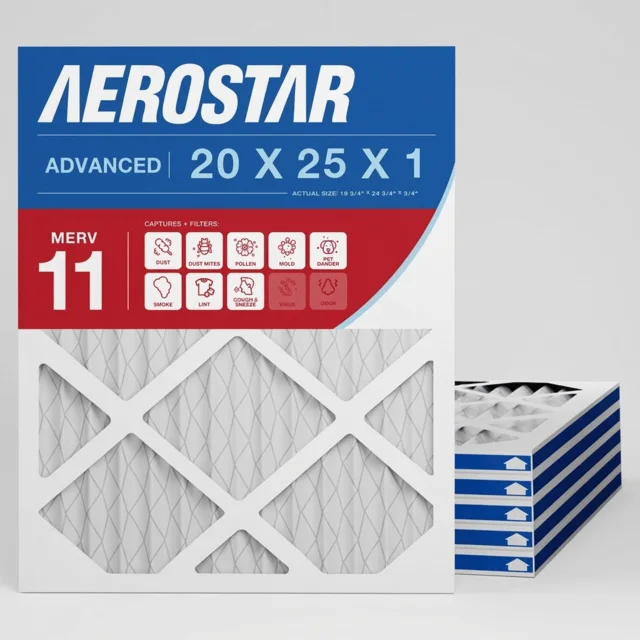
One upgrade note: if your filter slots are sized differently or you’ve been considering higher capture, read what MERV rating do I need first — a MERV 13 in a marginal blower is itself an airflow restriction, i.e., it can CAUSE the cycling you’re fixing.
Pleated MERV 11 (MPR 1200 / FPR 7), actual size 19.75 x 24.75 x 0.75 in — the standard residential slot. Moderate airflow resistance with fine-dust and dander capture; the balance the blower was designed for. Buy the size printed on your old filter's frame, not the shelf's nominal tag. 4.7 stars from 2,200+ ratings at the time of writing; sold and shipped by Amazon.
Check price on Amazon As an Amazon Associate we earn from qualifying purchases. Price & availability shown on Amazon.com.Ranked Cause 2: Thermostat Placement and Wiring
The thermostat can short-cycle the system two ways:
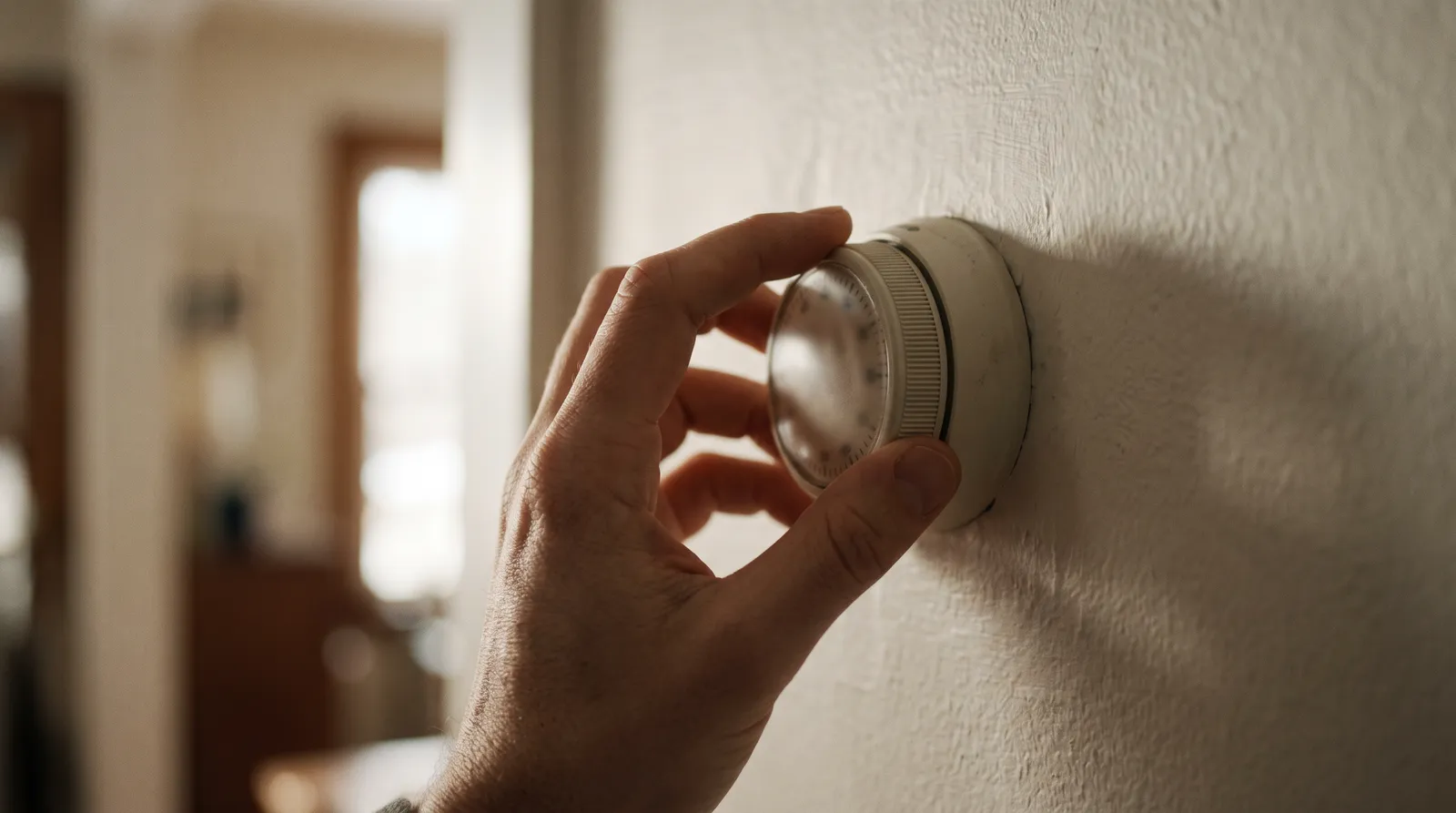
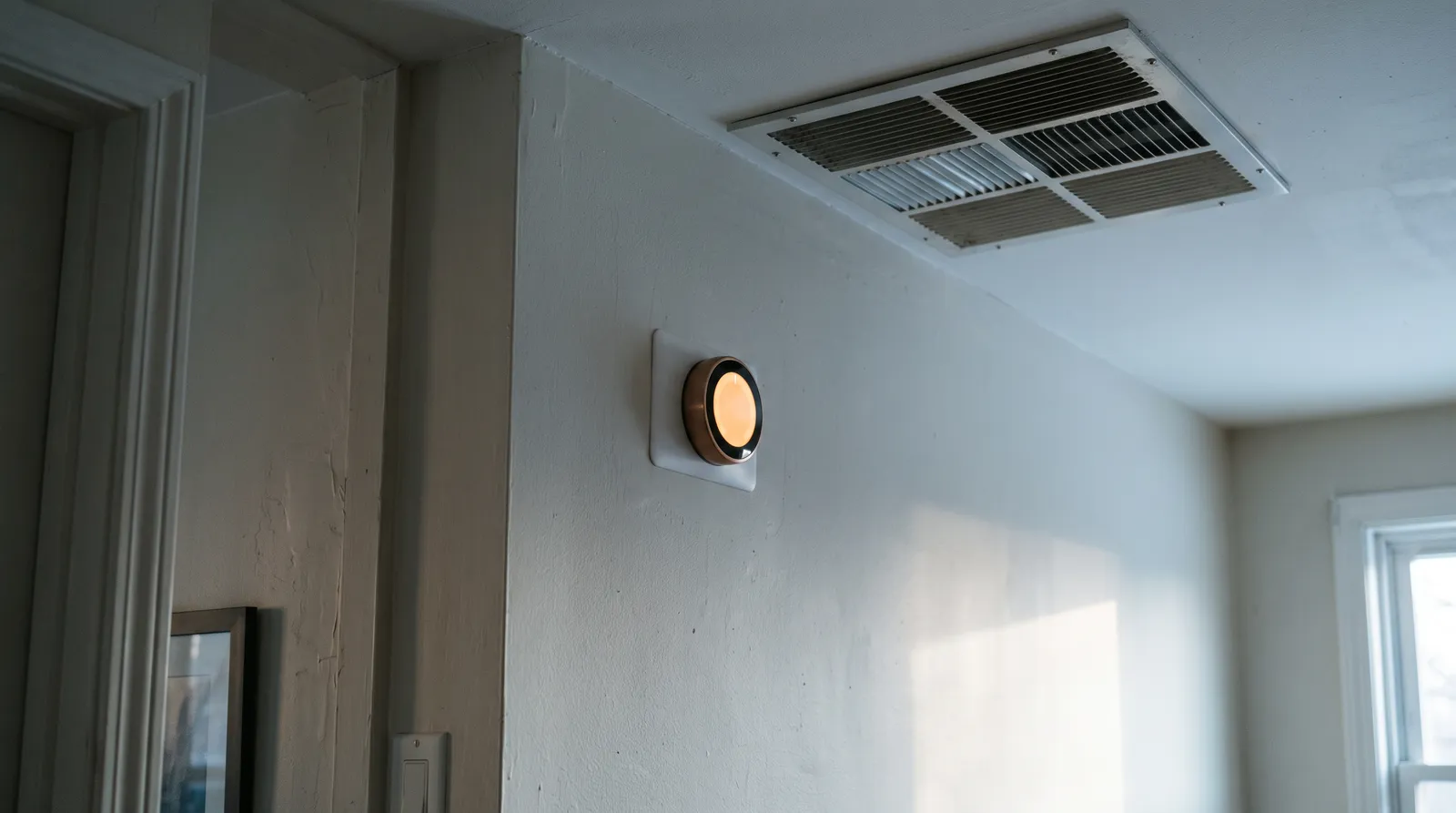
- Placement: mounted near a supply register (reads warm air the moment the blower starts), in direct sun, over a lamp or TV, or on an exterior wall with a draft — it reaches setpoint seconds into the cycle and cuts the call for heat.
- Anticipator/short detection: on older thermostats a miscalibrated heat anticipator cuts cycles early; on smart thermostats, a failing connection or a misconfigured minimum-runtime setting.
What to do: feel the air around the thermostat during a cycle — if it’s bathed in supply air within 60 seconds, placement is your problem, and moving it (or the offending register’s direction) fixes it. Wiring and configuration issues belong to the thermostat’s own troubleshooting; the models that handle staged runtimes cleanly are covered in our smart thermostat comparison.
Ranked Cause 3: The Dirty Flame Sensor
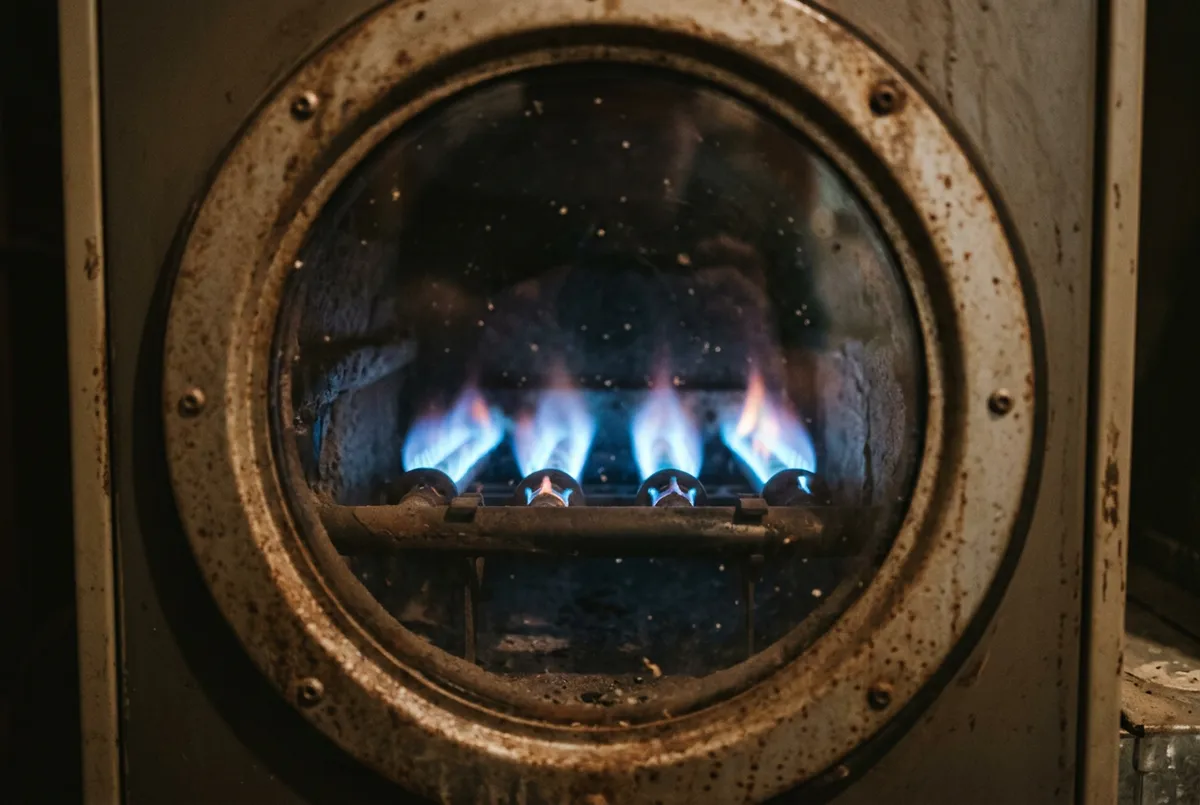
The flame sensor is a metal rod in the burner stream that confirms flame by conducting a microcurrent through it. When coated in combustion residue (a light silvery-gray film), the board “loses” the flame proof and shuts the gas valve — typically within seconds of ignition, several times in a row, before the furnace lockouts. The signature: very short burner runs, 5-30 seconds, sometimes a lockout the control resets after an hour.
What to do: this is a technician visit or a confident DIY — the sensor removes with one screw and cleans with fine abrasive pad (not sandpaper). A furnace tune-up includes it; ask for it by name, it’s the single most common tune-up item.
Ranked Cause 4: The Oversized Furnace
If short cycling has been the pattern since the furnace was new — every winter, every cycle, from day one — the unit may simply be too big for the house. An oversized burner produces heat faster than the house and ducts can absorb it; the exchanger overheats or the thermostat satisfies before a proper cycle completes. Contractor sizing shortcuts (rule-of-thumb per square foot, or “one size up for safety”) are the usual origin.
What to do: confirm with a Manual J load calculation (any competent contractor offers it) before replacing anything. There’s no cheap fix for true oversizing, but you already own the long-cycle lever: a thermostat with a properly configured long minimum runtime, and the setback strategy that reduces total cycle count.
Ranked Cause 5: Duct and Register Restrictions
Closed supply registers (guest-room doors shut all winter), a crushed return duct in the crawl space, a dirty AC evaporator coil stacked on the furnace, or a filter slot drawing air around a gapped cover — all reduce airflow with the same limit-switch consequence as the clogged filter. What to do: walk the house — open any closed supply registers fully, check the return path isn’t blocked by furniture, and make sure the filter cover seats with its tabs. If the evaporator coil is the restriction (thick dust layer visible through the plenum), that’s a professional cleaning.
What Short Cycling Costs You (The Bill Connection)
Every cycle start carries warm-up inefficiency: the igniter sequence, the pre-purge, the blower ramp — all energy spent before useful heat delivery. A furnace cycling every 5 minutes spends a meaningfully larger share of its runtime in that phase than one running 12-minute cycles, and the start-stop pattern is also what wears igniters and blower bearings prematurely (repairs that always land on the coldest week of the year). On the gas side, the meter keeps logging cubic feet; on the electric side, the blower’s kWh climbs exactly as described in why your electric bill spikes when the gas furnace runs — the PSC vs ECM blower distinction there matters to this diagnosis too.
The 20-Minute Diagnostic Order (Summary)
- Filter out, one cycle — cycle lengthens → replace filter, done. (Most homes stop here.)
- Thermostat check — supply air hitting it within a minute → placement problem.
- Timing the runs — 5-30 second flame losses → flame sensor cleaning (tune-up).
- History — cycled short since day one → oversized furnace; get a Manual J.
- Airflow walk — closed registers, blocked returns, dirty coil → open/clean.
Burning smells during the cycling? That’s the companion article: furnace smells like burning — the filter connection runs through both.
How Long Should a Cycle Actually Be? (It Depends on the Thermostat’s Work)
There is no single “correct” cycle length — it scales with how far outdoor temperature sits below balance point and how much heat the house is losing:
| Condition | Typical healthy cycle | Reads as |
|---|---|---|
| Mild (35-45°F), light load | 5-10 minutes | Short but normal |
| Design-ish (20-30°F) | 10-15 minutes | The reference range |
| Cold snap (below 20°F) | 15-20+ minutes, may run near-continuously | Normal — see furnace running constantly for when continuous is fine |
| Any temperature, under 5 minutes, house never warm | Short cycling | The failure this page covers |
The diagnostic question is never “how many minutes?” in isolation — it’s “does the cycle COMPLETE the thermostat’s request?” A 6-minute cycle that ends with the house at setpoint is a healthy mild-day cycle; a 3-minute cycle that ends with the house 2 degrees short and restarts in 90 seconds is short cycling at any outdoor temperature.
The Blower Motor Connection (Why the Same Filter Protects Two Different Motors)
The filter’s role in short cycling depends on which blower motor generation your furnace carries — the same distinction our heating bill diagnostic uses for bill spikes:
- PSC motors (older units): a clogged filter slightly LOWERS instantaneous wattage but forces longer runtimes to deliver the same heat — and the choked airflow still overheats the exchanger into limit trips. Short cycling with a PSC is exchanger-protection, but the motor also runs hotter than design.
- ECM motors (variable-speed): the motor ramps UP to fight the restriction, so a dirty filter shows up directly as higher blower wattage — and in the stressed extreme, winding temperatures climb toward the electrical-burn smell covered in furnace smells like burning.
Either way the filter is the first domino: it’s the one component in the airflow path designed to be replaced by the homeowner in sixty seconds.
What the Technician Will Check (and What Each Item Runs)
If the filter and thermostat checks don’t clear it, the service visit typically walks: flame-sensor resistance and cleaning (the most common billable 30 minutes in residential HVAC), limit-switch continuity and trip temperature, blower amperage against nameplate, static pressure across the filter and coil (the instrument reading that names an airflow restriction), and, if the history suggests it, a Manual J sizing review. Pricing expectations live in the furnace tune-up cost and schedule guide — but the ordering matters: sensor cleanings and switch replacements are service-call money; exchanger and motor replacements are decisions, and a contractor proposing them off a single short-cycling visit without static-pressure readings is worth a second opinion.
Frequently Asked Questions
Why does my furnace turn off after a few minutes?
Can short cycling damage the furnace?
Why does my furnace short cycle only at night?
Will a smart thermostat stop short cycling?
How much does it cost to fix a short cycling furnace?
Related: furnace smells like burning, furnace running constantly, why is my heating bill so high, and AC short cycling for the cooling season.