
Quick Answer
Start with the 10-minute toilet check — it finds the most common cause of a sudden spike. Add a few drops of food coloring to the toilet tank, wait 10 minutes without flushing, and look at the bowl: color appearing means the flapper is leaking, silently, around the clock.[1] EPA notes a family of four using more than 12,000 gallons in a winter month likely has a serious leak.[1]
If the dye test is clean, the sudden jump usually comes from one of three places this page walks through in order: a rate, tier, or billing-period change (check the usage line against the rate lines — usage flat with a higher total is a rate story, not a leak), seasonal outdoor use, or a leak outside the toilet (irrigation, service line). To check whether water is moving with everything off, use the water-meter leak indicator or the full meter running when no water is used test; for a bill that is high every month rather than suddenly, see causes of high water bills ranked by likelihood. And while you work the checklist, a five-pack of leak sensors like the Govee under the water heater, washer, and sinks turns the next leak from a $200 bill surprise into a same-day phone alert.
The most common reasons for a sudden spike
Sudden increases are usually tied to leaks, seasonal outdoor use, or a change in household habits. Toilets are a frequent cause because a silent leak can run all day without being obvious. EPA notes that an old or worn toilet flapper can cause a toilet to flush on its own or silently leak thousands of gallons a year.[1]
Other common reasons include a broken sprinkler line, guests staying in the home, or a bill that covers more days than normal.
If your usage seems to jump without any change in habits, start with a leak check before assuming a billing error.
Check for leaks inside and outside
Start with toilets. EPA's method: place a few drops of food coloring in the toilet tank, and if any color shows up in the bowl after 10 minutes, you have a leak. Flush immediately after the test to avoid staining the tank.[1] For the complete walkthrough, see full toilet leak test instructions.
Next, examine faucet gaskets and pipe fittings for any water on the outside of the pipe, which is how EPA recommends checking for surface leaks. A leaky faucet dripping at one drip per second can waste more than 3,000 gallons per year, and a showerhead leaking at 10 drips per minute wastes more than 500 gallons per year.[1]
Outdoors, EPA advises checking an in-ground irrigation system each spring before use to make sure it was not damaged by frost or freezing. An irrigation system with a leak 1/32nd of an inch in diameter — about the thickness of a dime — can waste about 6,300 gallons of water per month.[1]
If you have a sprinkler timer, confirm it has not been reset or extended. Accidental programming changes are a frequent cause of summer spikes.
Leak-check quick list:
- Toilet dye test: food coloring in the tank; color in the bowl after 10 minutes means a flapper leak.[1]
- Feel faucets and exposed pipe fittings for moisture — a one-drip-per-second faucet can waste more than 3,000 gallons a year.[1]
- Walk the irrigation line: a leak the thickness of a dime can waste about 6,300 gallons a month.[1]
- Confirm the sprinkler timer schedule hasn't been reset or extended.

Work the list top to bottom. Once the toilet and fixtures check out, move to the two-hour meter test below to confirm whether water is moving when everything is off.
The checks above find a leak that's running today. Contact sensors alarm at 105 dB and phone-alert you the minute water appears — place them under the water heater, behind the washing machine, and under sinks, where slow leaks start. 5-pack covers the usual suspects (Govee spec).
Check price on Amazon Price & availability shown on Amazon.com — we may earn a commission.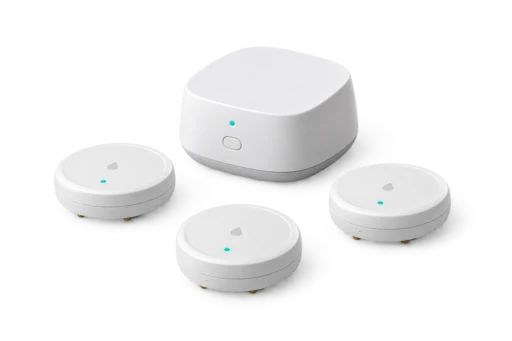
Look for normal usage changes
A temporary shift in household routines can raise usage. Extra laundry loads, long showers during cold months, or washing a car weekly can all add gallons. If a new appliance was installed, confirm it is working correctly and not cycling too often.
For context, EPA reports the average American family uses more than 300 gallons per day at home, with roughly 70 percent of that use occurring indoors.[2] Comparing your gallons per day against your own prior billing periods is more reliable than comparing against any national figure.
The checks above find a leak that's running today. Contact sensors alarm at 105 dB and phone-alert you the minute water appears — place them under the water heater, behind the washing machine, and under sinks, where slow leaks start. 5-pack covers the usual suspects (Govee spec).
Check price on Amazon As an Amazon Associate we earn from qualifying purchases. Price & availability shown on Amazon.com.Also consider landscaping changes. New sod or gardens often require more frequent watering during the first season. Nationally, outdoor water use accounts for 30 percent of household use, and EPA notes it can be much higher in drier parts of the country.[2]
If you recently started working from home, indoor water use may be higher simply because more people are home during the day.
Seasonal cleaning, like power washing a patio or filling a small pool, can also add a one-time spike that shows up on the next bill.
Tiered pricing can magnify a modest increase
Some utilities use tiered pricing. Once you cross a threshold, the price per unit rises. A modest increase in gallons can trigger a larger jump in cost. This makes the bill feel sudden even if usage rose only slightly.
Look for a tier table on your bill. It will show different prices for different usage tiers. Knowing where you are in the tiers helps you judge whether a small usage change is affecting the price. The specific thresholds and prices are set by your local utility's rate schedule. For a deeper example of how blocks price the same gallon differently, see how tiered water rates work.
If you are close to a tier threshold, small conservation steps can keep you in the lower-cost tier and reduce the total bill.
Weather-driven irrigation changes
Hot, dry weather increases outdoor watering needs. If your area had a heat wave or low rainfall, your sprinkler system may have run longer or more often. Even one extra watering day per week can add a large volume over a month, particularly for an in-ground system.
If you use a smart irrigation controller, review the settings after heavy rain or a seasonal shift. Many systems adjust automatically, but a manual review can prevent unnecessary watering. For a fuller breakdown of the seasonal pattern, see why water bills climb in summer.
And when dry weather turns into a declared drought, many utilities add a temporary surcharge on top of the normal rate — our drought surcharge on water bills explainer shows how the charge is calculated and when it ends.
Check the billing details
Bills can be higher if the reading was estimated or if the billing cycle is longer. Compare the number of days in the cycle. If this period is longer than usual, calculate gallons per day to see whether usage actually increased.
Also look for any service fee changes or local rate updates. Utilities sometimes adjust rates at the start of a new fiscal year.
Verify the meter reading
EPA's leak-check method: check your water meter before and after a two-hour period when no water is being used. If the meter changes at all, you probably have a leak.[1] Not sure how to read the numbers? Our guide to how to read your water meter covers dial and digital displays, including which unit you're looking at.

You can also compare your meter reading to the bill. If it is close, the bill is likely accurate. If it is much lower, the bill may reflect an estimated read or a data issue. Contact the utility if the numbers do not align.
If you have a digital meter with a leak indicator, watch for movement when no water is being used. That is a strong signal of a leak.
Build a simple usage timeline
A timeline helps connect spikes to real events. Write down days when guests visited, when you watered the lawn, or when a leak was repaired. Then compare those notes to your meter readings or daily usage data.
This is especially useful if you have a smart meter. A one-day spike can often be traced to a specific activity like filling a kiddie pool or running the washer multiple times.
If your utility only provides monthly reads, create a timeline with weekly meter readings. That gives you a clearer picture than waiting for the next bill.
Shared meters and submetering
In some multi-unit buildings, a single meter covers multiple units and costs are divided among tenants. This can make your bill rise even if your personal usage is unchanged. Check your lease and ask your property manager how water is allocated.
Submetering is different. With submetering, each unit has its own usage-based share. If your building uses submetering, you should be able to request your usage history for comparison.
Billing errors and adjustments
Billing errors are less common than leaks, but they can happen. If you believe the bill is incorrect, document your meter reading and contact the utility. Ask whether the bill was estimated and whether a re-read is possible. If you need the formal process, see how to dispute a utility bill.
Some utilities will adjust a bill if a leak is fixed quickly or if a meter was read incorrectly. Keep receipts and repair notes to support any adjustment request. Adjustment rules vary by utility, so ask yours what policy applies.
When you contact the utility, ask for your usage history over the last 12 months. That history can show whether the spike is unusual or part of a seasonal pattern.
What to do next
- Run EPA's two-hour meter test with all water off.[1]
- Check toilets with the food-coloring dye test.[1]
- Inspect faucets, showerheads, and outdoor irrigation for drips or damage.[1]
- Compare gallons per day across billing periods.
- Call the utility if the bill looks inconsistent with the meter.

If you find a leak, save receipts and ask your utility about its adjustment or leak-forgiveness policy. EPA notes that fixing easily corrected household water leaks can save homeowners about 10 percent on their water bills.[1]
Next step: after the two checks above, follow the result: water moved with everything off means a leak — start with the toilet dye test and the leak checks; water did not move means the meter test cleared the leaks, so compare your reading against the billing details; and if the numbers still don't line up, take them through the billing-error and dispute steps.
How much water does a running toilet waste?
Can a water softener raise my bill?
Should I call the utility first?
Sudden Bill Increase Causes
| Possible cause | What EPA data shows | How to check |
|---|---|---|
| Running toilet | A worn flapper can silently leak thousands of gallons a year[1] | Food-coloring dye test; check bowl after 10 minutes[1] |
| Dripping faucet | One drip per second can waste more than 3,000 gallons per year[1] | Examine faucet washers and gaskets[1] |
| Leaking showerhead | 10 drips per minute wastes more than 500 gallons per year[1] | Check the connection and pipe tape[1] |
| Irrigation leak | A 1/32-inch leak (dime thickness) can waste about 6,300 gallons per month[1] | Spring inspection for frost damage; meter test[1] |
| Larger hidden leak | 9 percent of homes have leaks that waste 50 gallons or more per day[1] | Two-hour meter test with no water in use[1] |
| Whole-house signal | A family of four exceeding 12,000 gallons in a winter month could have serious leaks[1] | Compare winter usage to that benchmark[1] |
| Rate or tier change | Set by your local utility’s rate schedule, not a national figure | Compare the rate per unit and tier placement on the bill |
| Estimated or longer bill | Varies by billing practice | Check days in cycle and look for an “estimated” note |
This walkthrough is part of the Water Explained hub. If a leak is confirmed, start with where to place water leak sensors.
Sources
- U.S. Environmental Protection Agency, WaterSense: Fix a Leak Week
- U.S. Environmental Protection Agency, WaterSense: How We Use Water
Related Reading:


