Quick Answer
Most homes: MERV 8. Allergy households: MERV 11. MERV 13 only if your system is rated for it. The number behind that shorthand is the EPA’s: MERV reports a filter’s capture efficiency for particles between 0.3 and 10 microns, with higher values meaning finer capture [1]. The filter market is built around three tiers — 8, 11, and 13 [3] — and equipment makers attach the same warning to every step up: higher-rated media can restrict airflow [2].
The rest is priorities — and the most common filter mistake isn’t the rating at all. It’s the size. A filter that doesn’t match its slot lets air slip past the media entirely, which is why the sizing section below outranks every rating debate here.
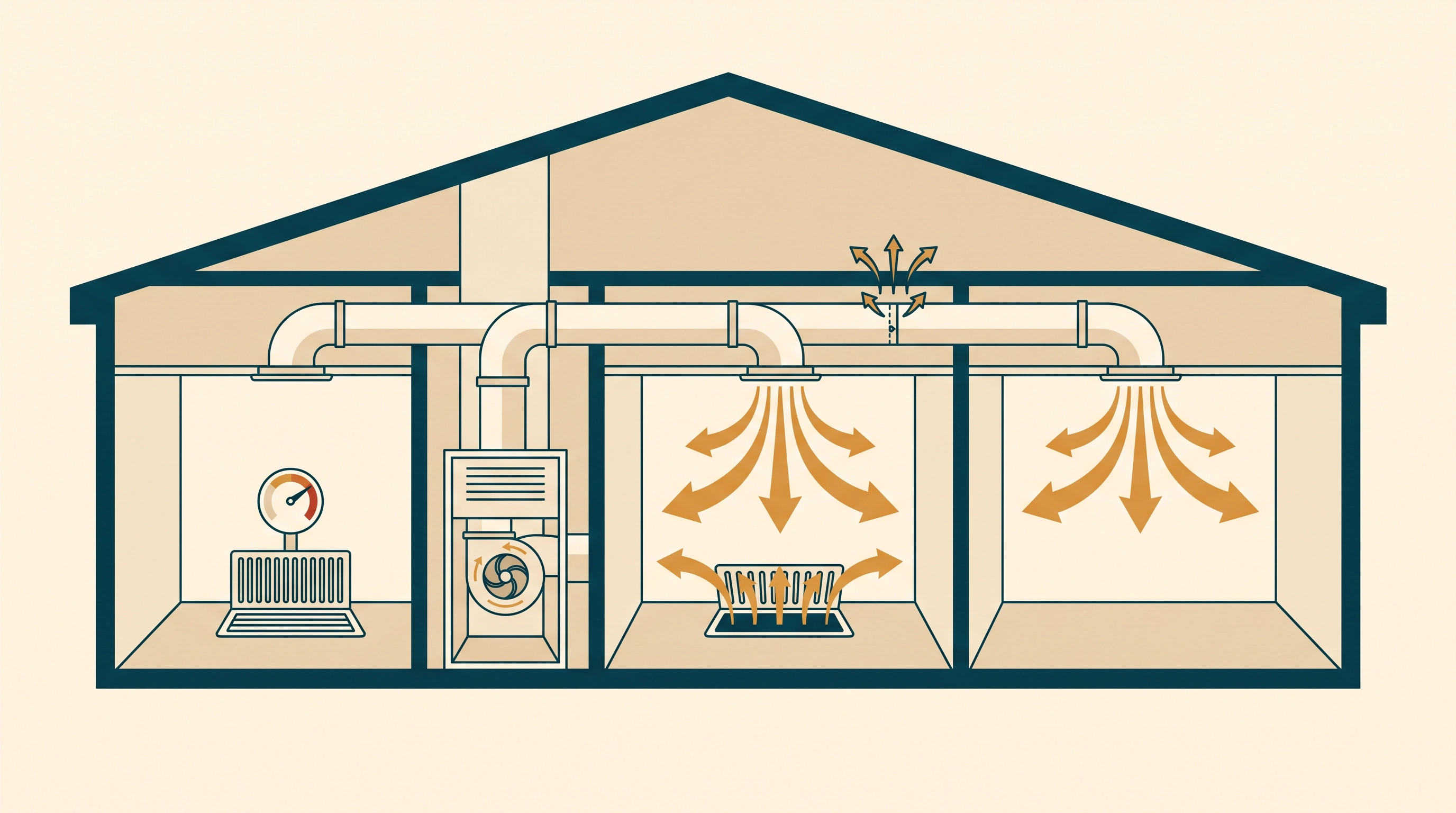
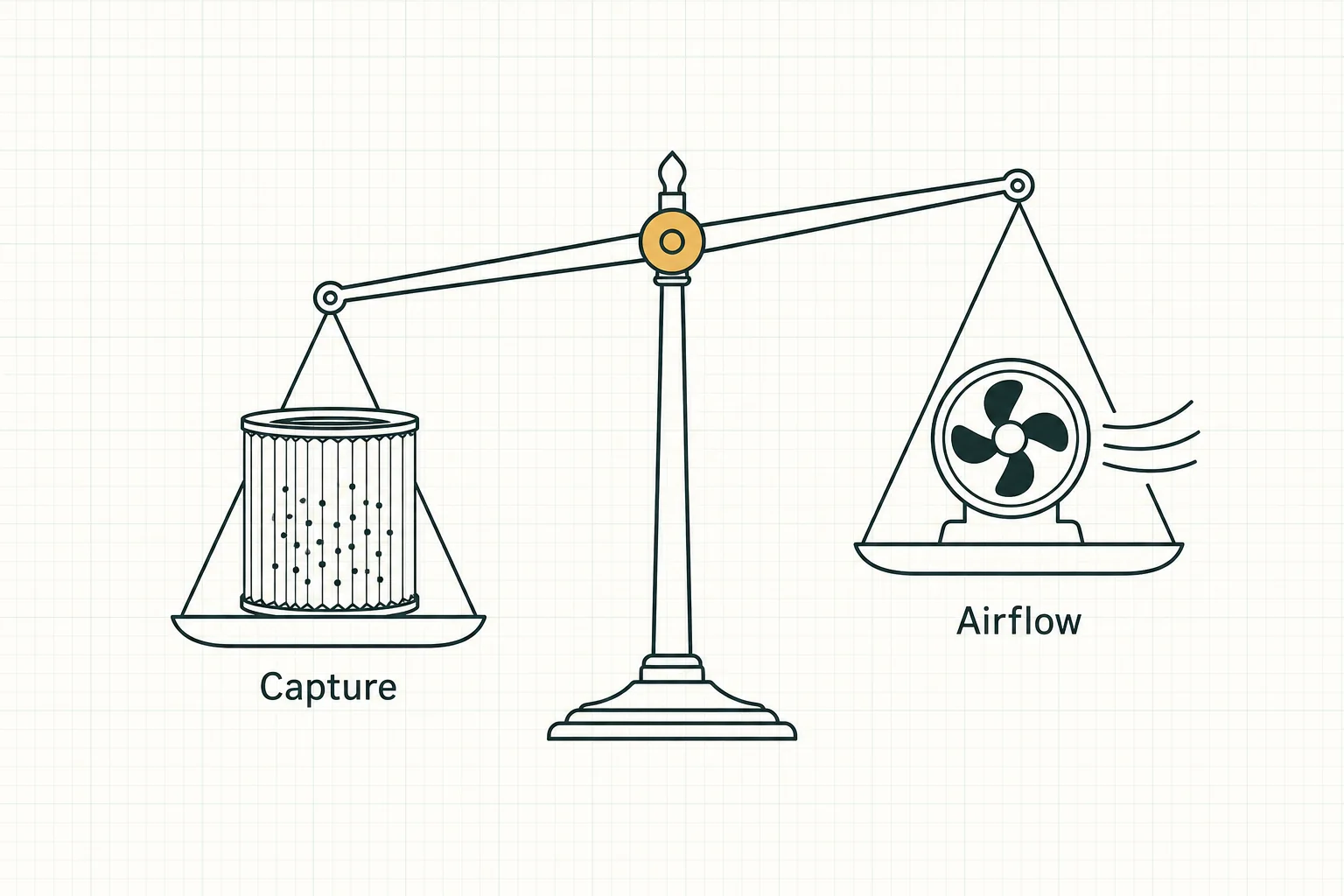
Your filter is a breathing problem before it’s a shopping problem. The blower pushes air through whatever you install; capture and airflow trade against each other, and every choice below — rating, size, timing — is a position on that trade.
What MERV Actually Measures
MERV measures what a filter catches — nothing else on the box does. The EPA defines MERV as a filter’s capture ability across particle sizes from 0.3 to 10 microns; a higher MERV means finer capture [1]. The definition is deliberately narrow. It doesn’t score how freely air moves through the media, it doesn’t know what system the filter is entering, and it makes no health claim — the number describes particles captured, not outcomes delivered [1].
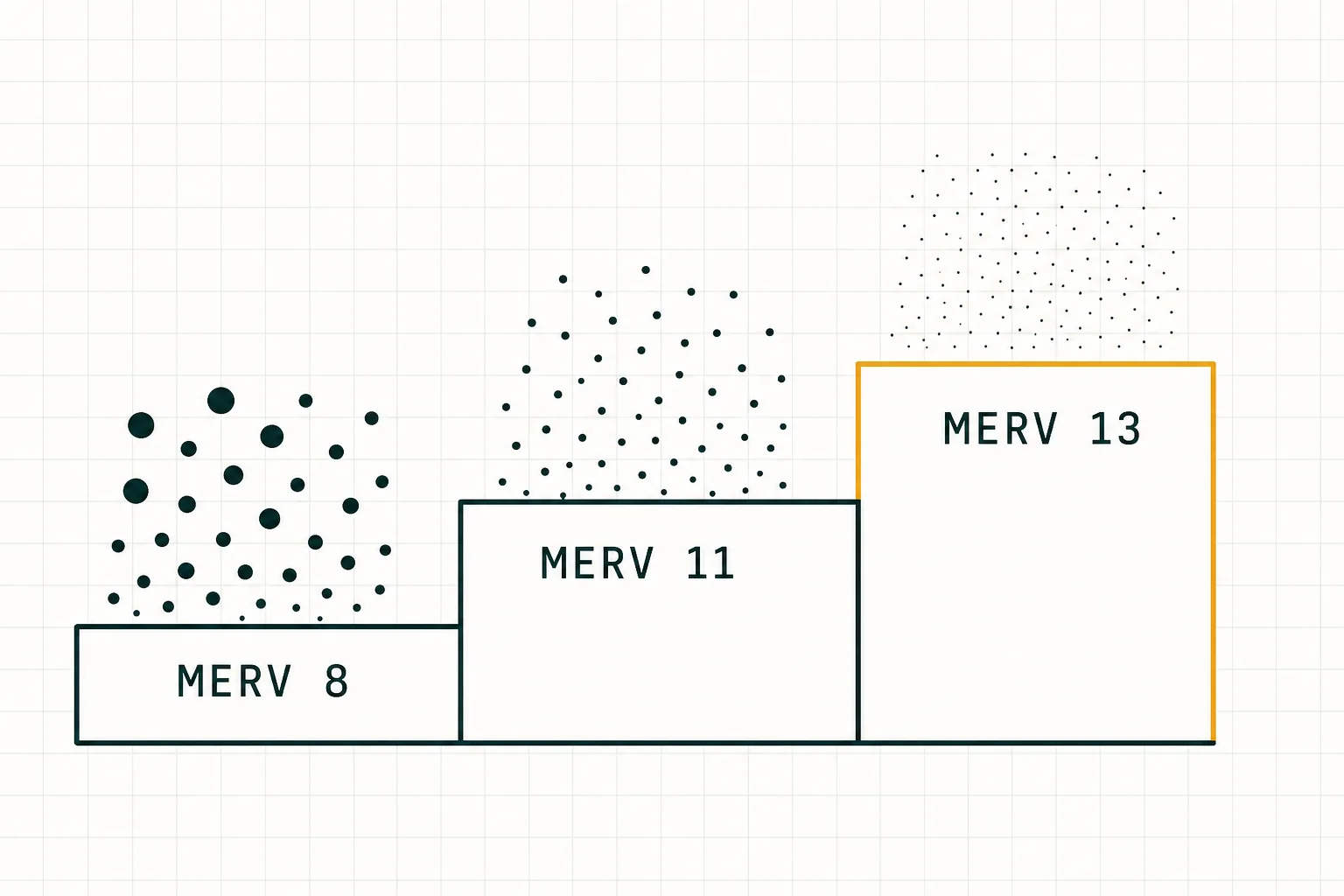
The ladder, from the floor up:
- MERV 1–4 — Debris duty. Lint and visible dust; these filters protect the equipment more than the lungs.
- MERV 8 — The residential standard. Pollen and household dust are the design targets, and it’s the tier most homes actually run [3].
- MERV 11 — Finer allergens. One more grade of density, aimed at particles the standard tier passes.
- MERV 13 — Fine-particle capture. This is the tier CDC and EPA guidance discusses where fine particles are the concern — and the framing matters: it describes capture of particles in a size range, not a health promise [1]. It also travels with the airflow caveat this article keeps returning to.
The Trade Nobody Explains: Capture vs. Airflow
Every step up the MERV ladder buys capture with airflow. Denser media means more pressure drop — more resistance standing between the blower and the return — and the blower pays that resistance on every cycle. Manufacturers state the operating range plainly: residential systems typically run media from MERV 8 through 13, and higher-MERV filters can restrict airflow [2].
A filter’s rating says what the media can catch. The system’s documentation says what the blower can pull through it. Only one of those numbers is printed on the box, which is exactly why the other one gets ignored — usually at the moment of purchase.
When the mismatch is real, the symptoms are mechanical rather than mysterious: airflow at the registers goes weak, runtimes stretch, and in aggravated cases the system short-cycles. That last one has its own diagnosis page, because it deserves more than a parenthesis: why your AC short-cycles, and how to fix it.
So treat the manual as the ceiling, not a suggestion [2]. If the documentation doesn’t confirm your system handles a tier, that tier is unavailable to you — no matter what the box promises or the allergies vote for. Your system breathes first; the rating argues second.
Does a Dirty Filter Raise Your Bill?
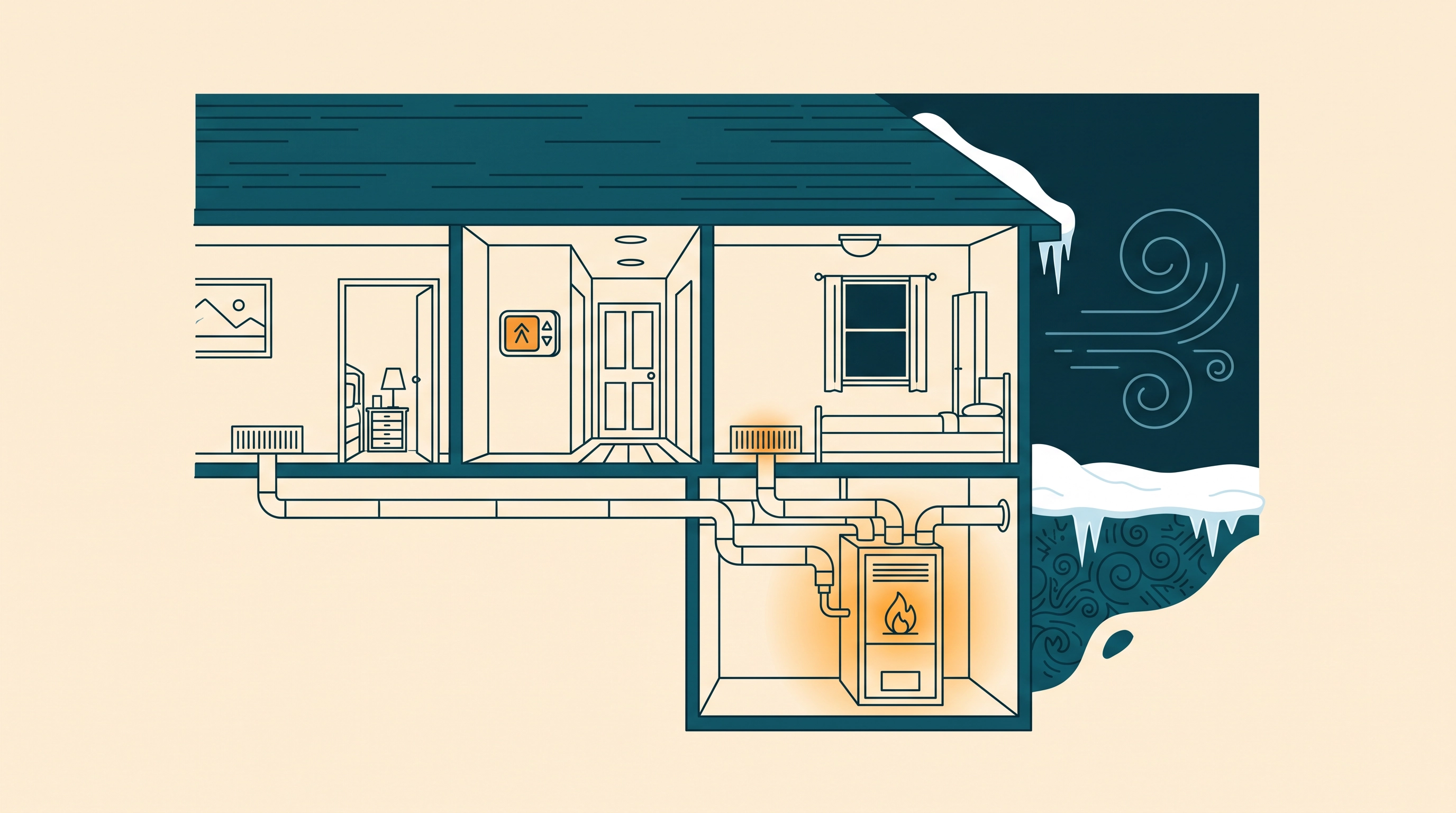
Yes — through runtime, not through a promised percentage. A clogged filter is the same restriction problem as oversized media, arriving gradually: dust loads the media, the open path narrows, and the blower pushes against it on every cycle.
The tier most homes run, in a pleated multipack. Shown in the 20x20x1 example size (actual 19.5 x 19.5 x 0.75) — match the printed size to the slot you measured.
Check price on Amazon As an Amazon Associate we earn from qualifying purchases. Price & availability shown on Amazon.com.The honest symptoms are runtime and comfort strain. The system runs longer to hold temperatures it used to reach quickly, and the rooms at the far end of the ductwork lose airflow first. If the AC seems to be running constantly while the house drifts warmer anyway, the suspect list is longer than the filter: when the AC runs but doesn’t cool.
What this article won’t do is attach a percent to that mechanism — the cost depends on the system, the ducts, and how dirty the filter actually gets. The honest fix is cadence: 1 to 3 months is the typical replacement band — sooner with pets in the house, renovation dust, or a heavy dust season.
Which MERV for Which System
Check the manual — or the rating printed on the old filter — before deciding anything [2]. The table below is the general map. Your paperwork overrides it.
| Tier | Captures | Airflow risk | Best for | Check before using |
|---|---|---|---|---|
| MERV 8 | Pollen, dust, household debris | Minimal — the default residential tier | Most homes without a specific air concern [3] | The size — measure the slot or the old frame |
| MERV 11 | Finer allergens the standard tier passes | Low to moderate; older blowers feel it first | Allergy households | That the manual or the old filter’s rating allows above-8 media |
| MERV 13 | Fine particles, including the range CDC/EPA guidance addresses [1] | Real — the restriction tier [2] | Systems documented for it; fine-particle priority | Explicit manual confirmation of MERV 13 for your system |
Two cautions travel with that table. Airflow risk is a property of your system, not the filter — the same media that disappears into one blower strains another. And the tiers describe typical homes [3]; your system is allowed to be the exception.
Measure the Size (the mistake that beats every rating debate)
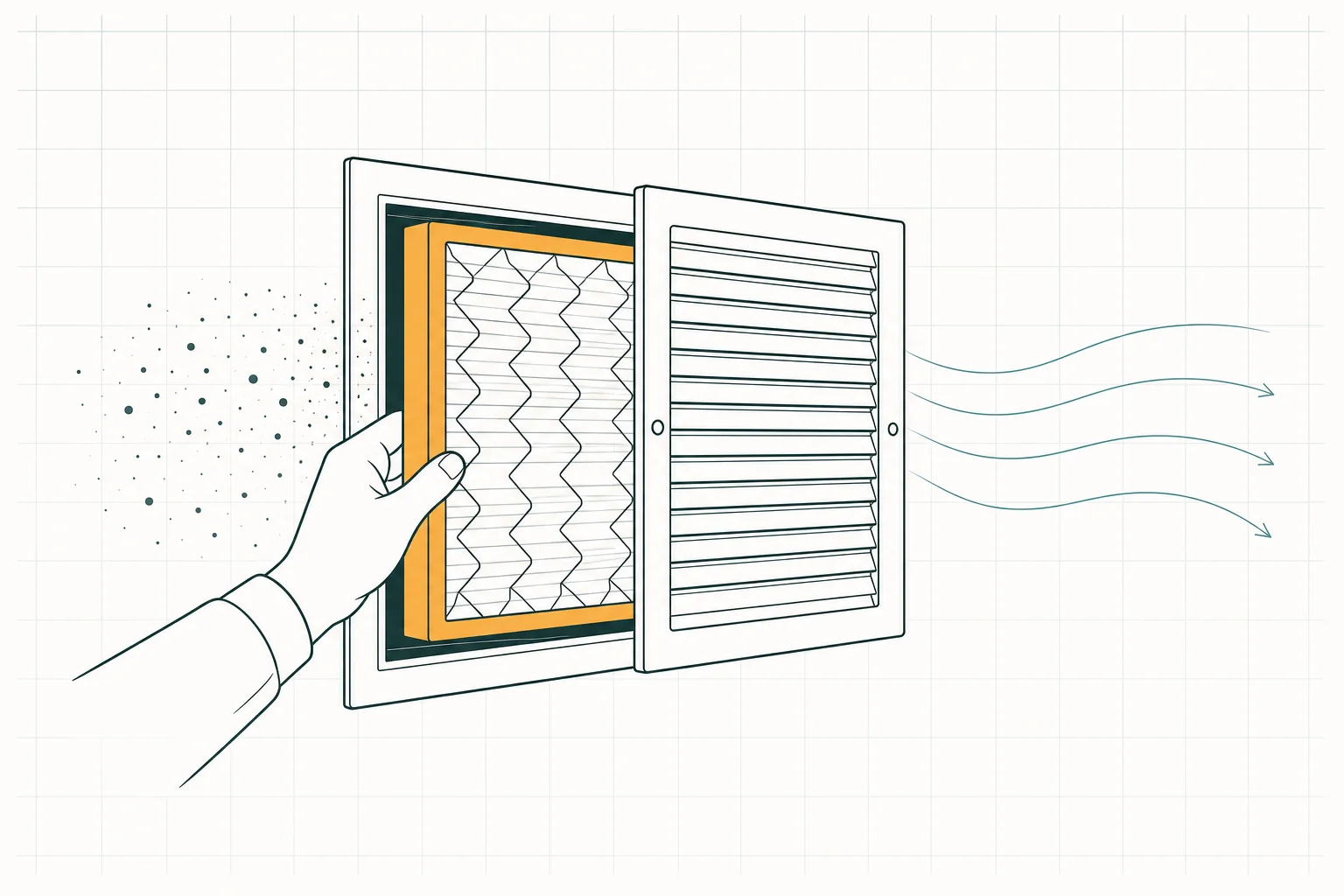
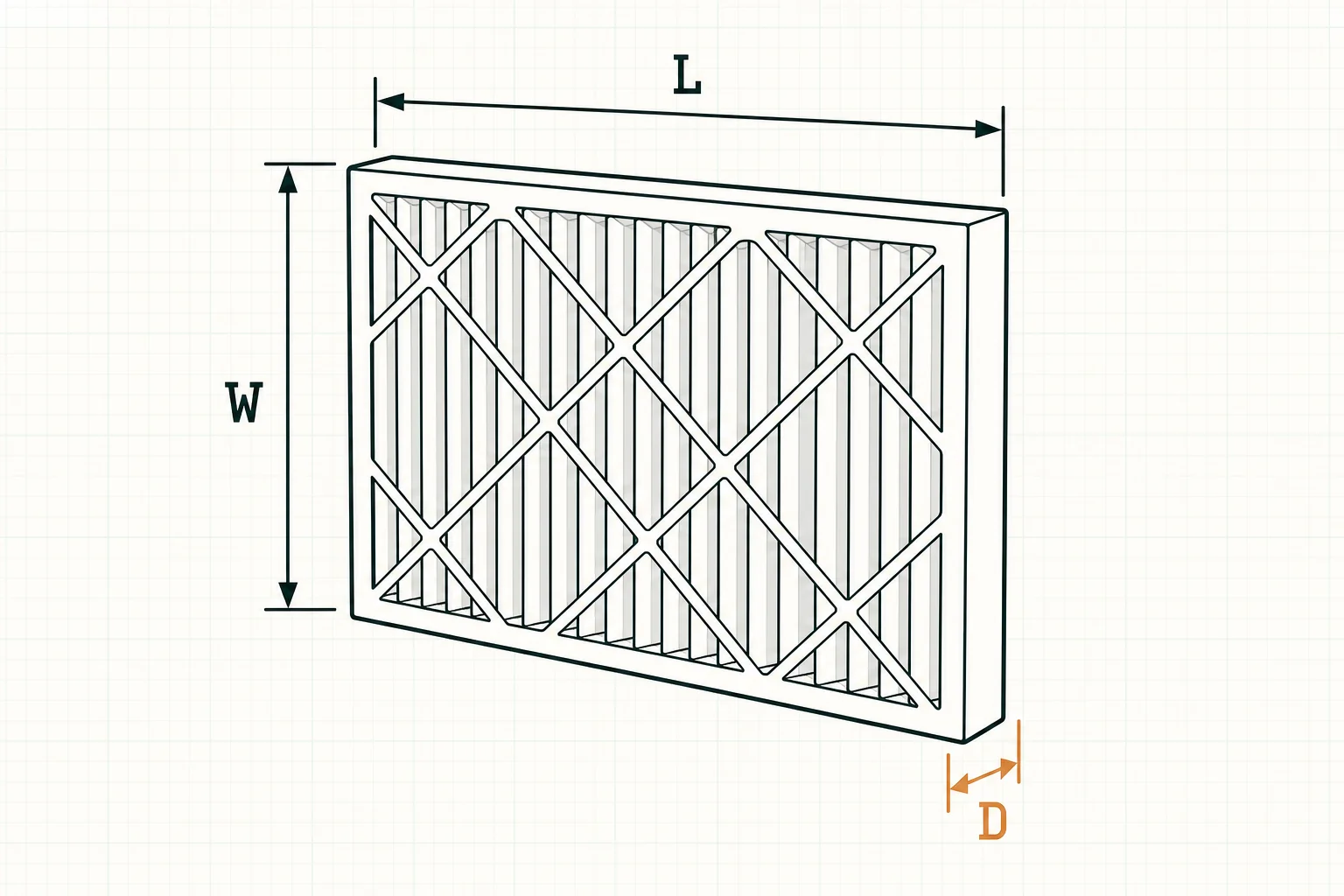
Read the length, width, and depth off the old filter’s frame — that’s the entire measurement. The frame prints the nominal size, and nominal is a rounded label, not a dimension: a “20x20x1” filter is not exactly 20.00 inches on any edge. The actual dimensions are printed separately on the frame, and those are the numbers that decide whether the filter actually seats.
Get it wrong by even an inch and air takes the easier path — around the media, unfiltered. That’s bypass air, and it’s why a size mismatch, not a rating argument, is the most common reason filters come back to the store.
| Where to look | What you’ll find |
|---|---|
| Old filter’s frame, large print | The nominal size — rounded, e.g. “20x20x1” |
| Old filter’s edge, fine print | Actual dimensions — the ones that must match the slot |
| System manual | The slot size, plus the highest MERV the system is rated for [2] |
If the old filter is gone, measure the slot itself: length, width, depth, in that order.
The Honest Economics
Buy the count you’ll actually use, in the size you measured, at the tier your documentation allows. The arithmetic is deliberately dull: filters per year at your replacement cadence, times the per-filter band in your size and tier. A 1-to-3-month cadence implies a modest annual pile, and multipacks exist to price that pile down. There is no prestige version of this purchase, and none is needed.
Subscribe-and-save fits when the cadence is stable — a household whose dust rhythm the calendar can carry. It fits badly when the count changes: a new pet, a renovation, a dusty season. The counterweight to bulk pricing is the multipack in the wrong size, which is not a discount. It’s inventory.
Finer-particle capture at the top of the residential range. Confirm your system is rated for MERV 13 before buying.
Check price on Amazon As an Amazon Associate we earn from qualifying purchases. Price & availability shown on Amazon.com.Filters are a commodity — buy on size and tier, not brand poetry. The two product picks below cover the honest tiers: a MERV 8 multipack for most homes, and a MERV 11/13 multipack for allergy households whose documentation allows above-8 media.[4][5] Match the printed size to your slot before the price gets any attention.
The tier most homes run, in a pleated multipack. Shown in the 20x20x1 example size (actual 19.5 x 19.5 x 0.75) — match the printed size to the slot you measured.
Check price on Amazon Price & availability shown on Amazon.com — we may earn a commission.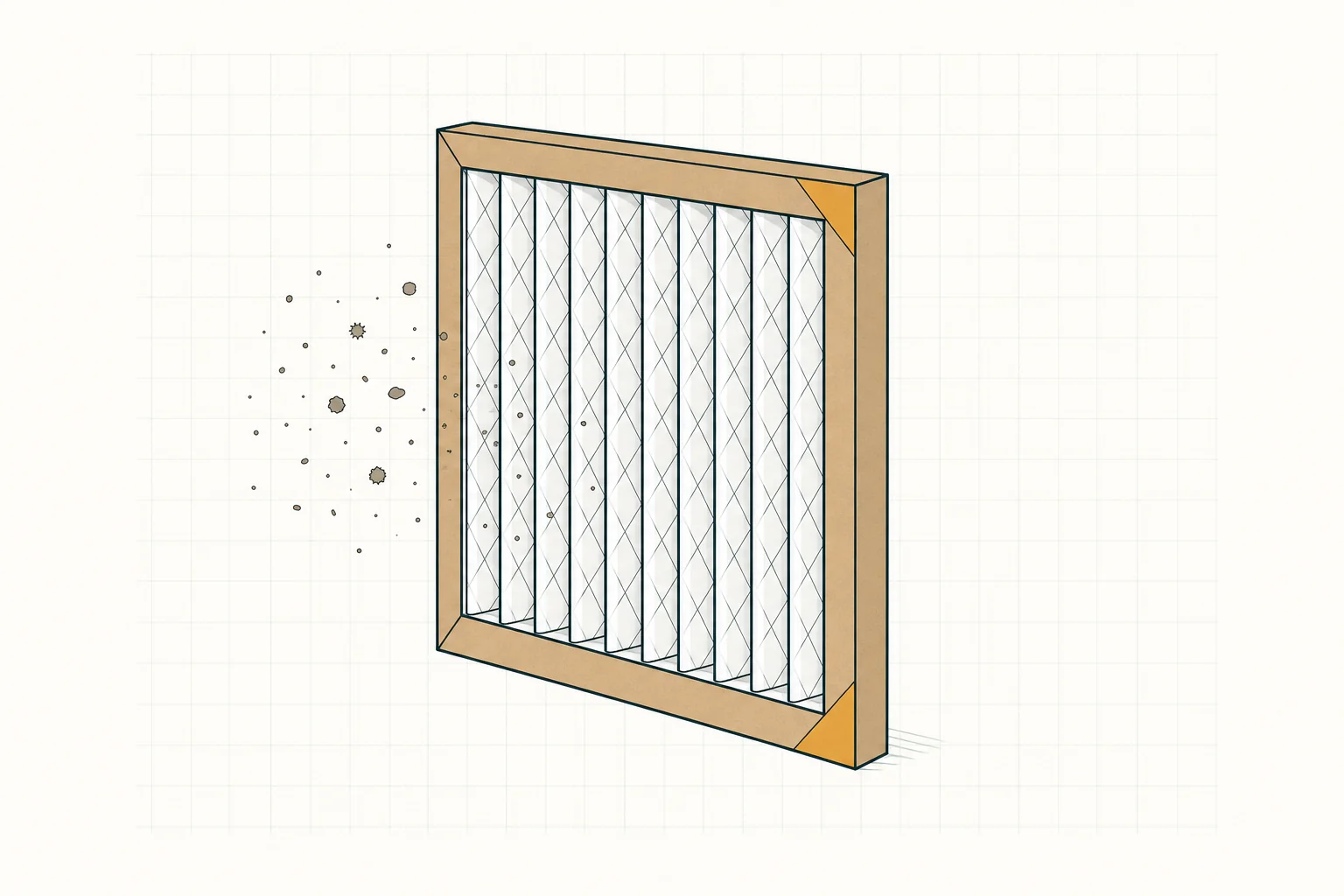
Finer-particle capture at the top of the residential range. Confirm your system is rated for MERV 13 before buying.
Check price on Amazon Price & availability shown on Amazon.com — we may earn a commission.
Ready to buy the workhorse tier in the most common size? Our MERV 11 six-pack comparison prices the value packs — after you measure your slot, as the sizing section above insists.
When NOT to Upgrade to MERV 13
The MERV 13 decision belongs to your blower, not your allergies. Stay at your current tier when the blower is older and its documentation has gone missing — older units are the classic casualty of denser media. Stay when the ducts already leak, because added static pressure loads a system that is already losing air it paid to heat or cool. And stay whenever the manual is silent: an unconfirmed tier is an unavailable tier [2].
And if allergy relief is the actual goal, a room HEPA unit — its own sealed airflow path, filtered air where you actually sleep — is often the better-matched purchase than pushing the whole house through denser media. Weigh that as a consideration, not medical advice: the blower governs the system upgrade, and the room governs the HEPA one.
For the same strain question from the other end — what a house loses through gaps and leaks before any filter matters — see how to check your home for energy leaks. The sealing half of that walk-through is its own guide: how to find and seal drafts in your home.
Frequently Asked Questions
Does a clogged furnace filter increase my electric bill?
Is MERV 13 bad for my HVAC system?
How often should I change my filter?
Sources
- EPA — What is a MERV rating? — MERV reports capture efficiency for particles 0.3 to 10 microns (retrieved 2026-08-30)
- American Standard — MERV glossary — residential systems typically run MERV 8–13; higher MERV can restrict airflow (retrieved 2026-08-30)
- FilterBuy — Which MERV rating should I use? — most homes use MERV 8, 11, or 13 (retrieved 2026-08-30)
- FilterBuy 20x20x1 MERV 8 Pleated Filters — Amazon listing — actual dimensions 19.5 × 19.5 × 0.75 in (retrieved 2026-08-30)
- Filtrete 20x20x1 MPR 1900 — Amazon listing — MPR 1900, Filtrete’s rating for the MERV 13 class (retrieved 2026-08-30)