
Quick Answer
If your water meter keeps moving after known water use has stopped, water is still flowing somewhere. Confirm that with two meter readings, then isolate the source. Common possibilities include a toilet, irrigation system, appliance cycle, or a plumbing leak.
- A toilet that is not sealing correctly — use the dye test to check it.
- An irrigation system or appliance cycle — make sure each known water user is off before you test.
- A service-line or plumbing leak — use the main-valve test below, then contact your utility or a qualified plumber if you cannot isolate it safely.
Next step: If your water bill is higher than expected, start with the water bill investigation guide to compare your statement and meter data before diving into the leak tests below.
The 10-minute test below tells you which one you have — and whether the leak is inside your house or under your yard. If the test comes back clean, the meter itself may be the suspect — here’s how smart meters work and how accurate they are. And if you can’t be at the meter to watch it yourself, a meter-mounted monitor like the Flume 2 does the watching and reports flow to your phone in real time — including while you’re asleep or away.
The 10-Minute Test: Find Where the Leak Is

Step 1: Kill every drop of water use
- No faucets, showers, or hose bibs dripping
- Dishwasher and washing machine off (not mid-cycle)
- Ice maker off — unplug it if you have to
- Sprinklers off, including “smart” schedules
Wait 5 minutes so toilets finish refilling after their last flush. A refilling toilet looks exactly like a leak.
Step 2: Confirm the meter is really moving
Watch the meter face for 60–120 seconds. On analog meters, watch the sweep hand or the small red triangle leak indicator (it moves with even a trickle — see our leak indicator guide for what your meter’s version looks like). On digital meters, watch the flow icon or gallons-per-minute readout.
Not moving? You don’t have a continuous leak right now. Take a photo of the reading, wait 15 minutes with everything still off, and compare — tiny leaks can be too slow for the indicator but still show on the numbers.
Step 3: Shut the main valve — the deciding move
Close the main water valve where the pipe enters your house (usually in the basement, crawlspace, or by the foundation). Watch the meter again.
Contact sensors with loud alarms and phone alerts. Stagger them along the suspect path — water heater, under sinks, toilet bases, washing machine box — and the first one to trip is your culprit zone.
Check price on Amazon As an Amazon Associate we earn from qualifying purchases. Price & availability shown on Amazon.com.- Meter stopped? The leak is INSIDE your house. Go to Step 4.
- Meter still running? The leak is BETWEEN the meter and your house — that’s your service line or, if it surfaces at your foundation, a slab leak. Skip to Step 5.
If It’s Inside: Find the Culprit
Test the toilets first (the usual suspect)
Put a few drops of food coloring in the toilet tank. Do not flush. EPA WaterSense recommends waiting 10 minutes; if color appears in the bowl, the flapper or flush-valve seal is leaking. Test every toilet. For a bigger-picture check, EPA notes that a family of four using more than 12,000 gallons (16 CCF) in a winter month likely has a serious leak.
Then check:
- Water heater — look at the T&P relief valve discharge pipe: dripping means a failing valve
- Under sinks — feel the supply lines and cabinet floors for moisture
- Washing machine hoses — bulges, cracks, or damp floor behind the machine
- Refrigerator line — dampness under or behind the fridge where the icemaker line runs
For ongoing monitoring, use the instructions provided by your utility or consult EPA WaterSense guidance on leak-detection and flow-monitoring devices.
The 10-minute test above tells you that you have a leak. These tell you where — continuously, including when you’re not home to watch the meter. For the longer arc — whether a few point sensors are enough or a whole-home monitor fits the house — point sensor vs. whole-home shutoff: when to upgrade walks the ladder.
Contact sensors with loud alarms and phone alerts. Stagger them along the suspect path — water heater, under sinks, toilet bases, washing machine box — and the first one to trip is your culprit zone.
Check price on Amazon Price & availability shown on Amazon.com — we may earn a commission.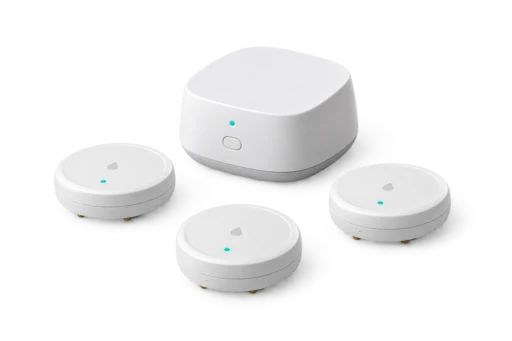
If the sensors come up dry but the meter keeps running, the leak is underground or silent at the fixture level — that is meter-level monitoring territory. The Flume 2 Smart Home Water Monitor straps onto your existing meter (no plumber) and shows exactly when water is flowing, so a 3 a.m. usage line points you at the toilet or irrigation valve instead of the whole house.
If It’s Outside: Service Line and Slab Leaks
A meter that keeps running with the house valve closed means water is escaping between the meter box and your foundation. Signs to look for:
(If the water is inside the meter box rather than moving through the meter, that’s a different diagnosis — the wet meter box decision tree covers rain vs. leak vs. utility-side seepage.)
- Unusually green, soggy, or sunken patches in the yard between the meter and house
- Warm spots on the floor (hot-line slab leaks)
- Cracks in the foundation or doors that suddenly stick
- The sound of running water where nothing is on — listen at the foundation at night
This can require professional help. Contact your water utility to confirm the responsibility boundary and ask whether it has a leak-adjustment policy; local rules vary. The full boundary map — utility side vs. your side, plus the escalation path when the answer is contested — is in who’s responsible for a water leak, before or after the meter.
Whose Problem Is It? The Meter Draws the Line
Responsibility divides at the water meter:
- Utility side (street to meter): the water company’s problem, their cost. If the meter itself is running with the house valve closed AND their side is leaking, report it — some utilities will even check for free.
- Your side (meter to house and everything inside): your problem, your plumber.
Estimate the impact from your own bill
Water and sewer rates, billing periods, and leak-adjustment policies vary by utility. Take a meter photo before and after the suspected leak is isolated, then use the rate schedule on your own bill to assess the impact. If your bill only recently spiked, see why water bills suddenly increase.
Frequently Asked Questions
Can a water meter run without a leak?
How do I know if it's the utility's side or mine?
Will my water utility charge me for a leak on my side?
How much does a plumber cost to find a leak?
Related Reading
- Water meter leak indicator explained — the small dial that catches what the numbers miss
- How to read a water meter — dials, digits, and units
- What is CCF on a water bill? — understanding the units on your bill
- Why did my water bill suddenly increase? — the full bill-detective playbook
This walkthrough is part of the Water Explained hub. If the meter confirms a leak, the response ladder starts with where to place water leak sensors and, for whole-home watching, Flume vs Moen Flo vs Phyn. For that first rung, a five-pack of leak sensors like the Govee covers the usual spots — water heater, washer box, under the sinks — in a single kit.
Sources
- U.S. Environmental Protection Agency WaterSense: Home Maintenance — household leak-maintenance guidance and toilet dye-test instructions.
- U.S. Environmental Protection Agency WaterSense: Leak Detection and Flow Monitoring Devices — consumer guidance for monitoring water flow and leaks.


