
Quick Answer
Many water meters include a small dial, triangle, star, or digital flow indicator that moves when water flows through the meter. Designs differ by meter and utility.
The practical rule: if an indicator keeps moving after you have stopped known water use, water is still flowing. Confirm that result with two meter readings before deciding the cause; a toilet, irrigation system, appliance cycle, or a leak can all create flow.
Where to find it: Lift the lid on your meter box (usually near the street or sidewalk in a concrete or plastic cover). Look on the meter face for a small red triangle, star, or dial — often labeled "leak" or "low flow." On digital smart meters, look for a flashing flow icon or a "leak" alert on the display.
For a full meter-reading walkthrough covering different dial styles and digital meters, see: how to read a water meter.
Next step: If your leak indicator is moving, follow the water meter running when no water is used guide to isolate the source, then check how to investigate a high water bill. To understand your usage units, see what is CCF on a water bill. To watch the meter between your once-a-month checks, a meter-mounted monitor like the Flume 2 catches the same slow continuous flow in real time and sends it to your phone.
For a faster next step when you just need the basics, read how to investigate a high water bill or see average water usage per person for a household baseline.
The 60-second test: how to check the leak indicator
This is the cleanest way to confirm whether you actually have a leak. The biggest mistake is testing while something small is still running (like an ice maker cycle) — that creates a false alarm.
Step 1: Shut off all water use
- No faucets, showers, or hose bibs
- No dishwasher or washing machine
- No sprinklers (including "smart" schedules)
- No ice maker or refrigerator water dispenser
Step 2: Wait a few minutes
Toilets refill quietly after a flush. Waiting helps you avoid mistaking a normal refill for a leak.
Step 3: Watch the indicator for 60–120 seconds
If it is truly still, the meter is not showing continuous flow at that moment. If it creeps, spins, or pulses steadily, water is moving through the meter and you need to identify the source.
Step 4: Confirm with a numbers check
Take a photo of the meter reading, wait 10–15 minutes with everything still off, then take another photo. Any increase means water moved through the meter — even if the indicator looked still at first glance.

Why your bill jumped (and how the leak indicator proves it)
A higher water bill is one of the most confusing household surprises. You did not change your routine — but your usage did. The most common reasons for a sudden spike are a silent toilet flapper leak (often running 24 hours a day at a slow rate), a stuck irrigation valve, a small underground service-line leak, or a billing-cycle length change. The 60-second test above is the fastest way to figure out which one is happening at your house.
If you already know your meter is running and want the full troubleshooting playbook, see our guide on water meter running when no water is used. For the overall "bill detective" flowchart, start here: why water bills suddenly increase.
Contact sensors that alarm at 105 dB and send phone alerts the moment water touches them. Not meter-level detection — you place them where leaks start (water heater pan, washer box, under sinks, toilet bases) and they stand guard there for years. Govee spec: IP67 rated, long-range hub connection.
Check price on Amazon As an Amazon Associate we earn from qualifying purchases. Price & availability shown on Amazon.com.What the leak indicator actually is
The leak indicator is the meter's built-in "motion detector." It exists because very small flows can be hard to see on the main number display — a slow flapper leak might only register as a fraction of a unit, which is easy to miss between monthly readings.
Depending on your meter, it may look like:
- A tiny red triangle
- A small star-shaped wheel
- A thin sweep hand
- A little dial labeled "leak"

On many digital "smart" meters, you may not see a physical indicator. Instead, the display may show a flow icon, a leak alert, or a real-time flow rate in gallons per minute.
Leak indicator types by meter
Indicator styles vary by region and meter age. If yours looks different, use the diagram or instructions from the utility that installed it. EPA WaterSense also provides consumer guidance on leak-detection and flow-monitoring devices. Once the indicator confirms flow, [who pays for the repair depends on which side of the meter it's on](/blog/who-responsible-water-leak-before-after-meter/).
Common false alarms (things that sip water)
Sometimes the meter is telling the truth, but it is not a "leak" in the scary sense. It is a device using a little water in the background.
These are common quiet users:
- Toilet tanks that refill slowly
- Ice makers or refrigerator water dispensers
- Whole-home humidifiers
- Water softeners (regeneration cycle)
- Drip irrigation systems
Toilets are the biggest repeat offender because you can have a leak you never hear. This quick test takes minutes: is your toilet running? (leak test).
How to isolate “house leak” vs “line leak”
If the indicator is moving, your next question is: is the water being used inside the home, or is it leaking somewhere between the meter and the house?
Option A: Use the main shutoff inside the home
Turn off the home's main shutoff valve. If the leak indicator stops, the flow is inside the home.
If it keeps moving, the flow may be:
- A leak on the service line (meter to house)
- A hose bib or irrigation tee that is before the shutoff
Option B: Separate indoor vs outdoor use
In summer, irrigation is a top cause of "mystery usage." If your bill spikes seasonally, this guide helps you connect the dots: why water bills are higher in summer.
Straps onto your existing water meter — no pipe cutting, DIY install — and reports household usage in real time to your phone. It catches the same slow continuous flow a leak indicator reveals, but the instant it starts, and the usage timeline shows when it began so you can localize it. The middle rung between point sensors and an automatic shutoff.
Check price on Amazon As an Amazon Associate we earn from qualifying purchases. Price & availability shown on Amazon.com.The leak indicator is a once-a-month check at the meter. These devices do that job continuously — at three rungs of cost and coverage:
Contact sensors that alarm at 105 dB and send phone alerts the moment water touches them. Not meter-level detection — you place them where leaks start (water heater pan, washer box, under sinks, toilet bases) and they stand guard there for years. Govee spec: IP67 rated, long-range hub connection.
Check price on Amazon Price & availability shown on Amazon.com — we may earn a commission.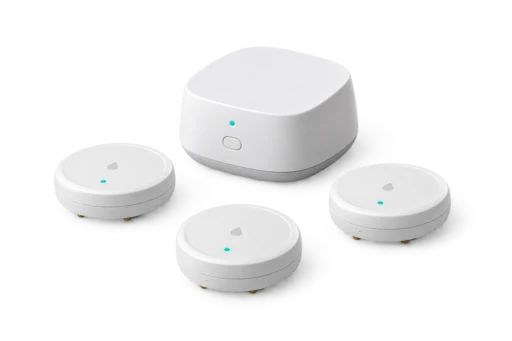
Straps onto your existing water meter — no pipe cutting, DIY install — and reports household usage in real time to your phone. It catches the same slow continuous flow a leak indicator reveals, but the instant it starts, and the usage timeline shows when it began so you can localize it. The middle rung between point sensors and an automatic shutoff.
Check price on Amazon Price & availability shown on Amazon.com — we may earn a commission.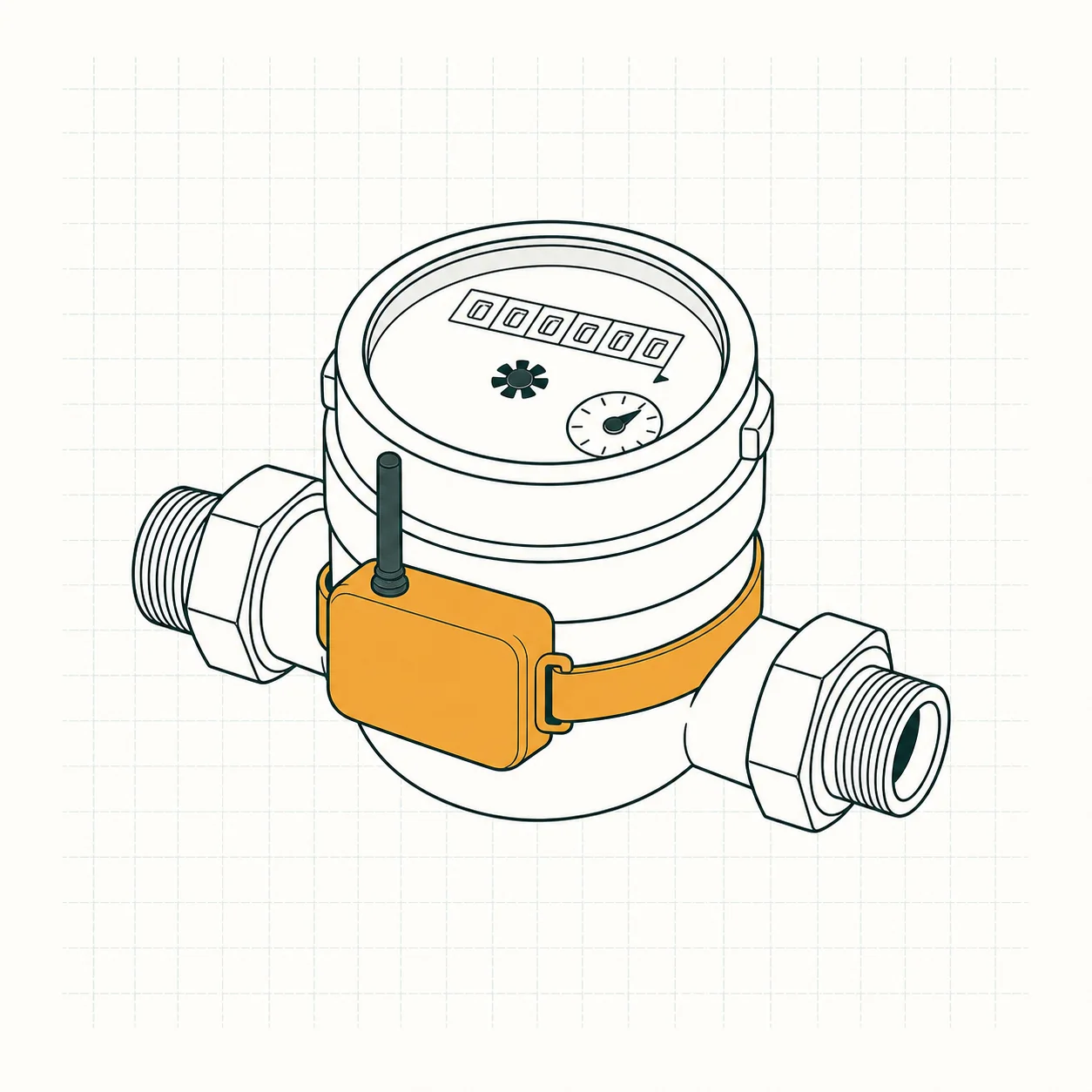
Monitors flow, pressure, and temperature 24/7 on the main line, detects drops-per-minute leaks, and can shut the main valve automatically when it finds one — the upgrade from checking a leak indicator once a month. Top rung; professional installation is required. Moen 900-001 spec.
Check price on Amazon Price & availability shown on Amazon.com — we may earn a commission.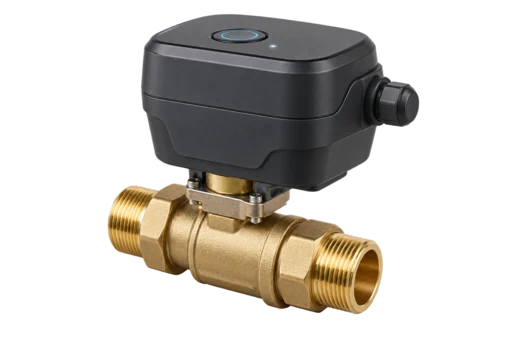
Common misconceptions
- "If the indicator moves once, I have a leak." Not always. Some appliances cycle. Look for steady movement over time, or use the 10–15 minute numbers check.
- "Small leaks do not matter." A tiny continuous flow adds up over a 30-day billing period — a single flapper that drips can waste hundreds of gallons a month.
- "My bill is high because of the service charge." The fixed fee matters, but big jumps are usually usage. If you are unsure, this is helpful: water service charge explained.
What to do if the indicator is moving
If your leak indicator is moving steadily, keep it simple. You are trying to answer two questions: where is the water going, and how fast.
- Check toilets first — they are the #1 cause of hidden water use and are often completely silent. Use the toilet running leak test to check each one in under five minutes.
- Check outdoor irrigation — stuck valves, broken heads, and overspray are common culprits, especially in summer.
- Re-check the meter after each change. When the indicator stops, you found the source.
For the complete diagnostic playbook — including how to isolate indoor vs. outdoor leaks, check for air in the lines, estimate cost impact, and decide between DIY and calling a plumber — see our in-depth guide: water meter running when no water is used.
If you want a structured troubleshooting path focused on high bills specifically, use: why your water bill suddenly increased. And once the leak is fixed, these tips on how to lower your water bill can help bring costs back down.
Monitors flow, pressure, and temperature 24/7 on the main line, detects drops-per-minute leaks, and can shut the main valve automatically when it finds one — the upgrade from checking a leak indicator once a month. Top rung; professional installation is required. Moen 900-001 spec.
Check price on Amazon As an Amazon Associate we earn from qualifying purchases. Price & availability shown on Amazon.com.If the leak keeps hiding between checks, continuous monitoring is the next step — when to upgrade from a point sensor to whole-home protection walks the options.
What is the leak indicator on a water meter?
Should the leak indicator move when everything is off?
What is the most common cause of hidden water use?
How long should I watch the leak indicator?
How do I find my water meter?
Can a slow leak indicator be serious?
This guide is part of the Water Explained hub. For what to do after the indicator confirms a leak, where to place water leak sensors ranks the spots that matter — a five-pack of leak sensors like the Govee covers most of them in one kit.
Sources
- U.S. Environmental Protection Agency WaterSense: Leak Detection and Flow Monitoring Devices — consumer guidance on monitoring water flow and leaks.
Related Reading:


