Quick Answer
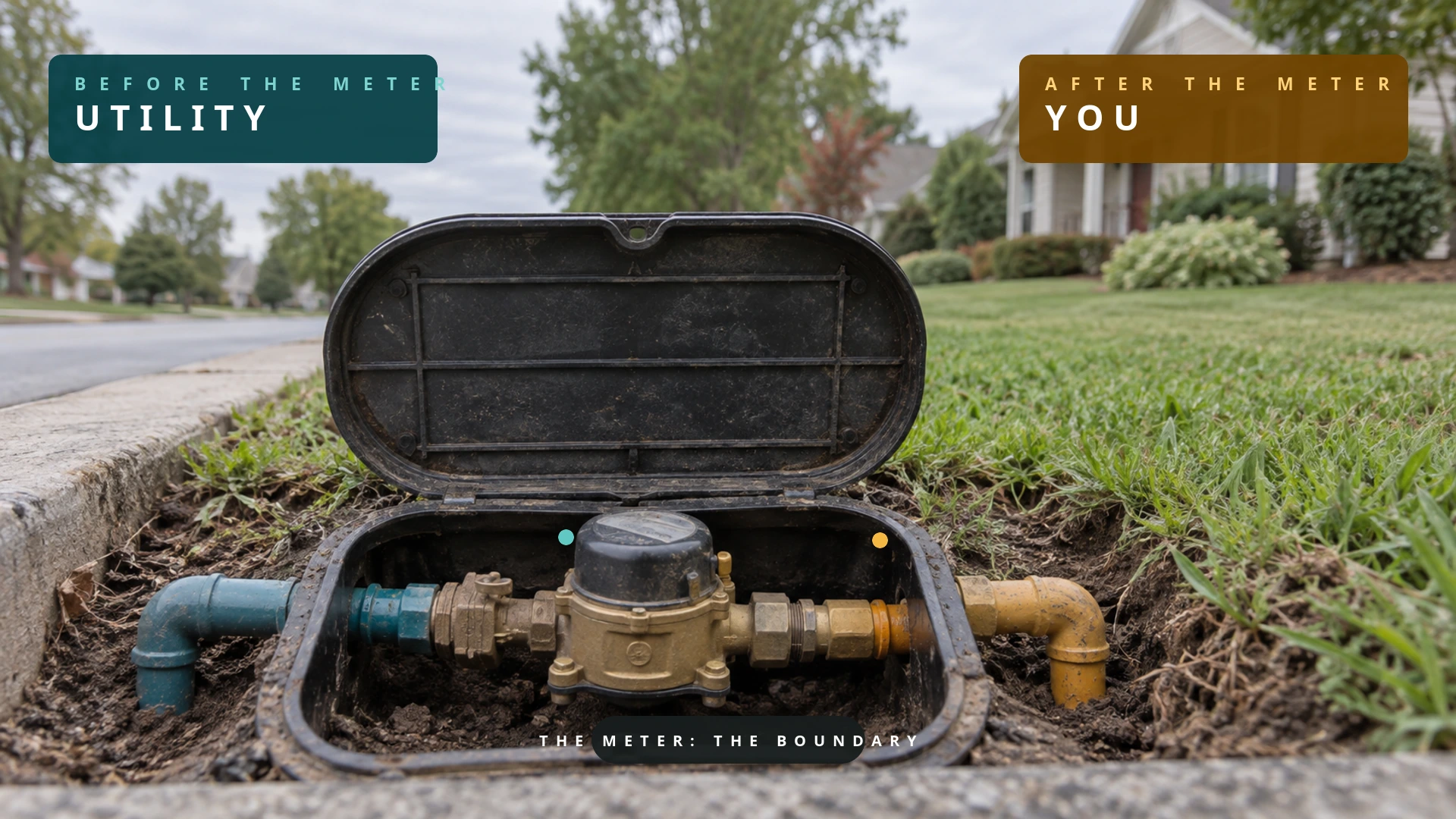
A break in the water main under the street is the utility’s pipe and the utility’s repair — you report it, you do not pay for it. Your responsibility starts at your own service line: the pipe that branches off the main, runs under your yard, and feeds your house. Utilities across the country draw the line in slightly different places — Denver Water puts property-owner responsibility from the tap at the main through the meter pit[1]; Toronto splits at the property line[2]; Columbus uses the curb box[3] — but the shape is the same. A main break will not run water through your meter, so it does not directly raise your bill; the follow-on issues (a boil-water advisory, brown water, or a freeze-broken service line on your side) are where the money questions live. For the full boundary map and the meter test that settles “which side is it on,” see who is responsible for a water leak before or after the meter.
Whose pipe is it: the three-way split
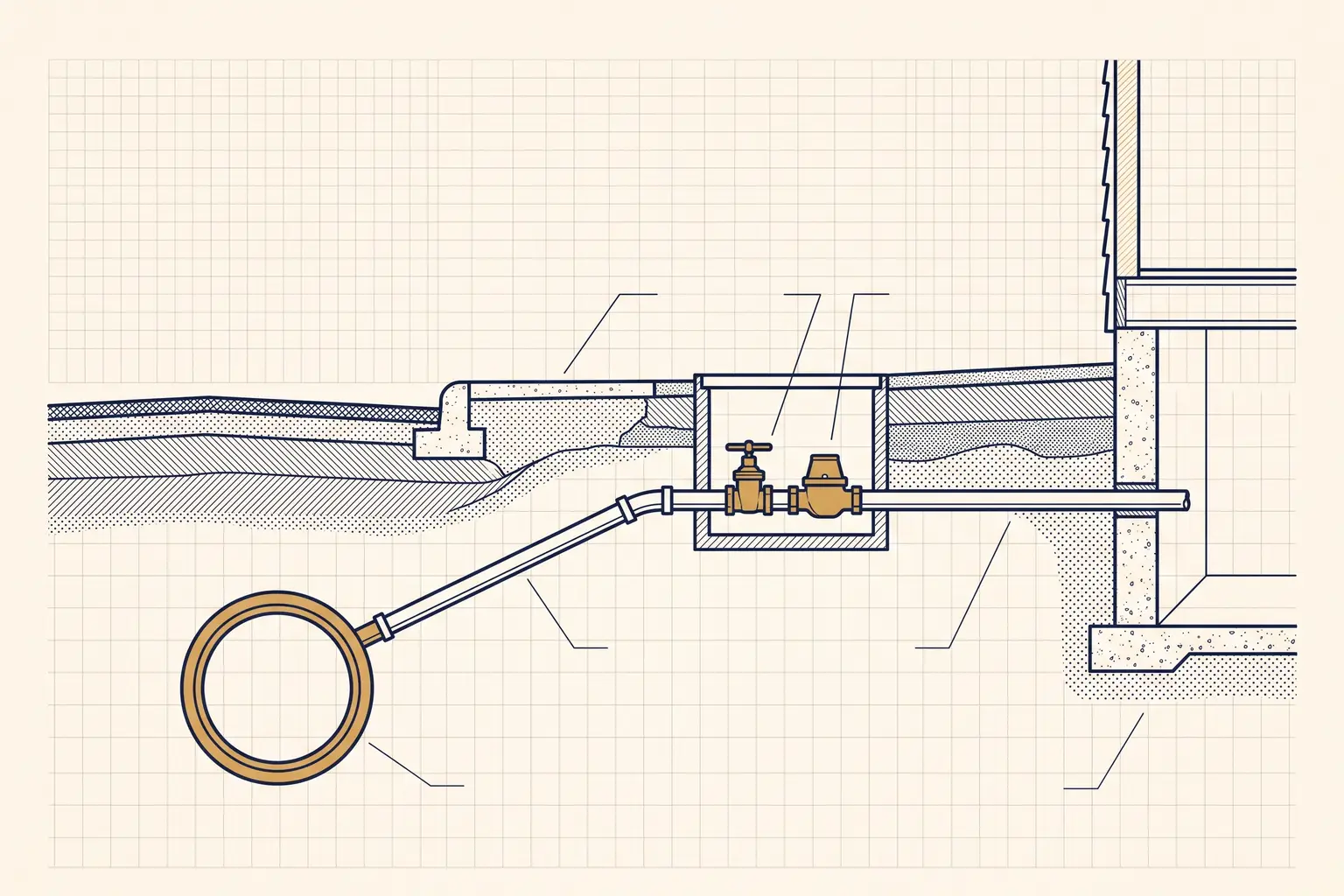
A water system reaches your kitchen faucet through three pieces:
- The main — the larger pipe under the street or easement, owned and repaired by the water utility. A break here is their crew, their cost, their emergency line.
- Your service line — the smaller pipe from the main to your house. This one is yours in most US utilities, including the whole yard stretch that surprises homeowners[1][5]. Henderson, NV states it plainly: the homeowner maintains the water service lateral from the connection at the City’s water meter, and pays all costs for breaks on that side[5].
- Everything inside the house — yours, plumbers’ territory.
The exact dividing point varies by utility — at the main tap, at the meter or curb box, or at the property line[1][2][3] — but the pattern holds: street side is theirs, yard side is yours. When you report a suspected break, a utility crew determines which side the leak is on; Columbus notifies the property owner with a door hanger when the repair is the owner’s responsibility, with a required repair window and a licensed-contractor requirement[3].
What a main break looks like from your driveway

You rarely see the pipe. You see the symptoms:
- Water surfacing where it should not be — bubbling or ponding in the street, a sunken or heaved patch of pavement, or an unexplained wet strip in a yard during dry, freezing weather. Columbus’s guidance: water spraying or ponding during periods of no rain or snowmelt may be a break — report it[3].
- Pressure drop or no water — a sudden loss of pressure across the whole house (not one faucet) often means a main or service-line event upstream.
- Discolored water — brown or yellow water after pressure changes means the flow stirred up iron and sediment in the mains. It is usually not a health emergency, but it is the classic after-effect of a break or hydrant work.
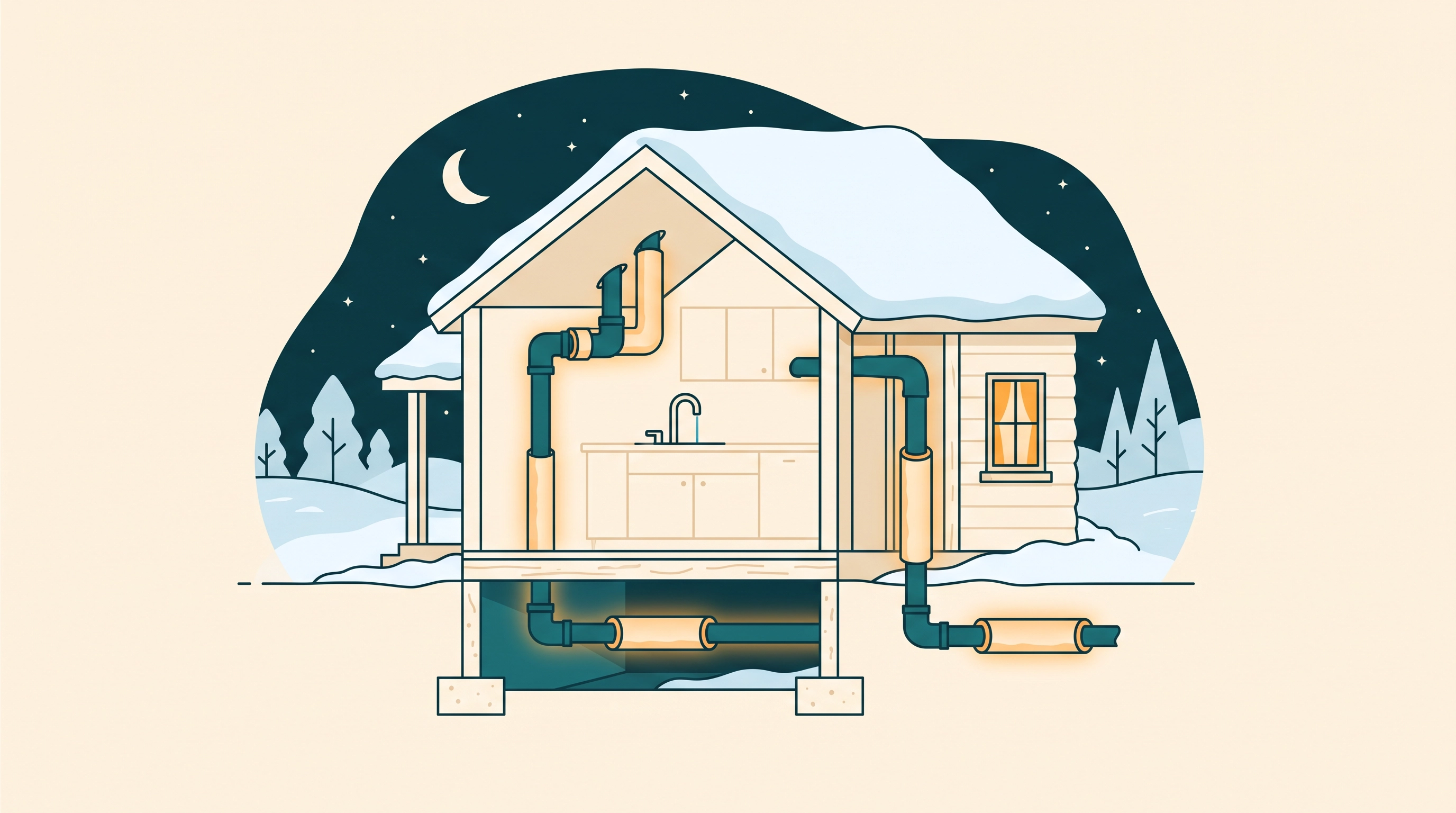
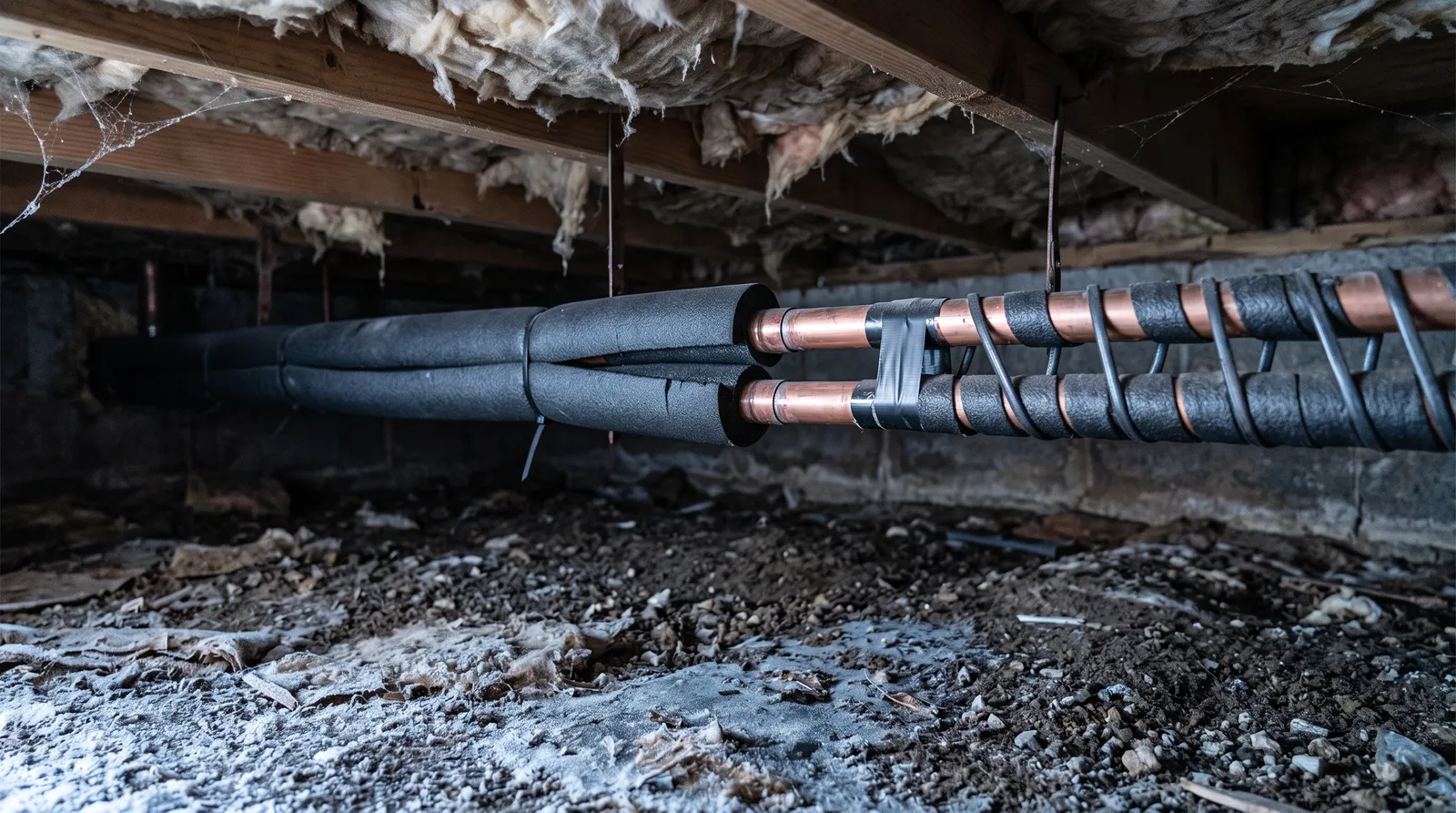
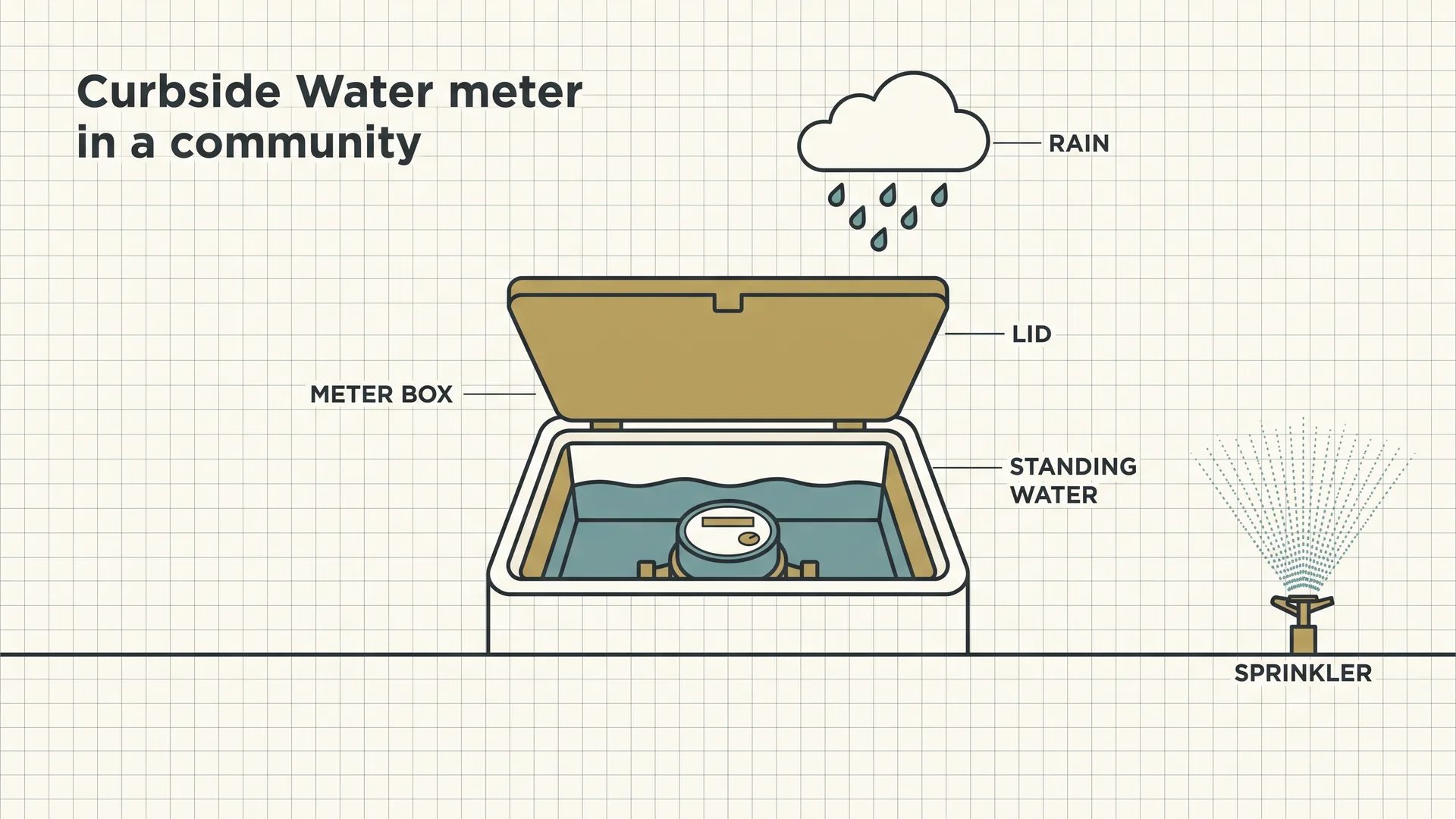
- In winter, the spike in breaks is real — ground freeze pushes break rates up exactly when a service line under your own yard is also at risk. The freeze months are when both water meter boxes fill with water and service lines split.
What to do, in order
- Report it. Call the utility’s emergency or 24-hour line — main breaks are treated as priority emergencies, and utilities ask for immediate reports[3]. Do not assume a neighbor already called.
- Protect your own house if the problem might be your side. Know where your main shut-off valve is (typically on the foundation wall where the service enters, before the meter). Toronto’s guidance: if your shut-off is not working, the city can turn water off at the property line — for a fee — while a plumber handles the private side[2].
- Follow the advisory. After significant breaks or pressure loss, utilities may issue a boil-water advisory until tests clear. Use bottled or boiled water for drinking and cooking until the utility lifts it — their notice, not the water clearing visually, is the all-clear.
- Flush your lines when told to. The standard post-break instruction is to run cold taps until the water clears, which moves stirred-up sediment out of the mains and your plumbing. Avoid running hot taps first, so sediment does not get drawn into the water heater.
- Document. Photos of flooding, dates, utility reference numbers — useful for insurance and for any bill adjustment conversation if your side of the pipe turns out to be involved.
Your bill questions, answered straight
Will a main break raise my water bill? No. Water from a main break never passes through your meter — the meter only records what flows into your house. You are not charged for the utility’s lost water.
But my usage looked weird after the break. Pressure fluctuations can stir odd readings and estimated bills; compare the bill against how to read your water meter directly. If the meter itself was damaged by freezing or the event, that is a utility conversation — in many utilities the meter belongs to the property owner but is maintained by the utility for normal wear[1].
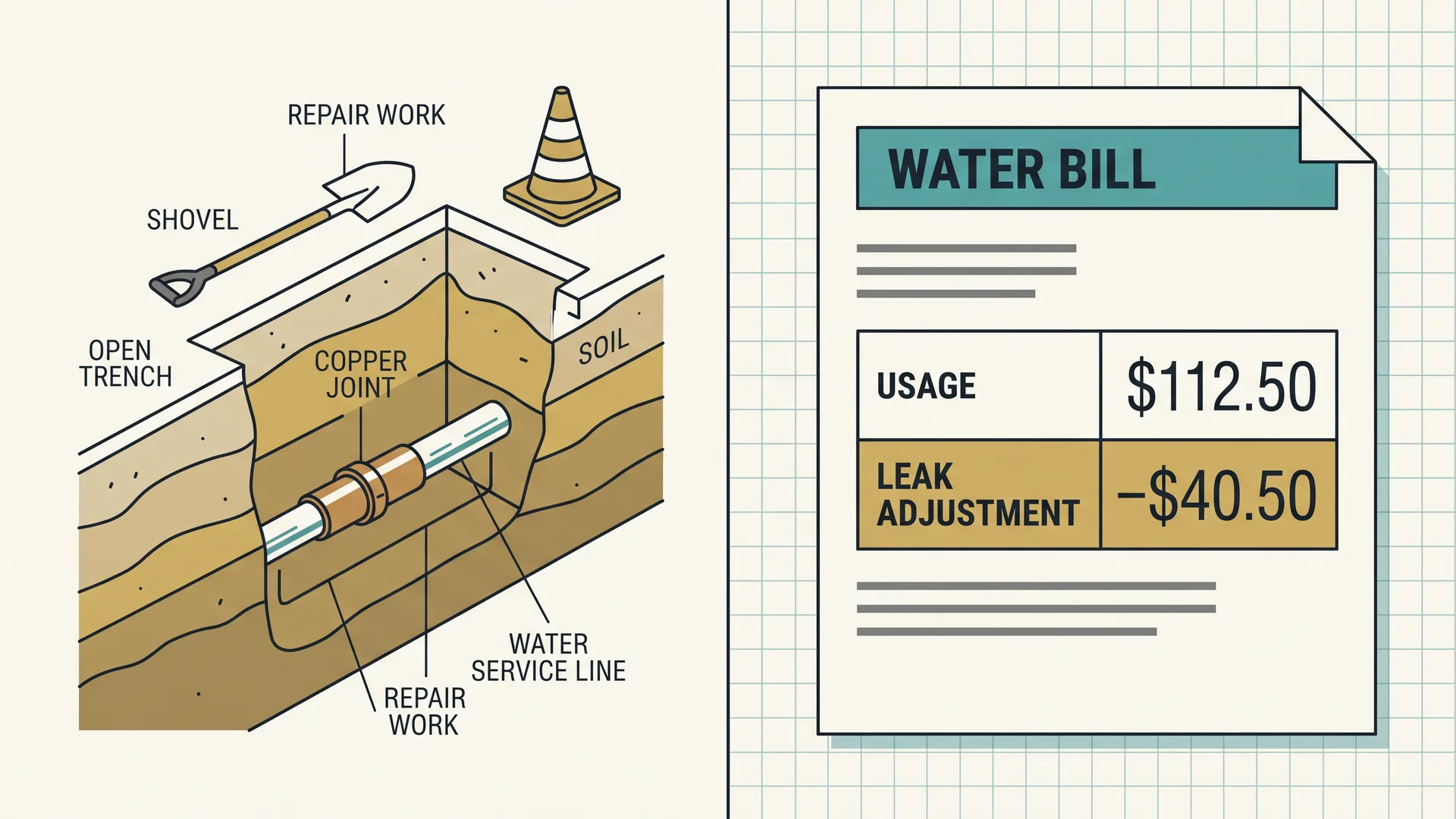
What if it was actually my service line that broke? Then the water did run through your meter, and the bill impact is real — a burst line can lose water fast. Two mitigations exist. First, many utilities offer leak adjustments (credits for the lost volume once the leak is repaired); Portland, for example, lets customers apply for an adjustment after burst-pipe leaks and will also review sewer charges, because winter water use sets some households’ year-round sewer billing[4]. Our water bill leak adjustment guide walks through the paperwork. Second, if you let faucets drip to prevent freezing, that deliberate use is typically not adjustable[4] — the tradeoff was cheap insurance.
Does homeowner’s insurance cover a service-line break? Sometimes, separately. Denver Water notes water damage may or may not be covered by a typical policy and directs homeowners to verify with their agent[1]; many insurers sell specific service-line coverage as an add-on. The pipe repair itself is often your cost either way.
How utilities prioritize repairs
Breaks queue by severity, not by call order. Columbus repairs by a priority system weighing the leak’s severity, location, and critical facilities served — hospitals and schools rank higher; busy-road repairs get scheduled for off-hours[3]. Translation: a gushing six-inch main on an arterial road gets a crew tonight; a weeping leak on a quiet cul-de-sac may wait days. Your role is to report accurately (location, whether water is surfacing, whether anyone is out of water) and to keep the report number.
FAQ
Who do I call for a water main break?
Is brown water after a main break safe?
Am I responsible for the pipe under the street?
Can I get a bill credit after a water main break?
Why do so many mains break in winter?
Related Reading
- Who is responsible for a water leak before or after the meter? — the boundary map and the 10-minute meter test
- Water bill leak adjustment: how to get credit — the paperwork path when the leak was yours
- Water meter box full of water — is it a leak or groundwater?
- How to read a water meter — verify what the bill claims
- Why is my water bill higher in winter? — the seasonal cluster this topic lives in
- Water explained
Sources
- Denver Water: Homeowner Responsibility (retrieved 2026-11-18)
- City of Toronto: Pipe Leak or Burst (retrieved 2026-11-18)
- City of Columbus: Report a Water Main Break (retrieved 2026-11-18)
- Portland Water Bureau: Apply for a bill credit after burst pipes (retrieved 2026-11-18)
- City of Henderson, NV: Water and Sewer Laterals (retrieved 2026-11-18)