Quick Answer
LIHEAP is a federally funded program run locally by states, territories, and tribes. It may help eligible households with home-energy bills, an energy crisis, or weatherization-related services; the benefit, income rules, documents, and application window depend on where you live.
- Start with your local program: use the federal LIHEAP program page to find the state, territory, or tribal administrator.
- If service is at risk: call your utility today and ask which payment arrangement, shutoff-protection rule, or emergency assistance program applies to your account.
For more detail, see Understanding Your Utility Bill.
You’re staring at a utility bill you can’t pay. Maybe it’s $480, double what you expected. Maybe you’re between jobs, or an unexpected medical expense wiped out your buffer. The due date is looming, and you’re worried about shut-off.
You have more options than you think. Federal programs, state assistance, utility hardship plans, and non-profit organizations can help. This guide explains every assistance program, who qualifies, how to apply, and exactly what to do if you’re facing shut-off this week.
Emergency: Facing Shut-Off This Week
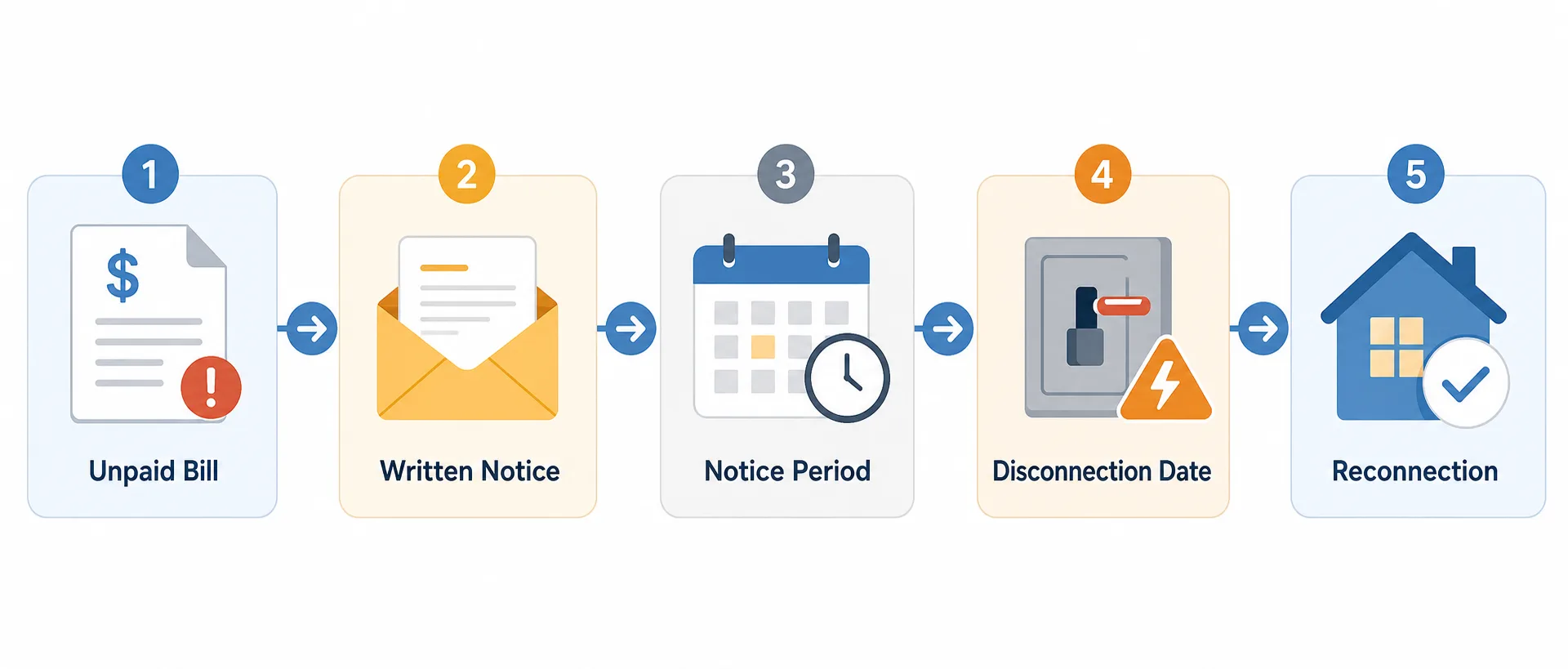
If your shut-off notice is dated within the next 7 days, take these steps NOW (and know your rights first — can your utility shut off service? explains the notice rules, protected categories, and winter protections that may stop the clock):
Today (Day 1)
Call your utility’s customer service
- Say: “I received a shut-off notice. I need to speak with a hardship representative about payment arrangements.”
- Ask for: payment plan options, hardship program eligibility, medical exemption forms (if applicable), shut-off extension
Document the call
- Rep name, case number, what they promised, follow-up date
Call 211
- United Way hotline connects you with local charities that pay utility bills
Check for LIHEAP emergency funding
- Some states offer “crisis assistance” for households with shut-off notices
Do not rely on a generic timeline or eligibility rule: the utility and the local assistance administrator control the available options and deadlines.
LIHEAP: Federal Energy Assistance
LIHEAP (Low Income Home Energy Assistance Program) is administered by states, territories, and tribes with federal funding. Ask your local administrator which assistance components are open and whether its funds are available.
What LIHEAP Covers
| Expense Type | Covered? | Notes |
|---|---|---|
| Home-energy bills | May be available | The local program sets its benefit and application rules. |
| Cooling assistance | May be available | Availability and season vary by local program. |
| Energy crisis help | May be available | Ask immediately if you have a disconnect notice or a health-and-safety risk. |
| Weatherization-related services | May be available | Local programs determine what work and households qualify. |
Do not use a national benefit or income table to decide whether to apply. Ask the local administrator for its current income rules, benefit calculation, required documents, and application dates.
How to Apply for LIHEAP
Step 1: Find your local LIHEAP office
- Call 211 and ask for “LIHEAP application site”
- Visit liheap.org and search by state
- Contact your local Community Action Agency
Step 2: Gather documents
You’ll need:
- Social Security numbers for all household members
- Proof of income (last 30–60 days): pay stubs, Social Security award letter, unemployment benefits
- Proof of address (utility bill, lease)
- Current utility bills (electric, gas, oil, propane)
- Shut-off notice (if applying for crisis assistance)
Step 3: Apply
| Application Method | How |
|---|---|
| In-person | Visit your local LIHEAP office (fastest) |
| Online | Many states offer online applications |
| Phone | Some states allow phone applications |
| Download form, mail with documents |
Timing: Ask the local administrator how it handles urgent cases. A disconnect notice, loss of heating or cooling, or a health-and-safety risk may change the process.
Utility Company Hardship Programs
Most utilities have their own hardship programs, separate from LIHEAP. These are often faster and less bureaucratic.
Common Utility Programs
| Program Type | What It Offers | Who Qualifies |
|---|---|---|
| Payment plans | Extended payment time (3–12 months) | Anyone behind on bills |
| Budget billing | Fixed monthly payment (smoothed over 12 months) | Customers in good standing |
| Hardship discounts | 10–40% off monthly bill | Income-qualified |
| Winter protection | No shut-offs during winter months | Income-qualified or medical need |
| Medical exemptions | No shut-offs for medical equipment | Doctor certification required |
Weatherization Assistance Program
WAP (Weatherization Assistance Program) is a federal program that improves home energy efficiency for low-income households. It’s not bill assistance, but it reduces future bills by making your home more efficient.
How WAP works
WAP starts with your state weatherization administrator. The Department of Energy directs applicants to locate that administrator and ask about the local application process. Measures, waiting lists, home eligibility, and income rules are set through the local program, so do not assume a particular upgrade or savings amount.
Frequently Asked Questions
Can I get help if I'm not low-income?
Yes, but options are more limited. You can still:
- Set up a payment plan (most utilities offer this to anyone)
- Enroll in budget billing (smooths seasonal spikes)
- Negotiate a hardship extension (especially if you lost a job)
—
How fast can I get help if I'm being shut off this week?
Fastest options:
- Call your utility — Payment plans can be set up same-day
- Call 211 — Ask for local emergency-utility-assistance referrals.
- Apply for LIHEAP crisis assistance — Ask the local administrator whether crisis assistance is available and what evidence it needs.
- Contact local charities — Ask each organization about its eligibility, funding, and response time.
Do ALL of the above simultaneously.
—
Can I use LIHEAP more than once per year?
—
Will applying for assistance affect my credit?
Related Articles:
- How to Read Your Electric Bill (Line by Line Guide)
- Understanding Your Utility Bill: The Complete Guide for 2026
- How Utility Rates, Fees, and Usage Work Together
Related Articles:
- How to Lower Your Utility Bills
- Budget Billing and Level Pay Explained
- Past Due Balance on Your Utility Bill
- How to Budget for Utilities
Sources
- U.S. Department of Health and Human Services: Low Income Home Energy Assistance Program (LIHEAP) — program overview and local-administrator information. (retrieved 2026-08-30)
- U.S. Department of Energy: How to Apply for Weatherization Assistance — state-administrator application path.