Quick Answer
A 1,500-watt space heater costs $0.275 per hour to run on high at the September 2026 US average residential rate of 18.34¢/kWh. Eight hours a day is about $2.20, a typical month about $66 — before the thermostat cycles the element off, which usually cuts the real bill by a third to a half. The formula is three numbers you already have:
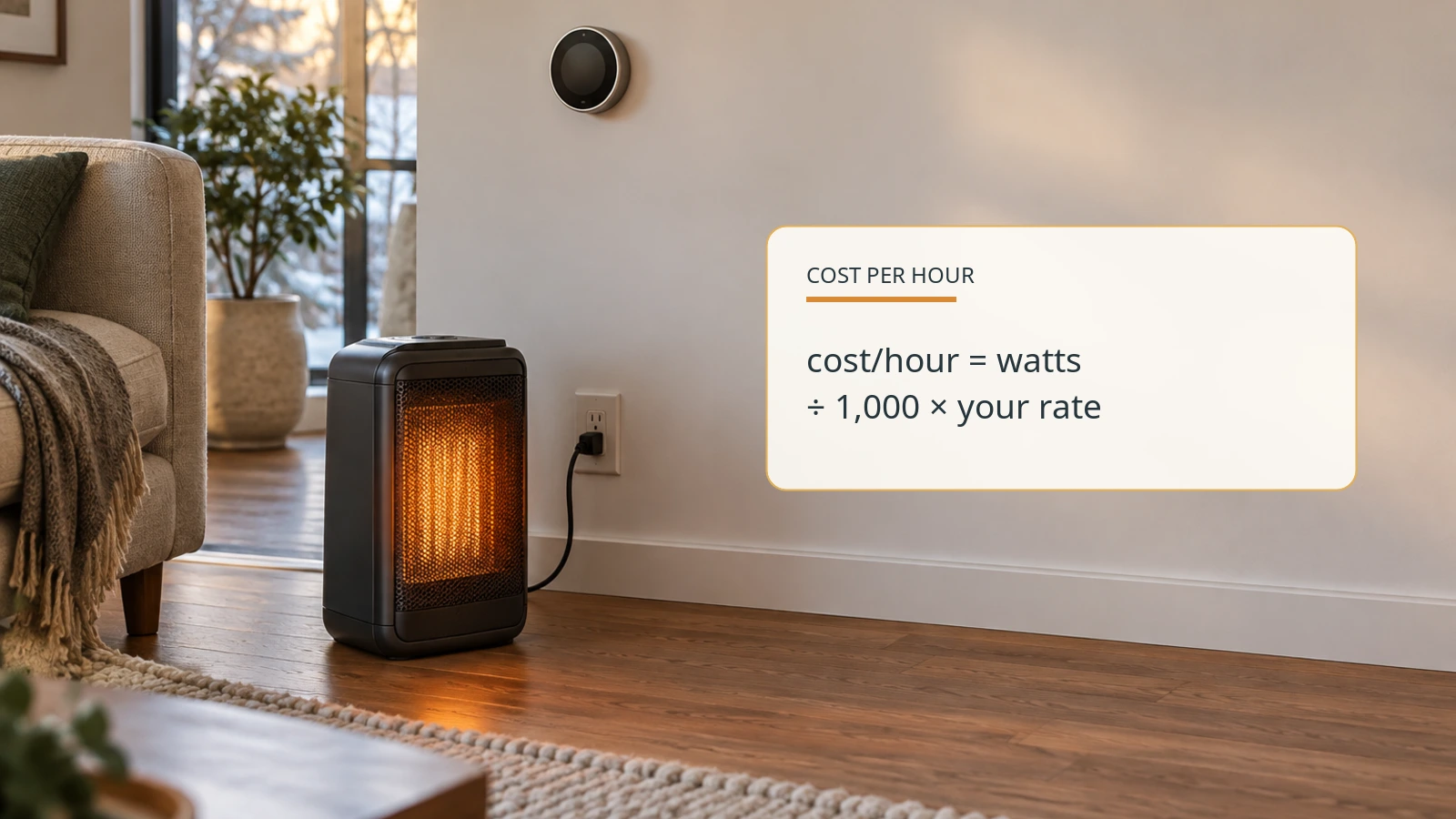
cost per hour = (watts ÷ 1,000) × your rate in $/kWh
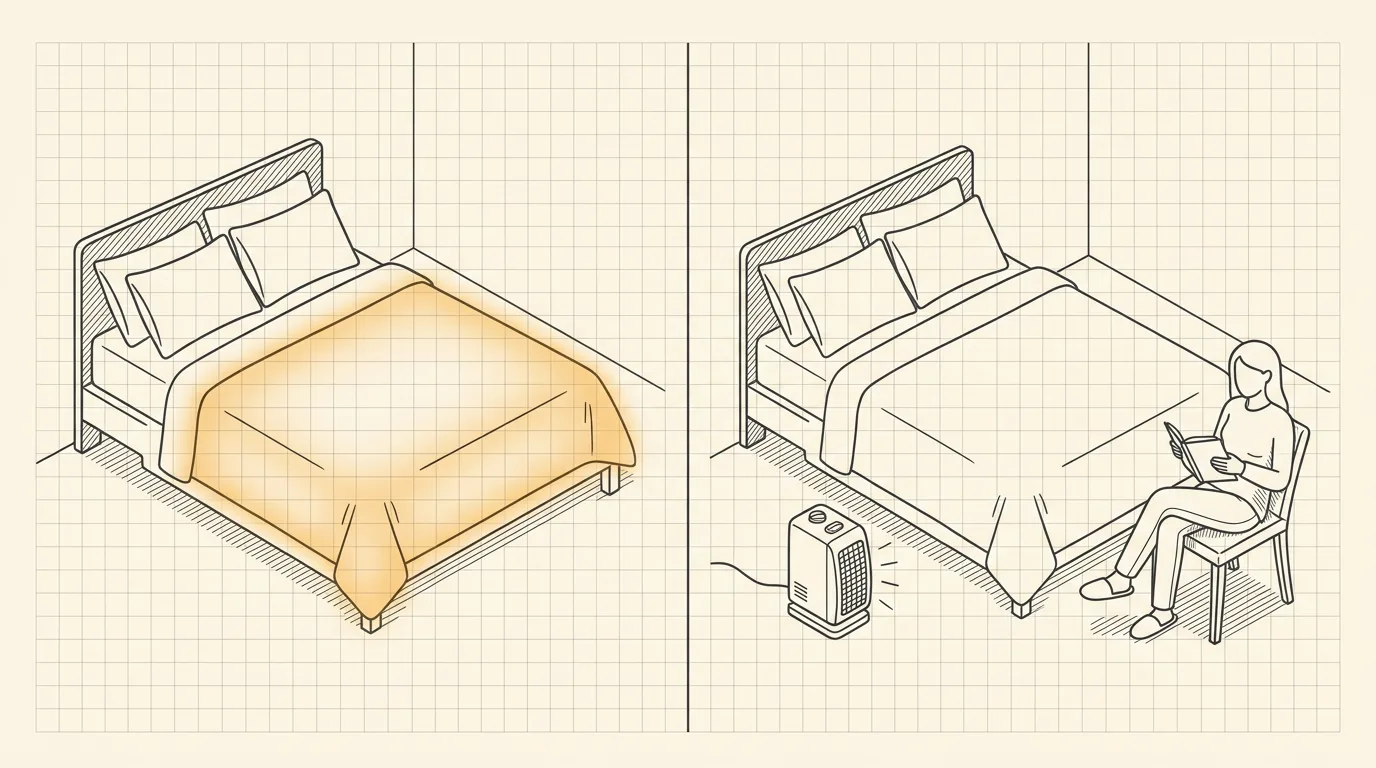
Plug in your own bill’s rate — the national average is nearly meaningless in Nevada (13.11¢) versus Hawaii (52.72¢), where the same hour costs $0.20 versus $0.79. This page is the math: per-wattage tables, the state spread, thermostat cycling, and the decision the formula exists for — when heating one room is cheaper than heating the whole house. For which heater to buy, that’s a separate decision covered in the best energy-efficient space heaters; for the ten-times-cheaper alternative for a bed, see electric blanket vs space heater.
The formula (and why it is the whole answer)
Every plug-in 120-volt space heater — ceramic, infrared, oil-filled, no matter the marketing — converts essentially all of its electricity into heat. DOE states it plainly: “electric resistance heating is 100% energy efficient in the sense that all the incoming electric energy is converted to heat."[3] That is why this page is formulas and tables, not heater reviews: the cost is decided by three numbers, and none of them is the brand on the box.
- Wattage — printed on the heater or its label. Nearly all plug-in heaters top out at 1,500 W (~12.5 A on a standard 15-amp circuit); many have a 750 W low setting.
- Your rate — the all-in cents-per-kWh from your bill (supply + delivery; skip taxes if you want the running cost, include them if you want the bill impact). If you can’t find it, divide your monthly electric total by your kWh used.
- Actual hours the element runs — not hours in the room. A thermostat cycles the element off once the set temperature is reached, and that duty cycle is the single biggest source of “my bill was way higher than the calculator said.”
Multiply them: watts ÷ 1,000 gives kW; kW × rate gives $/hour; $/hour × hours gives the period cost. A 1,500 W heater at 18.34¢: 1.5 × $0.1834 = $0.275/hour. That is the entire computation — everything else on this page is that formula applied to common cases.
Per-hour cost by wattage (US average 18.34¢/kWh)
| Heater setting | Cost per hour | 8-hour day | 30-day month (8h/day) |
|---|---|---|---|
| 200 W (mini/personal) | $0.037 | $0.29 | $8.80 |
| 400 W (low, small unit) | $0.073 | $0.59 | $18 |
| 750 W (low setting) | $0.138 | $1.10 | $33 |
| 1,000 W | $0.183 | $1.47 | $44 |
| 1,500 W (high, standard) | $0.275 | $2.20 | $66 |
| 1,500 W at real ~50% duty cycle | $0.138 avg | $1.10 | $33 |
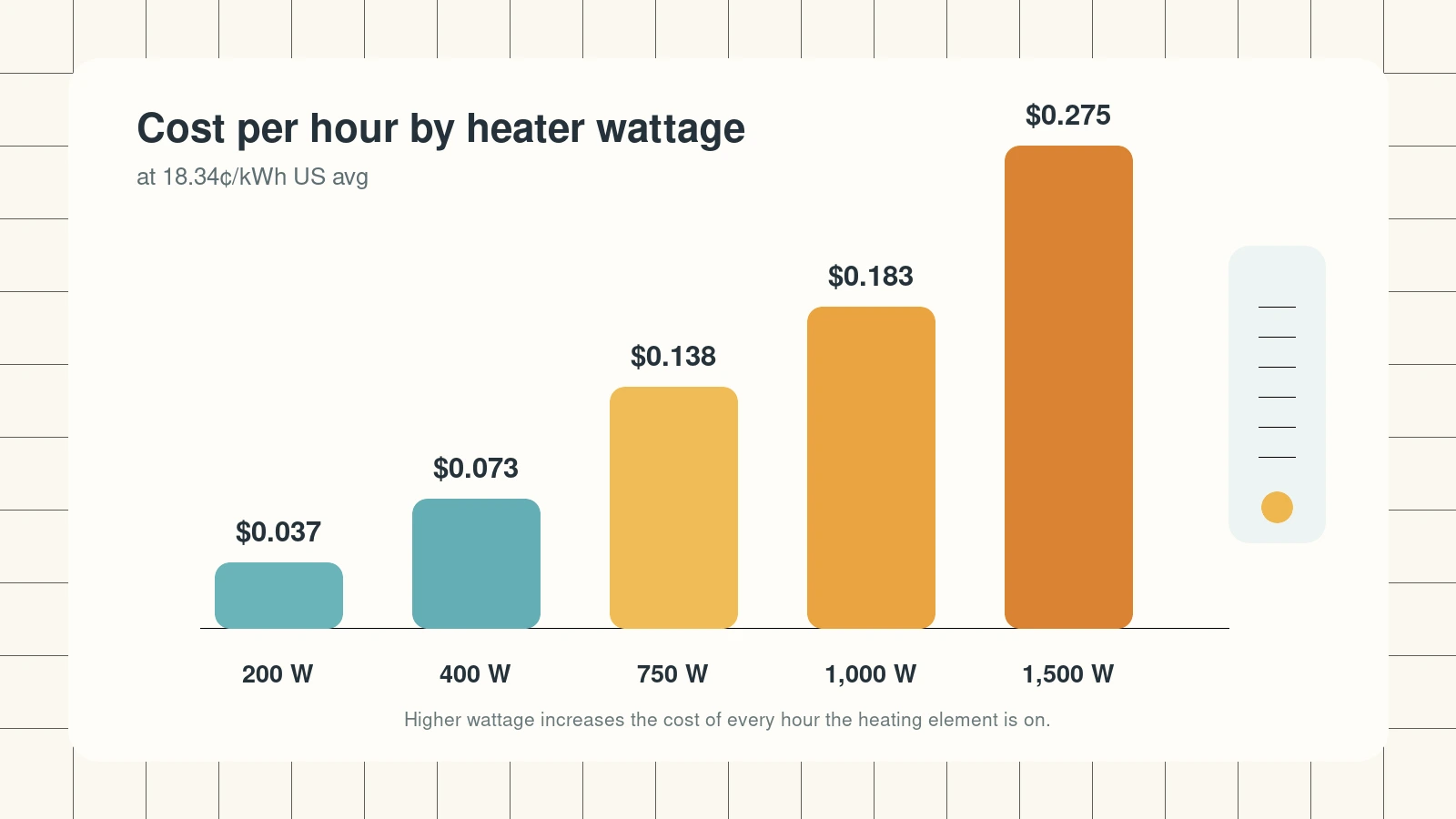
The last row is the honest one: a heater holding a 65–70°F room in typical winter conditions runs its element roughly half the time once the room is warm, so real monthly costs land nearer $33–50 than the headline $66. Use the table’s full-power rows as the ceiling, the duty-cycled row as the likely floor, and your smart-meter data to check afterward — the meter never rounds in your favor.
The state-rate spread: same heater, 4× the bill
Your rate is the multiplier that dwarfs every other variable. At September 2026 averages:
| State band | Rate | 1,500 W cost/hour | Month (8h/day) |
|---|---|---|---|
| Lowest (NV) | 13.11¢ | $0.20 | $47 |
| Low (ND, WA, LA, AR, NE band) | 11.6–13.5¢ | $0.17–0.20 | $42–49 |
| US average | 18.34¢ | $0.275 | $66 |
| High (CA, MA, CT, NH, ME band) | 28–35¢ | $0.42–0.53 | $101–126 |
| Highest (HI) | 52.72¢ | $0.79 | $190 |
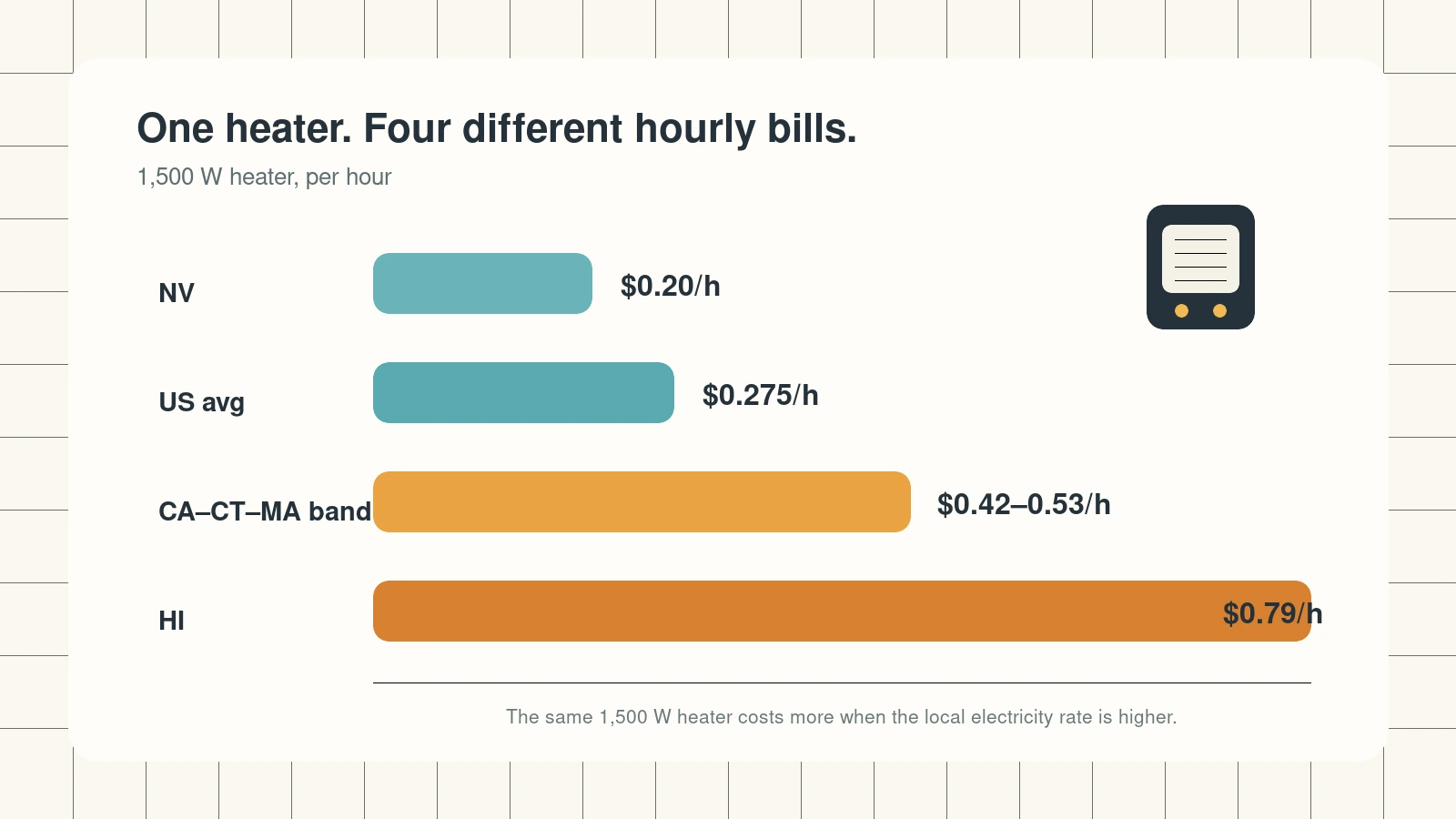
Two honest notes on this table. First, state averages hide intra-state spread — a neutral “delivery charge” re-pricing or a rural co-op can move your rate 20% from the state line figure, which is why the formula beats any table. Second, if you are on a time-of-use plan, the same hour at 9pm can cost a third of what it costs at 7pm; how time-of-use rates work shows how to read your plan’s peak windows and shift heater hours into the cheap ones.
Thermostat, duty cycle, and the “bill shock” gap
The most common gap between calculated and actual cost is not the rate — it is assuming 100% duty cycle. Three levers decide how many of the room-hours have the element on:
- Thermostat setting. Every degree lower on the heater’s dial shrinks the on-fraction. Holding 65°F instead of 72°F in a moderately insulated room can cut element-on time by a quarter or more.
- Room size and insulation. A 1,500 W heater holding a small bedroom warm cycles off often; the same heater in an open living-kitchen runs nearly continuously. A drafty room keeps the element on far longer than the insulation level alone would suggest — sealing beats heating.
- What’s behind the door. Zone heating works because the rest of the house is cooler. If the central system is running anyway, the marginal math changes — that is the next section.
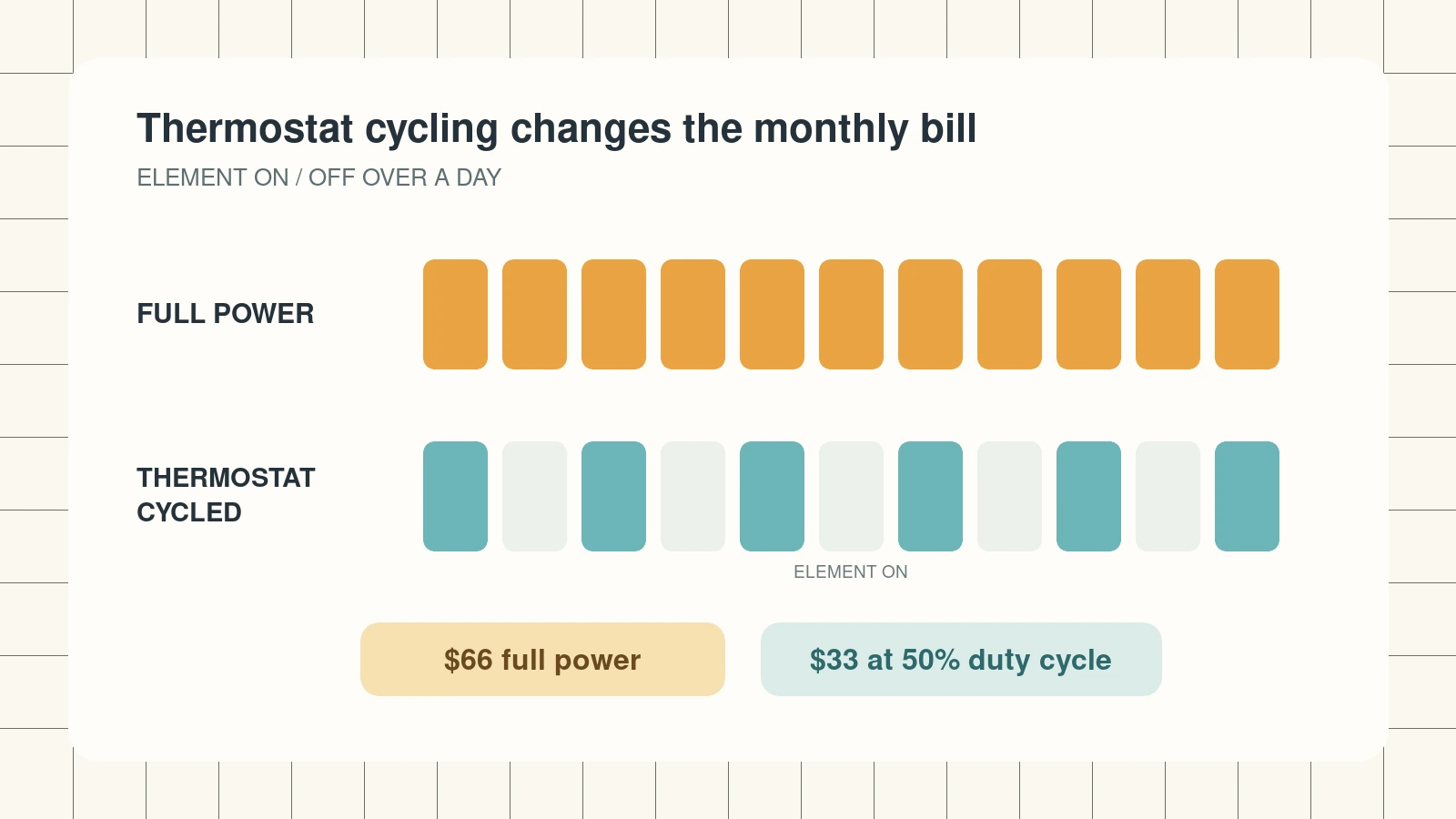
The verification move costs nothing: read your meter (or utility portal) before and after a heater day, then compare against the table. Ten minutes, and you’ll know your true duty cycle instead of estimating it. The full method is in how to read an electric meter, including the one-hour load test that works for any appliance.
When one room beats the whole house (the real decision)
The formula tells you the heater’s cost; the decision is whether that cost replaces a bigger one. DOE’s guidance on zone heating: it “can produce energy savings of more than 20% compared to heating the whole area of your house” — when the occupied room is heated and the rest of the house is allowed to run cooler.[4]
The zone-heating comparison, done honestly:
| Strategy | What you pay for | Typical winter-month cost shape |
|---|---|---|
| Central furnace, whole house at 70°F | All heated volume, all day | Highest — the baseline you’re comparing against |
| Furnace at 62°F + one 1,500 W room heater 4–6 h/evening | Reduced whole-home + one room in the evening | Often $20–60/mo below whole-house-at-70 |
| Heater only, no central system | One room only | The $33–66 table above — cheapest if you genuinely use one room |
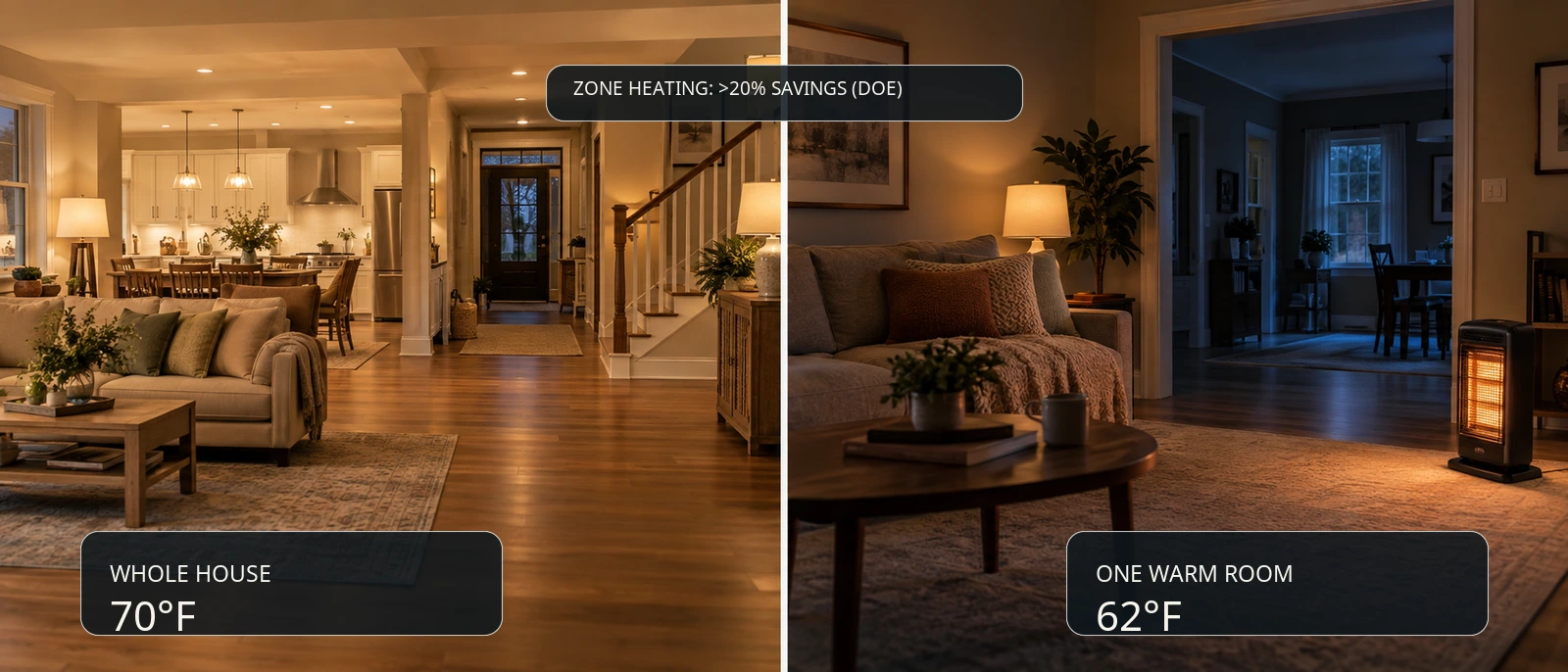
Three cautions before you commit to the heater-only row. A single 1,500 W unit cannot hold a large or open-plan space at 70°F in cold climates — undersized zone heating quietly becomes comfort sacrifice, not savings. Plumbing in unheated parts of the house needs protection from freeze damage. And if your “one room” is where the bed is, an electric blanket heats the person for about a tenth of the heater’s watts — the blanket-vs-heater math covers it with numbers.
What the formula cannot do (and what to do instead)
No per-hour number, however precise, answers “will MY bill go up by that much.” It won’t, exactly, because:
- The heater changes the furnace’s runtime too — some hours you’re paying both, some hours the heater lets the furnace stay off entirely. Net effect is house-specific.
- Your rate may be tiered or time-of-use; the marginal cost of the heater’s kWh is the top-tier or on-peak rate, not the average printed on the bill. Electric bill breakdown shows where to find your true marginal rate.
- Fixed customer charges don’t move at all — a heater never touches the $10–15/mo you pay for the wire itself.
The reliable method is the one the rest of this site keeps returning to: measure. Baseline week without the heater, week with, meter or portal both times. The lower your electric bill pillar walks the full diagnosis tree if the bill jumped for reasons that turn out not to be the heater.
Related Reading
- The best energy-efficient space heaters — the buying decision, honestly framed (all heaters are ~100% efficient; what differs is safety, controls, delivery).
- Electric blanket vs space heater cost — the ten-times-cheaper option when the “room” is a bed.
- How to read an electric meter — verify the duty cycle yourself with the meter you already own.
- How time-of-use rates work — the same kWh for a third of the price if your plan has off-peak windows.
- Why is my heating bill so high? — when the problem isn’t the space heater’s math but the whole house’s.
- The lower-your-bill pillar — the full diagnosis checklist this page’s math feeds into.
How much does it cost to run a space heater for 24 hours?
Is a 1,500-watt heater cheaper than central heating?
Does the heater's efficiency rating matter for running cost?
Why did my bill go up more than the calculator said?
What's the cheapest way to run a space heater?
The Number That Actually Matters
The per-hour figure — $0.275 at the US average, $0.20 to $0.79 across states — is the ceiling, not the forecast. Your real cost is set by the duty cycle the thermostat negotiates with your room’s insulation, and by the marginal rate your plan charges for extra kWh. Both are measurable with the meter you already own, and both move more than any heater feature can.
Where to go next: run the formula with your own bill’s rate tonight, then verify it against the meter this week. If the number is tolerable, the buying decision is which heater; if it isn’t, the ten-times-cheaper alternative for a bedroom is the blanket math, and the whole-house fix starts with why the heating bill is high.
This page is part of the Heating & Cooling hub; terms are defined in the utility glossary.
Sources
- EIA Electric Power Monthly Table 5.03 — residential average 18.34¢/kWh — national average rate anchor, retrieved September 26, 2026.
- EIA Electricity Monthly Update — End-Use Consumption — retrieved September 26, 2026.
- DOE Energy Saver — Electric Resistance Heating — “100% energy efficient” conversion statement, archived May 2026.
- DOE Energy Saver — Small Space Heaters — zone heating >20% savings guidance, archived June 2026.
- Choose Energy — Electricity Rates by State — Nevada 13.11¢ lowest, June 2026, retrieved September 26, 2026.
- ElectricChoice — Electricity Rates by State, September 2026 — 18.34¢ average confirmation, Hawaii 52.72¢ highest, retrieved September 26, 2026.