Quick Answer
Point sensors tell you a leak started. A whole-home system sees the ones point sensors can’t — and a shutoff valve acts when you can’t. The EPA’s leak arithmetic explains the gap: household leaks average about 9,400 gallons a year (EPA WaterSense statistics; the EPA’s classic campaign framing rounds it to “10,000 gallons wasted annually”), and roughly 9 to 10 percent of homes run leaks above 90 gallons a day [1]. No single device covers all of that, which is why this is a ladder, not a face-off.
Most homes are fine at tier 1 — a few point sensors in the right spots. The upgrade question is about coverage: how much plumbing you want watched, and what should happen when a leak starts with nobody home to answer the alert.
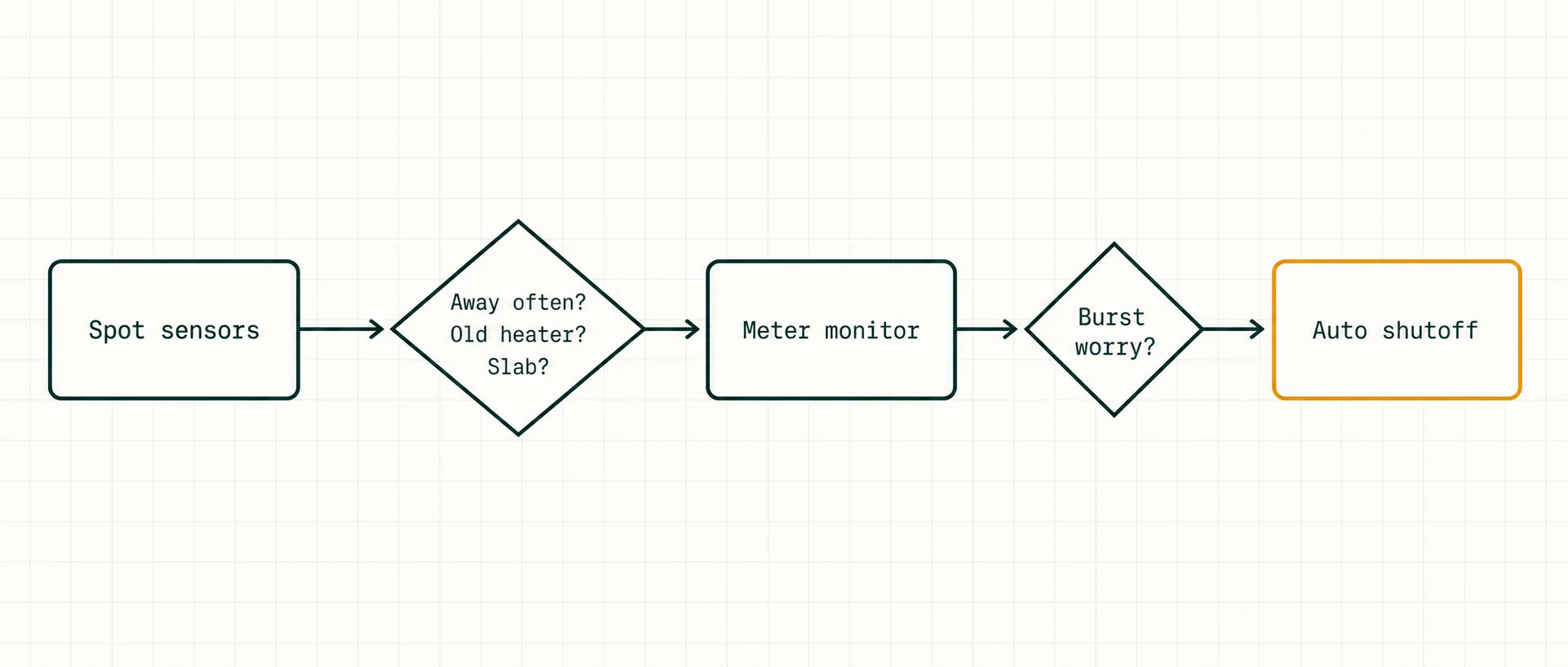
A $60 sensor and a $500 valve solve different problems. The sensor covers spots; the system watches gallons. Everything below is one upgrade path in three rungs — spot sensor, meter monitor, inline shutoff — and the only decision that matters is which rung your house’s risk actually calls for.
What Point Sensors Actually Cover
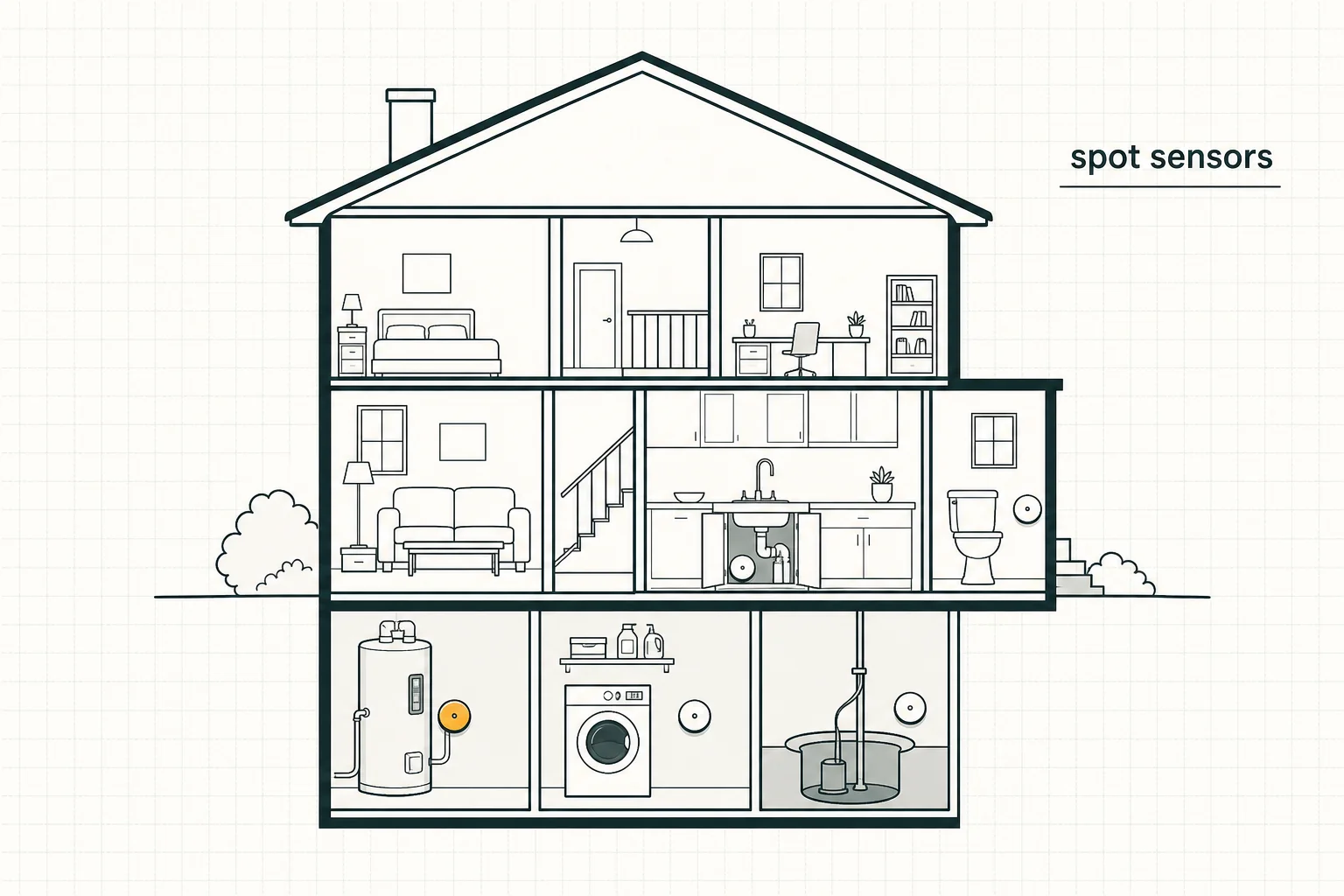
A point sensor guards exactly where it sits — and nowhere else. The stick-anywhere disc is the cheapest honest rung: water touches the contacts, your phone gets the alert [2]. The whole job is placement. Water heater pan, under every sink, behind the toilets, beside the sump pump — discs belong where water pools first.
Read the limit as the same sentence backward: a disc has no opinion about water it never touches. A supply line weeping inside a wall, a slab leak ticking under the floor, anything at the meter — none of it reaches a contact under a sink. Even a running toilet can slip past one, because the waste goes down the drain while the floor stays dry. That diagnosis is free at the source: run the toilet leak test.
Set the miss against the EPA figures and the coverage question gets concrete. A 5-pack under the fixtures addresses the visible share of those 10,000 gallons a year; the expensive category — inside walls, under slabs, at the meter — is structurally invisible to tier 1, no matter how many discs you deploy [1].
The tier-1 purchase, then, is about the right spots rather than more spots: a 5-pack of stick-on sensors with app and SMS alerts through the gateway covers the pan, the sinks, the toilets, and the sump for $59.98 [2].
Five stick-on sensors with app and SMS alerts through the gateway — water heater pan, under sinks, behind toilets, at the sump. Fifty-nine ninety-eight at writing.
Check price on Amazon Price & availability shown on Amazon.com — we may earn a commission.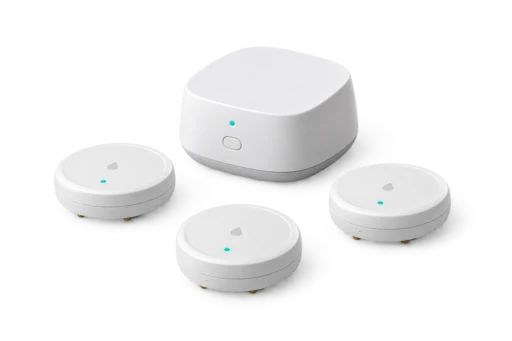
What a Meter-Mounted Monitor Sees
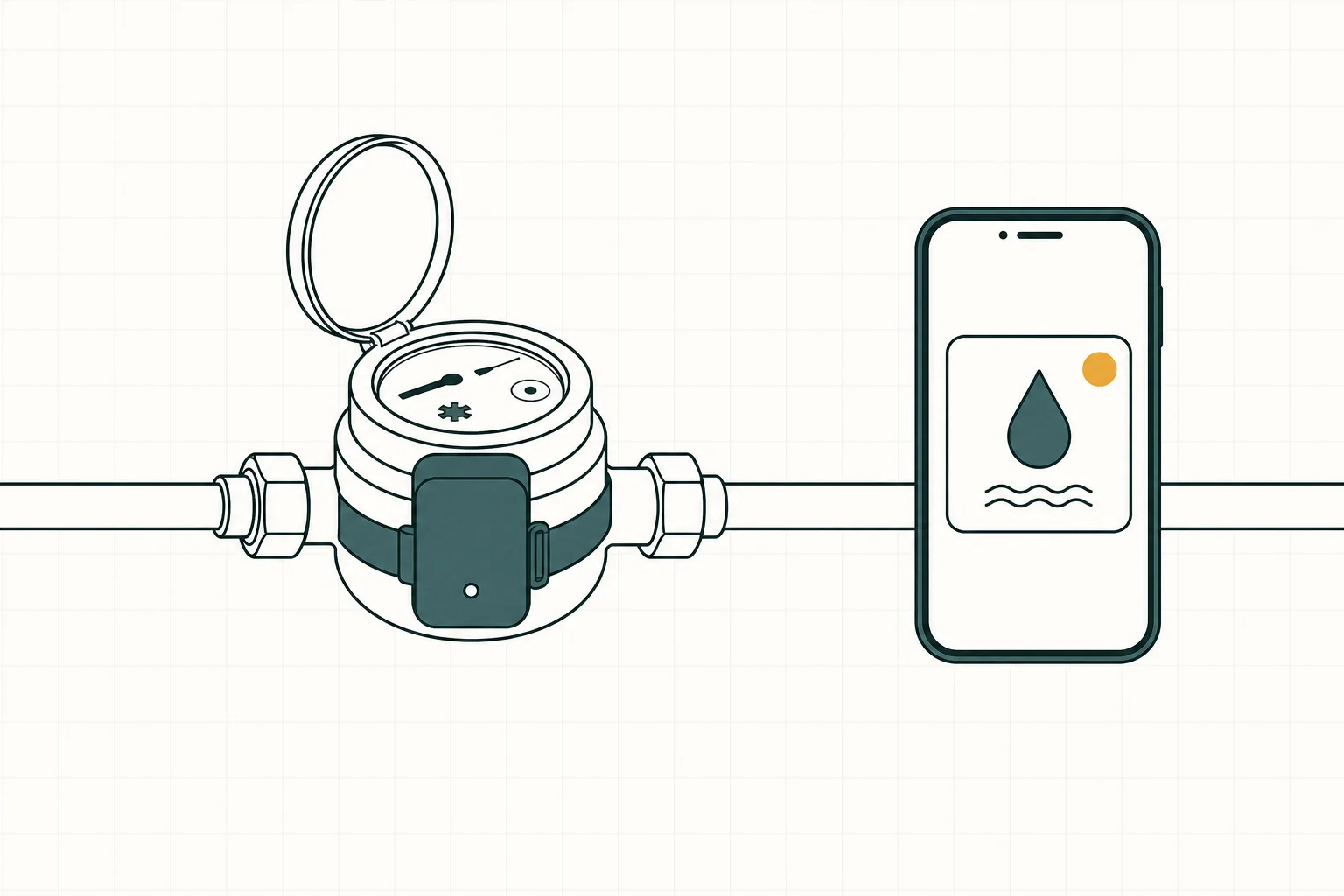
A meter monitor reads the whole house through the one pipe every gallon crosses. The Flume 2 straps onto the water meter you already have — no pipe cutting, no plumber, no contact with the water itself — and reads flow continuously [3]. The free cousin of that visibility is the meter’s own dial — what a running meter with no water in use means. Whole-supply vision is what catches micro-flow the eye misses: a fixture leaking at a trickle, a slab seep, an irrigation line feeding a crack overnight.
Caveats travel with the convenience. Compatibility is the manufacturer’s claim — the Flume 2 straps to about 95 percent of residential meters, a manufacturer-reported figure, so verify your meter model before ordering [3]. Access matters first: a meter behind a locked vault or a landlord’s fence is a property-manager question, not a checkout question.
And be clear about what the money buys: the Flume alerts; it cannot close anything — you finally see the leak, and you are still the response plan.
Five stick-on sensors with app and SMS alerts through the gateway — water heater pan, under sinks, behind toilets, at the sump. Fifty-nine ninety-eight at writing.
Check price on Amazon As an Amazon Associate we earn from qualifying purchases. Price & availability shown on Amazon.com.The bonus is a usage lens. Real-time water data shows where your gallons go, and on tiered water rates, the line between a cheap first tier and an expensive one is precisely the behavior this device exposes — see how tiered water rates work.
What an Inline Shutoff Adds
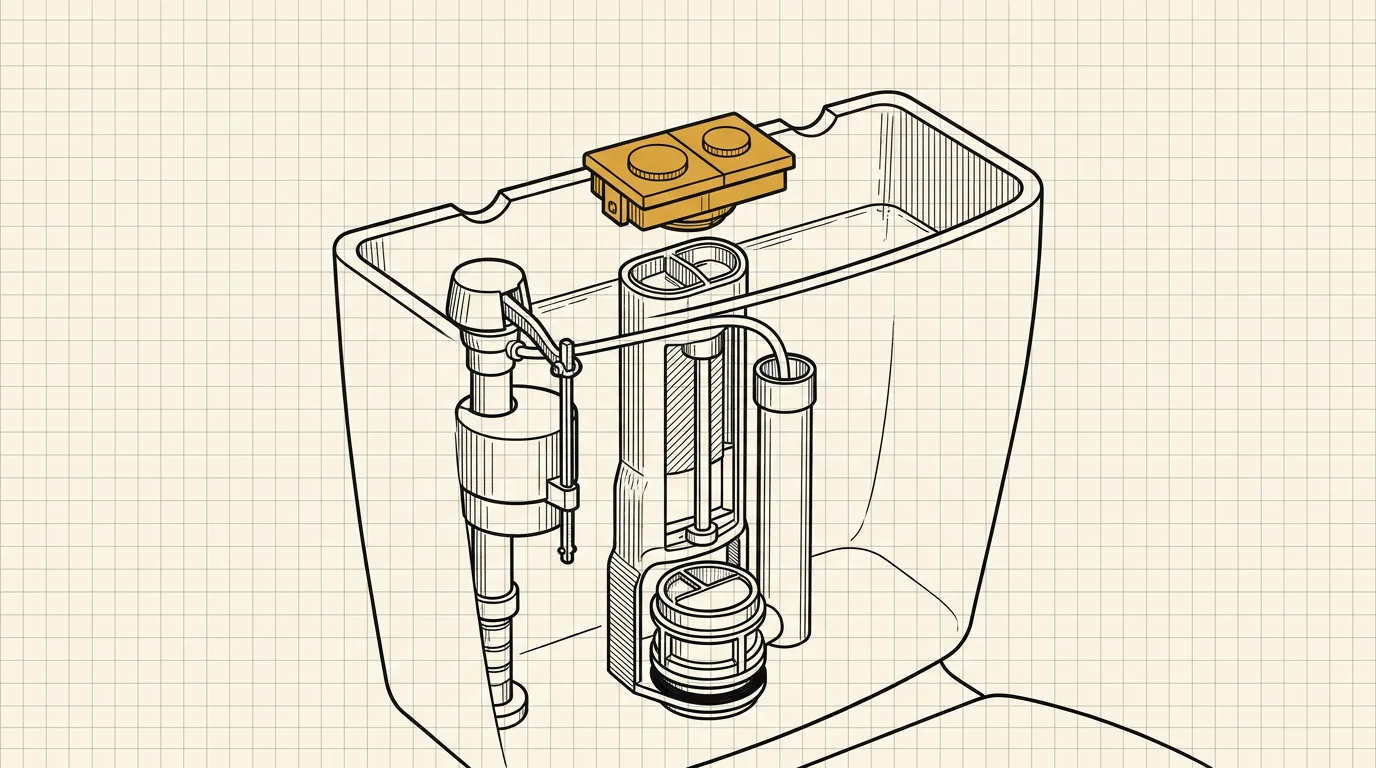
An inline shutoff doesn’t just watch the main — it closes it. The Moen Flo installs in-line on the main supply line, which means pipe cutting, which means a plumber. This rung is owner territory in the most literal sense: the pipe being cut belongs to you [4].
What the surgery buys is the fullest instrument set in this ladder. The Flo monitors flow, pressure, and temperature continuously and runs micro-leak detection down to drops per minute [5] — and on an anomaly it does the one thing no disc or meter strap-on can: closes the valve itself.
That capability exists for a specific nightmare: a supply line or fitting lets go while the house stands empty. A point sensor texts an alert nobody can answer. A meter monitor texts a better alert to the same nobody. The shutoff valve is the only rung where the house responds without you.
The counterweights are price, install, and scope: about $560 before the plumber’s invoice [4], and none of it applies to a renter. This rung earns its cost only when the burst scenario — or the insurance math below — is genuinely yours.
The Five Upgrade Signals
Five household situations move you up this ladder, and each points up for a specific reason.
- You travel, or you own a rental that sits empty. The costliest failures happen with no responder on site — an empty home is where alerts go unanswered. This is the canonical tier-3 signal: a valve acts when you can’t.
- The water heater is past the 10-year mark. Tank heaters fail at fittings, seams, and valves — sometimes as a slow seep a pan-mounted disc catches, sometimes as a sudden seam failure that empties the tank before any alert matters. An aging heater is system risk one fitting away from the whole supply: the tier-2/3 boundary case.
- You have a slab foundation or a finished basement. Both are invisible-leak habitats. A slab leak can run for months without surfacing a drop; a finished basement buries the evidence under drywall and flooring. Discs can’t guard what they can’t touch — only flow-based sensing sees it.
- Your carrier offers a smart-shutoff discount. Some insurers discount premiums for leak-detection or automatic-shutoff devices; others offer nothing. Ask before you buy — name the device, get the terms in writing — and let the answer adjust tier 3’s math rather than create the need.
- The bill keeps creeping, and the meter’s leak indicator is the only witness. Silent waste bills in dollars, not puddles — the bill-side walkthrough is why your water bill is so high. The meter’s built-in leak indicator is the free first check — how to read it — with one timing warning attached: a leak that runs during a winter-averaging window can lock a higher sewer average in place long after the fix — how sewer averaging works.
Every signal points up for the same underlying reason: the failure it describes is either invisible to a disc or happens when no alert can be answered. If none of the five is yours, that isn’t a pending upgrade — it’s a permission slip to stay at tier 1.
Flume vs. Moen Flo
They don’t compete because they don’t do the same job: one watches the meter, the other closes the valve.
| Flume 2 | Moen Flo | |
|---|---|---|
| What it is | Meter-mounted monitor; straps onto the meter you already have | Inline monitor plus automatic shutoff valve on the main |
| Install | DIY strap-on; no pipe cutting [3] | Plumber required; cuts into the main [4] |
| What it catches | Whole-house flow, including micro-flow the eye misses | Flow, pressure, temperature; micro-leaks down to drops per minute [5] |
| What it does about it | Alerts your phone | Alerts, then closes the valve itself [5] |
| Price at writing | ≈$200 ($199 on Amazon vs. $269 direct) [3] | ≈$560 ($559 live) [4] |
| Renter or owner | Renter-viable with meter access | Owner only |
Two answers to two different final questions: do you want to see what the pipes are doing, or do you want the house to act without you? The picks below are those two answers.
Straps onto your existing water meter — no pipe cutting, no plumber. Whole-home flow, micro-leak alerts, and a usage lens. Verify your meter model is compatible first.
Straps onto your existing water meter — no pipe cutting, no plumber. Whole-home flow, micro-leak alerts, and a usage lens. Verify your meter model is compatible first.
Check price on Amazon As an Amazon Associate we earn from qualifying purchases. Price & availability shown on Amazon.com.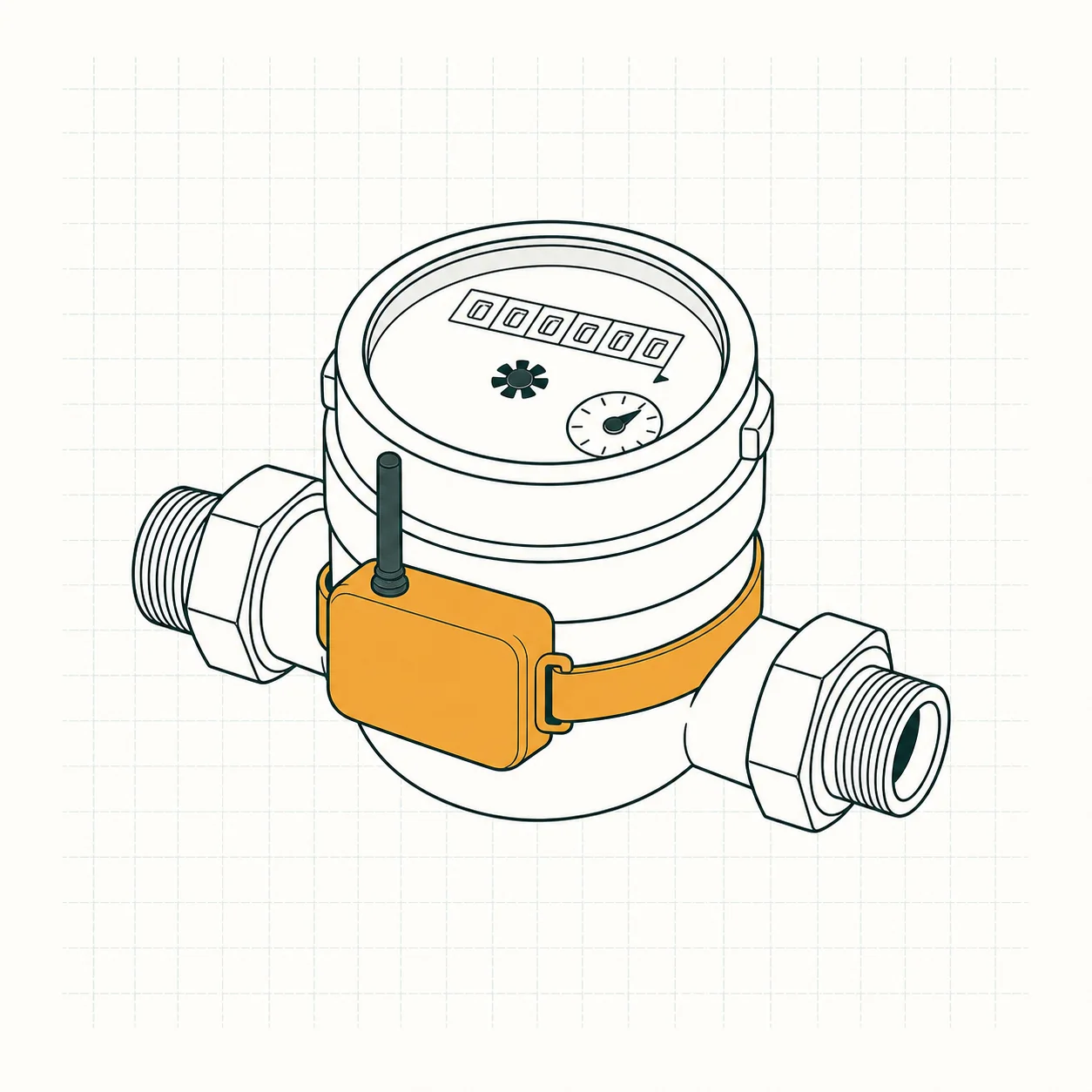
Inline monitor and automatic shutoff on the main line — plumber install. Watches flow, pressure, and temperature and closes the valve itself on an anomaly. Ask your carrier about a shutoff discount.
Add to cart on Amazon Price & availability shown on Amazon.com — we may earn a commission.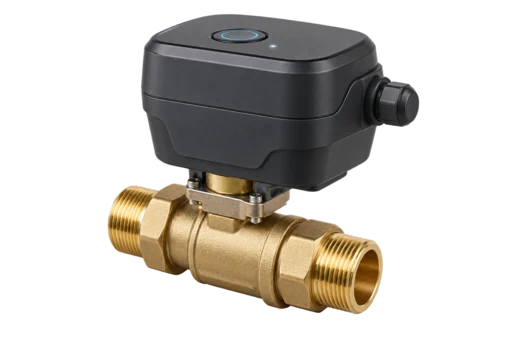
The Coverage Ladder, Priced
Price the ladder by the risk each rung retires, not by the gadget count.
| Tier | Hardware | ≈Price | What the money buys, in risk terms |
|---|---|---|---|
| 1 — Spot coverage | GoveeLife 5-pack point sensors [2] | $60 | Fast alerts where water pools first — pan, sinks, toilets, sump. Retires the found-it-in-minutes risk; does nothing for walls, slabs, or the meter. |
| 2 — Whole-home watch | Flume 2 [3] | ≈$200 | Continuous flow visibility for every gallon past the meter, plus micro-leak alerts. Retires the silent-waste-for-months risk — if someone acts on the alert. |
| 3 — Whole-home act | Moen Flo [4] | ≈$560 | Everything tier 2 sees, plus automatic closure. The only rung that retires the empty-house burst risk — and the only one with an insurance question worth asking. |
The honest sequence for most homes: tier 1, placed deliberately in the right spots. Move to tier 2 when bills creep or the meter’s indicator points at waste you can’t locate. Tier 3 belongs to the burst scenario and the insurance conversation — justified by travel, an empty rental, or a carrier that answers yes, never by gadget envy.
And the standing counterweight: for a lot of houses, a $60 kit in the right corners is the correct final answer. The non-gadget half of leak defense stays free either way: the meter’s indicator, the dye test, and the habits in how to lower your water bill.
The Renter’s Question
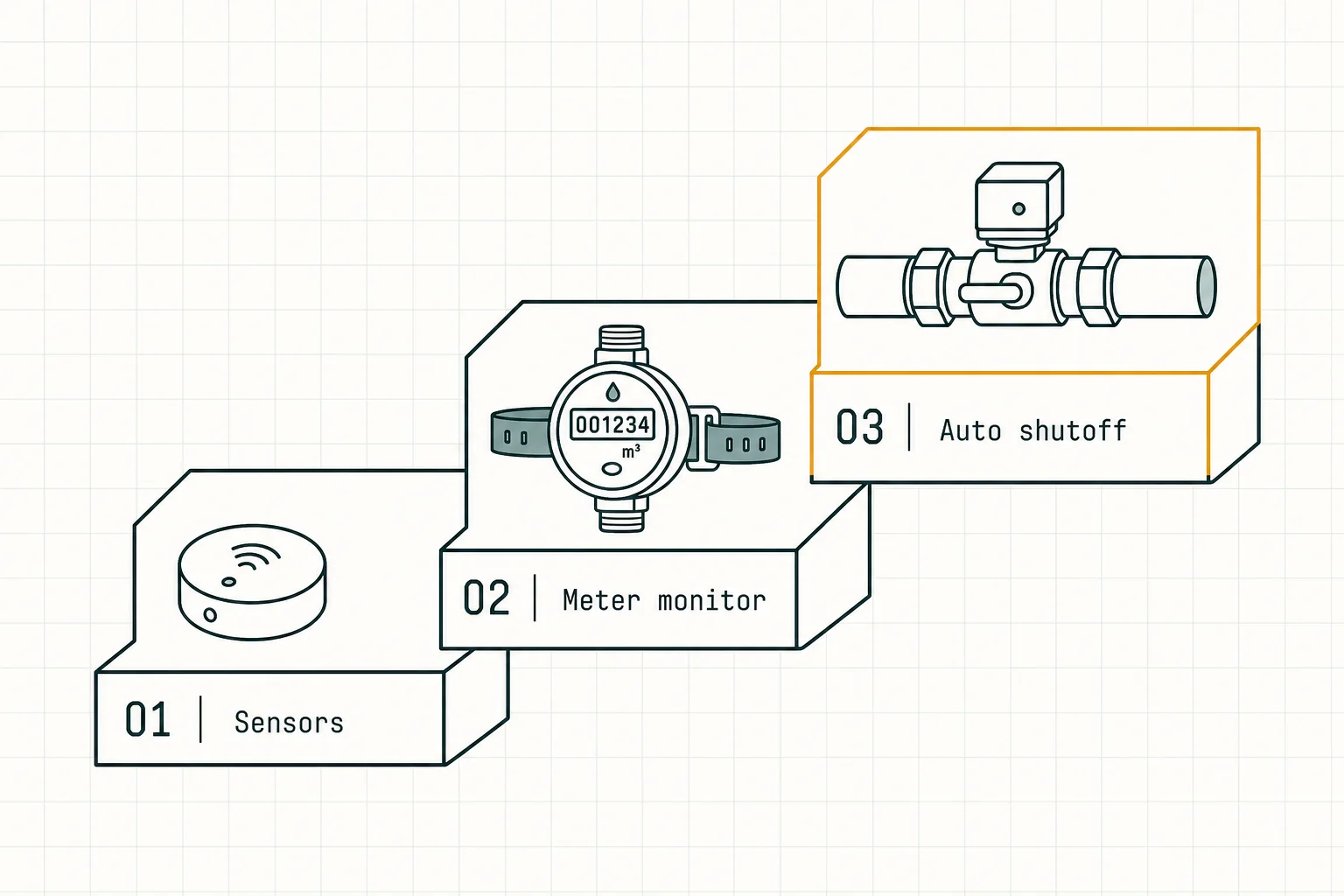
Renters get tier 1 freely, tier 2 conditionally, and tier 3 not at all.
Tier 1 is renter-native: stick-on discs touch no plumbing, survive a move, and never meet the security deposit. Tier 2 is possible only with a compatible meter you can physically reach — in a multiplex it may sit behind a locked gate or on the utility’s side of the line, which makes it the property manager’s call. Tier 3, cutting into a building’s main, is never a tenant project.
Inline monitor and automatic shutoff on the main line — plumber install. Watches flow, pressure, and temperature and closes the valve itself on an anomaly. Ask your carrier about a shutoff discount.
Check price on Amazon As an Amazon Associate we earn from qualifying purchases. Price & availability shown on Amazon.com.The one upgrade conversation that is yours to start is with the landlord, and the pitch is theirs, not yours: some carriers discount premiums for shutoff devices, an empty unit is precisely the no-responder scenario, and the catastrophic claim lands on the owner’s policy. You bring the ladder; they bring the plumber.
Frequently Asked Questions
Do smart water shutoff valves lower home insurance?
Do I need a plumber for Moen Flo?
Are point leak sensors enough for apartments?
For the head-to-head specs of the tier-2 and tier-3 devices named here — install, subscriptions, and what auto-shutoff actually buys — see Flume vs Moen Flo vs Phyn; for puck-by-puck positioning, where to place water leak sensors.
Sources
- EPA WaterSense — Fix a Leak Week: household leak statistics (average household leaks above 10,000 gallons/year in classic materials, above 9,300 in newer ones; roughly 9–10% of homes waste 90+ gallons/day) (retrieved 2026-08-30)
- GoveeLife Water Leak Detector 5-pack — Amazon listing (ASIN B0DQLFC3Q6): $59.98 live at retrieval; stick-on point sensors, app/SMS alerts via gateway (retrieved 2026-08-30)
- Flume 2 Smart Home Water Monitor — Amazon listing (ASIN B08DX6MP8X): ≈$199 at retrieval ($269 direct); straps onto the existing meter, no pipe cutting; ~95% of residential meters per manufacturer claim (retrieved 2026-08-30)
- Moen Flo Smart Water Monitor and Automatic Shutoff 900-001 — Amazon listing (ASIN B00C03D01Q): $559 live at retrieval; installs in-line on the main (retrieved 2026-08-30)
- Moen — Flo Smart Water Monitor and Shutoff product page: flow, pressure, and temperature monitoring; micro-leak detection; automatic shutoff (retrieved 2026-08-30)