Quick Answer
A pilot that lights but dies the moment you release the button points to the thermocouple — the safety probe that must sit in the flame and signal the gas valve to stay open; manufacturers name it the most frequent cause.[1][2] A pilot that stays lit for hours or days and then goes out on its own points to a draft, a partially clogged pilot orifice, or a venting problem. Relight once, following the appliance’s procedure. If it fails twice, stop relighting — a pilot that will not stay lit is the appliance telling you a part has failed or combustion is not venting right, and either answer needs a technician. Two hard stops override everything: a rotten-egg smell means leave and call the gas company, and headache or nausea that eases when you leave the house means carbon monoxide — get out and get help.[3]
How the safety chain actually works
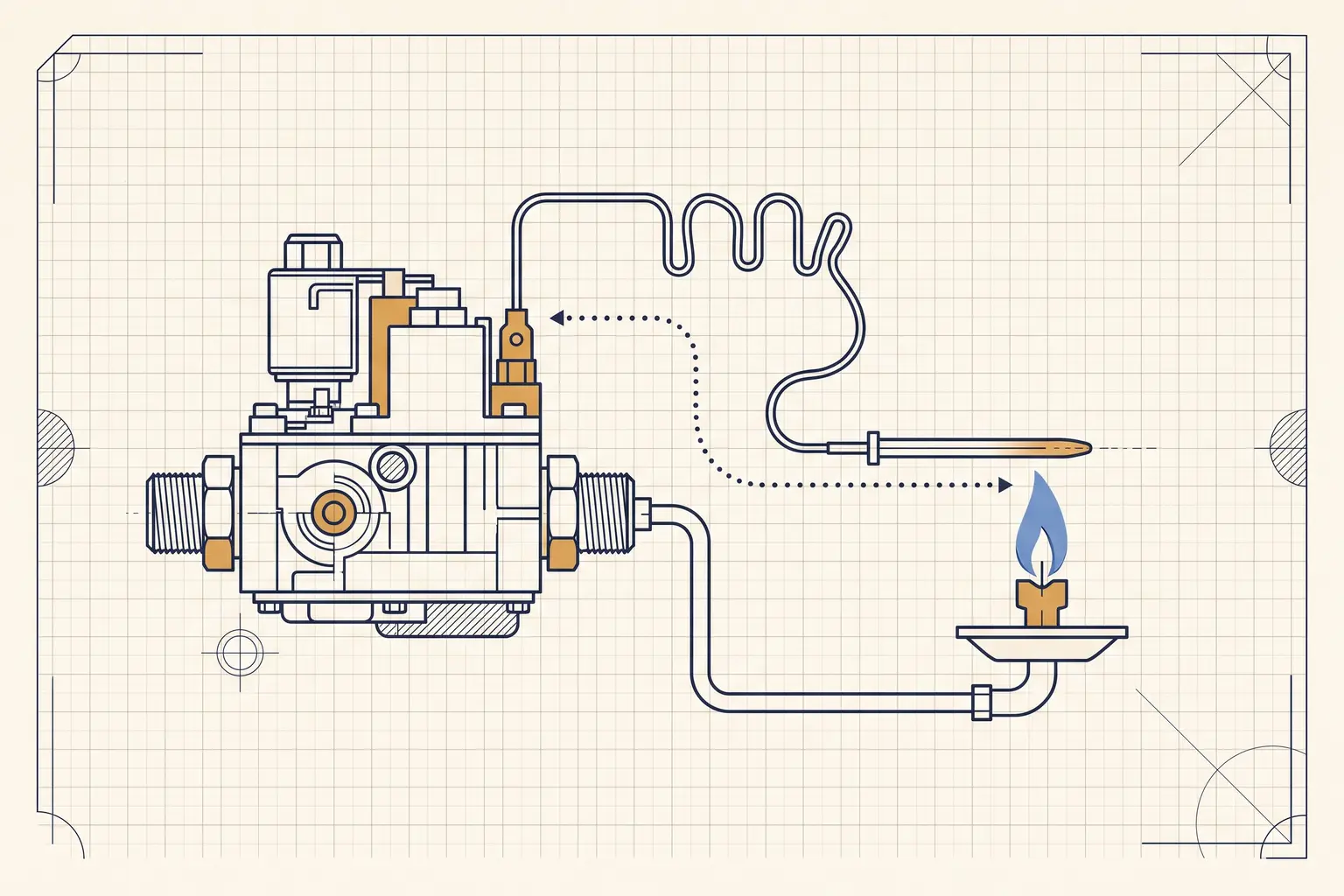
A standing pilot is a small, constantly burning gas flame. When the thermostat calls for heat, that flame lights the main burner. Sitting in the flame is a safety sensor — on most older furnaces and water heaters, a thermocouple: a metal probe that generates a tiny electrical current when heated. That current holds the gas valve open. If the flame disappears, the current drops and the valve snaps shut, stopping gas.[1][2]
That design explains the whole symptom table. When the pilot goes out and the gas does not, the system is doing its job. The diagnostic question is always one of two: why does the sensor believe the flame is missing (thermocouple worn, soot-coated, or mispositioned), or why is the flame genuinely disappearing (gas supply, orifice, draft, venting)?
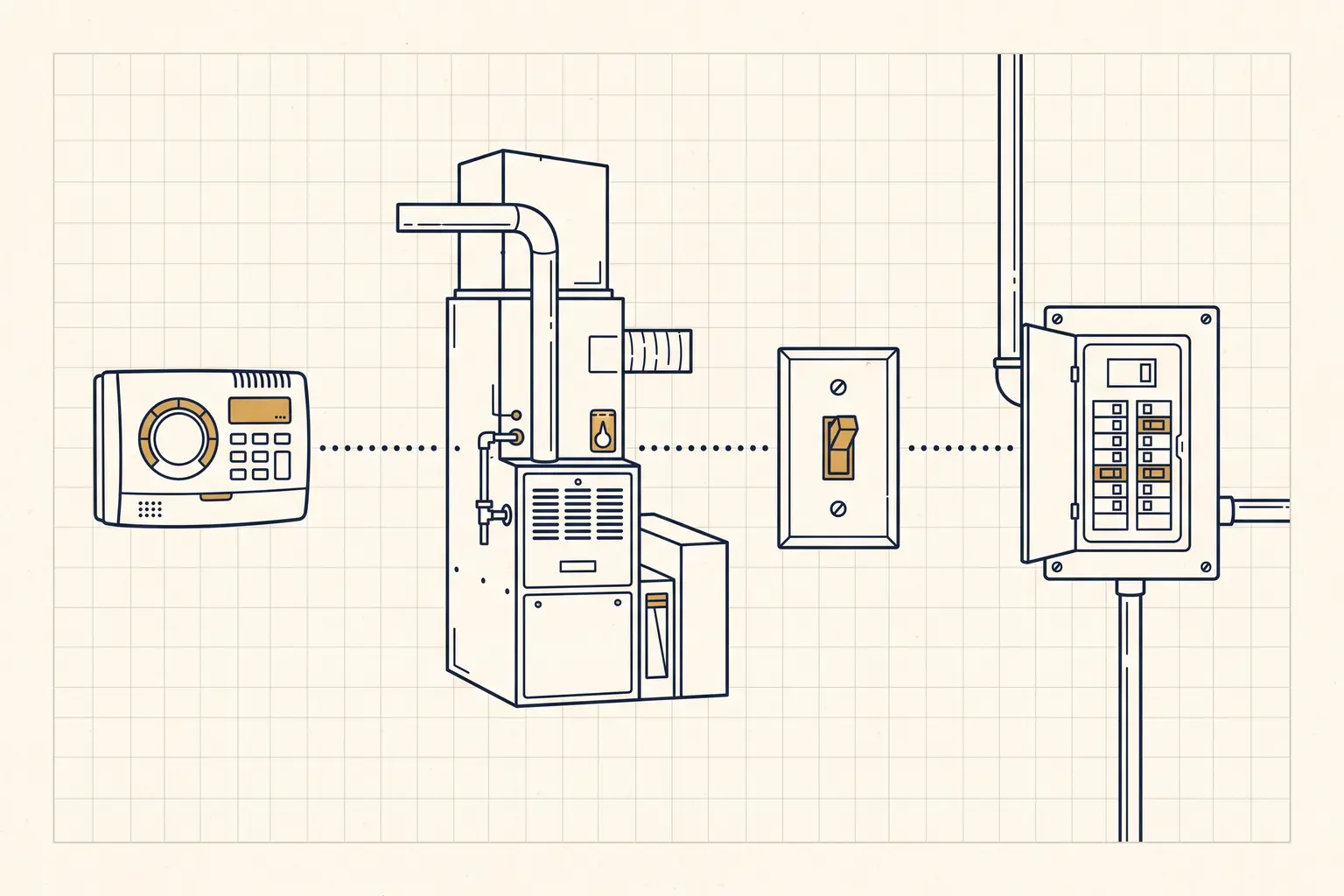
Newer appliances mostly replace the standing pilot with electronic ignition — if your furnace has a glow-bar igniter or spark, a “pilot out” diagnosis is really an ignition fault, which starts in furnace won’t turn on.
The causes, ranked by how they show up
Lights, then dies within seconds of releasing the button → thermocouple. The classic signature. The probe is soot-coated, bent just out of the flame, or simply worn out and producing too little current to hold the valve. Manufacturers put it first on the cause list for exactly this signature.[1][2] The part itself is inexpensive; the catch is matching it and positioning the tip exactly in the flame path.
Stays lit for hours or days, then out → draft or a dirty pilot orifice. A gust from a window, an open garage door, or an exhaust fan can snuff a small flame[1]. The pilot orifice is a tiny opening — dust, lint, and rust can partly block it, leaving a weak, yellow, wavering flame that cannot heat the thermocouple properly[2]. A healthy pilot is steady and mostly blue; a lazy yellow one is asking for cleaning.
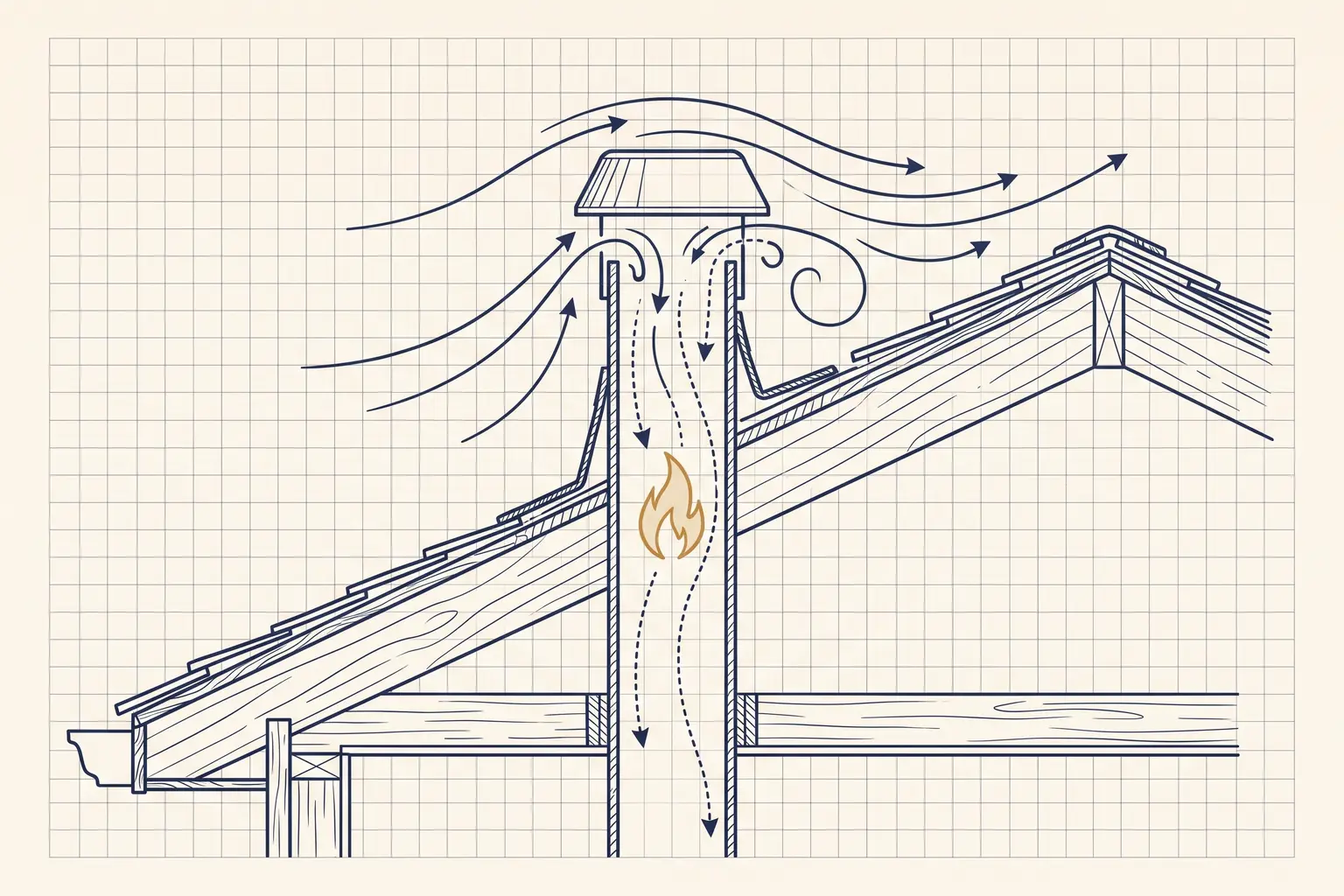
Goes out when the dryer or a bath fan runs → backdrafting. Competing exhaust appliances can pull air backwards through the appliance’s venting. That is a combustion-safety issue, not a nuisance: it can draw combustion gases into living space, and it warrants a technician’s combustion-safety check rather than another relight.
Will not light at all, no gas at the pilot → supply or valve. Check whether other gas appliances work. If nothing gas works, the supply is the question; if only this appliance fails, its control valve, gas pressure, or ignition-side parts are suspect — all technician territory.[1]
Yellow flame with soot near the burner → stop using the appliance. Incomplete combustion is dirty and potentially unsafe; soot marks mean the burner needs professional attention.
Relighting: the procedure and the two-strike rule
- Set the thermostat to its lowest setting or switch the appliance off.[1]
- Turn the gas control knob to Off and wait at least five minutes — A.O. Smith specifies the wait so any accumulated gas can clear.[1] If you smell gas at any point, stop, leave, and call.
- Turn the knob to Pilot. Press and hold the pilot button.
- Light with a long lighter or the built-in igniter, still holding the button.
- Keep holding about 30 to 60 seconds, so the thermocouple heats and signals the valve.[1]
- Release slowly. If the flame holds, turn the knob to On and restore the thermostat.
- If it dies again, you may repeat once after the five-minute wait. After two failures, stop — order the part or the technician visit instead of feeding a failing safety chain.
When to stop relighting entirely
- Rotten-egg smell: leave the house and call the gas company from outside. The utility’s leak check is free and takes priority over every troubleshooting step.[3]
- CO symptoms — headaches, nausea, dizziness that ease when you leave the house: get out, get fresh air, get medical help, and have the appliance and venting checked before relighting.[3]
- Soot, scorching, or a yellow lazy flame: combustion is wrong; continuing to relight pushes unburned gas and CO risk into the house.
- Three relights in a season on an aging appliance: standing-pilot equipment is older by definition; stacked failures (a pilot plus a rusty burner plus a rising gas bill) point at the repair-versus-replace conversation rather than another thermocouple.
Furnace vs. water heater: same chain, different trades
The causes above apply to both, with two differences worth knowing. A furnace pilot failure means no heat — diagnose it inside the furnace no-heat check order first, because a furnace that will not fire has ignition-side causes beyond the pilot. A water heater pilot failure means cold showers and a tank that sits cold — check the appliance’s own relight sticker on the tank, and note that sediment buildup in a tank can make the burner run rough, a plumbing-trade problem rather than an HVAC one. On either appliance, if the pilot problem coexists with unexplained gas-bill movement, reading your gas meter settles whether usage actually changed.
FAQ
Can I relight a pilot light myself?
How much does a thermocouple replacement cost?
Why does my pilot go out when it is windy outside?
Do modern furnaces even have pilot lights?
Could a dying pilot run up my gas bill?
Related Reading
- Furnace won’t turn on — the full no-heat check order
- Gas leak signs: what to do, and the bill impact — the free utility leak check
- Why is my gas bill so high? — the cost-side diagnostic
- How to read your gas meter — settle usage questions yourself
- MCF vs CCF vs therms on a gas bill — the units on the bill
- Heating & cooling explained
Sources
- A.O. Smith: How To Relight A Water Heater’s Pilot Light (retrieved 2026-11-18)
- Lennox: Why Your Water Heater Pilot Light Keeps Going Out (retrieved 2026-11-18)
- CPSC: Carbon Monoxide Information Center (retrieved 2026-11-18)