Quick Answer
A bill can combine usage-based charges with fixed charges, taxes, credits, and other tariff-defined items. Use the rate schedule and line items on your own statement rather than a generic formula or example.
For more detail, see Understanding Your Utility Bill.
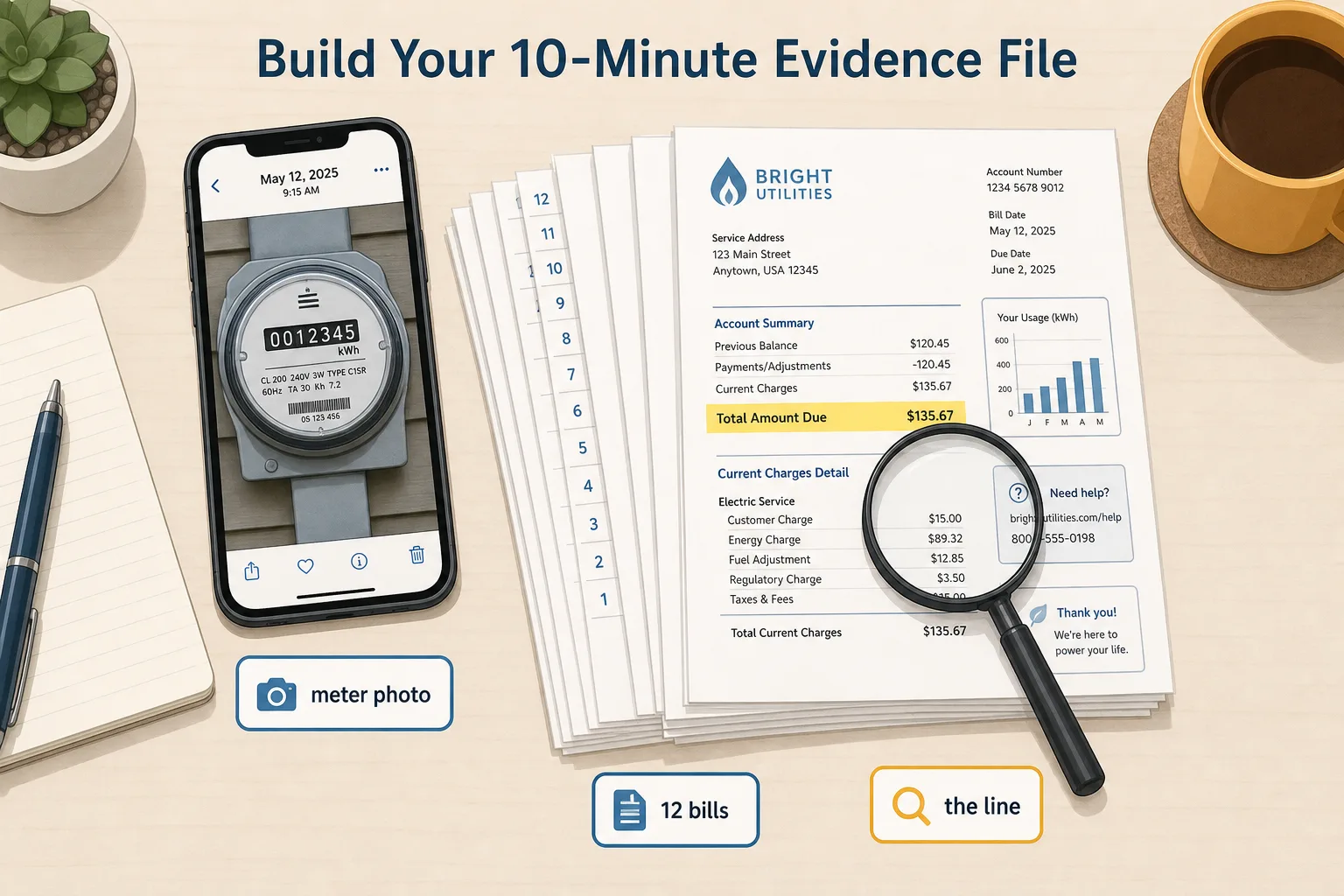
Think in layers: usage times rate, plus fixed charges
Most people look at one number and feel lost. A simple model brings the bill back into focus.
The total is built from three layers: how much you used, what each unit cost, and the charges that show up no matter what. Some rate structures add a fourth wrinkle — credits — most visibly when solar owners export power through net metering.
If you want the full pillar map, start with Utility Bills & Costs Explained.
Rates: the price per unit (and why it changes)
Rates can be flat, tiered, or time-based. Each one changes how the same usage turns into dollars.
Flat vs tiered vs time-of-use
Tiered rates charge more after a threshold. Time-of-use rates charge more at certain hours. If you want examples, see Tiered Electricity Rates Explained and Time-of-Use Rates.
Adjustments and riders
Some bills include small adjustments tied to fuel costs or programs. They look minor, but they add up.
Fees: the parts that do not depend on usage
These are service charges, taxes, and local fees. They show up even if you used very little.
Service charges
You will often see a base charge for keeping service active. Water bills are a clear example. See Water Service Charge Explained.
Taxes and franchise fees
Local taxes and franchise fees are common and can change yearly. This guide walks through them: Utility Bill Taxes, Fees, and Franchise Charges Explained .
How one change ripples through the total
A small rate change on a long billing period can feel like a big jump. A fixed fee increase can be more visible in a low-use month.
If your total jumped and you want a quick diagnosis, start with why your utility bill went up this month .
A simple walkthrough (no math, just the logic)
Imagine a month with the same usage as last month. The billing period is a few days longer. The rate moved slightly. The fixed charge went up by a dollar.
Each change is small on its own, but they stack. That stack is why a steady routine can still create a higher total.
If electricity is the main driver, this focused guide helps: Why your electric bill is so high — the full diagnostic .
Common misconceptions
- "Rates are fixed all year." Many plans change seasonally or through adjustments.
- "Fees are just taxes." Some fees fund local infrastructure or programs, not taxes.
- "If usage is flat, the bill must be flat." The price per unit and fixed charges can still shift the total.
Continue learning in the hub: Utility Bills & Costs Explained.
How do rates and fees work together on a utility bill?
Why do fees show up even when I used little?
Do rate changes apply to all utilities?
What is the fastest way to make sense of a bill?
Where should I start if my bill feels confusing?
Sources
- U.S. Energy Information Administration: U.S. electricity prices continue steady increase — official context for differences in retail electricity prices.