Quick Answer
The only definitive way to tell if a neighbor is stealing your electricity is the “main breaker test”: turn off your home’s main electrical breaker and check your utility meter; if the meter continues to tick or show active usage, power is being drawn by something outside your control. While actual theft is rare, “phantom usage” is often caused by shared circuits in multi-family buildings, wiring faults, or forgotten high-draw appliances. If the meter stops when your breaker is off, the usage is internal; if it keeps running, document the evidence and contact your utility provider immediately—never attempt to confront a neighbor or touch utility-side equipment yourself.
The Reality of Electricity Theft
Finding a sudden, unexplained jump in your utility bill is stressful. While your first instinct might be to suspect a neighbor is tapping into your outdoor outlet or splicing a line, actual criminal theft is statistically less common than technical errors or simple “phantom” loads. However, in multi-family housing or older converted apartments, “shared circuits”—where a neighbor’s outlet or a common area light is accidentally wired to your meter—are a real and documented issue.
Before you make an accusation, you need proof. The national average residential electricity rate is 18.34¢/kWh (as of June 2026) [1]. At that rate, a neighbor running a single space heater on your tab could add $50–$100 to your monthly bill. This guide walks through the diagnostic steps to separate a sudden spike in your electricity bill from actual theft.
The Core Diagnostic: The Main Breaker Test
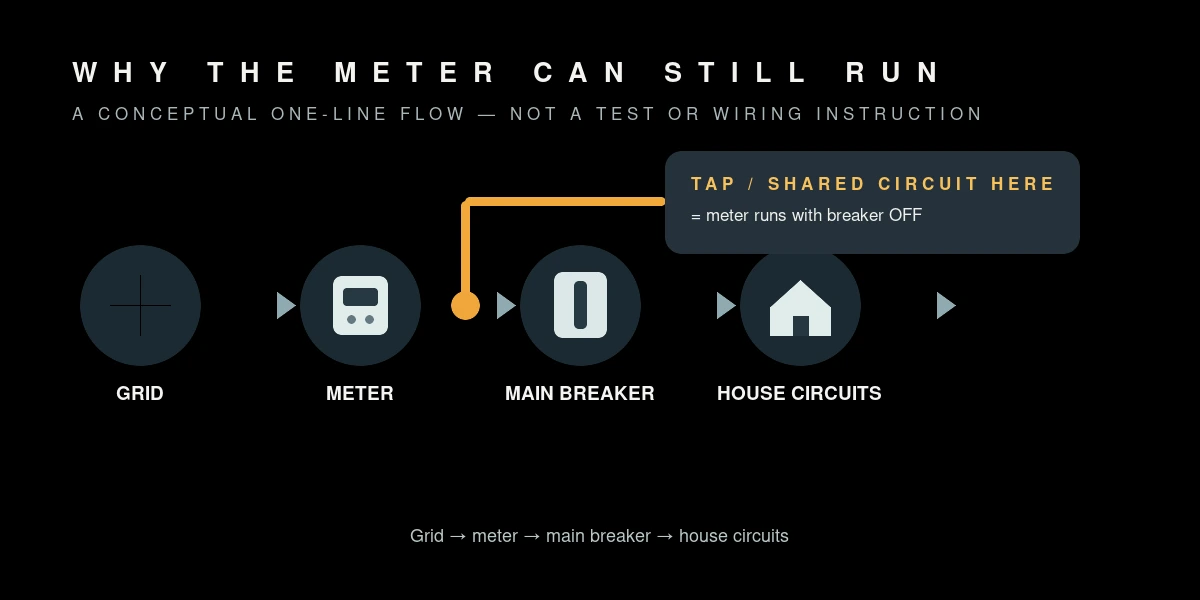
This is the “gold standard” for identifying unauthorized power draw. It works because your utility meter sits between the power grid and your home’s main breaker panel.
Step 1: Locate Your Meter and Main Breaker
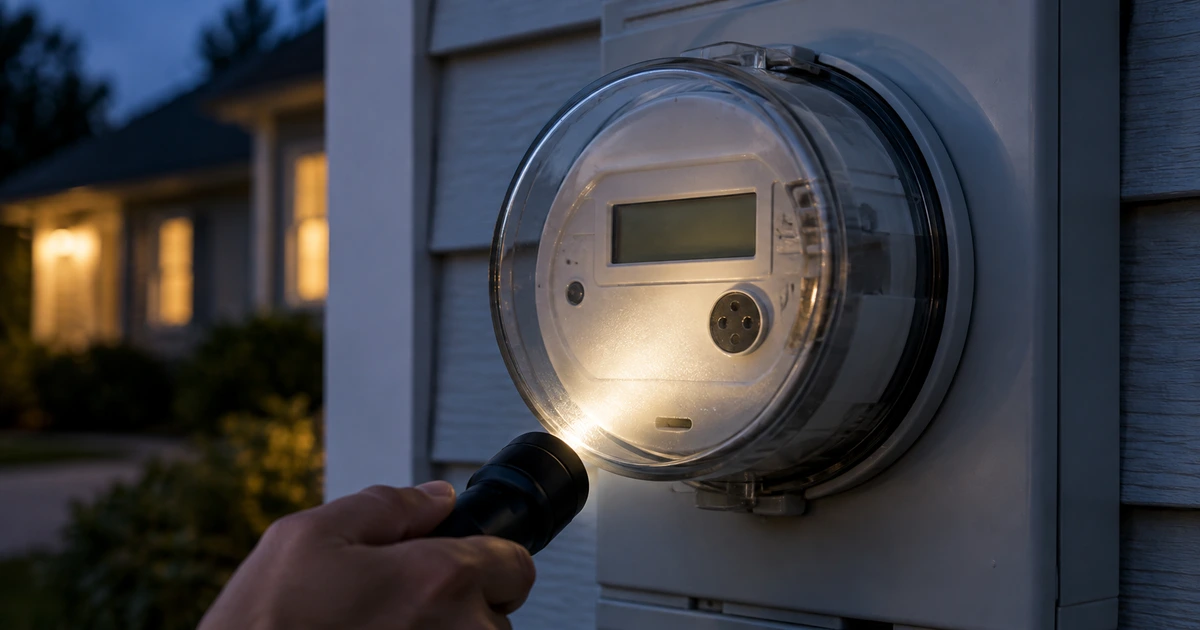
Find your electric meter (usually on the side of the house or in a basement bank for apartments) and your main electrical panel. If you aren’t sure how to find or read it, see our guide on how to read your electric meter.
Step 2: Perform the “All-Off” Test
- Go to your main breaker panel.
- Flip the Main Breaker to the “OFF” position. This cuts power to every single circuit in your home.
- Go to your electric meter and watch the display.
Step 3: Interpret the Results
The interpretation matrix is simple:
| Meter Status (Main Breaker OFF) | Meaning | Action |
|---|---|---|
| Meter Stops Completely | No power is leaving the meter. The “theft” is happening inside your home. | Check for phantom power draw or faulty appliances. |
| Meter Continues to Run | Power is being drawn from a point between the meter and your breaker panel. | This is evidence of a shared circuit or external tap. Document and report. |
Safety and Legal Constraints: What NOT to Do
If you suspect theft, your role is observer and reporter, not investigator.
- Never break meter seals: The lead or plastic seals on your utility meter are legal protections. Breaking them is often a crime and will make the utility suspect you of meter tampering.
- Never touch utility-side equipment: The wires coming from the street to your meter carry lethal voltage.
- Do not confront neighbors: If someone is intentionally stealing power, a direct confrontation can escalate into a dangerous situation.
- The Legal Path: The only legal path to resolution is documenting the “main breaker test” results and calling your utility company to request a “site investigation” or “meter tech visit.”
Ranking the Causes of “Phantom Usage”
If your bill is high but the main breaker test shows the meter stops when you cut power, the “theft” is likely one of these common culprits, ranked from most to least likely:
1. Ordinary Standby Load (Phantom Power)
The average US household uses ~899 kWh/mo [2]. A significant portion of this is “vampire” or phantom power draw—electronics that use energy even when turned off. While it rarely causes a “spike,” it can make a bill feel higher than expected.
2. Shared or Legacy Circuits
In older homes converted into apartments, wiring is often a mess. A basement outlet used by a neighbor or a hallway light might be wired to your panel. This isn’t necessarily “theft” in a criminal sense, but it is a billing error that your landlord must fix. This is a common reason for apartment utilities to cost more than expected.
3. Wiring Faults
A “ground fault” (where a wire’s insulation is damaged and electricity is leaking into the ground or building structure) can cause a massive spike in usage without tripping a breaker. This is dangerous and a fire hazard.
4. Meter Error
While rare, mechanical meters can fail or digital meters can have communication errors. If you suspect this, check how smart meters work to see how they transmit data.
5. Actual Intentional Theft
This usually involves a physical wire (extension cord) or a “tap” spliced into your lines. Look for extension cords running from your outdoor outlets to a neighbor’s window, or strange wires protruding from your external junction boxes.
How to Measure Internal Usage
If the breaker test proves the usage is coming from inside your house, you need to find which appliance is the culprit. Instead of guessing, use a tool to get hard data.
The industry standard for measuring individual appliance draw. Plug any 120V appliance into the Kill A Watt, and it displays exactly how many kWh that device is using. Perfect for proving a 'broken' fridge or old dehumidifier is the reason for your high bill.
Check price on Amazon Price & availability shown on Amazon.com — we may earn a commission.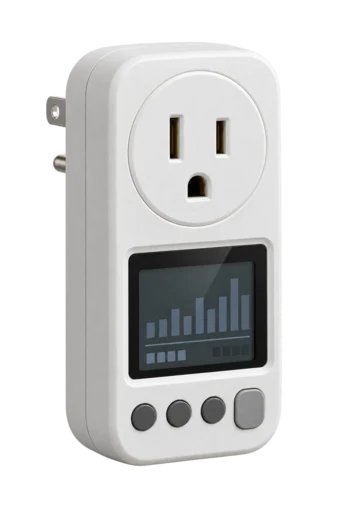
If you want to monitor multiple devices at once, smart plugs with monitoring are a modern alternative.
Unlike a manual meter, these smart plugs log energy usage over time to an app on your phone. You can see exactly when a device spikes and how much it costs you per day.
Check price on Amazon Price & availability shown on Amazon.com — we may earn a commission.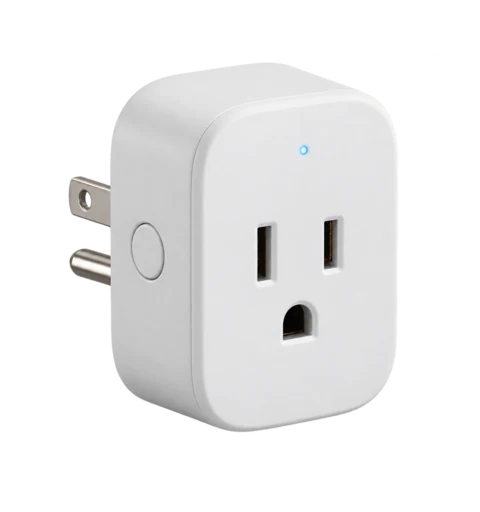
Summary of Potential Costs
Using the verified EIA 2025 average of 17.30¢/kWh [1], here is what “stolen” or “leaked” power actually costs you:
| Device/Scenario | Estimated Draw | Monthly Cost (at 17.30¢/kWh) |
|---|---|---|
| Neighbor’s Space Heater (1500W, 8h/day) | 360 kWh | $62.28 |
| Shared Hallway Lighting (100W, 24/7) | 72 kWh | $12.46 |
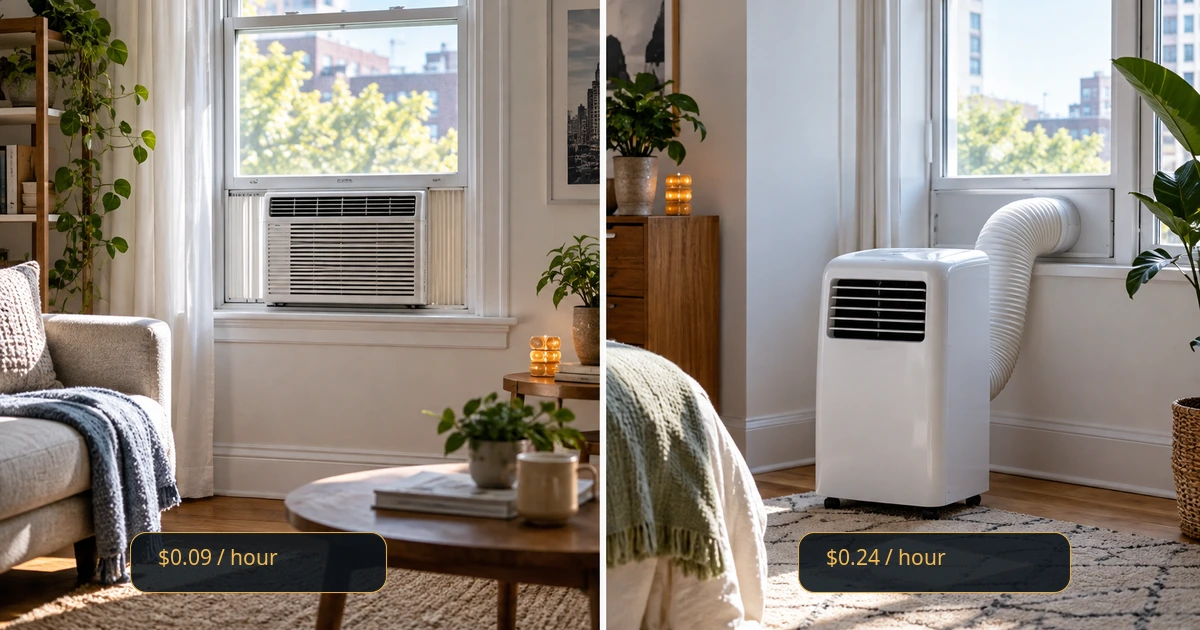
| Neighbor’s Window AC (800W, 12h/day) | 288 kWh | $49.82 |
| Typical “Phantom” Load (50W constant) | 36 kWh | $6.23 |
Arithmetic: (Watts / 1000) * Hours * 30 days * $0.1730. Example: (1500/1000) * 8 * 30 * 0.1730 = $62.28.
What to Do If You Find Theft
- Document Everything: Take photos of the meter while the main breaker is off. Take photos of any suspicious wires or extension cords.
- Contact the Utility: Call the “Revenue Protection” or “Fraud” department of your electric company. They take theft seriously because it often bypasses safety equipment.
- Contact the Landlord: If you are in a rental, the landlord is responsible for ensuring your meter only serves your unit. If they refuse to help, you may need to dispute the utility bill.
- File a Police Report: If you find a physical tap, this is theft of service. A police report is often required by the utility company to credit your account for the stolen power.
For more help diagnosing a high bill that isn’t caused by theft, see our complete guide to lowering your electric bill or explore the Electricity Explained hub.
FAQs
Can a neighbor steal electricity through a smart meter?
Will the utility company refund me for stolen power?
What if my meter is inside the neighbor's house?
Sources
- U.S. Energy Information Administration — Electricity Monthly Update — Residential averages for 2025 (17.30¢/kWh) and June 2026 (18.34¢/kWh).
- U.S. Energy Information Administration — FAQ: How much electricity does an American home use? — 2022 average of 10,791 kWh/yr (~899 kWh/mo).