Quick Answer
Most homes leak air in the same ten places, and the fixes are cheap: sweeps, weatherstripping, caulk, gaskets — ENERGY STAR puts sealing plus insulation at up to 10% of the total annual energy bill. That figure is ENERGY STAR’s own program estimate for the two measures together — treat it as a labeled estimate, not a bill coupon.[1] This article covers the sealing half: where the gaps are, what each size calls for, what each fix costs.
Find before you buy. The tour below costs an evening and one windy day and ends with a written list of the gaps your home actually has — buy from that list. The thermal camera waits for round two, if the hand and the smoke pen leave questions behind.
Your hand and a twelve-dollar smoke pen find every gap — no thermal camera required. That is also this article’s boundary: when a gap hides where hands can’t reach, the DIY energy-leak checklist runs the instrument-based audit — a different tier of mystery, a different tool. When round two arrives, the thermal camera comparison sorts the ~$116 USB-C picks from the premium tier.
The Detection Kit
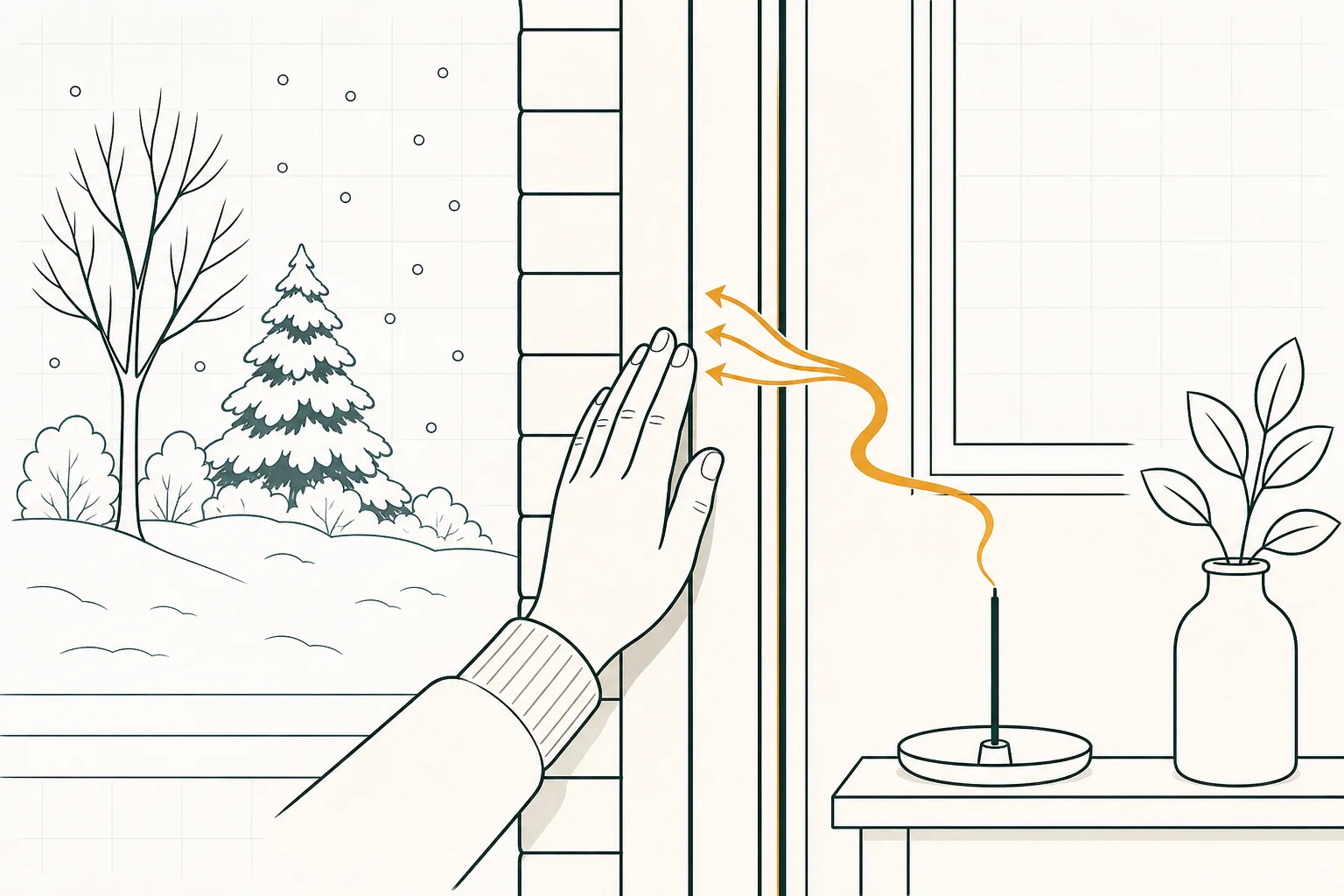
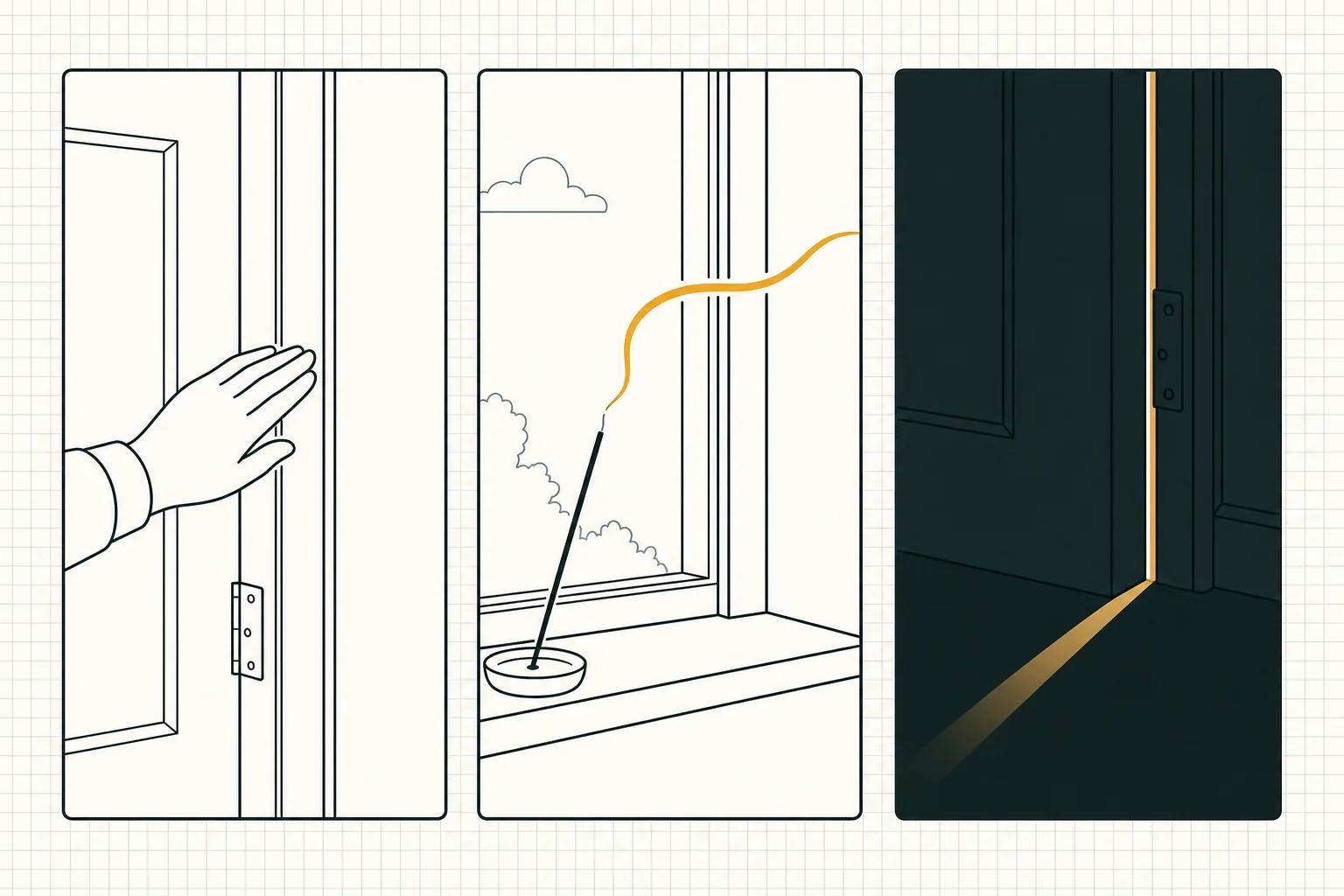
Three instruments, one of them strapped to your wrist. The hand test runs on a windy day, indoors: back of the hand, slow sweep along door frames, window trim, outlet plates, baseboards, hatch edges. Slow beats fast — a quick palm reports its own motion, not the draft. The smoke pencil (or a stick of incense) turns a hunch into an observation: fans off, watch the smoke stream bend or jerk near a suspect edge. The night flashlight trick needs a helper and darkness — they walk a flashlight along the outside of a closed exterior door while you watch from the dark inside; any stripe of light that reaches you used the same path winter air takes. The kit prices out at $0–15: the incense is already in the pantry, and the smoke pen is the only purchase these methods can justify.[4]
The 10-Spot Tour
Ten stops cover the leak list federal guidance walks through — the DOE- and FTC-standard locations, dressed for a Saturday.[2] Cold air arrives low and warm air leaves high, so the order runs basement to attic, exterior walls first. Detect as you go, and write down what you find.
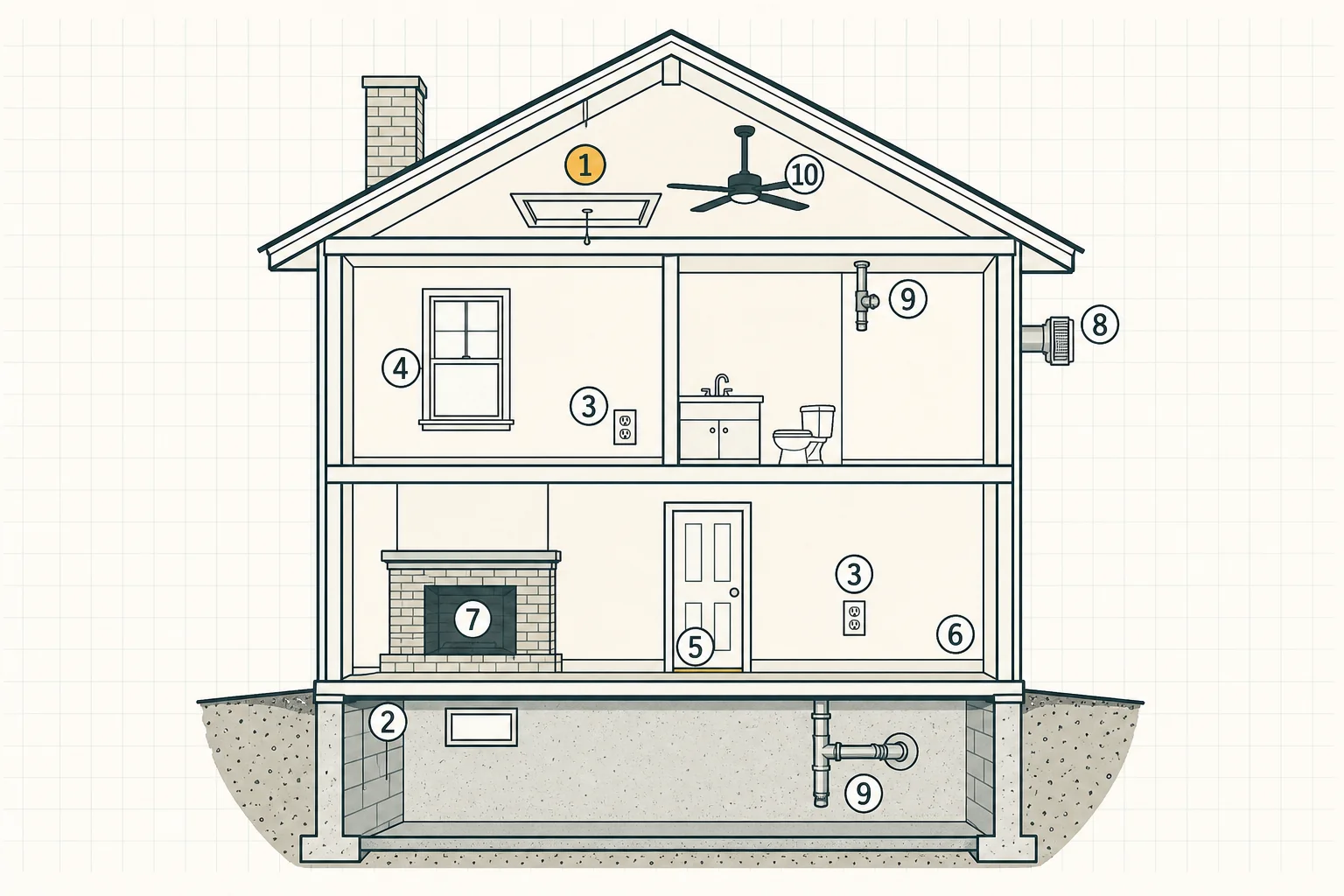
1. The attic hatch
Detect: Back of the hand along the hatch trim on a windy day — colder-than-the-room air means the attic above is connected. Seal with: An insulated hatch cover.[4] Renter-ok: No — the attic belongs to the building, not the lease.
2. The rim joist and top plate
Detect: Slow palm along the seam where the foundation meets the framing, basement side; cold corners upstairs often trace back here. Seal with: Caulk or foam matched to the gap size — both sit on the FTC’s standard fix list.[2] Renter-ok: Partial — open basement seams, yes; finished walls belong to the owner.
3. Exterior-wall outlets and switches
Detect: Back of the hand flat on the plate — a chill means the box behind it shares air with the wall cavity. Seal with: Foam gaskets behind the plates — a fifty-pack covers the whole tour; breaker off, screws kept.[4] Renter-ok: Yes — fully reversible.
4. Window sashes and tracks
Detect: Smoke pencil at the meeting rail and both side channels, fans off — a bending stream is a finding. Seal with: V-strip where surfaces close against each other; rope caulk on panes you never open.[4] Renter-ok: Yes, with a paint-lift caveat on older trim.
5. Door bottoms
Detect: The night trick — a helper circles the closed door outside with the flashlight; stripes of light mark your gap. Seal with: A door sweep, or a weighted stopper with zero installation.[4] Renter-ok: Yes.
Adhesive under-door sweep for gaps up to about an inch — the eight-to-fifteen-dollar fix for the door that opened your tour. Clean the door bottom before sticking.
Check price on Amazon As an Amazon Associate we earn from qualifying purchases. Price & availability shown on Amazon.com.6. Baseboards and floor edges
Detect: Smoke an inch above the baseboard along exterior walls — a flickering stream means floor-edge leakage. Seal with: A caulk bead at the wall-floor line, or press-in rope caulk.[4] Renter-ok: Yes — the rope-caulk way.
7. The fireplace damper and flue
Detect: Palm an inch above a closed damper on a cold day — moving air with the damper shut means the seal has quit. Seal with: A flue plug for a chimney you never light — and it comes out before any fire, every time.[4] Renter-ok: No — landlord sign-off first.
8. The dryer vent exterior flap
Detect: From outside, watch the flap settle after a drying cycle — a lint-wedged flap hangs open. Seal with: Nothing — clear the lint and restore the closing action; terminations are on the never-seal list below. Renter-ok: Partial — it is an exterior wall.
9. Pipe, wire, and duct penetrations
Detect: Palm work under sinks, behind the refrigerator, along the basement ceiling — wherever plumbing, wiring, or ducts punch through. Seal with: Caulk for hairlines, foam for voids — match the product to the hole.[2] Renter-ok: Partial — accessible seams, yes; wall interiors are maintenance.
10. Bathroom and kitchen exhaust fan housings
Detect: Fan off, a tissue held at the grille — flutter means air is shortcutting the housing. Seal with: A bead of caulk where the housing meets the ceiling — never at the roof or wall cap outside. Renter-ok: Partial — usually a maintenance ticket, not a DIY cut-in.
Match the Seal to the Gap
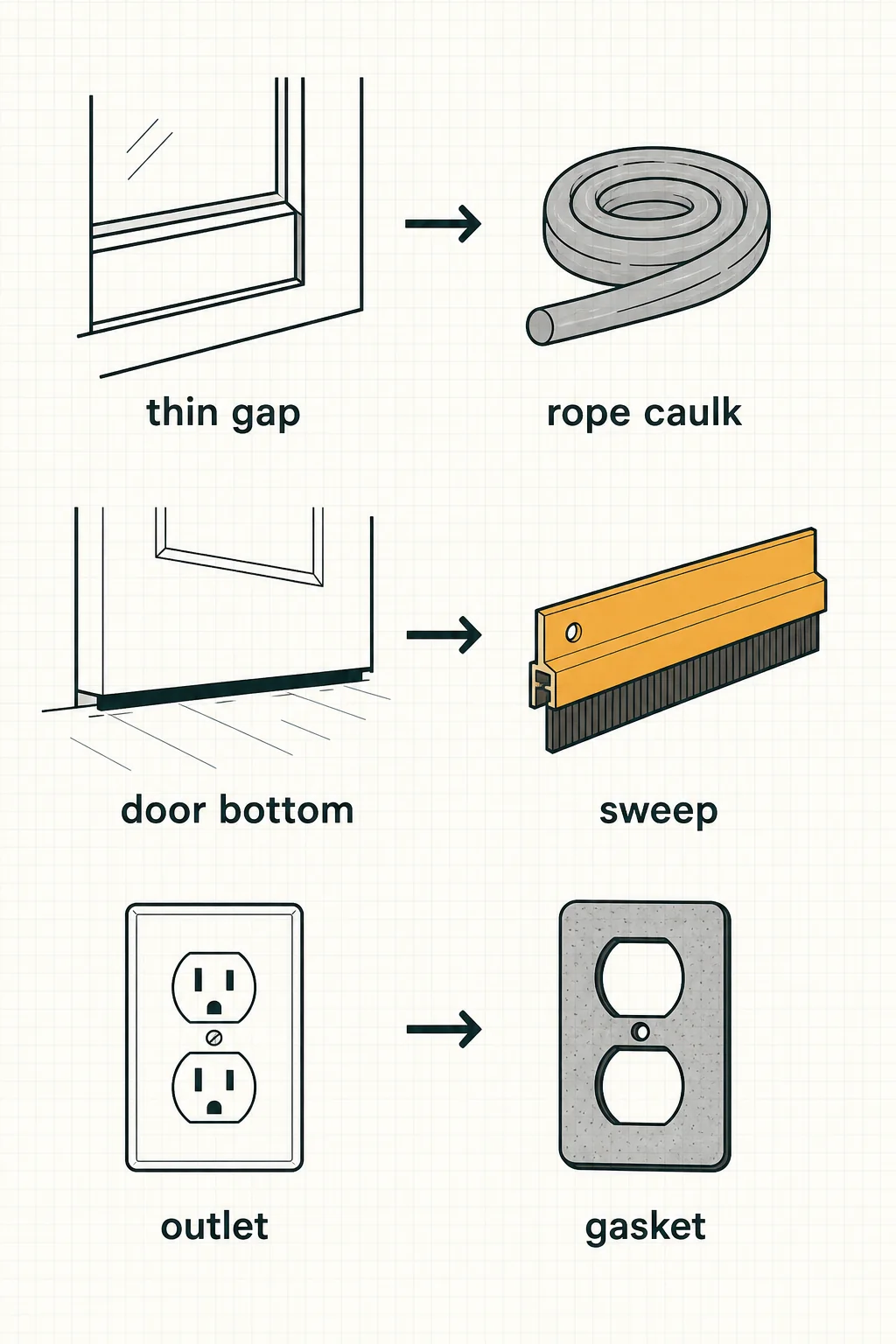
Match the sealant to the gap — ragged edges, compression seams, and moving joints each take their own class of product. The table does the matching, with the honest column included: where the cheap version fails. Bands are live-checked class prices from August 2026, not quotes on any one tube.[4]
| The gap | The right product | Typical band | Renter-ok | Where the cheap version fails |
|---|---|---|---|---|
| Hairline to about 1/4", fixed surface | Press-in rope caulk | $8–15 | Yes — peels at move-out; may lift paint | Adhesive strips never bond to dusty or chalky surfaces — clean first, or go press-in |
| A seam that opens and closes | V-strip or D-profile weatherstripping | $5–15 | Yes | Foam on moving friction points shears within a season — compression profiles are built for the cycle |
| Under an exterior door | Door sweep — a weighted stopper where drilling is off the table | $8–15 / $15–25 | Yes | A sweep on a warped door fights the wrong problem; the frame needs the fix |
| Outlet and switch plates on exterior walls | Foam gaskets, 50-pack | $5–15 | Yes — breaker off, screws kept | A gasket cannot reach a cavity open at the baseboard — the bigger hole needs its own fix |
| An attic hatch | Insulated hatch cover | $25–60 | No | A cover over a hatch that no longer latches just rattles |
| The flue of an unused chimney | Flue plug | $12–60 | Only with sign-off | A plug left in a chimney you still use is a hazard — remove before any fire |
The Renter’s Toolkit
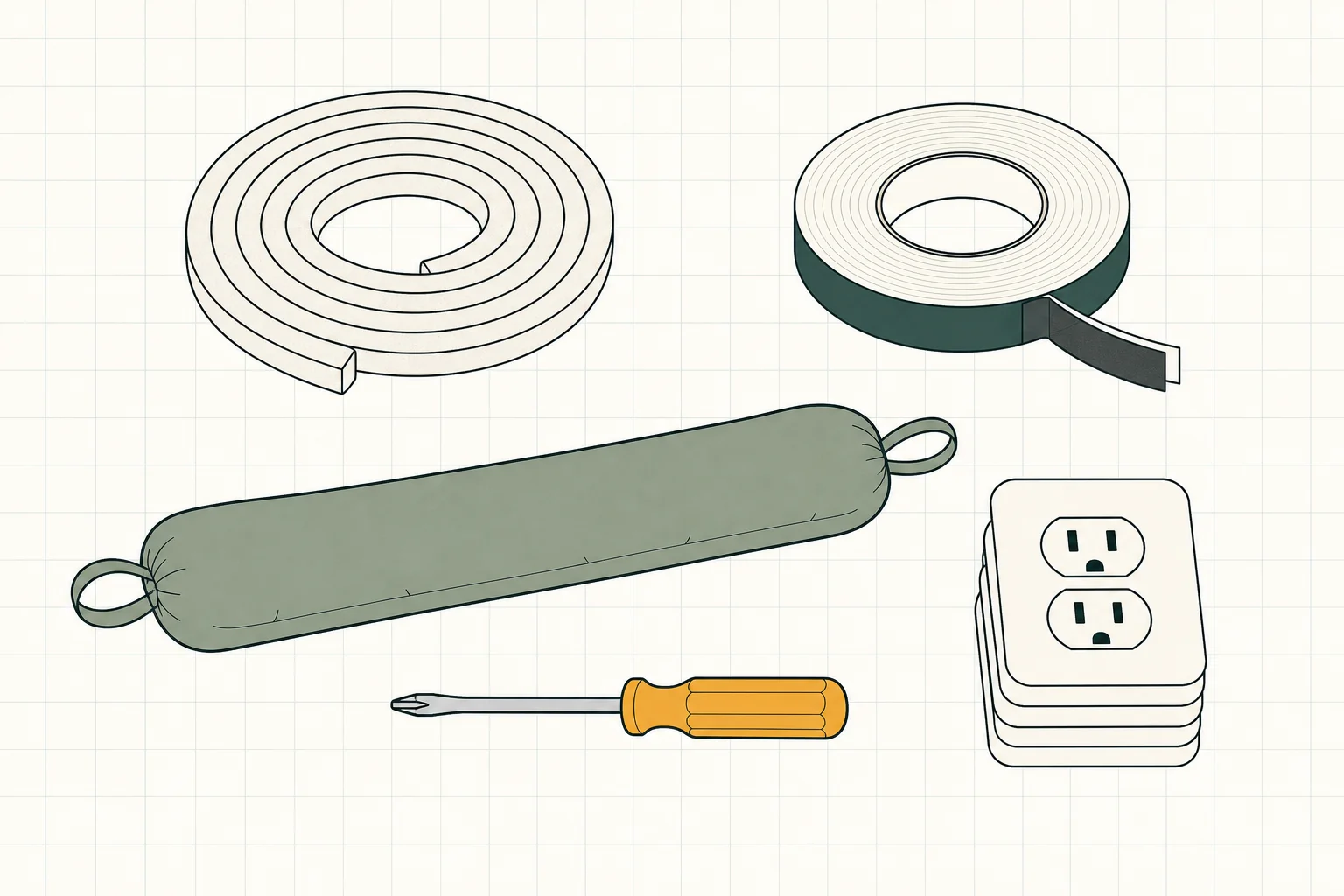
Everything worth carrying into a rented home is reversible — or it is not in the kit. Four classes do nearly the whole tour:
- Press-in rope caulk ($8–15): the universal joint for fixed gaps — sash edges, baseboard runs, trim joints. Thumb it in; peel it out at move-out.[4]
- Adhesive V-strip or D-profile ($5–15): for surfaces that close against each other. It bonds only to clean, dry surfaces — wipe before you stick.[4]
- Weighted fabric stoppers ($15–25): zero install, zero hardware, zero lease questions — laid against the offending door each night.[4]
- Foam outlet gaskets (fifty-pack, $5–15): breaker off, screws into a cup, gasket seated, everything buttoned back exactly as found.[4]
The skip list is firmer: anything permanent — expanding foam, committed caulk beads, attic-hatch covers, chimney flue plugs — waits for the owner’s sign-off. Reversibility is not a style preference in a lease; it is the design brief.
What Not to Seal (the section that keeps you safe)
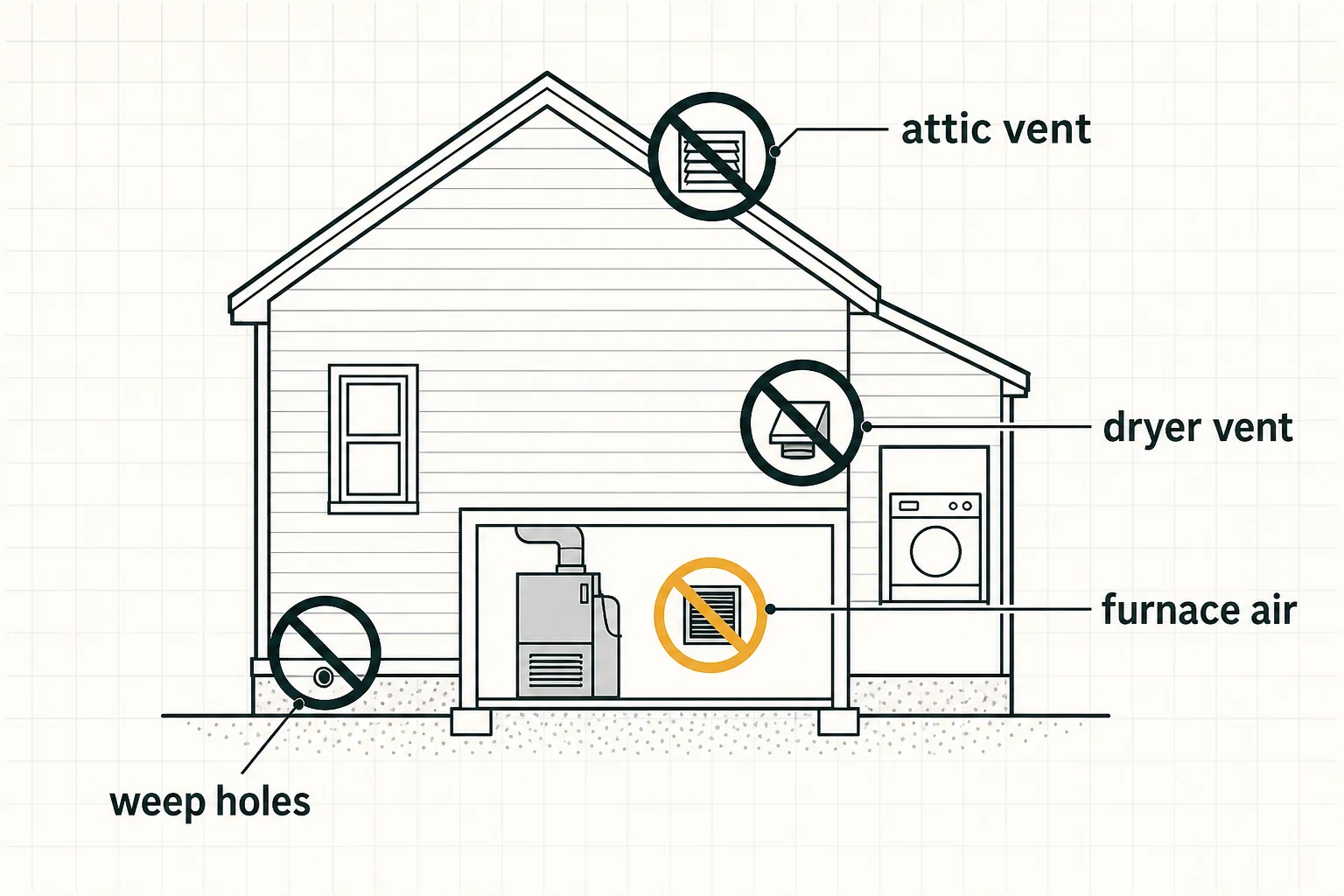
Some openings in your home are equipment, not defects. Sealing the ones below saves pocket change and creates real hazards — the trade never comes out ahead.
- Weep holes behind siding. They drain rain out of the wall; block them and the wall keeps the water.
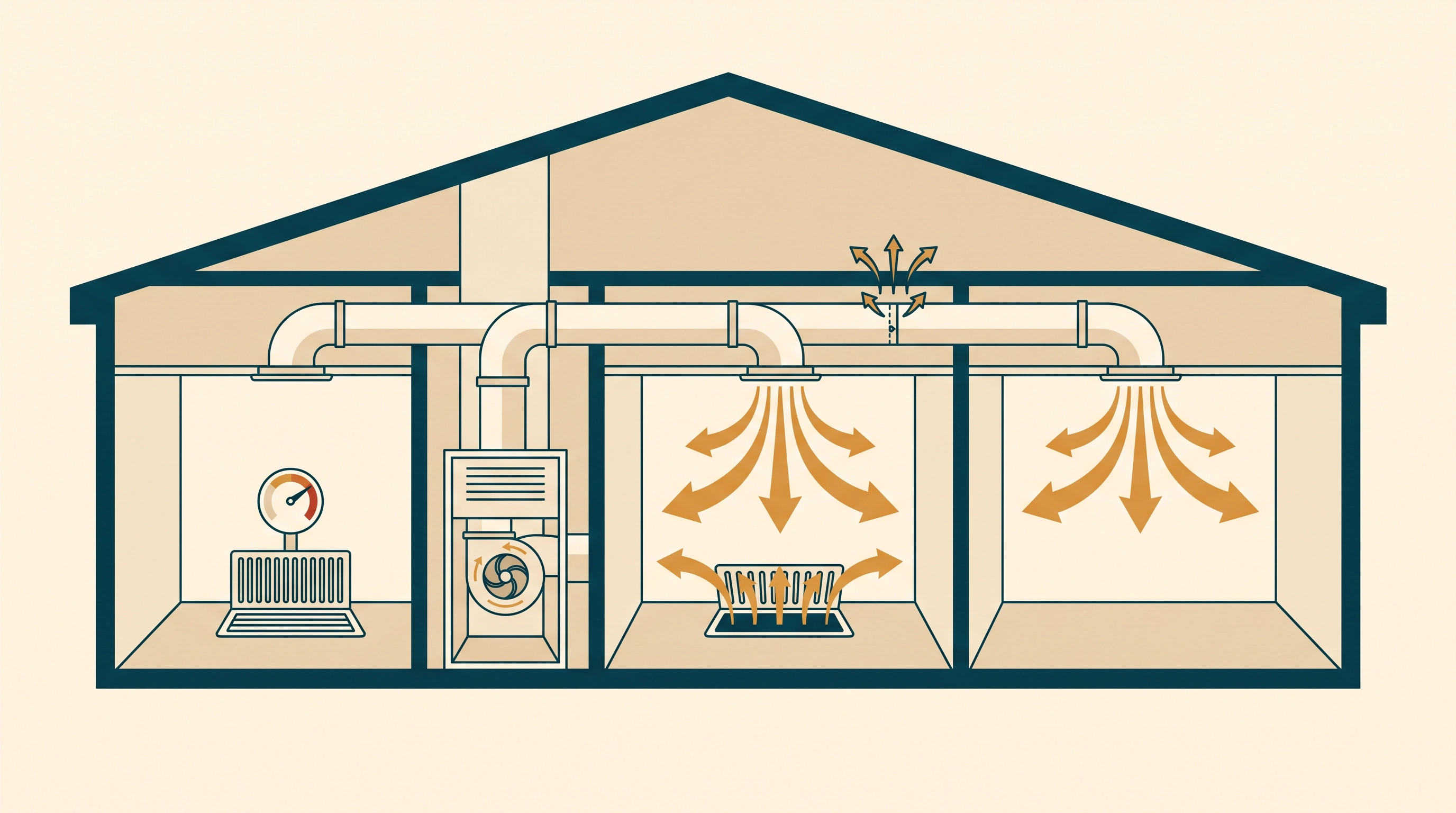
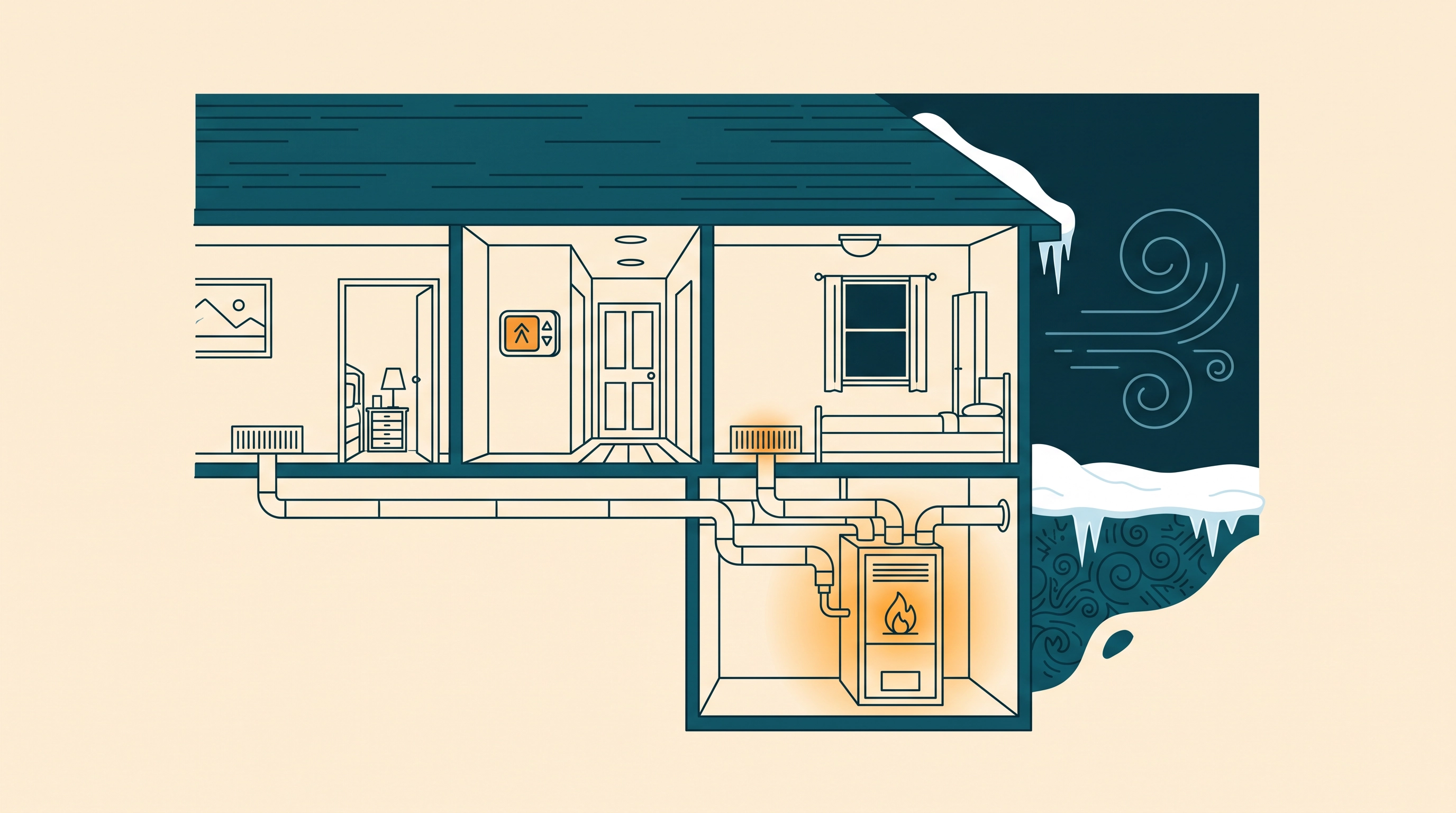
- Combustion-air openings near gas appliances. Furnaces and water heaters breathe through those grilles on purpose; a flame that loses its designed air supply finds air somewhere else. That intake is the starting fact of every gas bill — why a gas bill runs high begins there.
- Dryer and exhaust terminations. Moist air and lint have to exit; a flap that will not close wants cleaning, never a cover.
- Attic ventilation. Soffit and ridge vents carry moisture and heat out of the attic assembly — ventilation, not drafts; they do not owe you stillness.
Anything the appliance manual says feeds combustion air never goes on the sealing list — not with foam, not with a rag, not “just for the winter.”
The Free 80% (before any purchase)
Run the free list first — many “drafts” are operation, not construction.
- Lock every window fully. An unlatched sash rests on its weatherstrip instead of compressing it.
- Latch the doors you use most. The latch pulls the door into its seals; a merely pulled-to door drafts around the latch side.
- Close the fireplace damper when no fire is lit. An open damper is a flue, and a flue drafts.
- Re-seat the attic hatch. Square in the frame, pressed down — a half-seated hatch leaks along its whole trim.
- Repair a torn sweep before replacing it. A tightening and a straightening beat a shopping trip.
None of it costs a dollar, and it retires a fair share of “drafty house” verdicts on its own.
Basket Shopping
Seal the gap, not the store. Every dollar in the basket maps to a gap the tour found — a named stop, the product class the table assigned. Two baskets cover most households.
The one-weekend starter is a sweep for the worst door, one run of adhesive weatherstripping for the worst window, and a fifty-pack of outlet gaskets. The door that opened your tour takes the sweep first — the box below, an under-door sweep in the $8–15 band.[4] The outlet stop finishes with the gasket multipack.[4]
Adhesive under-door sweep for gaps up to about an inch — the eight-to-fifteen-dollar fix for the door that opened your tour. Clean the door bottom before sticking.
Check price on Amazon Price & availability shown on Amazon.com — we may earn a commission.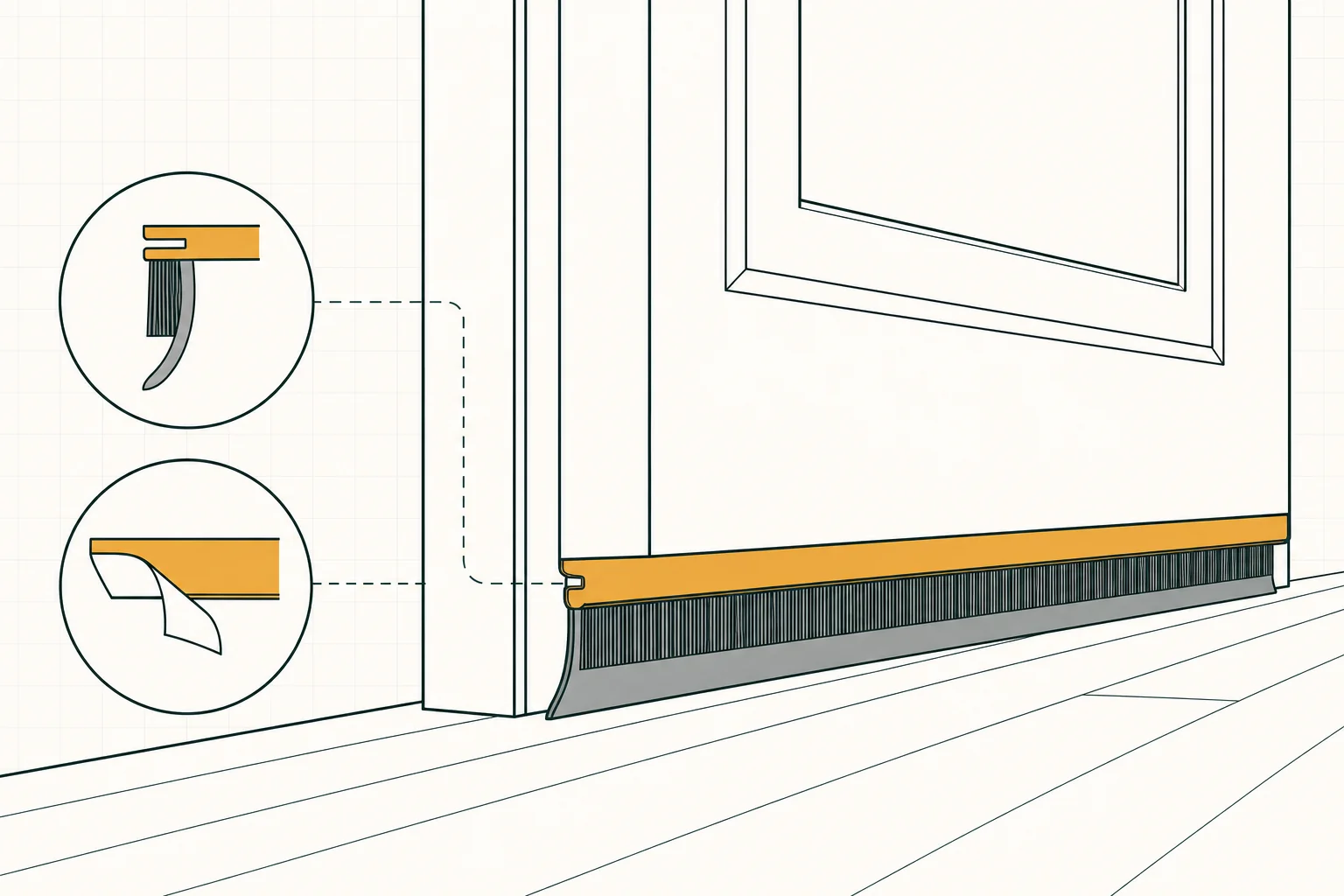
The full-tour basket adds classes only as named stops demand them: rope caulk for fixed hairlines, a weighted stopper for a zero-install door, and — where the tour actually found them — the attic-hatch cover at $25–60 and the flue plug at $12–60. That last pair is where spending stops being pocket change; those purchases follow the detection, never lead it.[4]
Two honest brackets before the boxes: ENERGY STAR’s up-to-10% figure is its estimate for sealing and insulation together — it does not attach to a single sweep.[1] And the 25C Home Improvement Credit covers insulation and air sealing, worth a check before tax season even if the basket stays small.[3] For where this evening ranks among the other levers, how to lower utility bills keeps the full list. And once the seals are in place, a home energy monitor can measure what the fixes actually saved.
Frequently Asked Questions
Do door draft stoppers actually work?
How do I find drafts in an apartment I can't modify?
Is air sealing worth it before winter?
Sources
- ENERGY STAR — Seal and Insulate — program-stated estimate: air sealing plus insulation can save up to 10% on total annual energy costs. Retrieved August 30, 2026.
- FTC — How to Save Money on Heating and Cooling Your Home — the caulk-and-weatherstripping fix list; standard leak locations around windows, doors, and pipe-and-wire penetrations. Retrieved August 30, 2026.
- U.S. Department of Energy — Energy Efficient Home Improvement Credit: Insulation and Air Sealing — the 25C credit covers insulation and air sealing. Retrieved August 30, 2026.
- Retailer-checked price bands, August 30, 2026: rope caulk $8–15 (press-in), V-strip/D-profile $5–15, under-door sweeps $8–15 (Holikme B07MSM6G9R), weighted fabric stoppers $15–25, outlet-gasket 50-packs $5–15, smoke pencils ~$12, attic-hatch insulation covers $25–60, chimney flue plugs $12–60 (remove before any fire).