Quick Answer
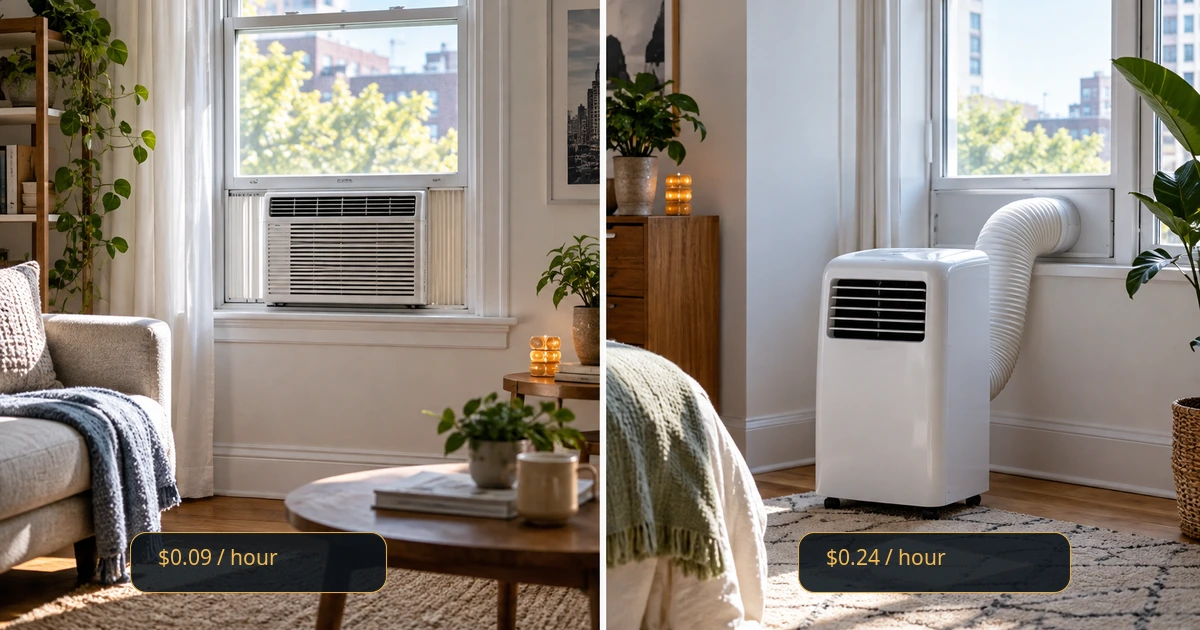
A typical 5,000 BTU window AC costs about $0.09 per hour to run, while a larger 12,000 BTU unit costs roughly $0.22 per hour at the June 2026 national average rate of 18.34¢/kWh. Portable AC units are generally less efficient, costing 15–30% more than window units of the same cooling capacity due to heat bleed from the exhaust hose and lower real-world SACC ratings. The honest way to track your cooling spend is to measure the unit’s actual draw with a tool like the Kill A Watt P4400 to see exactly how many kilowatt-hours your specific room and climate require.
The Basic Math: Watts to Dollars
To find the cost of any air conditioner, you need three numbers: the wattage the unit draws, the number of hours it runs, and your electricity rate. The formula is the same one used for other appliances like refrigerators:
** (Watts × Hours) ÷ 1,000 = kWh ** ** kWh × Electricity Rate = Total Cost **
For our planning estimates, we use the June 2026 national average residential rate of 18.34¢/kWh [1]. If you are in a lower-cost area or looking at annual averages, you might use the 2025 annual average of 17.30¢/kWh [1].
Estimating Watts from BTU and EER
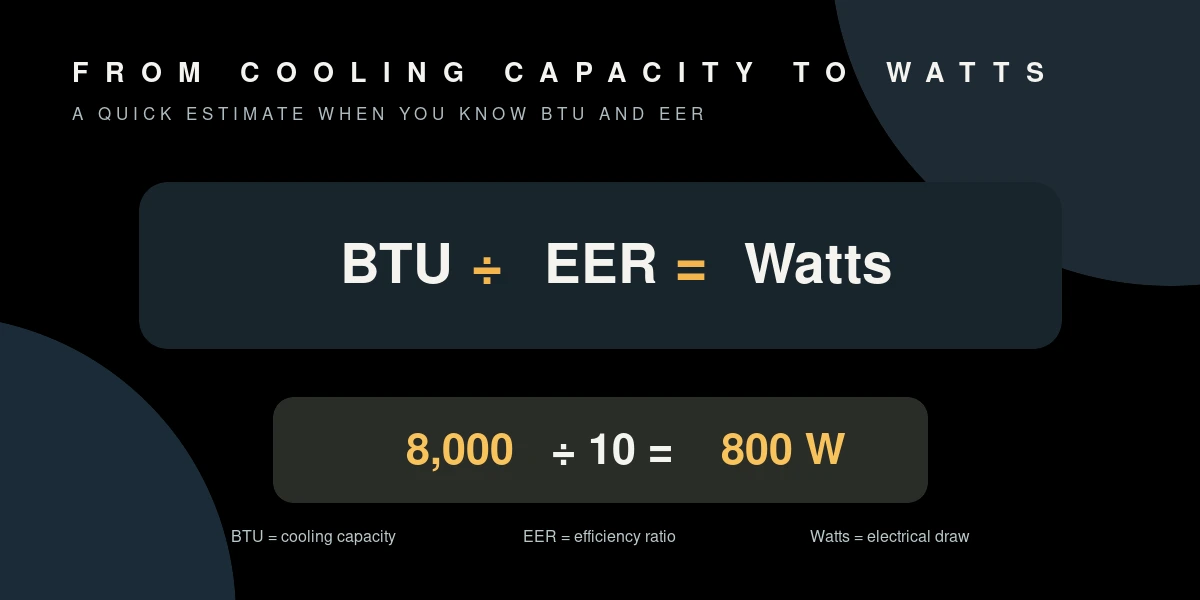
If you don’t have a meter, you can estimate the wattage of a window unit using its BTU (British Thermal Units) rating and its EER (Energy Efficiency Ratio). The math is:
** Watts ≈ BTU ÷ EER **
Most modern window units have an EER around 10 to 12. For these calculations, we assume a standard EER of 10 to be conservative.
- 5,000 BTU unit: 5,000 ÷ 10 = 500 Watts
- 8,000 BTU unit: 8,000 ÷ 10 = 800 Watts
- 12,000 BTU unit: 12,000 ÷ 10 = 1,200 Watts
Window AC Running Costs
Window units are the traditional choice for room cooling. They are relatively efficient because the “hot” side of the machine sits entirely outside the building envelope.
Using the 18.34¢/kWh rate, here is what those wattage bands cost to run per hour of compressor time:
| Unit Size (BTU) | Estimated Watts | Cost Per Hour (18.34¢) | Cost Per 8-Hour Night |
|---|---|---|---|
| 5,000 BTU | 500 W | $0.092 | $0.74 |
| 8,000 BTU | 800 W | $0.147 | $1.18 |
| 10,000 BTU | 1,000 W | $0.183 | $1.46 |
| 12,000 BTU | 1,200 W | $0.220 | $1.76 |
Note: These figures assume the compressor is running 100% of the time. In reality, once a room reaches the set temperature, the compressor cycles off and the cost drops significantly. If your unit is short cycling, your costs may be higher due to the startup surge.
Portable AC: The Efficiency Penalty
Portable AC units are popular because they don’t require a heavy installation in a window, but they come with a hidden “efficiency tax.” There are two reasons for this:
- The Hose Heat: A portable AC keeps the entire hot machine inside the room. It blows hot air out a plastic hose, but that hose gets very hot and radiates heat back into the room you are trying to cool.
- Negative Pressure: Single-hose portable units blow air out of the room to cool the condenser. This creates a vacuum that pulls warm air in from under doors and through cracks in windows, forcing the AC to work harder.
Because of this, the industry moved to a new rating called SACC (Seasonally Adjusted Cooling Capacity). A portable AC labeled “12,000 BTU” might only have a SACC of 7,000 BTU. This means it uses the electricity of a 12,000 BTU machine but only provides the cooling of a much smaller window unit.
Portable AC Cost Estimate: A typical 12,000 BTU (nameplate) portable unit draws about 1,100 to 1,400 watts. At 1,300 watts: 1.3 kW × $0.1834 = $0.238 per hour
While the hourly cost looks similar to a large window unit, the portable unit will likely run for more hours to achieve the same temperature drop, leading to a higher monthly bill. If you see a sudden spike in your electricity bill after switching to a portable unit, this efficiency gap is usually the culprit.
Monthly Cost Scenarios
Most people don’t run their AC 24/7. A realistic “heavy use” scenario is 8 hours a day (overnight or during the hottest part of the afternoon) for 30 days.
5,000 BTU Window Unit (500W):
- 0.5 kW × 8 hours × 30 days = 120 kWh
- 120 kWh × $0.1834 = $22.01 per month
12,000 BTU Window Unit (1,200W):
- 1.2 kW × 8 hours × 30 days = 288 kWh
- 288 kWh × $0.1834 = $52.82 per month
12,000 BTU Portable Unit (1,300W):
- 1.3 kW × 8 hours × 30 days = 312 kWh
- 312 kWh × $0.1834 = $57.22 per month
If you are trying to lower your electric bill, switching from a portable unit to a window unit or a mini-split is one of the most effective appliance upgrades you can make.
Comparison: Window vs. Portable vs. Mini-Split
If you are deciding on a long-term cooling solution, the efficiency differences are stark. Efficiency is often measured by SEER (Seasonal Energy Efficiency Ratio). You can read more about how these ratings compare in our guide on AFUE vs SEER vs HSPF.
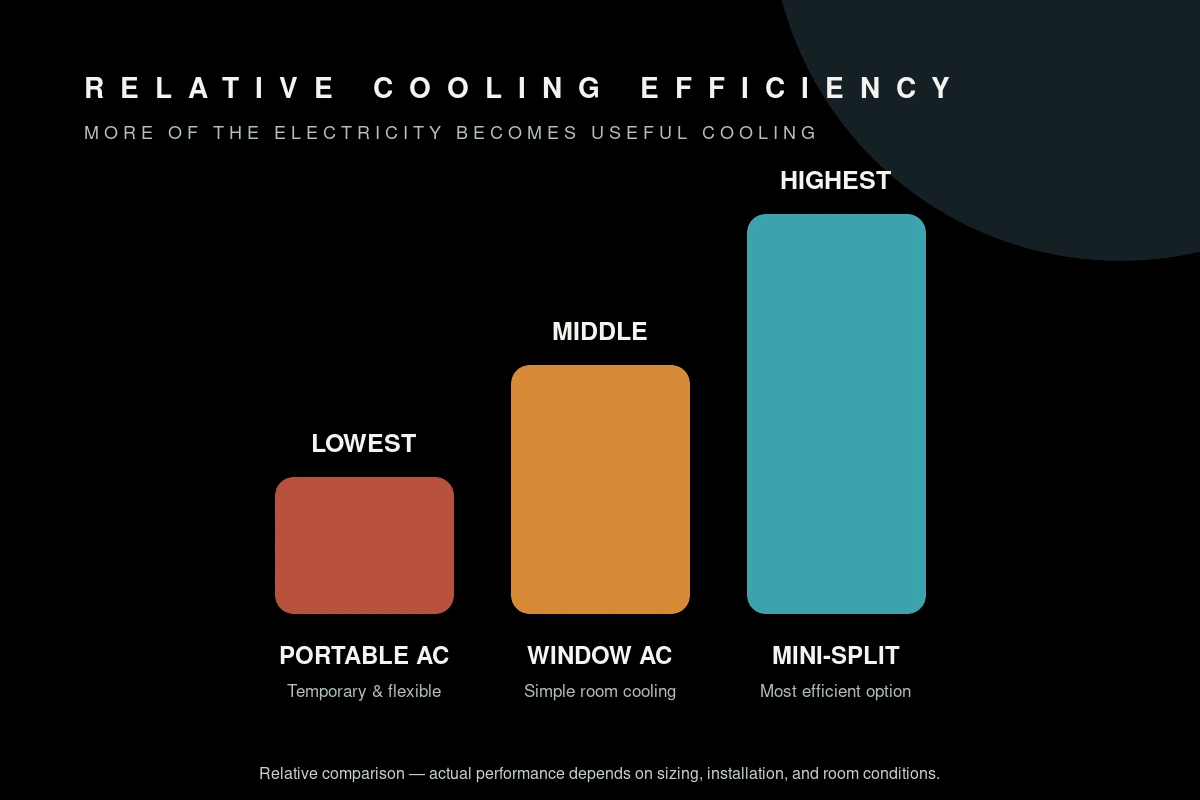
- Portable AC: Least efficient. High heat bleed and negative pressure issues. Best for temporary use or where window units are forbidden.
- Window AC: Moderately efficient. Cheap to buy, but can be noisy and block a window.
- Mini-Split: Most efficient. These units often have SEER ratings of 20 to 30, meaning they can provide the same cooling as a window unit for about half the electricity cost. They are essentially small heat pumps.
How to Measure Your Own Unit
The numbers above are planning estimates. Your actual cost depends on how well your room is insulated, the outside temperature, and the age of your unit. To get a real number, you should use a plug-in power meter.
The Kill A Watt P4400 is the industry standard for this. You plug the AC into the meter, and the meter into the wall. It will track the cumulative kilowatt-hours used over a day or a week.
The classic electricity usage monitor. Plug your window or portable AC into it for 24 hours to see exactly how many kWh it consumes. Multiply by your utility rate to find your true daily cost.
Check price on Amazon Price & availability shown on Amazon.com — we may earn a commission.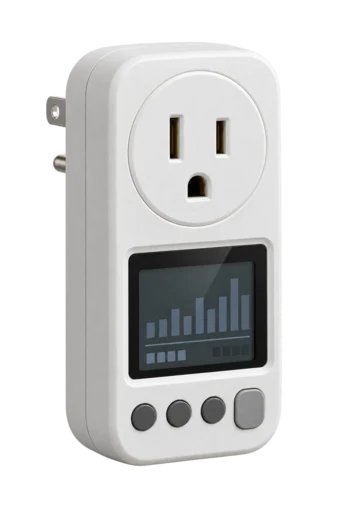
If you want to monitor your usage remotely or set schedules to save money, a smart plug with energy monitoring is a modern alternative. These are especially useful for ensuring your AC isn’t contributing to phantom power draw when it’s turned “off” but still plugged in.
Allows you to track real-time energy usage from your smartphone and set schedules. Rated for 15A, suitable for most 5,000 to 8,000 BTU window units (check your AC's amperage first).
Check price on Amazon Price & availability shown on Amazon.com — we may earn a commission.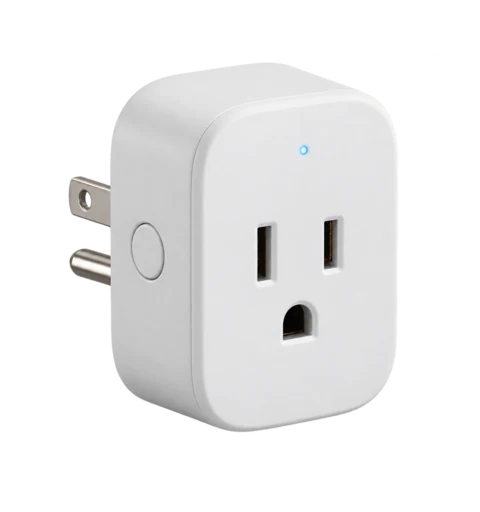
For more options on measuring tools, see our list of Kill A Watt alternatives.
Efficiency Tips to Lower Cooling Costs
If your electric bill is too high, cooling is often the first place to look. Here are the most effective ways to reduce the run-time of your window or portable AC:
- Seal the Gaps: Window units often have accordion side panels that leak air. Use foam tape or window insulation kits to seal these gaps.
- Manage the Sun: Close curtains or blinds during the day to prevent solar heat gain. This reduces the “load” the AC has to fight.
- Check the Filter: A dirty filter restricts airflow, making the fan and compressor work harder — the same airflow-to-energy relationship that drives up furnace blower costs in winter applies to AC fans in summer.
- Use Off-Peak Hours: If your utility has time-of-use rates, try to pre-cool your room during times when electricity is cheapest and turn the unit up during peak afternoon hours.
- Thermostat Settings: Using a programmable thermostat or a smart AC controller can prevent the unit from cooling an empty room.
Summary Table: AC Running Costs
| Unit Type | Wattage Range | Cost Per Hour (18.34¢) | Monthly Cost (8h/day) |
|---|---|---|---|
| Small Window (5k BTU) | 450–550 W | ~$0.09 | ~$22 |
| Medium Window (8k BTU) | 700–900 W | ~$0.15 | ~$35 |
| Large Window (12k BTU) | 1,100–1,300 W | ~$0.22 | ~$53 |
| Portable (12k BTU) | 1,100–1,400 W | ~$0.24 | ~$57 |
Calculations: (Watts / 1000) * $0.1834 = Cost per hour. Monthly cost = Cost per hour * 8 hours * 30 days.
Does a portable AC use more electricity than a window AC?
Is it cheaper to leave the AC on all day or turn it off when I leave?
How many watts does a 5,000 BTU window AC use?
For more help understanding your home’s energy use, visit our Electricity Explained hub.
Sources
- U.S. Energy Information Administration — Electricity Monthly Update — Residential electricity rates for 2025 (17.30¢) and June 2026 (18.34¢).
- U.S. Energy Information Administration — FAQ: How much electricity does an air conditioner use? — Context for residential cooling energy consumption.
- U.S. Department of Energy — Room Air Conditioners — Efficiency standards and installation guidance for window and portable units.