Quick Answer
A typical 60,000 BTU/h gas furnace costs about $1.15 per hour of burner run at the September 2026 national averages (natural gas ≈ $1.92/therm) — the fuel burned depends on the input rating, not the efficiency. Where AFUE shows up is run-hours: to deliver the same heat, an 80% AFUE furnace burns about 19% more fuel over the month than a 95% one. An electric resistance furnace of equivalent output costs roughly 3–4× the gas figure — near $3.20/hour at the 18.34¢/kWh national average — which is the whole argument for gas heat in one line. The formula is two numbers off the rating plate and one off your bill:
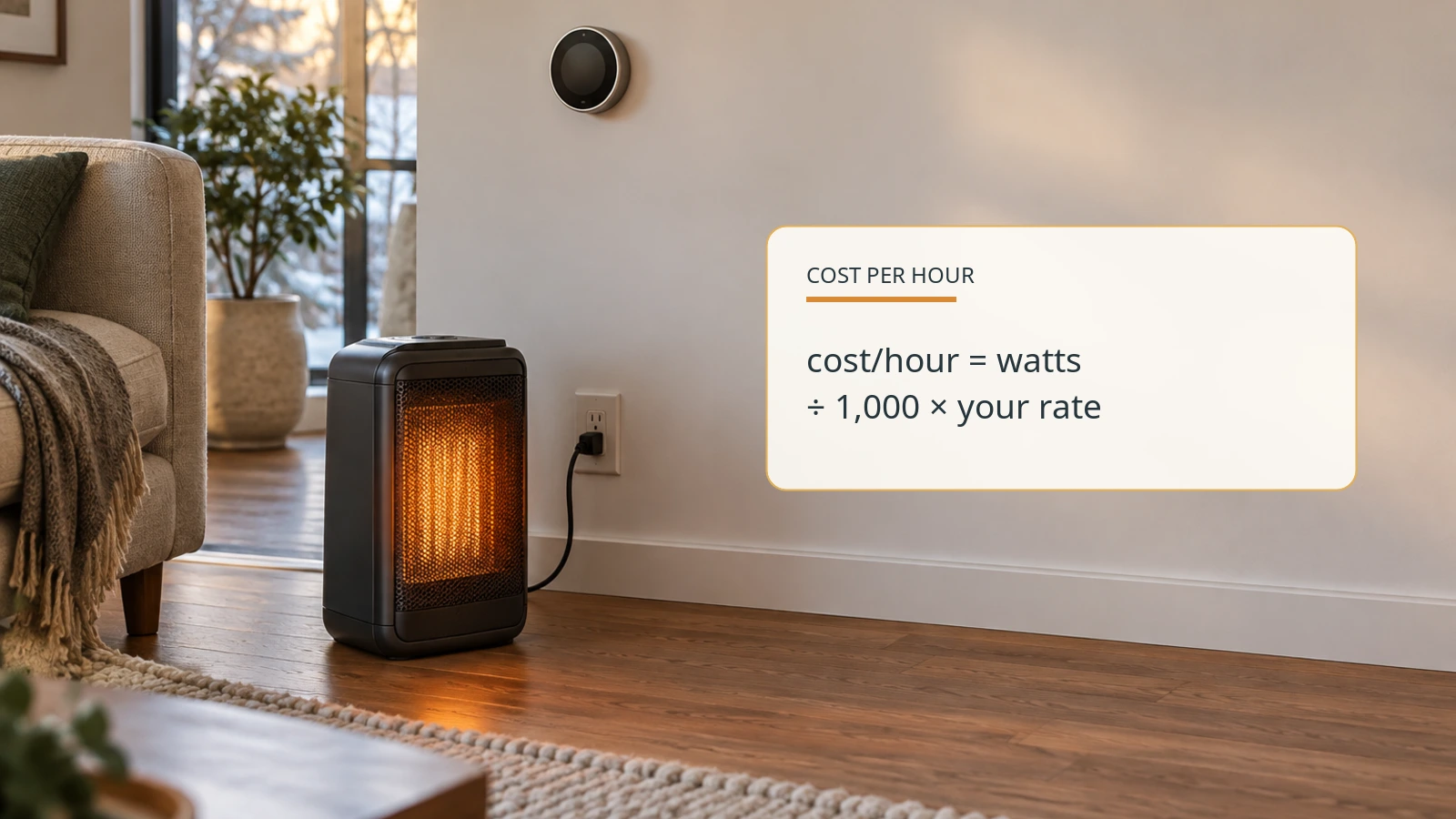
fuel burned per hour (therms) = input BTU/h ÷ 100,000; cost/hour = that × your $/therm
A 60,000 BTU/h unit burns 0.6 therms per hour of run; at $1.92/therm that’s $1.15. Delivered heat per run-hour = input × AFUE — that’s the number efficiency improves. Everything else on this page is that formula applied: per-hour tables by furnace size and efficiency, monthly worked examples for cold and mild climates, the blower fan’s separate electric cost, and the levers that cut run-hours. For room-level heating instead of whole-house, see space heater running cost and window or portable AC running cost for the cooling sibling.
The formula (it’s the rating plate and the bill)
Two numbers live on your furnace (inside the cabinet, on the rating plate): input BTU per hour — 40,000 to 120,000 for typical homes — and AFUE, the Annual Fuel Utilization Efficiency (80% federal minimum; 90+% for condensing units). One number lives on your gas bill: price per therm (a therm = 100,000 BTU; most bills print it — divide total gas charges by therms used if not).
Fuel burned per hour = input ÷ 100,000 therms; cost per run-hour = that × your $/therm. Heat delivered per hour = input × AFUE ÷ 100,000. A 100,000 BTU/h furnace at any AFUE burns 1.0 therm ($1.92) per run-hour — but at 95% AFUE, 0.95 of that reaches your rooms vs 0.80 at 80%. The national-average gas price moves seasonally — EIA residential prices ran near $1.92/therm in recent months[1] — but YOUR bill’s therm price is the one that matters, and it varies from roughly $1.04 to $2.29 across states.
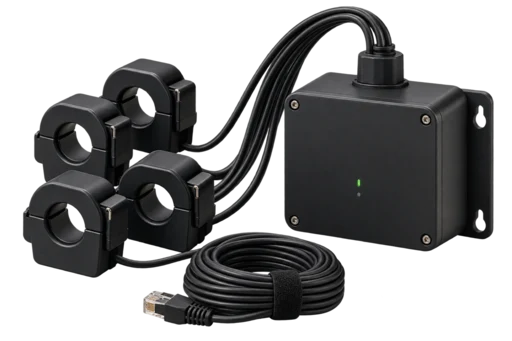
Circuit-level monitoring in your electric panel — see the blower's exact wattage each cycle, plus everything else in the house. The gas side shows up as run-hours you can read off the thermostat; the electric side stops being a mystery.
Check price on Amazon As an Amazon Associate we earn from qualifying purchases. Price & availability shown on Amazon.com.Per-hour cost by furnace size and efficiency (at $1.92/therm)
| Input BTU/h | Fuel burned per run-hour | Cost/hour at $1.92/therm | Heat delivered/hour at 80% AFUE | at 95% AFUE |
|---|---|---|---|---|
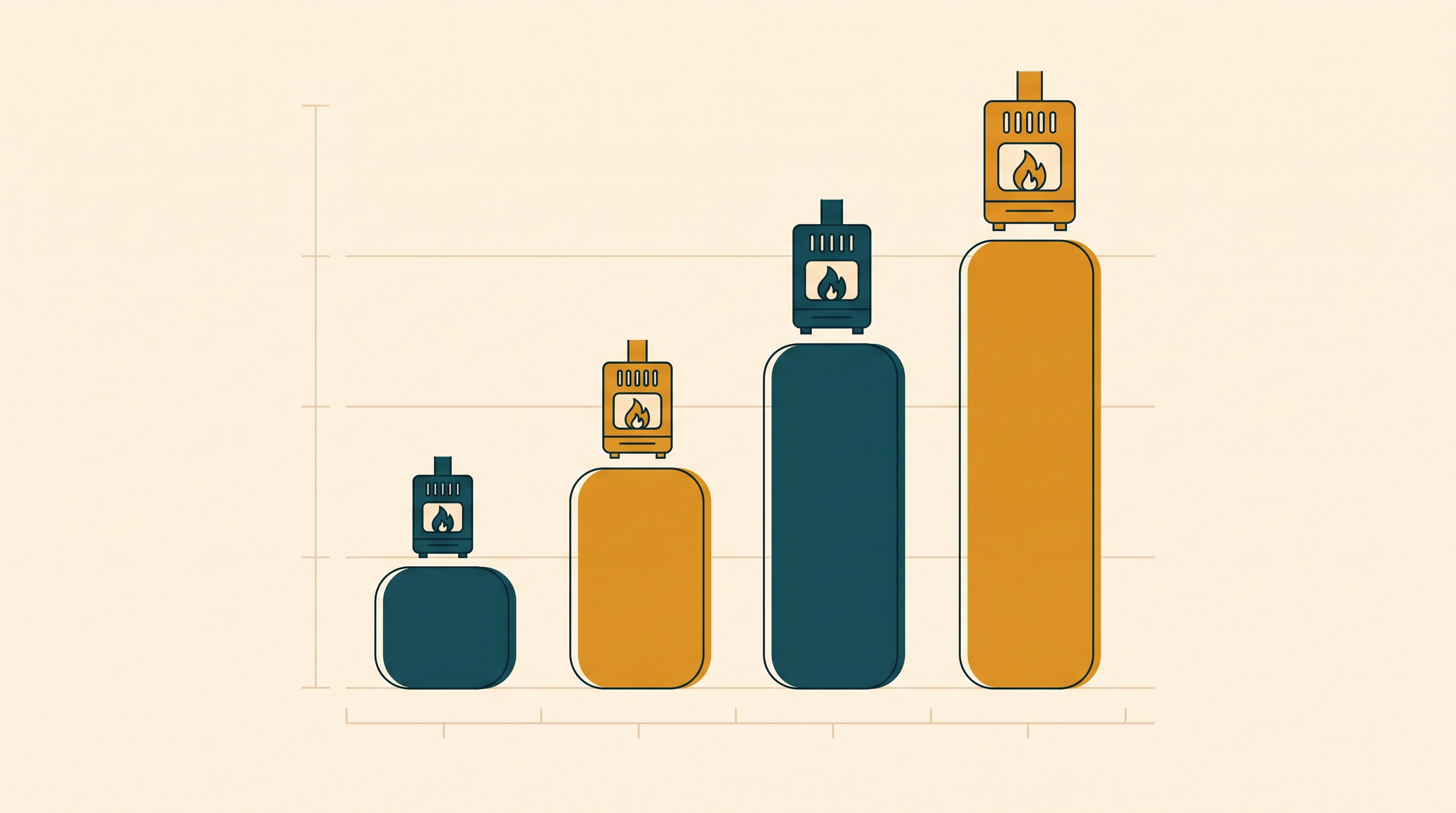
| 40,000 (small home / mild climate) | 0.40 therms | $0.77 | 0.32 therms | 0.38 therms |
| 60,000 (typical) | 0.60 therms | $1.15 | 0.48 therms | 0.57 therms |
| 80,000 (cold climate) | 0.80 therms | $1.54 | 0.64 therms | 0.76 therms |
| 100,000 (large / very cold) | 1.00 therm | $1.92 | 0.80 therms | 0.95 therms |
| 120,000 (big house, harsh winter) | 1.20 therms | $2.30 | 0.96 therms | 1.14 therms |
The AFUE column is where the money hides. Fuel per hour of run depends only on input rating — but a 95% furnace delivers 19% more heat from the same fuel, so the thermostat satisfies sooner and total run-hours drop about 19% for the same warm house. Per therm delivered: $1.92 ÷ 0.80 = $2.40 at 80% AFUE vs $2.02 at 95% — a 16% fuel saving, consistent with DOE’s guidance that condensing furnaces pay off in cold climates[3].
The blower fan: the small electric bill inside your gas bill
The burner is the gas bill; the blower is the electric one. A typical permanent-split-capacitor blower draws 400–800 W while running — call it 0.6 kW × 18.34¢ = about 11¢ per hour of run[2]. An ECM (variable-speed) blower cuts that roughly in half or better. It’s a rounding error next to the fuel — until you remember it runs whenever the thermostat calls, so a furnace with a stuck fan relay can add $25–50/month in electricity alone. If your electric bill spikes every heating season, why is my electric bill so high walks the checklist; for measuring the fan directly, a Kill A Watt works on a standard outlet but a whole-home monitor handles hardwired loads — see the product box below.
Monthly worked examples
Mild climate (Pacific Northwest winter, 60,000 BTU/h, 80% AFUE): burner runs perhaps 4–5 hours/day total across cycles in January. 4.5 h × $1.15 × 31 days ≈ $161/month fuel + ~$17 fan.
Cold climate (Minnesota January, 100,000 BTU/h, 95% AFUE): 10–12 run-hours/day in the coldest weeks, averaging ~9 across the month. 9 h × $1.92 × 31 ≈ $536/month fuel + ~$35 fan (at 95% AFUE the delivered heat equals a 119,000 BTU/h input at 80%, so the comparison holds). This is why cold-climate gas bills clear $400 — and why the levers below matter most there.
Your real number divides by your thermostat behavior, insulation, and duct tightness — the same house can swing 30% either way. For the seasonal big picture, why is my gas bill so high ranks all the drivers.
Gas vs electric vs heat pump (same heat, different bills)
Delivered-heat pricing at national averages (gas $1.92/therm, electricity 18.34¢/kWh, heat pump COP 2.8 seasonal):
| System | Delivered cost per 100,000 BTU of heat | Relative |
|---|---|---|
| Gas furnace, 80% AFUE | $2.40 | 1.0× (baseline) |
| Gas furnace, 95% AFUE | $2.02 | 0.84× |
| Electric resistance (furnace/baseboard) | $5.38 | 2.2× |
| Heat pump, COP 2.8 | $1.92 | 0.80× |
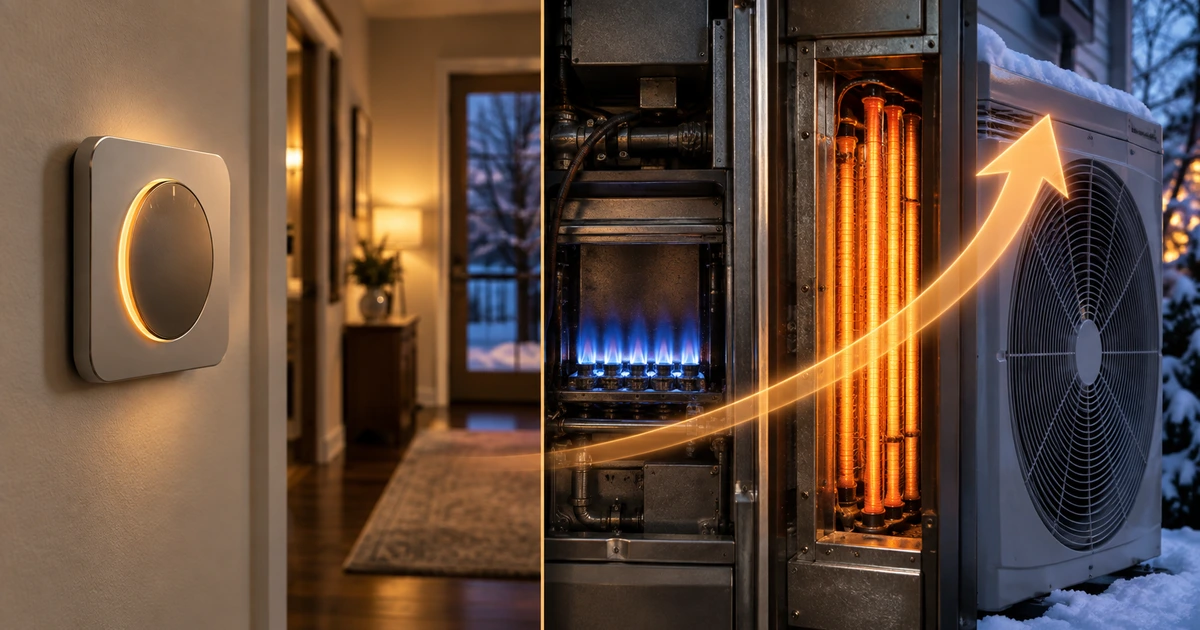
Electric resistance converts every kWh to 3,412 BTU — 100% efficient, and still the most expensive heat per BTU at national rates; the full method is in electric baseboard heater cost. A heat pump moves heat instead of making it, which is how it undercuts even 95% gas at moderate COPs — the complete breakeven math (including when gas wins back the lead) is heat pump vs gas furnace.
The levers that cut run-hours (each one is cheaper than the fuel)
- Thermostat schedule. A 7–10°F setback for 8 hours saves up to 10% on heating per DOE[4] — on the cold-climate example that’s $50/month. The honest comparison of thermostat types is do programmable thermostats cut heating bills.
- A clean filter. A clogged filter chokes airflow; the furnace runs longer to deliver the same heat. Check monthly in season.
- Sealed ducts. Leaky ducts waste 20–30% of conditioned air per DOE[4] — you pay for heat that never arrives. Symptoms and fixes: duct leaks, HVAC running all day.
- Air sealing + insulation where the heat escapes fastest: how to check for energy leaks.
- Annual tune-up. Combustion efficiency drifts; a tune-up keeps AFUE near its rating — furnace tune-up cost and schedule.
Circuit-level monitoring in your electric panel — see the blower's exact wattage each cycle, plus everything else in the house. The gas side shows up as run-hours you can read off the thermostat; the electric side stops being a mystery.
Check price on Amazon Price & availability shown on Amazon.com — we may earn a commission.