Electricity rate basis: U.S. EIA national average through July 2026 · Listing details verified October 2026
Quick Answer
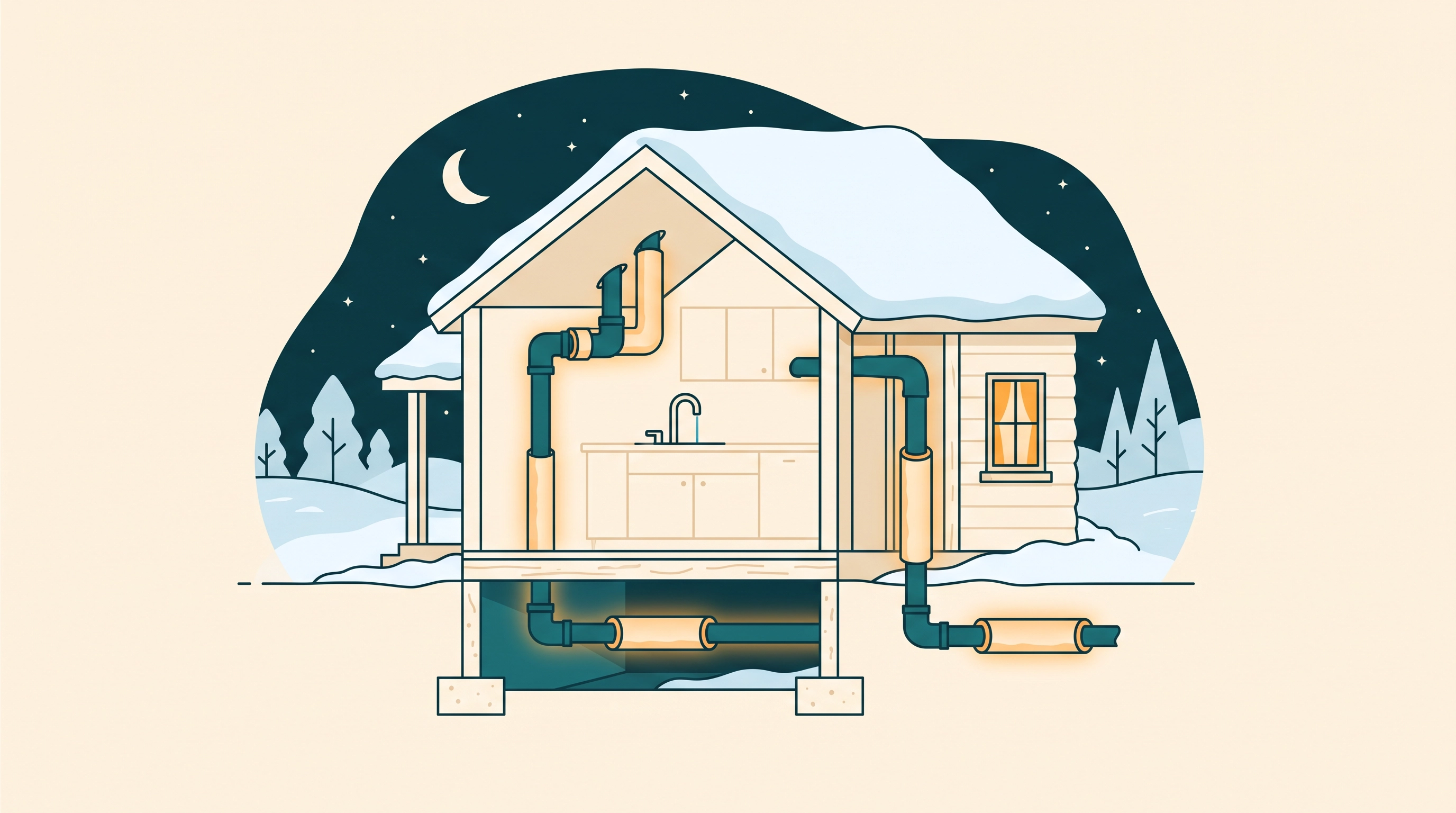
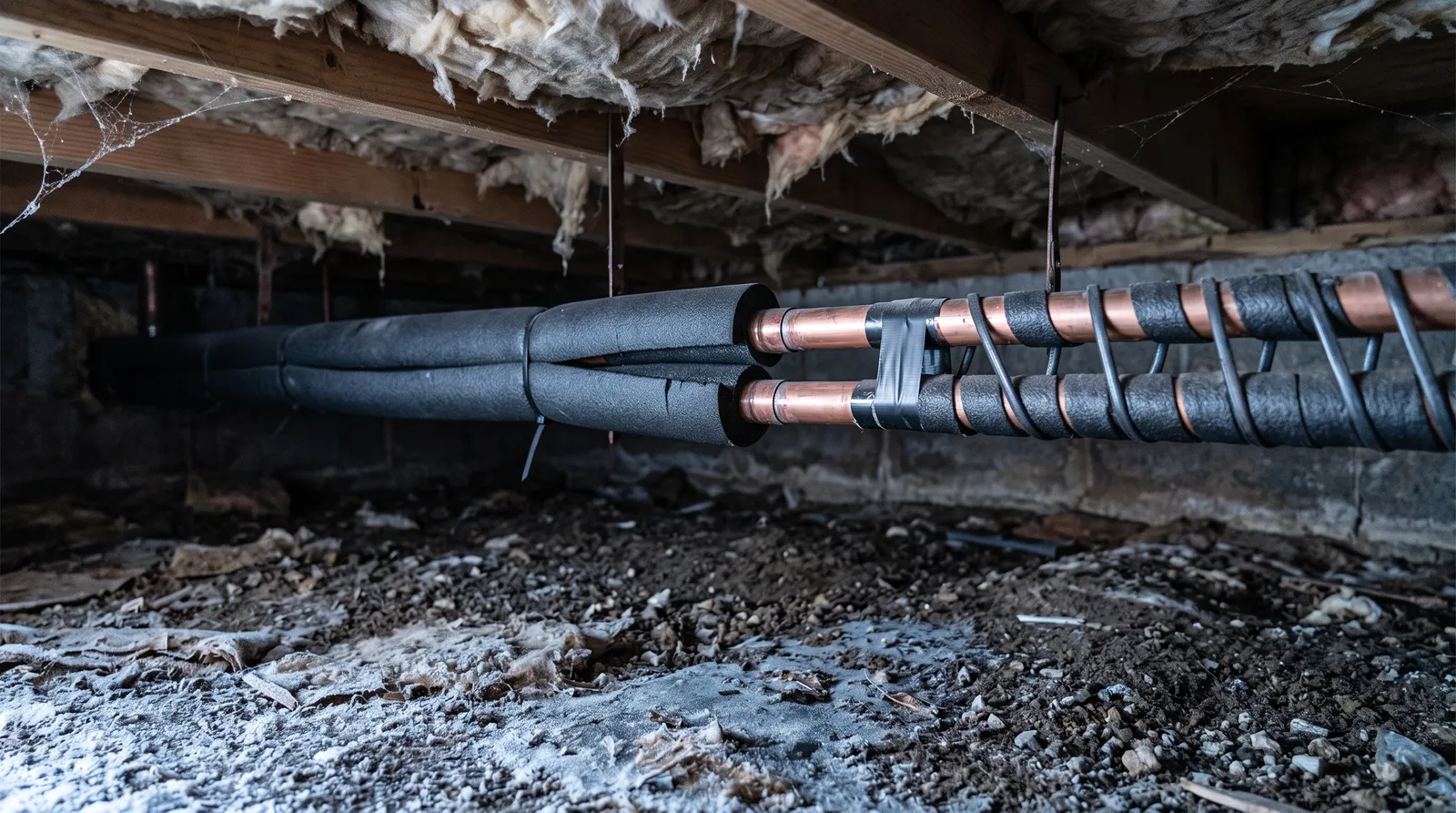
Pipe insulation and heat tape solve different halves of the frozen-pipe problem. Insulation slows the freeze — it buys hours. Heat tape prevents the freeze — it costs electricity all winter. For most homes the answer is insulation first: it’s a one-time, no-operating-cost purchase that handles every pipe that only occasionally sees freezing conditions. Heat tape is the right tool only for the specific run that freezes every single year — well lines, crawl-space feeds, north-wall pipes, mobile-home supply — and for those runs, the gold standard is both: cable on the pipe, insulation over the cable.
If a pipe has already frozen tonight, stop reading comparisons and go to how to keep pipes from freezing (the ranked prevention ladder) — the “pipe is already frozen” section is there.
Why Pipes Freeze (The 30-Second Physics)
Water freezes at 32°F, but pipes don’t freeze the moment outdoor air does. The water in a pipe carries heat from the house, and the pipe loses that heat to whatever cold mass surrounds it — crawl-space air, wind hitting a rim joist, an attic at 15°F. Freezing starts at the pipe wall, and the ice that forms actually insulates the remaining liquid water, which is why a marginal pipe often survives a cold night and dies on the third cold night in a row: each night the pipe starts colder than the last, and standing water loses the race.
That’s the whole game the two products play:
- Insulation slows the heat loss, so the pipe holds above 32°F longer — often long enough for daytime temperatures to rescue it. It cannot help a pipe that sits below freezing for days.
- Heat tape adds heat back, so the pipe never loses the race regardless of duration. It consumes electricity the entire time it’s doing it.
The American Red Cross’s frozen-pipe guidance adds the free measures neither product replaces: keep the thermostat at the same temperature day and night (no lower than 55°F), open cabinet doors under sinks on exterior walls, and let cold faucets drip during extreme events.
What Pipe Insulation Actually Does
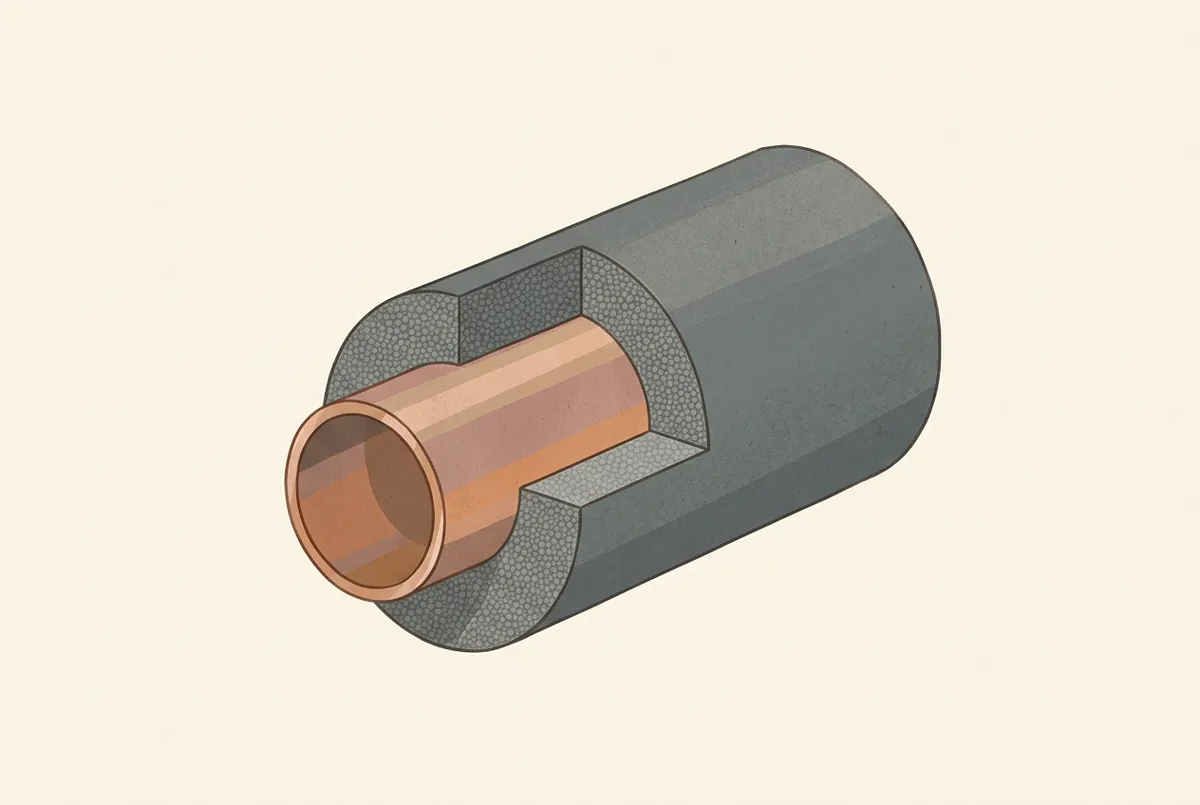
Closed-cell foam tubes — the black or grey sleeves sold in 6-foot lengths — slip over the pipe or wrap around it pre-slit. Typical residential wall thicknesses (3/8" to 1/2") carry an R-value around 2 to 4. That sounds tiny next to an attic’s R-49, but it’s the difference between losing heat in hours and losing it in a night.
What insulation is honestly good at:
Pre-slit closed-cell polyethylene sleeves rated around R-2.1 per the manufacturer's spec: enough to turn an overnight freeze into a survivable slow bleed of heat. Slip on, tape the seams, done in an afternoon. One caution: this listing's own title and description disagree on which pipe size it fits — match your pipe's OUTER diameter against the fit chart on the listing before ordering, because foam that's too big grips nothing.
Check price on Amazon As an Amazon Associate we earn from qualifying purchases. Price & availability shown on Amazon.com.- Surviving single cold nights — the pipe that froze once in a decade needs hours of protection, not infinite protection.
- Hot-water pipes — it cuts standby loss from the water heater to taps, which is why insulating hot water pipes shows up on DOE energy-saver lists. It earns its cost back even in climates that never freeze.
- Condensation control on cold water pipes in humid basements — dripping wet insulation is what you’re preventing there.
- Whole-run coverage — at a few dollars per stick, wrapping every accessible pipe in the crawl space is an afternoon and a modest hardware bill.
What it cannot do: keep a pipe liquid through a multi-day sub-freezing stretch, protect a pipe with no house heat behind it, or fix a wind-driven exposure — moving air strips the R-value away from an open rim joist.
What Heat Tape Actually Does
“Heat tape” (also sold as heat cable or pipe trace) is a resistive heating element that runs along the pipe and warms it directly. Two families, and the difference matters for safety and cost:
- Constant-wattage cable draws its full rating all the time — typically 5 to 7 watts per foot. Simple, cheaper, and it will happily run up your bill in November and burn out faster.
- Self-regulating cable — the kind worth buying — varies its draw with pipe temperature (roughly a 3-5W/ft class at full output, tapering as the pipe warms). No thermostat to set, no overheating when the run is dry, and safe under insulation on both plastic and metal pipe.
What heat tape is honestly good at:
- The run that freezes every year — the one you already know about. This is its entire reason to exist.
- Exposures insulation can’t rescue — wells, barns, mobile-home underbellies, long crawl-space feeds, pipes in unheated outbuildings.
- Deep-cold events — multi-day polar-vortex stretches where insulation alone is a delaying action.
What it costs to run: the math that surprises people. A 30-foot self-regulating run averaging 5W/ft draws about 150W. On a 12-hour/day duty cycle from November through March (about 120 days), that’s 216 kWh for the season — at the July 2026 national average of 18.3¢/kWh, roughly $40 for the winter, every winter. On a thermostat-controlled or genuinely self-regulating install in a mild climate it’s less; on constant-wattage cable left plugged in year-round it can be triple.
The Head-to-Head Table
| Pipe Insulation | Heat Tape | |
|---|---|---|
| Mechanism | Passive — slows heat loss | Active — adds heat |
| Stops a multi-day freeze? | No — buys hours | Yes — while powered |
| Upfront cost (30-ft run) | A few dollars per 6-ft stick; ~$15-30 total | ~$1.50-4 per foot of cable; $50-120 for the run |
| Operating cost | Zero | ~$40/season for a 30-ft run (math above) |
| Install | 10-minute sleeve-on DIY | Wrap run, secure per manufacturer spacing, plug into GFCI |
| Failure mode | Silent — wet, displaced, or UV-cracked foam does nothing | Power off / tripped GFCI / ended lifespan — inspect every fall |
| Lifespan | Years (UV degrades it in sunlight) | Listed cables are typically rated ~3-5 seasons of seasonal use |
| Best use | Every accessible pipe; occasional-freeze climates | The specific run that freezes annually |
Which One for Your Situation
Start with insulation everywhere — it’s the cheapest per foot and it never costs another cent. Standard 6-foot pre-slit polyethylene sleeves (3/8" wall class, R-value around 2.1 for the common Frost King P11XB type) handle copper and iron pipe in the sizes most homes have. Miter the corners with a utility knife, tape the seams, and don’t stretch the foam — gaps at joints are where the cold gets in.
Pre-slit closed-cell polyethylene sleeves rated around R-2.1 per the manufacturer's spec: enough to turn an overnight freeze into a survivable slow bleed of heat. Slip on, tape the seams, done in an afternoon. One caution: this listing's own title and description disagree on which pipe size it fits — match your pipe's OUTER diameter against the fit chart on the listing before ordering, because foam that's too big grips nothing.
Check price on Amazon Price & availability shown on Amazon.com — we may earn a commission.Add heat tape only for the problem run — and buy self-regulating. If a specific pipe froze last winter (or every winter), insulation is a band-aid there; the run needs active heat. This is also the one purchase where reading the instructions is a safety requirement, not a formality: listed cable only, GFCI-protected outlet only, never crossed over itself unless the manufacturer explicitly rates it for that, and never plugged into a cheap extension cord.
Self-regulating cable in the 3-5W/ft class that scales its output to the pipe temperature — no thermostat to set, rated for plastic and metal pipe, installable under insulation. For the one run that freezes every year: well lines, crawl-space feeds, mobile-home supply. Match the cable length to your run and follow the manufacturer's install instructions exactly — including the GFCI outlet.
Check price on Amazon As an Amazon Associate we earn from qualifying purchases. Price & availability shown on Amazon.com.Self-regulating cable in the 3-5W/ft class that scales its output to the pipe temperature — no thermostat to set, rated for plastic and metal pipe, installable under insulation. For the one run that freezes every year: well lines, crawl-space feeds, mobile-home supply. Match the cable length to your run and follow the manufacturer's install instructions exactly — including the GFCI outlet.
Check price on Amazon Price & availability shown on Amazon.com — we may earn a commission.The combo is the gold standard for exposed runs: cable fastened to the pipe per the manufacturer’s spacing, foam insulation over the cable. The insulation makes the cable’s watts go further (less heat lost to the crawl space), and the cable covers the multi-day events the insulation can’t. Check the listing — the cable must explicitly be rated for use under insulation; not all are.
The Two Rules That Beat Both Products
- Air-seal the exposure before buying anything. A can of spray foam closing the rim-joist gap blowing -5°F air across the pipe fixes the cause; insulation and tape only fight the symptom. The full prevention ladder ranks this first because it’s free-to-cheap and permanent.
- Inspect every fall before first freeze. Displaced foam, a tripped GFCI, or a cable that’s reached end-of-life all fail silently — the discovery event is the burst. Five minutes with a headlamp in October is the cheapest insurance in this entire article.
If the Worst Happens
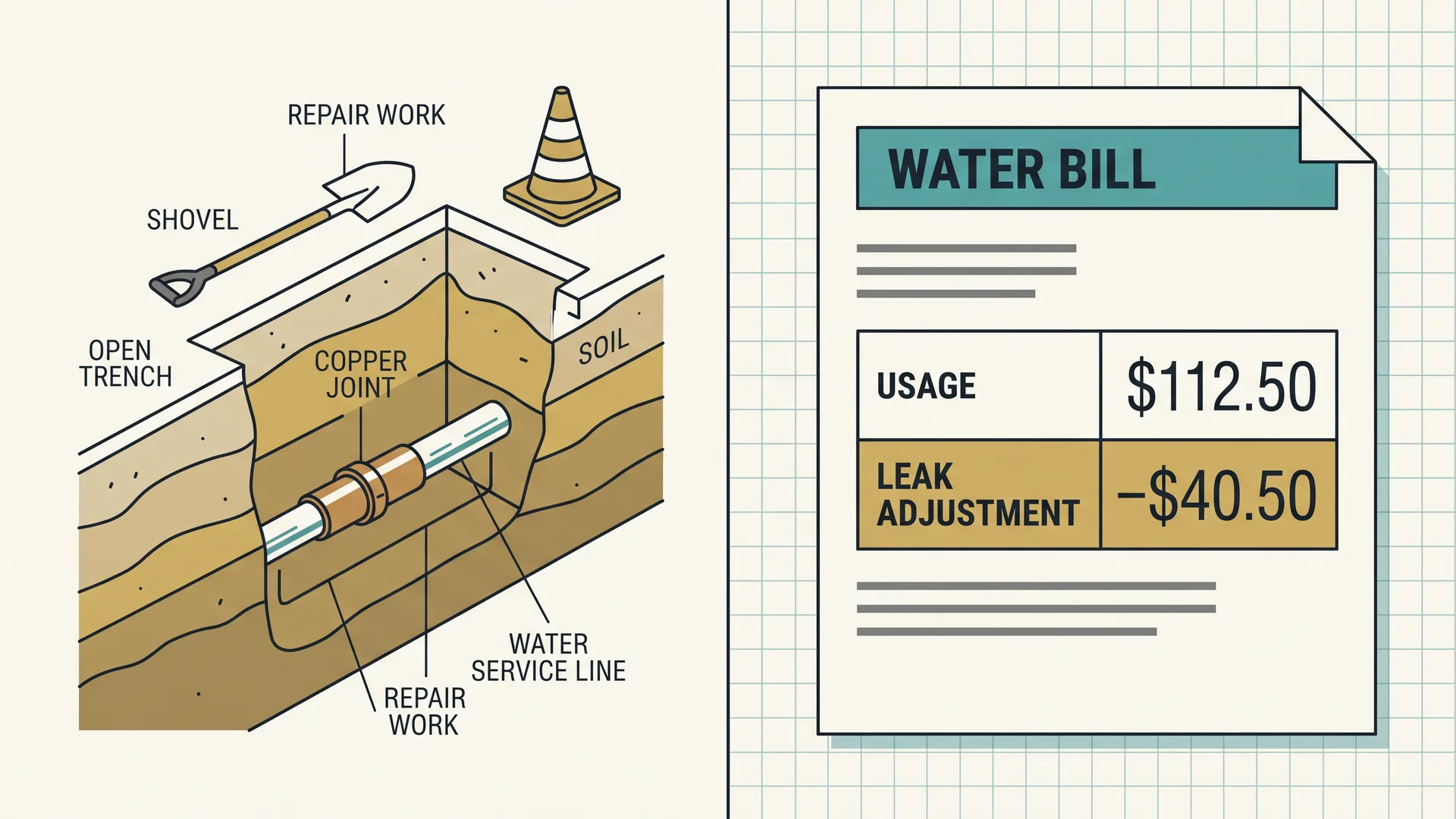
A burst pipe is a water bill problem as much as a flooding problem — a 1/8-inch crack can release hundreds of gallons a day, and the usage shows up on your bill as a mysterious water-bill spike even when the damage is contained fast. Know where your main shutoff is before you need it, and consider the detection layer: battery sensors by the water heater and under sinks (where to place water leak sensors) turn a catastrophic overnight burst into a 2 a.m. alarm. Winter brings other bill surprises too — see why your water bill is higher in winter.
Sizing Heat Tape Without Overbuying
Cable is sold by length, and the wrong length is the most common purchasing mistake — too short leaves the coldest elbow unprotected, and splicing two cables together is prohibited by every listing. Measure the run first:
- Measure the pipe run you’re protecting, not the cable path — for straight runs, cable length equals pipe length.
- Spiral wrapping doubles effective length. Wrapping the cable in a spiral (per the manufacturer’s spacing chart) needs roughly 1.5-2× the pipe length, but only do it on cable rated for spiral installation.
- Add for valves and spigots. Manufacturer charts specify extra wraps at valves, spigots, and joints — the metal mass there conducts cold straight into the water line.
- Round to the stocked length, never over. A too-long cable cannot be cut or doubled back on itself; excess must run straight back along the pipe (only if listed for it) or you buy the shorter length.
Well lines and mobile homes deserve a specific word because they’re the two situations where heat tape is genuinely the only fix, not a choice: a well line between pump and house runs through unheated earth-to-air transitions that insulation alone cannot protect through a multi-day freeze, and mobile-home underbellies combine exposed supply, drafts, and no house heat. In both cases: self-regulating cable, full-length coverage, insulation over the cable (if listed), GFCI-protected supply, and a calendar reminder each October to power it up and inspect it.
Frequently Asked Questions
Can I just use pipe insulation instead of heat tape?
Can heat tape go under pipe insulation?
How much does heat tape cost to run per month?
Is heat tape a fire risk?
What pipe sizes does foam insulation fit?
For the full ranked prevention ladder — including the free tonight-steps and who pays when a pipe bursts on a rental — see how to keep pipes from freezing.
Sources
- American Red Cross — Preventing and Thawing Frozen Pipes — thermostat no-lower-than-55°F guidance, drip and cabinet-door measures.
- U.S. DOE Energy Saver — Insulating Hot Water Pipes — insulation materials and placement guidance.
- U.S. EIA — Electricity Monthly, Table 5.03 — national average residential electricity rate (18.3¢/kWh basis).
- Amazon — Frost King pre-slit foam insulation listing — wall thickness, R-2.1 rating, pipe-size fit (verified Oct 2026).
- Amazon — self-regulating heat tape listing — 3-5W/ft class, plastic/metal pipe rating, under-insulation install class (verified Oct 2026).