Quick Answer
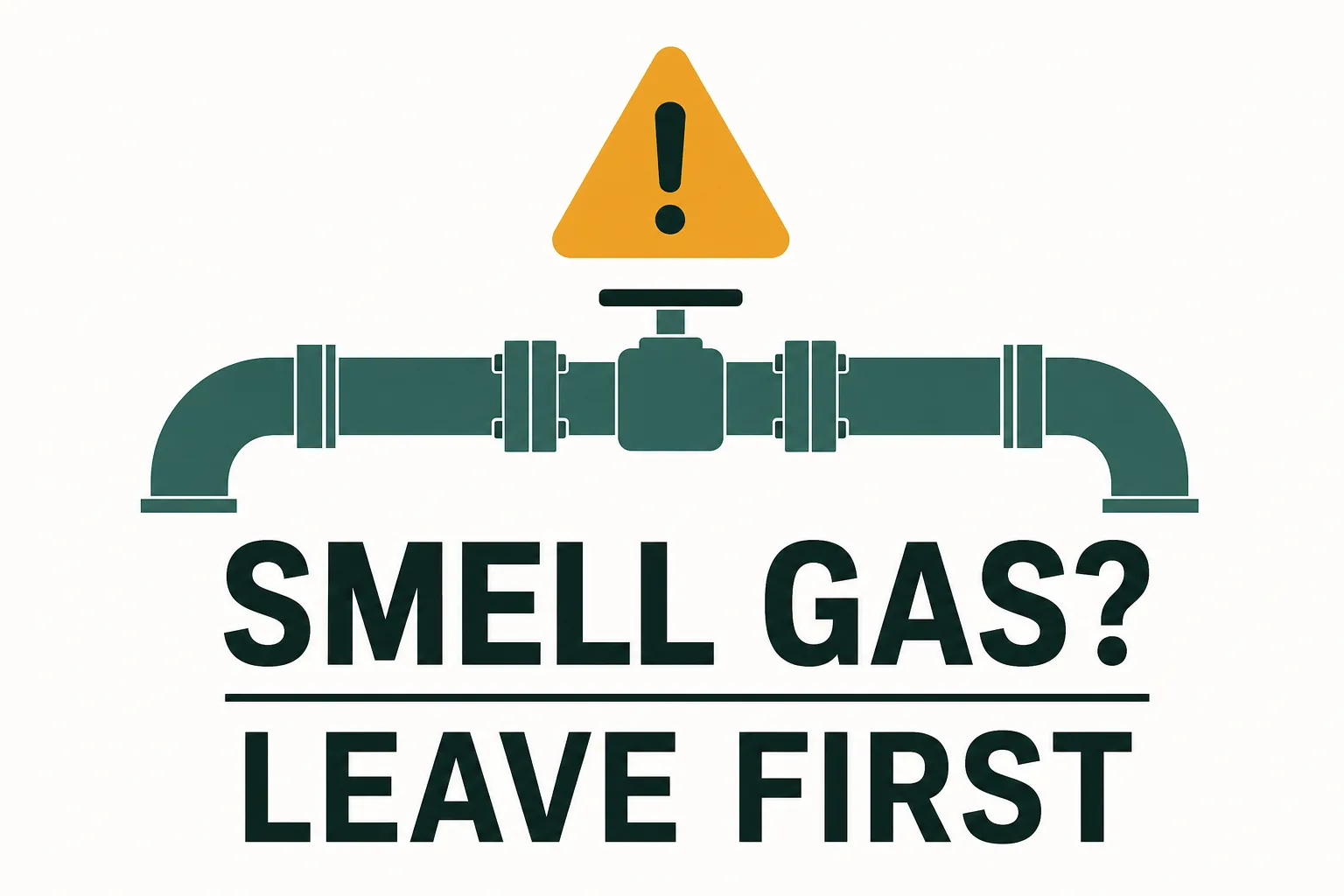
If you smell rotten eggs, hear hissing near a gas line or appliance, or see dead vegetation or dirt blowing near a buried pipe, leave the house immediately — do not hunt for the leak, flip switches, or use your phone indoors — then call 911 or your gas utility’s emergency line from outside.[1][2] A leak does show up on your bill eventually, but typically only by a few dollars a month for a slow one, and it should never be treated as a billing problem. It is a safety problem that is free to report.
This guide covers what a gas leak smells, sounds, and looks like; exactly what to do in the first minute; and what a leak actually does to a household gas bill when you get to it later.
Why Gas Smells Like Rotten Eggs
Natural gas in its pure form has almost no smell — which would make a leak nearly impossible to notice. Utility companies fix that by adding a chemical odorant called mercaptan, which smells similar to rotten eggs or sulfur, on purpose.[1] That smell is the built-in alarm: if you can smell it, gas is escaping somewhere, and the stronger it gets, the closer you probably are to it.
One caveat: the odor can fade. Gas passing through certain soil conditions, rust, or long runs of small pipe can lose some of its odorant before it reaches your nose.[2] So treat your nose as the primary detector (it works for most leaks most of the time) but not the only detector — which is why the physical signs below matter too.
The Signs of a Gas Leak
Smell: a rotten-egg or sulfur odor, anywhere in or near the house. Stronger near the furnace, water heater, stove, dryer hookups, or meter usually means the source is close.
Sound: an unusual hissing or whistling sound near a gas line, appliance connection, or the meter — the sound of gas escaping under pressure.[2]
Sight, indoors: a gas flame that is yellow or orange instead of steady blue, or dust blowing near a connection. A pilot light that keeps going out is worth investigating by phone with your utility.
Sight, outdoors: a patch of dead or dying grass or plants in an otherwise healthy yard, dirt or water blowing into the air near a pipeline route, or continuous bubbling in wet ground or a puddle near buried pipe.[2]
Any one of these alone can be a leak. A couple of them together — say, a smell plus hissing — should be treated as an emergency, not something to sleep on.
What to Do First (and What Never to Do)
If you notice any gas leak sign, the sequence is simple and it always starts with leaving:[1][2]
- Leave the building immediately. Don’t stop to open windows or find the source. Take everyone with you, including pets if it doesn’t slow you down. If you’re already outside when you notice, move away from the smell.
- From a safe distance, call 911 or your gas utility’s emergency line. Every major gas utility runs a 24-hour emergency number — for example, SoCalGas uses 1-800-427-2200 — and calls are accepted anonymously if you’re hesitant.[2] The number for your utility is on your monthly bill; it’s worth knowing it before you need it.
- Stay away until the utility says it’s safe. Follow the directions of utility employees or emergency responders on site.[1]
Never do any of the following — every one of them can create the spark that turns a leak into an explosion:[1][2]
- Don’t turn lights or appliances on or off (switches can arc)
- Don’t light a match, lighter, or candle, and don’t smoke
- Don’t use your phone indoors — step outside before you dial
- Don’t use a flashlight to look around
- Don’t start a car or garage-door opener near the leak
- Don’t try to stop, pinch, or repair the leak yourself[2]
Notice what’s missing: nothing says “find the leak.” Professionals do that with calibrated instruments. Your only job is to get out and get the right people moving.
What a Gas Leak Does to Your Bill
Here’s the part that surprises people: with rare exceptions, a gas leak is a bill event only in a minor way. Every cubic foot that escapes inside your home or yard has already passed through your meter, so it does count as usage you pay for. But most household leaks are small by volume, and small leaks cost small amounts.
Using recent U.S. residential natural gas prices — roughly $1.35 to $1.92 per therm, which is the range EIA-reported national prices sat in during early-to-mid 2026 and the same range we use across our gas bill explainers[3] — a leak’s monthly cost depends almost entirely on how big it is:
| Leak size (therms/day) | What that might look like | Typical added cost/month |
|---|---|---|
| 0.1 | Slow appliance-connector seep, no smell until close up | ~$4 to $6 |
| 0.5 | Small constant seep you can faintly smell near one appliance | ~$20 to $29 |
| 1.0 | Noticeable constant smell in one room | ~$41 to $58 |
| 3.0 | Hissing you can hear; a serious, obvious breach | ~$122 to $173 |
(Anything past 0.5 therm/day isn’t the slow-drip case — it’s an emergency, and the bill is the last thing that matters about it.)
Two more honest points about the bill side:
- You may never see a leak on your bill at all. A leak in the utility’s underground service line, between the street and the meter, is upstream of your meter — the gas never registers, and the utility pays for it, not you.
- Don’t go looking for the leak to protect your wallet. Reading the bill or the meter can be done later, from a comfortable distance. Hunting for the source inside a house that smells like gas is exactly the wrong trade.
| Suspected gas leak | Real usage spike | |
|---|---|---|
| Bill impact | Usually small — the leak volume itself is low | Can be large (heating season, new appliance, rate change) |
| What you notice | Smell, hiss, dead grass, bubbles | Higher usage or a new appliance pattern |
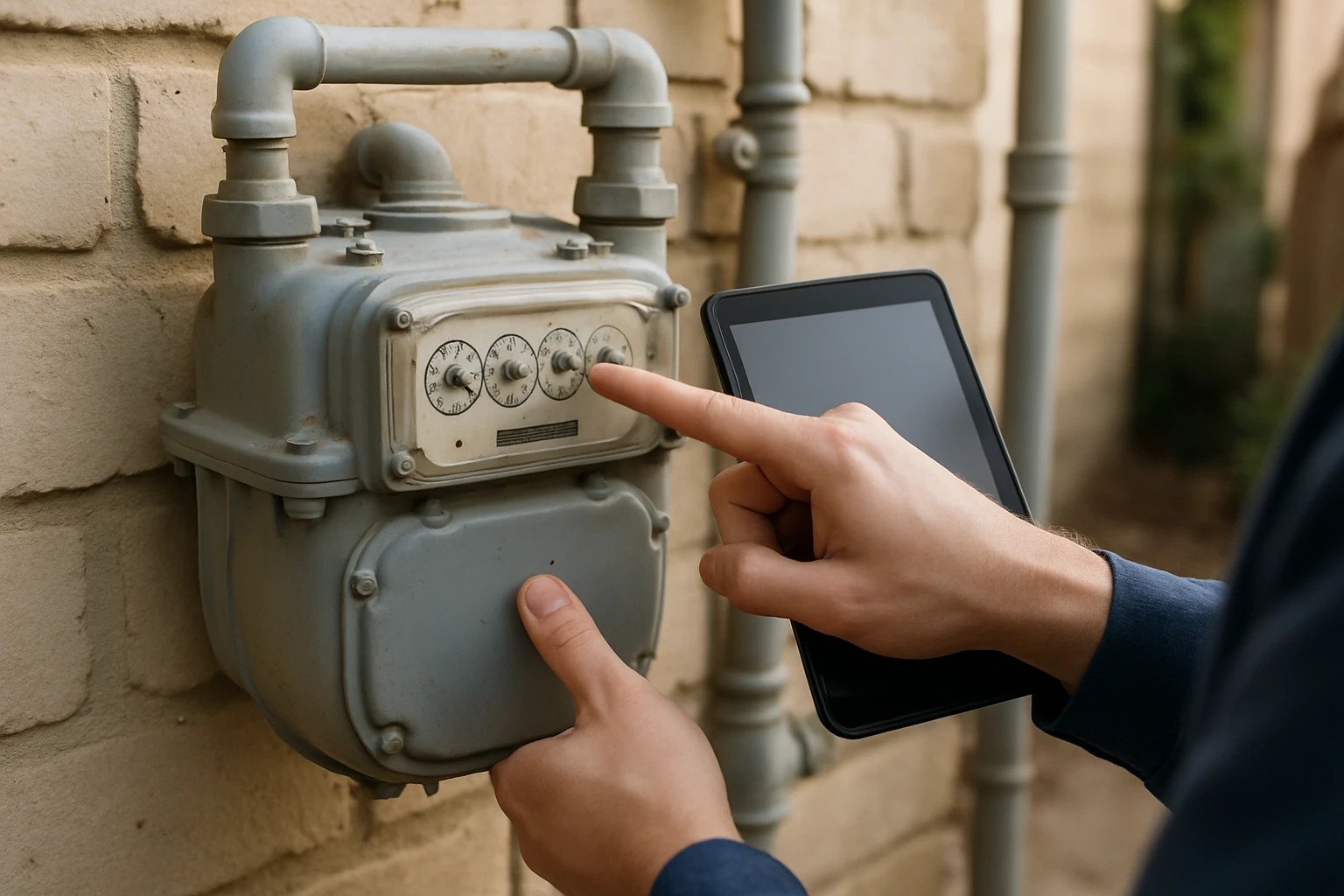
| First move | Leave, call 911 or the utility from outside | Check usage — start by reading your gas bill and your gas meter |
| Who fixes it | The utility crew (free emergency response) | You, with efficiency steps |
| Time pressure | Minutes | Weeks |
The honest analogy is a running toilet on the water side: a running toilet quietly adds to your water bill every single day and warrants patience and tracking, because it wastes water but endangers no one. A gas leak wastes a little money and endangers everyone in the house. That difference in danger is why one is a plumbing-weekend problem and the other is a leave-the-house-now problem.
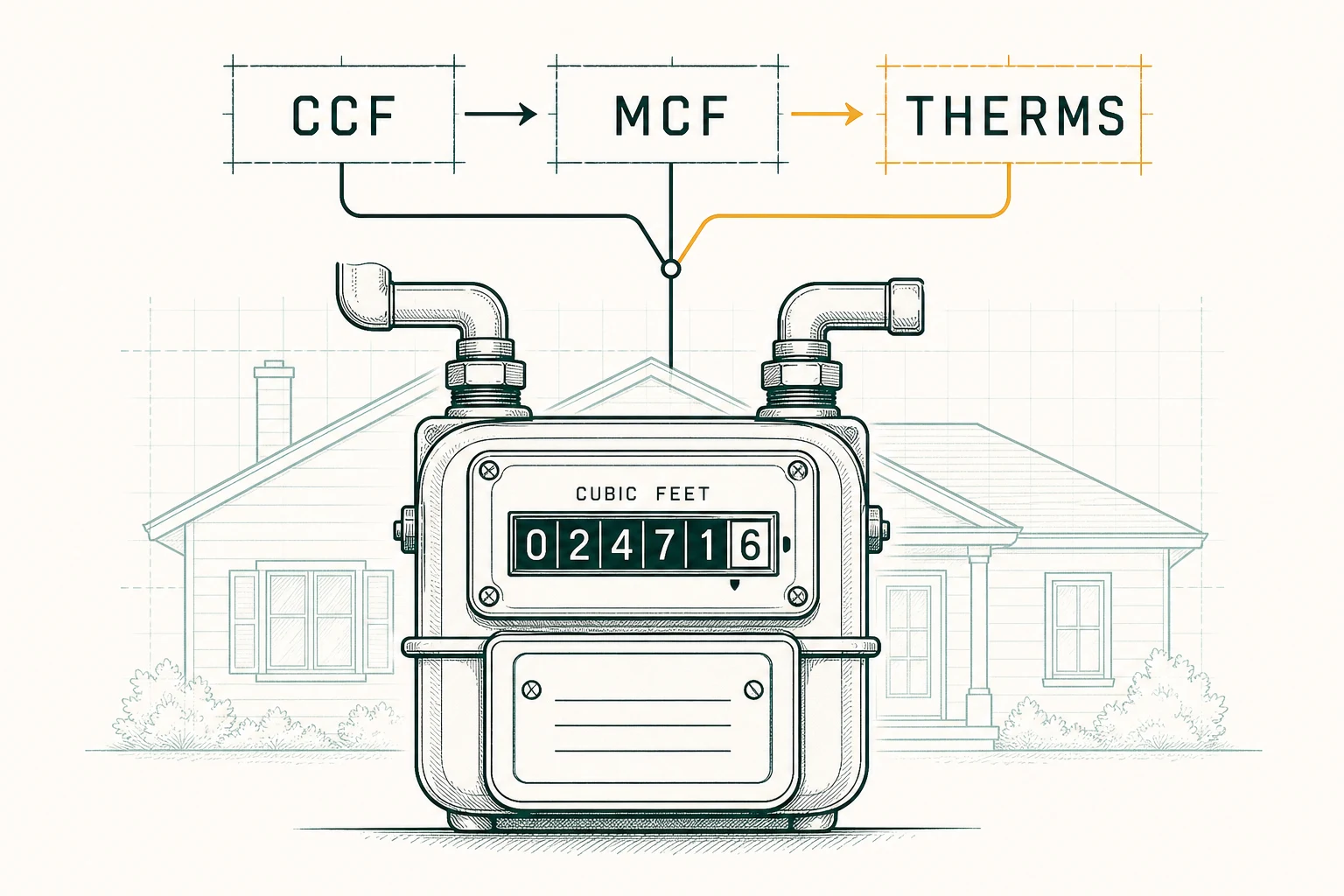
If your gas bill is high and you smell nothing anywhere, the cause is far more likely usage, weather, or rates than a hidden leak — our guide to why your gas bill is high ranks the likely causes, and MCF vs CCF vs therms explains the units you’ll see on the meter.
What the Utility Does When You Call
The emergency check is part of what your utility bill already covers — you are not billed a service fee for reporting a suspected leak, and you can report anonymously.[2] When you call, the utility responds as an emergency: crews are dispatched promptly for dangerous leaks.[2]
The technician will shut off gas at the meter if needed, sweep the property with a combustible-gas detector, and test the meter and accessible line sections.[1] If gas was shut off, don’t turn it back on and don’t relight anything yourself — the utility or fire department must confirm the system is safe to re-enter and relight first, the same rule Ready.gov gives after a fire has damaged utilities.[4]
If they find the leak is on your side of the system, they’ll tell you exactly where and what needs a licensed plumber. They won’t bill you for the inspection itself — that’s the emergency service, and it’s free to you.
Utility Emergency Line or Plumber?
The dividing line is the meter:
- Utility’s side (street main, service line, the meter itself): the utility’s problem and the utility’s crew — report it immediately, keep everyone away, and let them work.[1]
- Your side (house piping, appliance connectors, flues): the utility will still respond and shut things down for safety, but the permanent repair is on you, and it must be a licensed plumber or gas contractor. Do not attempt it yourself — SoCalGas specifically warns against trying to control a leak or repair a damaged pipe or meter, because plastic pipe can build static that ignites the escaping gas.[2]
In practice: call the utility first no matter where you think the leak is. They’ll make the scene safe, tell you which side the leak is on, and advise you on next steps. If they say “your side, call a plumber,” then you call a plumber — with the gas off and the scene already secured. If they say “the smell is gone and the test came back clean,” you’ve lost nothing.
One related safety habit: before any project that digs — fence posts, trees, drainage — call 811 first so buried lines get marked for free; excavation damage is a leading cause of gas line hits.[1]
The Bottom Line
A gas leak is one of the few household problems where the money question is genuinely second place. Most small leaks cost a few dollars a month in wasted gas — real money, but not the reason to act. You act because mercaptan’s rotten-egg alarm means gas is escaping now, and an accumulated cloud of it needs only a spark.[1][2] Leave, call from outside, wait for the all-clear, and let the utility’s free emergency check do the looking. If the smell isn’t there and your bill is just creeping up, that’s a usage puzzle, and our gas explainers hub walks you through it step by step.
Sources
- American Gas Association — Using Natural Gas Safely (retrieved 2026-08-30)
- SoCalGas — Identifying and Responding to a Natural Gas Leak (retrieved 2026-08-30)
- U.S. EIA — Natural Gas Prices (retrieved 2026-08-30)
- Ready.gov — Home Fires (retrieved 2026-08-30)