Quick Answer
Measure and assess before buying. A device does not automatically lower a bill; its result depends on what it measures, how it is used, the home, and the utility rate. DOE recommends using a home energy assessment to identify cost-effective improvements and lists efficient technologies such as smart thermostats, LEDs, smart power strips, efficient appliances, and EV chargers as potential improvements.[2]
Do not rely on a generic product ranking, payback promise, or national dollar estimate. Use your bill, equipment instructions, and an assessment to decide what problem is worth solving.
Gadget Categories: What They Do, Who They’re For, and Realistic Savings
Electricity-Use Monitors
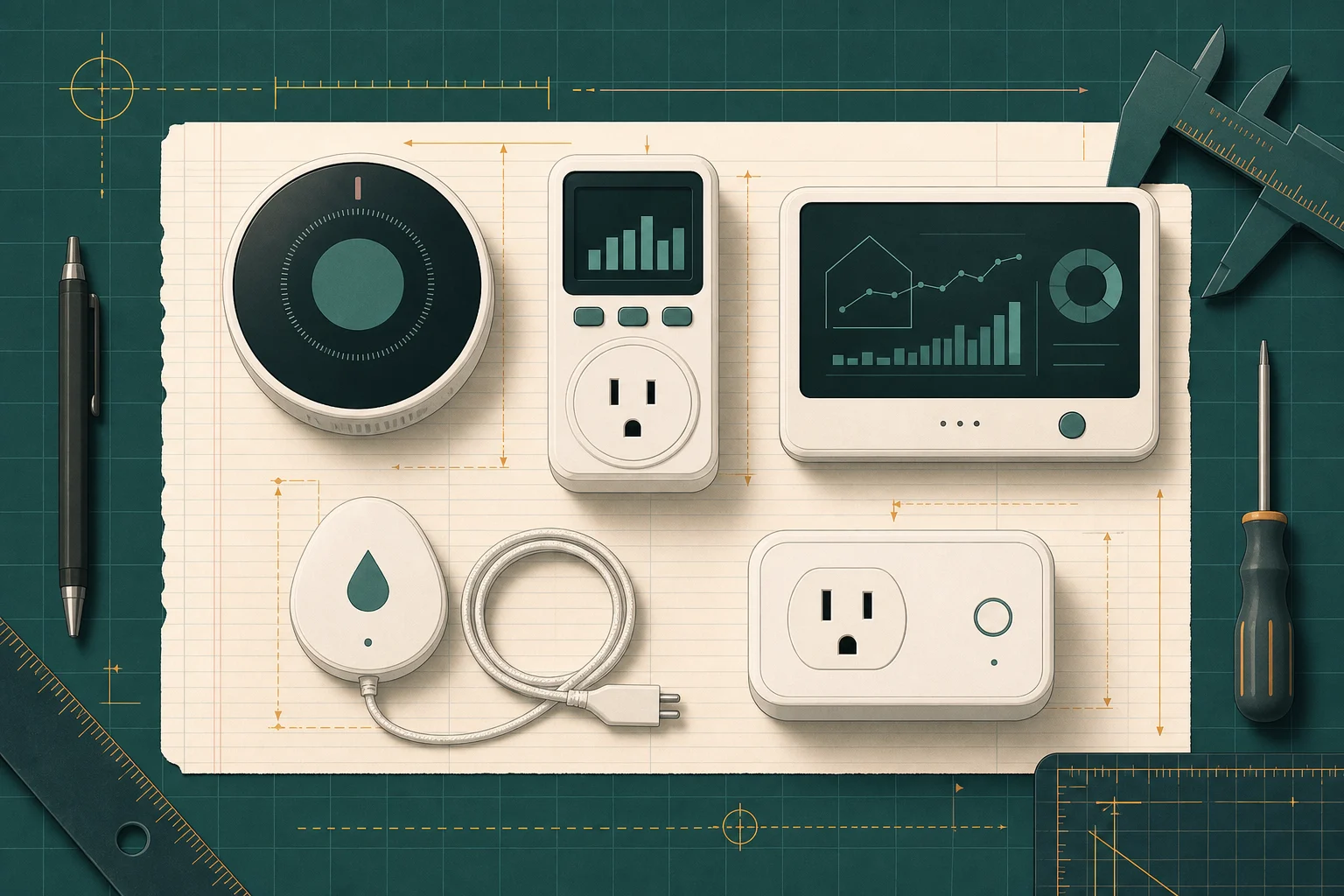
What it does: An electricity monitor measures real-time power draw (watts) and cumulative energy use (kWh) of whatever is plugged into it or wired into a circuit. The Kill A Watt P4400 (the tool in the product box below) reads watts, volts, amps, and cumulative kWh with 0.2% accuracy per the manufacturer spec. Whole-home monitors like the Emporia Vue 3 track individual circuits from the breaker panel via wireless sensors. The full upgrade logic — what monitors see, what they miss, and when the free utility app suffices — is in do home energy monitors save money.
Typical cost range: Plug-in meters: $20–$40. Whole-home circuit monitors: $50–$200 (depending on number of sensor channels). Installation for panel-mounted units typically requires a homeowner comfortable at the breaker panel or an electrician.
Who it’s for: Anyone who wants to know exactly what their devices cost to run — not an estimate based on a label rating but the actual draw in their home, on their rate. Particularly useful for older homes where circuits share equipment or where a bill seems higher than expected.
Realistic savings basis: A monitor itself saves nothing. The savings come from acting on what it reveals — for example, identifying a 10-year-old refrigerator drawing 180 watts constantly (about $260/year at the national average 18.4¢/kWh) and deciding to replace it after seeing actual versus rated consumption. DOE’s ENERGY STAR refrigerator replacement guidance notes that a new ENERGY STAR model uses about 300–400 kWh/year versus 500–800+ for a pre-2010 model — a difference that, when verified by measurement, can drive a decision. Without measurement, a household might replace a perfectly good fridge on a hunch.
Water Leak Monitors
What it does: Detects unexpected moisture at a specific point (near a water heater, under a sink, behind a toilet, in a basement) and sends an alert via app, SMS, or audible alarm. The GoveeLife sensor (B0DQLFC3Q6) detects water at sensor contact points with a 105 dB alarm and supports SMS/app/email alerts through its gateway. Whole-home flow monitors like the Moen Flo (B00C03D01Q) install on the main water line and learn your home’s water use patterns, then shut off the water if a leak is detected — a drops-per-minute rate that falls outside normal use.
Typical cost range: Point sensors: $30–$60 for a multi-pack with gateway. Whole-home flow monitors: $150–$600 plus potential installation cost.
Who it’s for: Households with an older water heater, finished basement, or vacation property where a small leak could run for days undetected. Anyone with slab-on-grade construction where a leak under the slab is expensive to find and fix.
Realistic savings basis: Water leak monitors primarily prevent damage — the average water damage claim is $10,000–$15,000 per the Insurance Information Institute. On the utility bill side, a slow toilet leak (the most common household water-waste source) can waste 200+ gallons/day, which at average US water/sewer rates of ~$10/1,000 gallons adds about $60/month — an amount a point sensor at the toilet base can alert you to within hours rather than months.
Smart Thermostats
What it does: Replaces a manual or basic programmable thermostat with a Wi-Fi-connected unit that can adjust temperature based on schedule, occupancy sensing, and remote control. The Nest Learning Thermostat 4th gen (B0D5BBYRJM) programs itself within a week and is ENERGY STAR certified.
Typical cost range: $100–$280, with some utility rebates reducing the net cost. Installation is DIY-friendly for homes with a C-wire (common wire) or compatible setup; some homes require a power adapter.
DOE lists smart thermostats as an efficient technology that can lower utility use when schedules match occupancy.[2] The Nest Learning Thermostat programs itself within a week and is ENERGY STAR certified. Google reports typical savings of 10–12% on heating and 15% on cooling.
Check price on Amazon As an Amazon Associate we earn from qualifying purchases. Price & availability shown on Amazon.com.Who it’s for: Households where heating and cooling make up 40–50% of energy use (EIA RECS data) and where the thermostat schedule does not match occupancy — a classic adjustment that DOE says can save up to 10% per year by setting back 7–10°F for 8 hours a day.
Realistic savings basis: Google reports 10–12% heating savings and 15% cooling savings for the Nest thermostat in typical use. An ENERGY STAR–certified smart thermostat that is properly programmed typically saves about 8% of heating/cooling costs (DOE/ENERGY STAR). On a $1,900 annual utility bill where heating+cooling is $760–$950, that’s $60–$140/year — enough to pay for the thermostat in 1–3 years depending on installation cost and rebates. Savings are lower in mild climates, all-electric homes with heat pumps (setback may trigger supplemental heat), or homes where the thermostat was already well-programmed.
Smart Power Strips
What it does: A power strip that cuts power to designated outlets when a master device (usually a computer or TV) is turned off or when no activity is sensed. DOE’s Better Buildings program describes two-tier designs: always-on outlets for equipment that must stay powered, and switched outlets that cut power when the master device’s current draw falls below a threshold.[2]
Typical cost range: $20–$60. Basic switched strips cost less than models with USB charging or individual outlet control.
Who it’s for: Home offices, entertainment centers, and any cluster of electronics where one device (computer, AV receiver) signals when the whole group can be safely powered down.
Realistic savings basis: Entertainment-center equipment in standby can draw 3–15 watts total — TV, cable box, game console, soundbar, and streaming device. At the national average rate, 10 watts of continuous standby costs about $16/year. A smart power strip pays for itself in 2–4 years in standby reduction alone. Higher savings apply if it automatically turns off peripherals that would otherwise be left on 24/7.
Efficient Replacement Products (ENERGY STAR)
What it does: Appliances, electronics, and fixtures that meet ENERGY STAR efficiency specifications exceed federal minimum standards per DOE.[1] They use less energy for the same service — a refrigerator, clothes washer, or ceiling fan carrying the ENERGY STAR label has been independently certified.
Typical cost range: ENERGY STAR models typically cost 10–30% more than baseline models but the premium has been narrowing for most categories. ENERGY STAR clothes dryers use about 20% less energy than conventional models; heat pump dryers save 20–60% more than conventional dryers per the DOE Home Upgrades page.
Who it’s for: Households replacing a worn-out or failing appliance. Upgrading a working appliance solely for efficiency rarely pays back before the appliance’s natural end of life — the savings per year are too small compared to the upfront cost.
Realistic savings basis: The DOE Home Upgrades page notes water heating accounts for about 20% of home energy use. A heat pump water heater (ENERGY STAR) can save a household $300–$500/year compared to a standard electric water heater per DOE estimates. A new ENERGY STAR refrigerator replaces one using 500–800 kWh/year with one using 300–400 kWh/year — saving $35–$70/year at national average rates.
Gadget Comparison Table
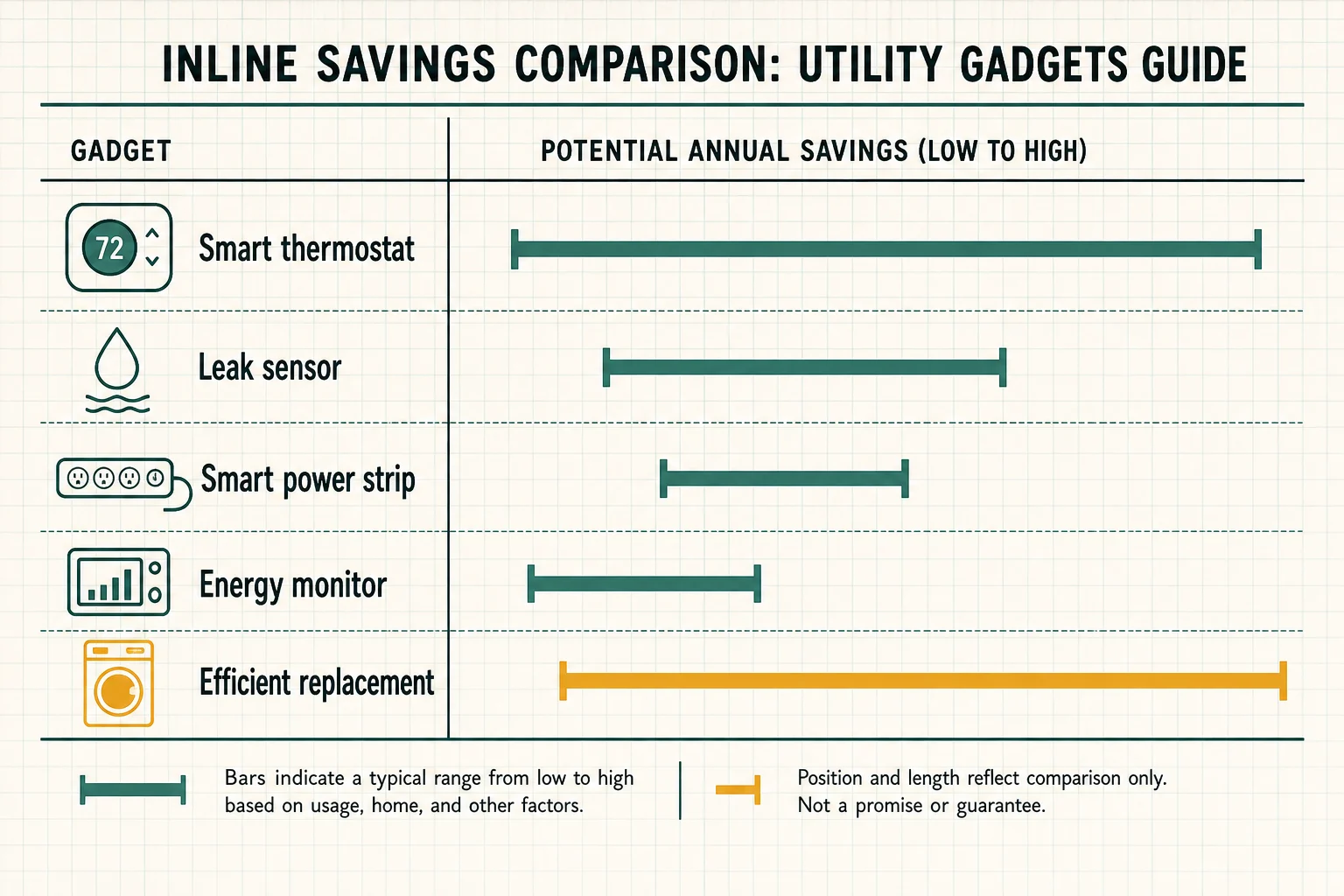
| Gadget Type | What It Measures/Controls | Typical Price | Typical Yearly Savings | Payback Range | Best For |
|---|---|---|---|---|---|
| Plug-in power meter | Watts, kWh per device | $20–$40 | $0 (diagnostic only) — savings from actions taken | Immediate (if finds a culprit) | Finding what drives the bill |
| Whole-home energy monitor | Circuit-level kWh | $50–$200 | $0–variable (depends on actions) | 1–5 years | Homes with solar, EV, or unexplained high usage |
| Smart thermostat | Temperature schedule, occupancy | $100–$280 | $60–$140/year (heating+cooling) | 1–3 years | Households away during work hours |
| Water leak sensor (point) | Moisture at sensor location | $30–$60 (multi-pack) | Mostly damage prevention | Immediate if a leak caught | Basements, laundry rooms, vacation homes |
| Whole-home water monitor | Flow rate, leak patterns | $150–$600 | $60–$180/year from leak savings + prevention | 1–4 years | Homes with high water bills or frequent leaks |
| Smart power strip | Multi-outlet on/off per zone | $20–$60 | $10–$25/year (standby reduction) | 2–4 years | Entertainment centers, home offices |
| ENERGY STAR appliance replacement | Energy use per cycle/year | Varies by appliance | $35–$500/year depending on appliance | 2–8 years | When old appliance fails naturally |
When These Devices Do NOT Pay
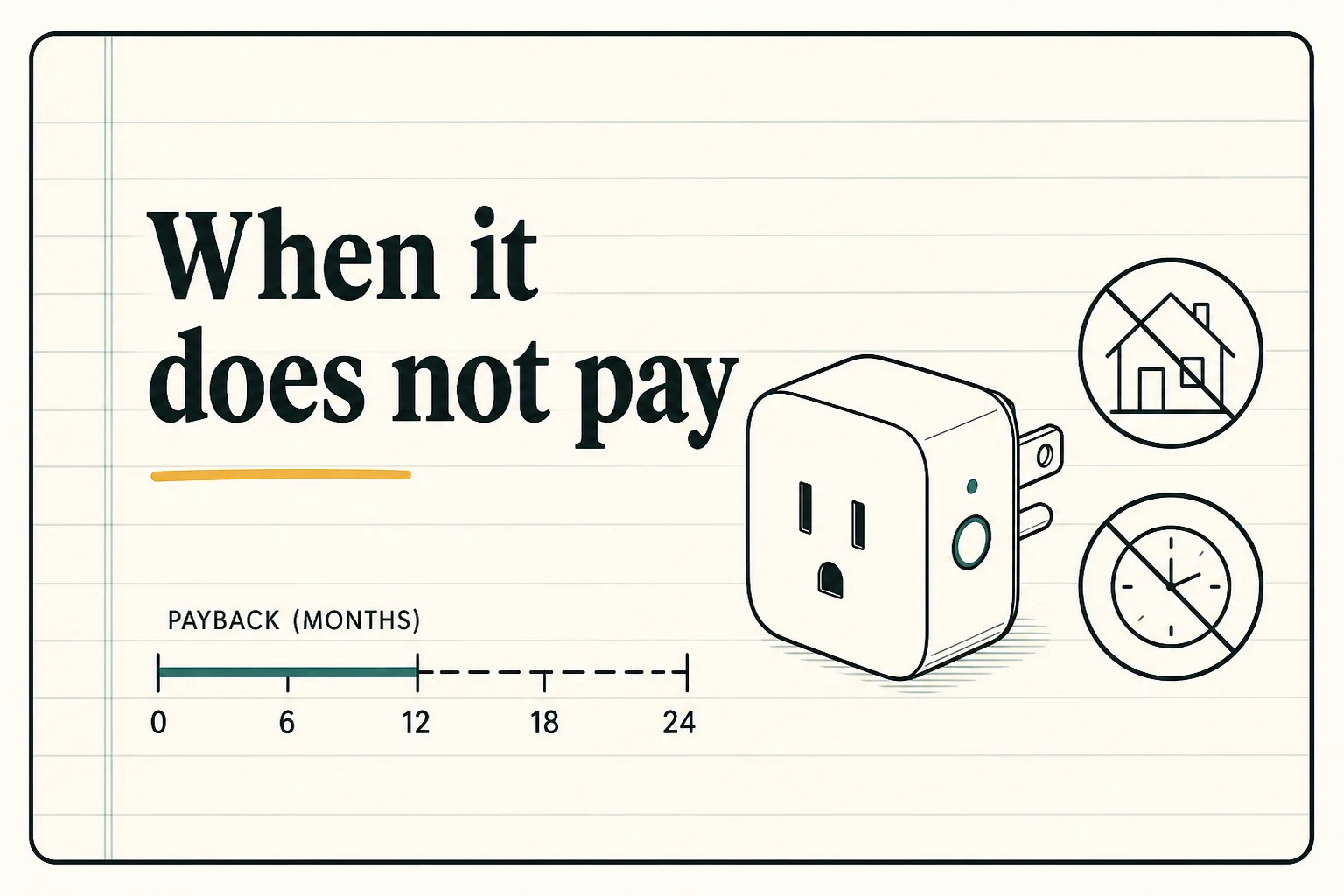
A gadget that pays for itself in one home may waste money in another. Here are the cases where each category typically fails to earn back its purchase price:
Plug-in power meter: If every device in your home is already relatively modern and draws minimal standby power — say you live in a small apartment with a laptop, phone, a TV, and a mini-fridge — the meter may find nothing worth changing. At $25, if it saves $0, it never pays back.
A per-outlet power meter that shows real-time consumption in its app — answering the question 'Which device or circuit is using more electricity than expected?' from the table above. DOE advises measuring before buying hardware to prioritize cost-effective changes.[2]
Check price on Amazon As an Amazon Associate we earn from qualifying purchases. Price & availability shown on Amazon.com.Smart thermostat: If your home uses electric resistance heat (baseboard heaters) or a heat pump in a mild climate where the supplemental heating strip fires when you set back the temperature, a smart thermostat may actually increase costs. Same for homes where the temperature is never adjusted because someone is home all day — a basic programmable thermostat or manual adjustment works as well.
Water leak sensor: If you rent an apartment where the landlord handles plumbing issues, or your home has no basement, crawlspace, or finished rooms near water sources, a sensor has limited value. The damage-prevention argument weakens in slab-on-grade homes where a leak under the slab cannot be detected by a point sensor anyway.
Smart power strip: If your entertainment center uses a modern TV drawing <1 W in standby and peripherals that are unplugged regularly, a smart strip may add little benefit. The strip itself consumes a small amount of power (<1 W) when active — in rare cases, the strip’s consumption plus the reduced manual effort may not offset the cost.
Whole-home energy monitor: If you already have a clear understanding of your usage patterns, a flat-rate utility plan without time-of-use or demand charges, and no EV or solar system to track, a monitor adds data without actionable savings.
Efficient replacement appliance: Replacing a 5-year-old refrigerator that already works well — even if not ENERGY STAR best-in-class — for efficiency alone has a payback period that extends past the appliance’s useful life. The carbon and manufacturing impact of the replacement must also be considered. Replace at end of life, not prematurely.
DOE lists smart thermostats as an efficient technology that can lower utility use when schedules match occupancy.[2] The Nest Learning Thermostat programs itself within a week and is ENERGY STAR certified. Google reports typical savings of 10–12% on heating and 15% on cooling.
Check price on Amazon Price & availability shown on Amazon.com — we may earn a commission.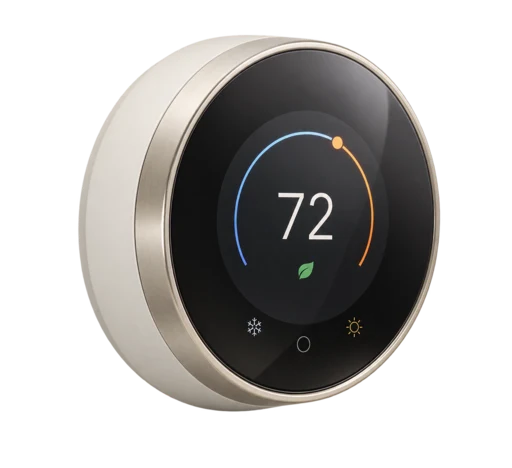
A per-outlet power meter that shows real-time consumption in its app — answering the question 'Which device or circuit is using more electricity than expected?' from the table above. DOE advises measuring before buying hardware to prioritize cost-effective changes.[2]
Check price on Amazon Price & availability shown on Amazon.com — we may earn a commission.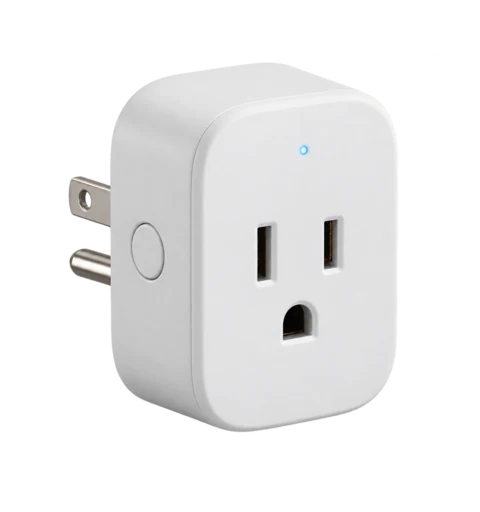
A Safe Decision Process
- Compare the current bill with a similar prior billing period.
- Identify whether the issue is electricity, gas, water, or a billing question.
- Measure or inspect the specific issue before buying hardware.
- Check electrical rating, installation requirements, and manufacturer instructions.
- Recheck the bill or measured use after the change.
DOE notes that ENERGY STAR-qualified products exceed federal minimum standards for efficiency and quality.[1] That label can help when an appliance, electronic product, or other equipment is already due for replacement; it is not evidence that every connected device or gadget will pay for itself. Before buying anything, inspecting the home itself is free — our DIY guide to checking for energy leaks walks room by room through the drafts, ducts, and insulation gaps most worth measuring first.
For a broader starting point, see how to read your electric bill and how to lower utility bills.
Deep dives on the measuring tools named here: the best home energy monitor 2026, Kill A Watt alternatives, and which smart plugs actually measure energy.