Quick Answer
A furnace that won’t turn on is usually stopped by something in the first three checks: the thermostat (set to Heat, fresh batteries, temperature called up), the furnace’s wall switch (a light-style switch that someone flipped off), or a tripped breaker. Manufacturer troubleshooting guides put exactly these at the top of the no-heat list.[1] Work the checks in order — each takes under a minute — before paying for a service call. If the furnace powers up but never ignites, or blinks an error code, that narrows the problem considerably; the sections below cover both. And two reasons to stop immediately: a rotten-egg smell (possible gas leak — leave and call) or a carbon-monoxide alarm.
The check order: six stops before the phone call
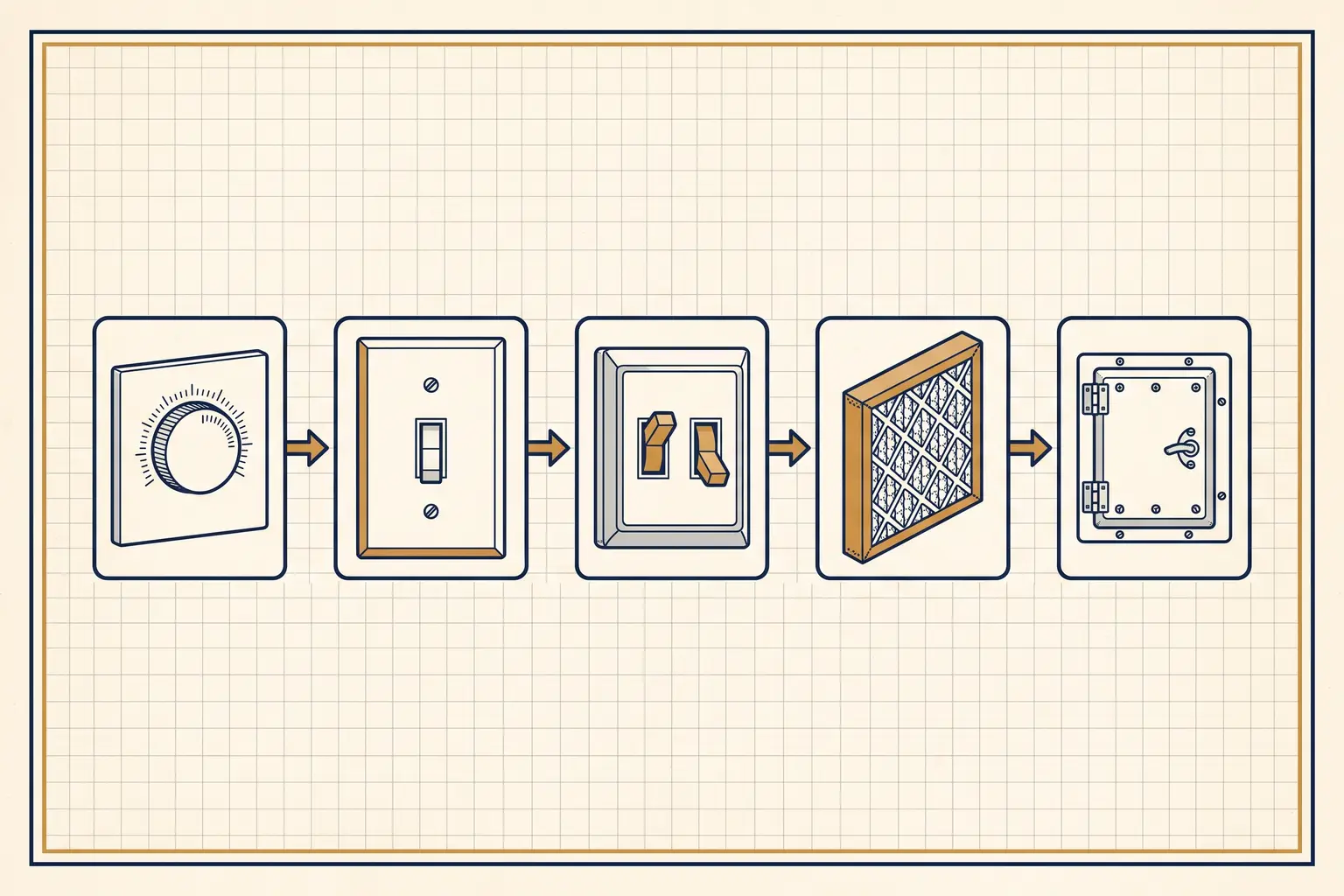
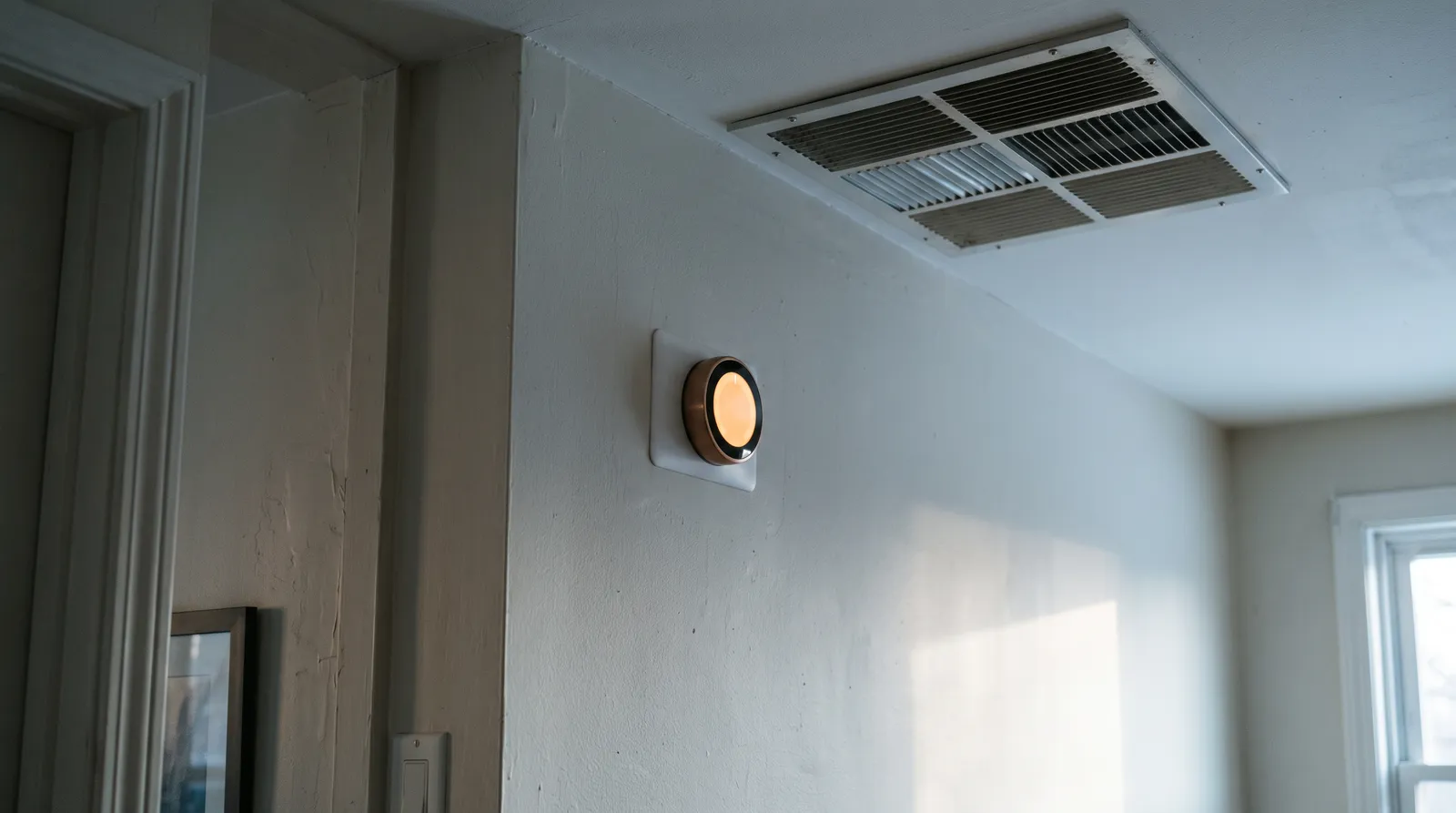
1. The thermostat
Set the mode to Heat (not Fan or Cool) and push the set temperature a few degrees above the room temperature. If the display is blank or dim, replace the batteries — on battery thermostats, dead batteries are the single most common “furnace died” cause. If it is hardwired, check that it seats level on its base; a half-unclipped thermostat can drop its wire contacts. After any change, wait two to three minutes: most thermostats delay the call for heat to protect the equipment, and impatience at this step causes people to misdiagnose a working furnace as dead.[1]
2. The furnace switch
Gas furnaces need electricity for the blower and controls, and nearly every furnace has a wall switch near the unit — it looks exactly like a light switch and gets flipped by accident, by cleaning, or by a child. Make sure it is on. This is check number three on manufacturer lists for a reason.[1]
3. The breaker
Find the electrical panel and look for a tripped breaker labeled furnace or heat. Flip it fully off, then on. If it trips again, do not keep resetting it — repeated tripping means an electrical problem that needs a technician, and the breaker is doing its job.[1]
4. The filter and the limit switch
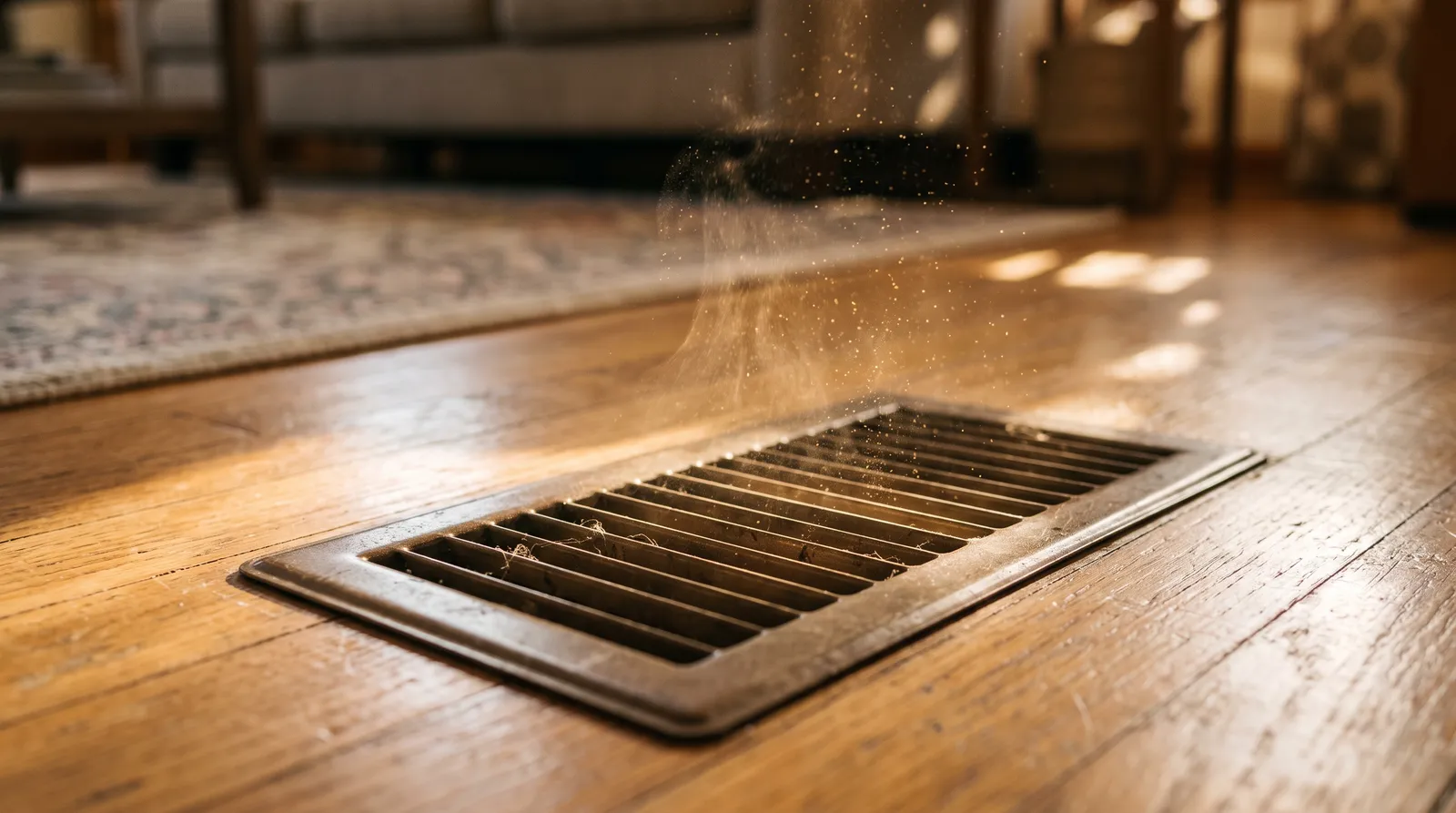
A badly clogged filter restricts airflow until the furnace’s high-limit switch shuts the burners down to prevent overheating. If your filter is gray and fuzzy or you cannot remember its age, replace it — this is the cheapest fix on the list. Restricted airflow shows up elsewhere too: weak airflow from the vents is its own diagnostic, and a furnace that runs but blows cool is usually a different fault, covered in why furnaces blow cold air.
5. The door switch
The blower door has a safety switch that kills power when the door is off or not fully seated. If you (or a filter change) left the door slightly ajar, the furnace will act completely dead. Push the door firmly until it latches.[1]
6. The vents outside
High-efficiency furnaces breathe through two plastic pipes through the wall. In winter, ice, snow drifts, or a bird’s nest blocking either pipe trips the pressure switch and the furnace locks out before ignition. A walk around the house clears more no-heat calls than you would expect.
When it powers up but never ignites
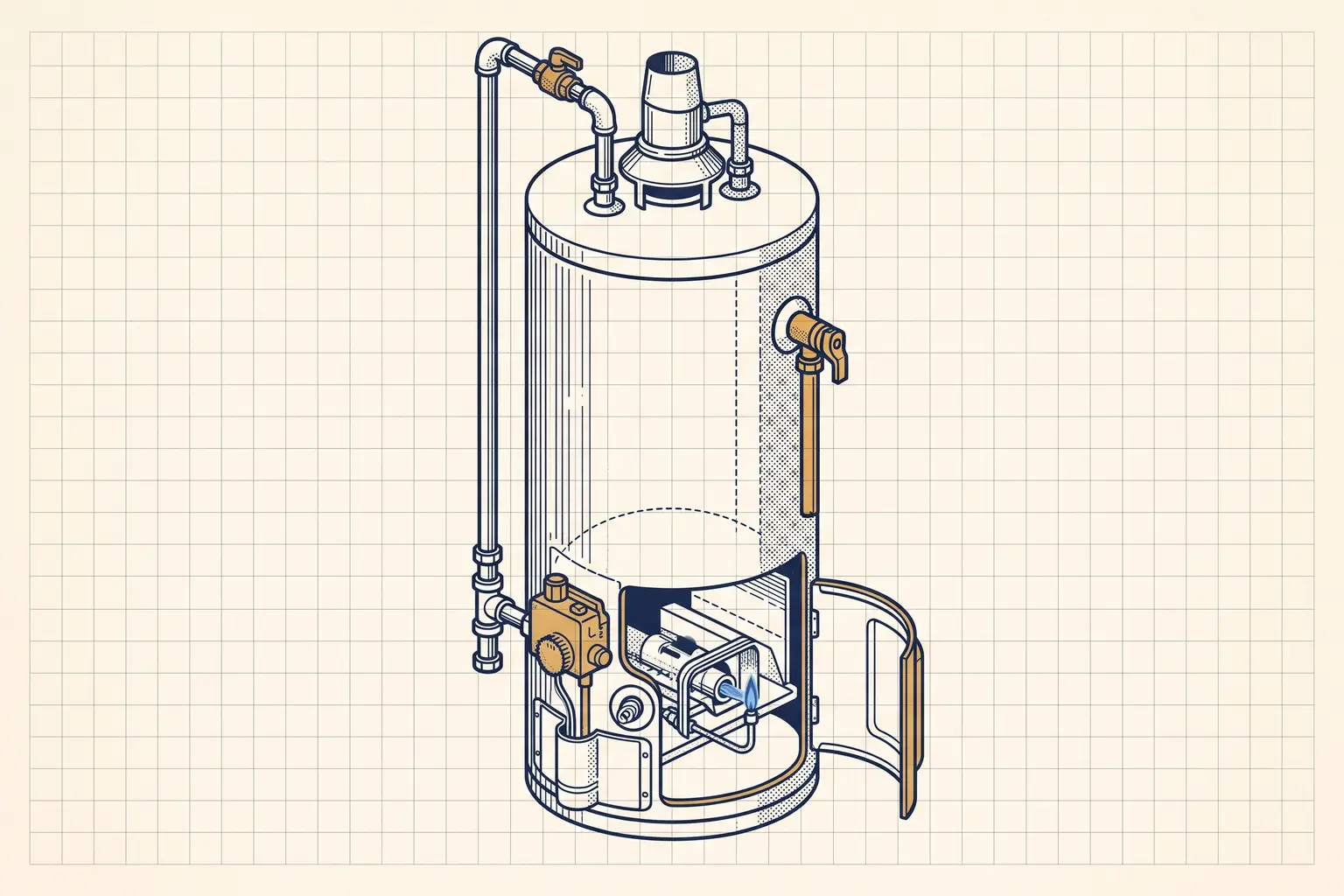
If the blower runs and the thermostat calls for heat but the burners never light, the ignition system is the suspect. Older furnaces use a standing pilot — if the pilot is out, the burners have nothing to ignite them, and a pilot that will not stay lit has its own causes and safety rules, covered in pilot light keeps going out. Newer furnaces use a hot-surface igniter or spark ignition, and an igniter failure needs a technician — the part is inexpensive, but it sits inside the burner compartment.[1]
One more ignition-adjacent cause worth knowing: on condensing furnaces a blocked condensate drain can trip a safety lockout. Technicians report drain clogs as a recurring winter no-heat cause; the fix is clearing the condensate trap and lines.
Error codes: the furnace is telling you the answer
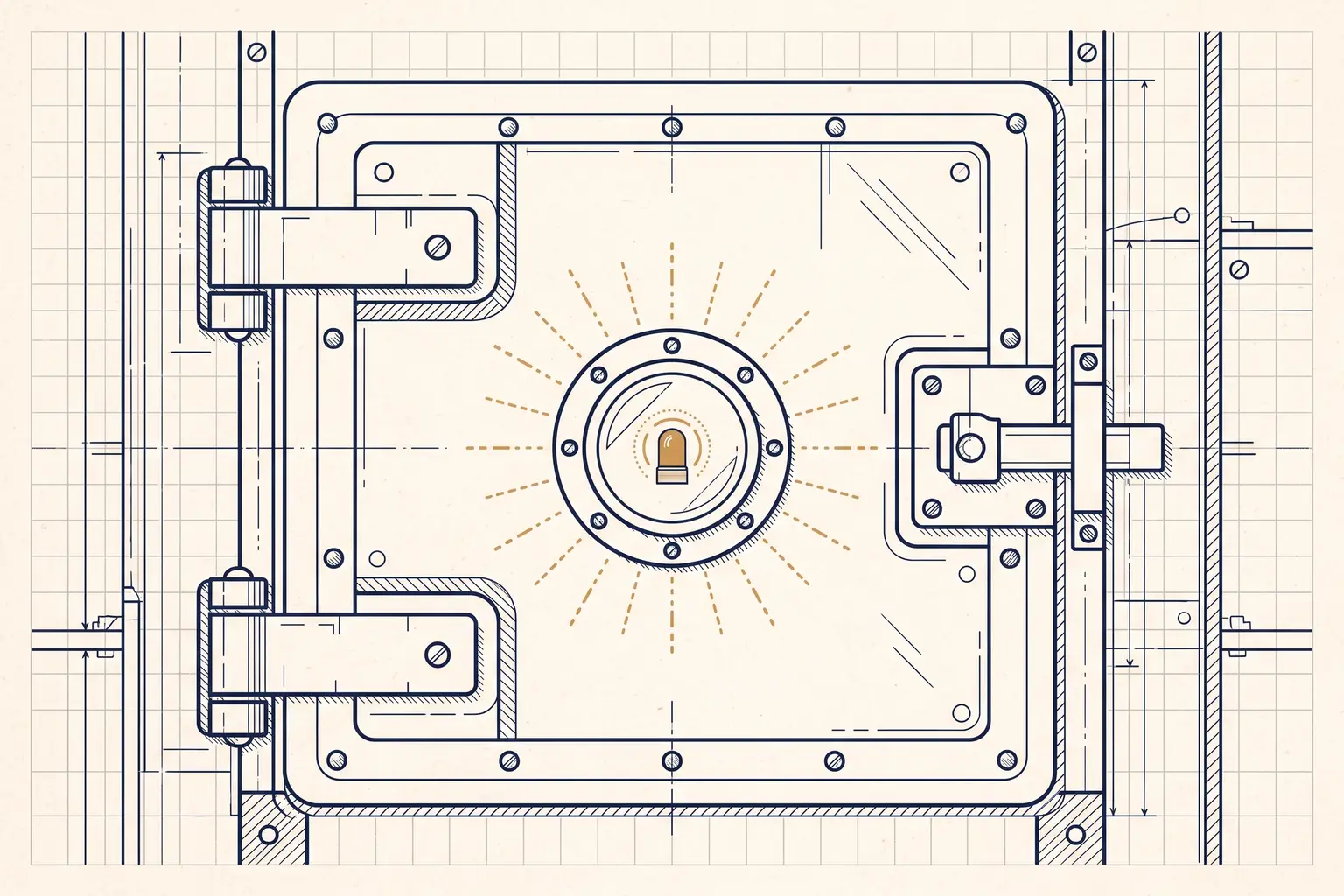
Modern furnaces flash a light on the control board — through a sight glass on the door — in coded blinks. A steady or repeating blink pattern corresponds to a specific fault listed on a code chart pasted inside the door or in the manual: pressure switch, limit switch, ignition lockout, and so on. Reading the code before you call turns a “no heat, unknown cause” service call into “pressure switch fault,” which gets the right part on the truck the first visit. Take a photo of the blink pattern and the chart.
When to stop and get help
Stop troubleshooting and act immediately if:
- You smell rotten eggs or gas — leave the house and call your gas company from outside. The gas leak signs guide covers what to do, including the free utility leak check.
- A carbon-monoxide alarm sounds — get everyone out and call for help; CPSC’s carbon-monoxide center covers alarm response.[2]
- The breaker trips repeatedly, you see scorching, or the furnace shut down with a burning smell — that smell has its own triage in furnace smells like burning.
Otherwise, if one full pass through the check order does not restore heat, a service call is the reasonable next step — you have already ruled out the causes that do not need a technician.
What the repair call is likely to cost
No-heat repairs cluster around a few parts: a igniter or flame sensor, a capacitor, a contactor, a pressure switch, or a control board, plus the diagnostic fee. Part costs are modest; labor and the trip charge are most of the bill. Season timing matters — the first cold snap is peak demand, and wait times stretch. Regular maintenance reduces the odds of the midnight no-heat call in the first place; the furnace tune-up cost and schedule guide covers what a tune-up includes and when it is worth it.
FAQ
Why would my furnace suddenly stop working?
How do I know if my furnace switch is on?
Can a dirty filter really stop the furnace from turning on?
Should I keep resetting a tripped breaker?
How long should I wait after turning the thermostat up?
Related Reading
- Why is my furnace blowing cold air? — blower runs, no heat: the sibling diagnostic
- Why does my furnace keep turning on and off? — short cycling
- Why is my furnace running constantly? — the opposite problem
- Furnace smells like burning — odor triage
- Pilot light keeps going out — standing-pilot ignition faults
- What temperature to set the thermostat in winter
Sources
- Trane: Furnace Not Turning On? Try These Troubleshooting Tips (retrieved 2026-11-18)
- CPSC: Carbon Monoxide Information Center (retrieved 2026-11-18)
- CPSC: Keep Warm and Safe This Winter — generators, furnaces, and space heaters (retrieved 2026-11-18)