Quick Answer
A professional furnace tune-up typically runs about $80 to $200, with most homeowners paying in the $100-$200 range [1]. You generally want it once a year, ideally in the fall before heating season starts, so problems get caught before you need the heat [3]. The visit covers checking combustion, cleaning or flagging filters, testing safety controls, and looking for wear — but it is not repair work. If the technician finds broken parts, your bill will be separate from the tune-up price.
What a Furnace Tune-Up Actually Includes
A tune-up is preventive maintenance, not a fix-it service. A good technician spends 45-90 minutes looking at the parts that wear out or become dangerous. Here’s what a typical visit includes, based on contractor checklists and ENERGY STAR’s maintenance guidance [3]:
| Check | What the tech does |
|---|---|
| Combustion check | Tests gas (or oil) pressure and burner operation; looks for improper combustion that can waste fuel or create carbon monoxide [3] |
| Heat exchanger | Inspects for cracks or corrosion — a cracked heat exchanger can leak carbon monoxide, so this is the safety-critical part [3] |
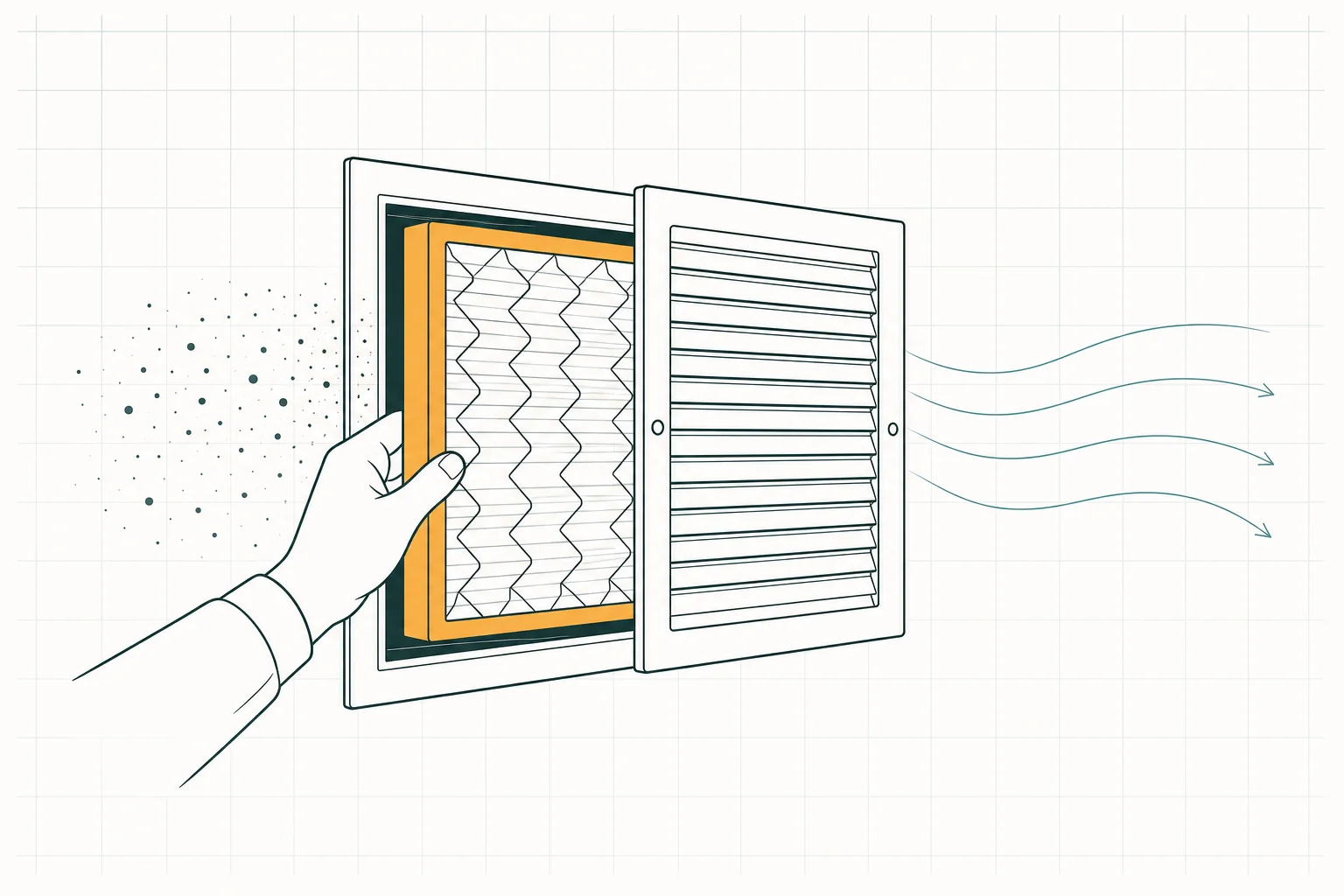
| Filter | Checks, cleans, or replaces the filter; a dirty filter raises energy costs and can damage equipment [3] |
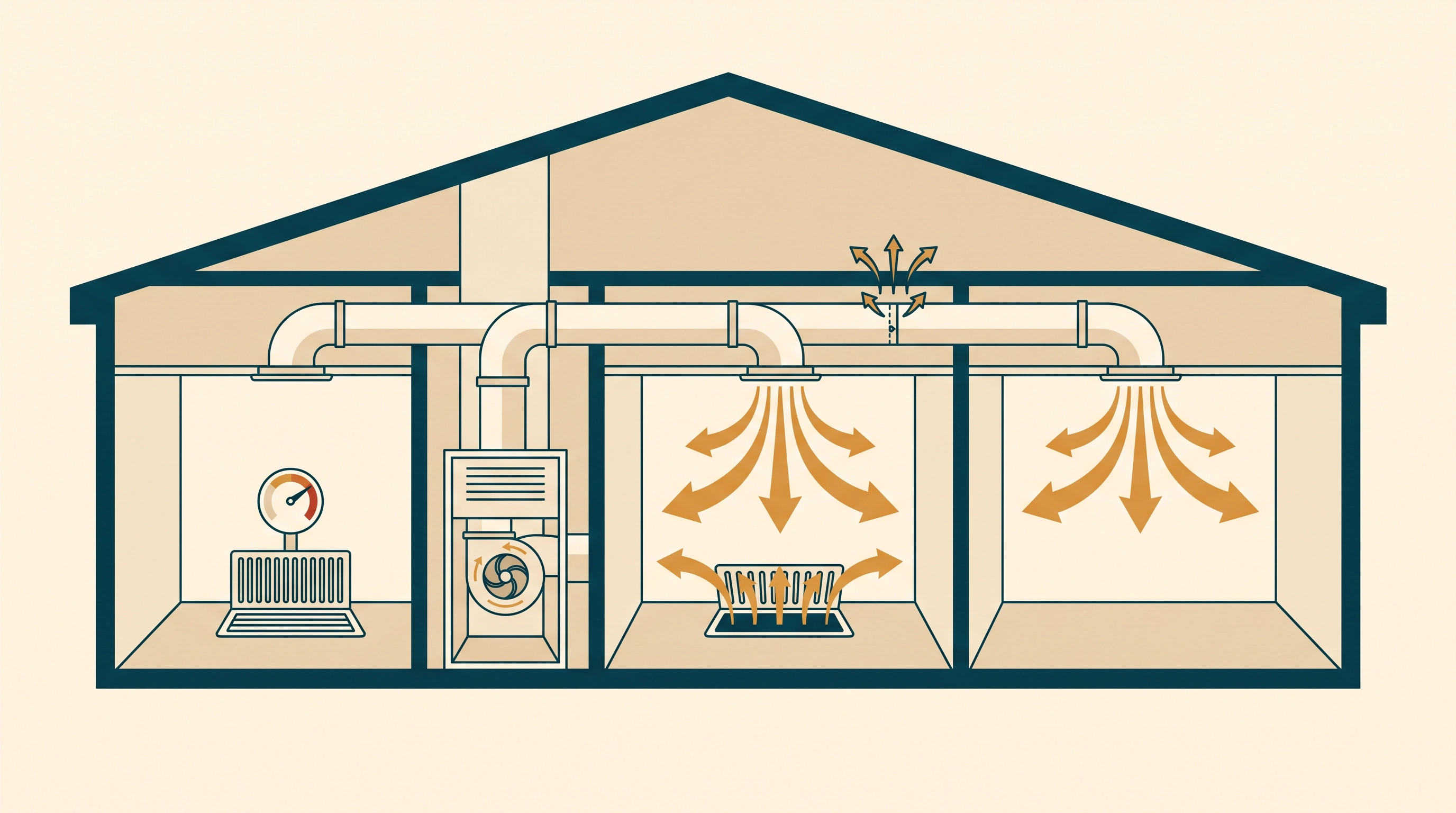
| Blower | Inspects the blower motor and fan, cleans if needed, checks airflow |
| Flame sensor | Cleans or tests the flame sensor, which keeps the burner running safely |
| Venting | Checks the flue/exhaust pipe for blockages or leaks, so combustion gases leave the house properly [3] |
| Safety controls | Confirms limit switches, thermostats, and ignition systems start and shut down correctly [3] |
Ask for the checklist when you call. Most reputable companies will tell you exactly what their tune-up includes before you book, and honest ones will show you what they found when they’re done [1].
Gas vs. Oil vs. Electric: Cost Differences
What you pay depends partly on what kind of furnace you have. Gas and oil units burn fuel, so they need combustion checks; electric units are simpler, with no burner, no flame, no venting to check — so their tune-ups tend to be cheaper [1][2].
| Furnace type | Typical tune-up cost | Why the difference |
|---|---|---|
| Gas | $80 - $170 | More moving parts: burner, ignitor, gas valve, heat exchanger [1][2] |
| Oil | $100 - $200 | Also needs fuel-line, tank, and nozzle checks; oil soot cleanup takes time [1][2] |
| Electric | $70 - $130 | Fewer combustion parts; tech mainly checks heating elements, blower, and controls [1][2] |
Understanding your equipment starts with knowing how efficient it is — see our AFUE vs SEER vs HSPF vs COP guide. The single biggest reason the ranges vary, though, is where you live. Labor rates differ by region, and HVAC companies charge $75-$125 an hour labor on average [1]. Rural areas often run cheaper than big metro zones [2].
Maintenance vs. Repair: Knowing the Difference
The tune-up price covers the check and the routine cleaning — not replacement parts. If your technician finds something broken, that’s a repair, booked separately, and repairs typically cost $100 to $600 depending on the part [1].
That distinction matters because it changes what you’re agreeing to. A tune-up at $150 should not quietly become a $450 repair bill without you approving the work first. A fair process: the tech finishes the inspection, shows you what’s wrong, gives you a repair estimate, and waits for your yes. If a company won’t do that, find another one.
A tune-up is also not a replacement recommendation. Some companies use an annual visit to pitch a whole new furnace. Unless your unit is very old, incredibly inefficient, or failing safety tests, a $150 tune-up should keep it going rather than pushing you into a $5,000+ replacement [1].
Is a Maintenance Plan Worth It?
Many HVAC companies sell annual maintenance plans for roughly $150 to $500 a year, which works out to around $10-$30 a month [1]. In exchange, you typically get the tune-up, the inspection, a filter replacement, and sometimes priority scheduling or a small discount on repairs [2].
Are they worth it? It depends:
- Worth it if your system is older or you know you’ll skip maintenance otherwise. A plan forces you to do the once-a-year visit, and one caught problem usually pays for years of plans.
- Worth it if a single tune-up costs $150+ in your area anyway. If the a-la-carte tune-up costs $150-$200, a plan at $150-$200 a year doesn’t cost more, and it usually bundles extras like the filter.
- Skippable on a new furnace with a long warranty. Many new furnaces come with 10-year parts warranties that don’t require annual service, though a warranty does not cover every problem.
- Read the fine print first. Some plans cover only one visit a year, while others promise two (often furnace in fall, AC in spring). Some include parts, some just a discount rather than full coverage [2].
And never sign up for a ten-year contract you can’t cancel. A monthly $10-$30 charge adds up fast if you never use it [1].
One Caution: Watch for the Upsell
The most common furnace scam is the heat exchanger crack claim: the tech points at a hairline mark, declares the exchanger cracked, and quotes you several thousand dollars to replace the whole furnace, because a cracked exchanger can leak carbon monoxide.
Legitimately, cracked heat exchangers are a serious safety problem — ENERGY STAR warns that a cracked heat exchanger or dirty burner causes improper burner operation, which can create carbon monoxide hazards [3]. But that’s exactly why you should ask to see it yourself. A real crack is usually visible, and a reputable tech will show you with a camera or flashlight. Before approving expensive work:
- Ask the tech to show you the crack — an honest pro can point exactly at it.
- If they can’t or won’t, get a second opinion before spending thousands.
- Ask whether they did a carbon monoxide test around the unit; that result matters more than a blurry photo.
Same logic applies to any big-ticket claim during a routine visit: filters, duct cleaning, and “urgent” part replacements can wait for a second quote. Walk out of any company that pressures you to decide that day [1].
When to Schedule — and a Few Ways to Save
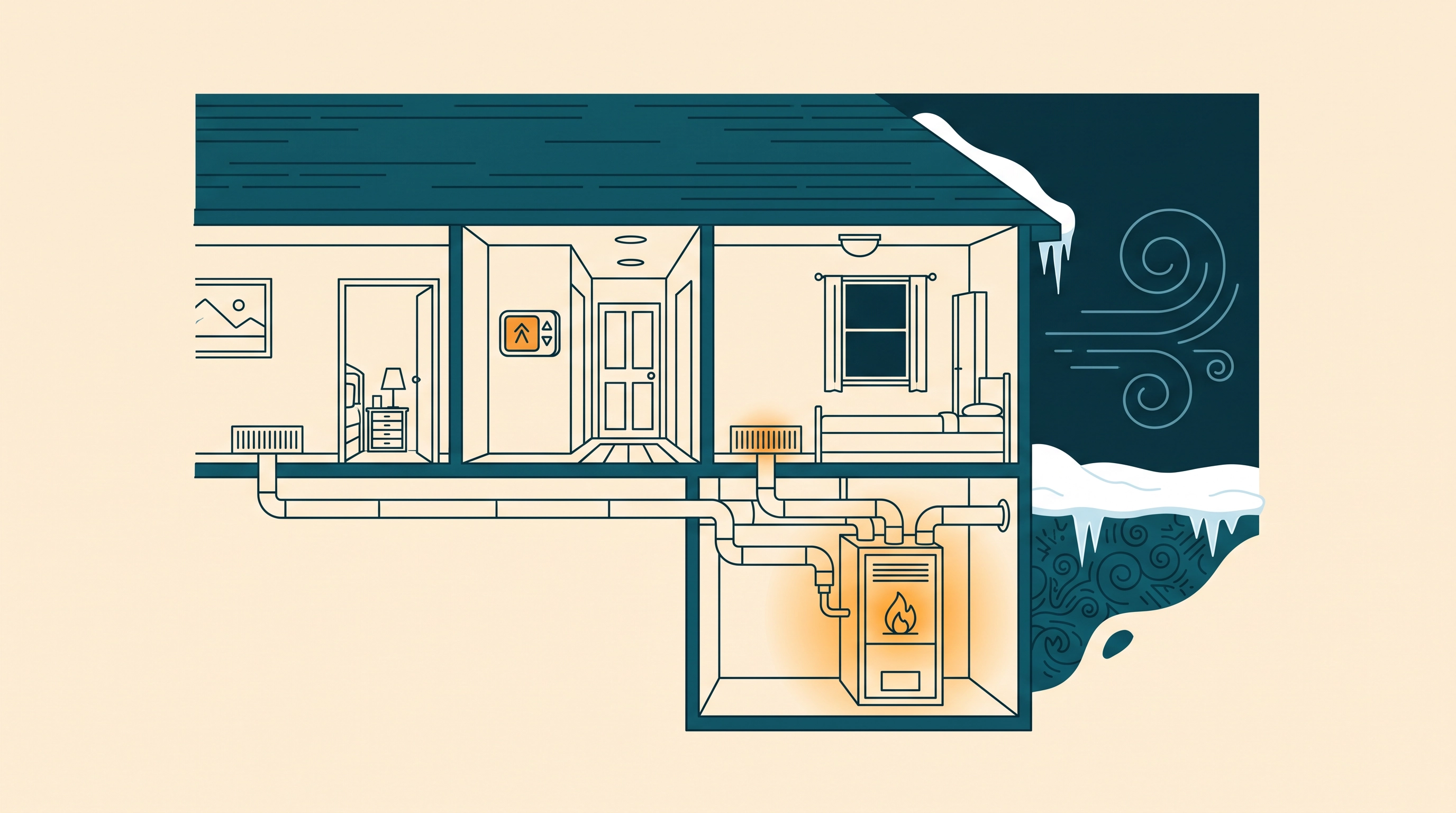
Schedule your furnace tune-up in the fall, before heating season starts — ideally September or October. ENERGY STAR specifically recommends having a contractor do annual pre-season check-ups, because contractors book up once cold weather hits [3]. Calling in August or early September gets you the best timeslots and usually the same price.
Ways to keep costs sane:
- Replace your filter yourself between visits. A basic filter costs $10-$30, and a dirty filter raises energy costs and can damage equipment — so this one task does a lot of work for you [1][3].
- Bundle with your AC check. If you have central air, many companies discount a combined heating-and-cooling plan versus two separate annual visits [2].
- Ask for the price on the phone. If they can’t give you a range over the phone, they’re likely to upsell you in person [1].
If the tune-up finds nothing wrong, consider it money well spent: you now know your furnace will likely start all winter. If it finds something, you found it in September instead of January, when emergency repair rates apply [1].
Even with an efficient system working perfectly, the context helps: the average U.S. home uses about 899 kWh of electricity a month [4], and U.S. residential electricity averaged about 18.34 cents per kWh as of mid-2026 [5] — so heat is one of the biggest levers on your bill, which makes a cheap yearly check a reasonable insurance policy. Natural gas prices have also stayed relatively low through 2026, with wholesale spot prices around $1.86 per million Btu near mid-2026 [6] — but a furnace that runs inefficiently because it’s never been serviced burns more of whatever fuel you use, whatever the price.
Related Reading
- AFUE vs SEER vs HSPF vs COP
- Why Is My Furnace Blowing Cold Air?
- Heat Pump vs Gas Furnace: Which Is Cheaper to Run?
- Heating & Cooling Basics
Sources
- Bob Vila — Furnace Tune-Up Cost(retrieved 2026-08-30)
- HomeGuide — Furnace Inspection Cost(retrieved 2026-08-30)
- ENERGY STAR — Maintenance Checklist(retrieved 2026-08-30)
- EIA — How is electricity used in U.S. homes?(retrieved 2026-08-30)
- EIA — Electric Power Monthly, Table 5.6.A: Retail prices of electricity sold by major U.S. electric utilities to residential consumers(retrieved 2026-08-30)
- EIA — Natural Gas Weekly Update(retrieved 2026-08-30)