Quick Answer
A dusty, burnt-dust smell in the first minutes after the season’s first furnace run is normal: it’s months of settled dust burning off the heat exchanger and the supply ducts, and it should fade within 20-30 minutes and not return after the second or third run. Four versions of the smell are NOT normal and each has a different urgency: an electrical or hot-metal smell means a component is overheating, a burning-plastic smell means wiring or a foreign object in the ducts, a burning-oil smell on an oil furnace means a combustion problem, and a rotten-eggs smell means possible raw gas — leave the house and call your gas utility’s emergency line for that one, before anything else on this page.
The Normal One: Burnt Dust on the First Run
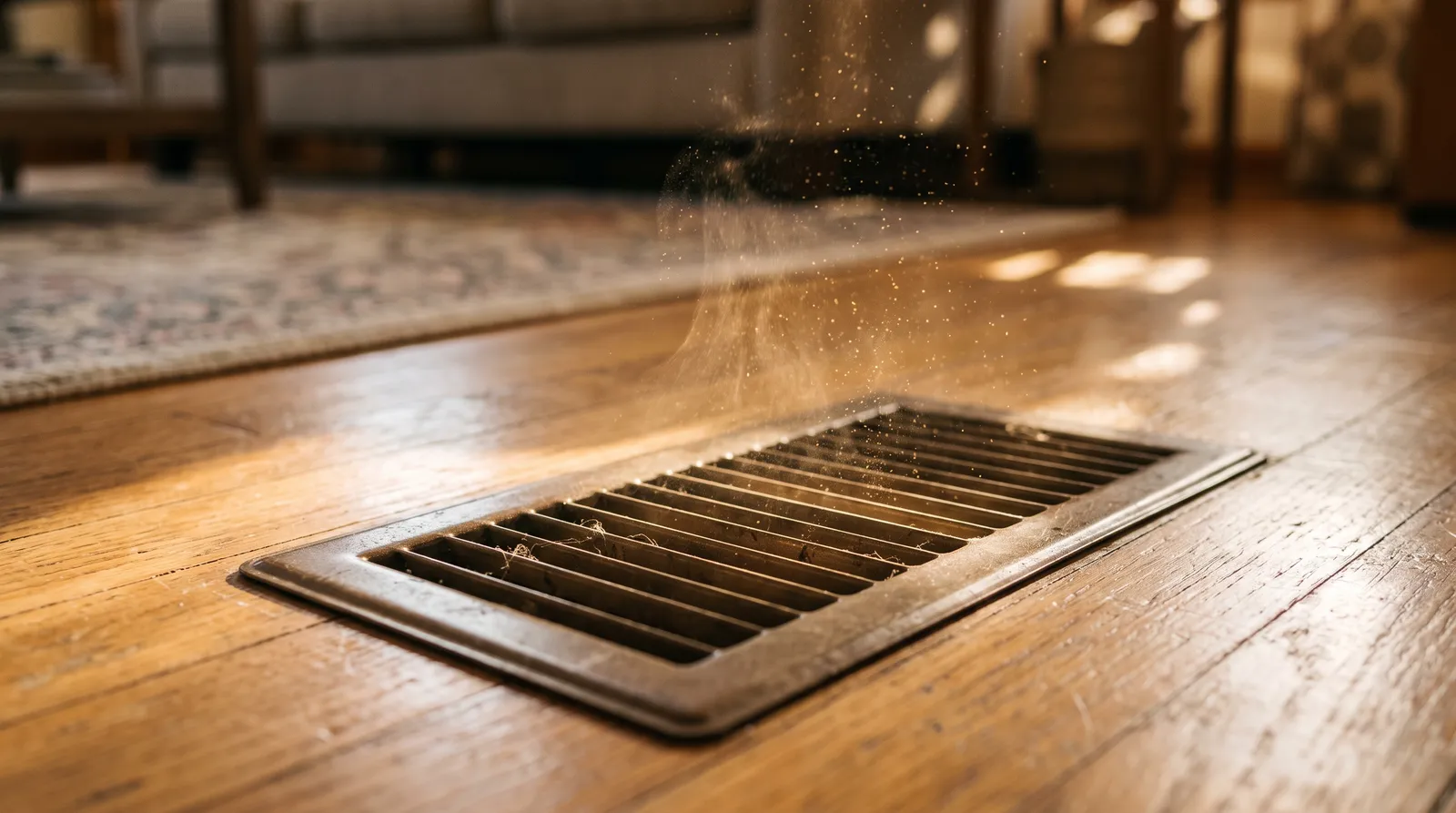
After four to seven months of disuse, a thin film of dust settles on everything the air passes over: the heat exchanger, the blower wheel, the supply plenum, the floor registers. When the burner lights for the first time, that organic film cooks off — the smell is exactly what it is: dust burning. Heating professionals see it at virtually every fall tune-up call that comes before the homeowner has run the system.
What the normal version looks like:
- Timing: appears within the first minute or two of the first few runs of the season, strongest on run one.
- Character: dusty, musty-burnt — compared to burnt toast, a hair dryer, or an old space heater. Not sharp, not chemical, not sweet.
- Duration: fades within roughly 20-30 minutes of airflow and is essentially gone by the second or third cycle.
- Pattern: it does not come back mid-winter. Returning dust-smell in February means something else — usually a filter so loaded it’s shedding, or a blower drawing from a dirty return path.
If it’s mild, dusty, and fading — open a window, let it run, done. If you want next October to start clean, the two levers are a fresh filter before the season (the best MERV 11 furnace filters page covers sizing) and a fall furnace tune-up that includes a heat-exchanger and blower cleaning.
The Four Smells That Are Not Dust
1. Electrical / hot metal (sharp, acrid, like an overheated motor)
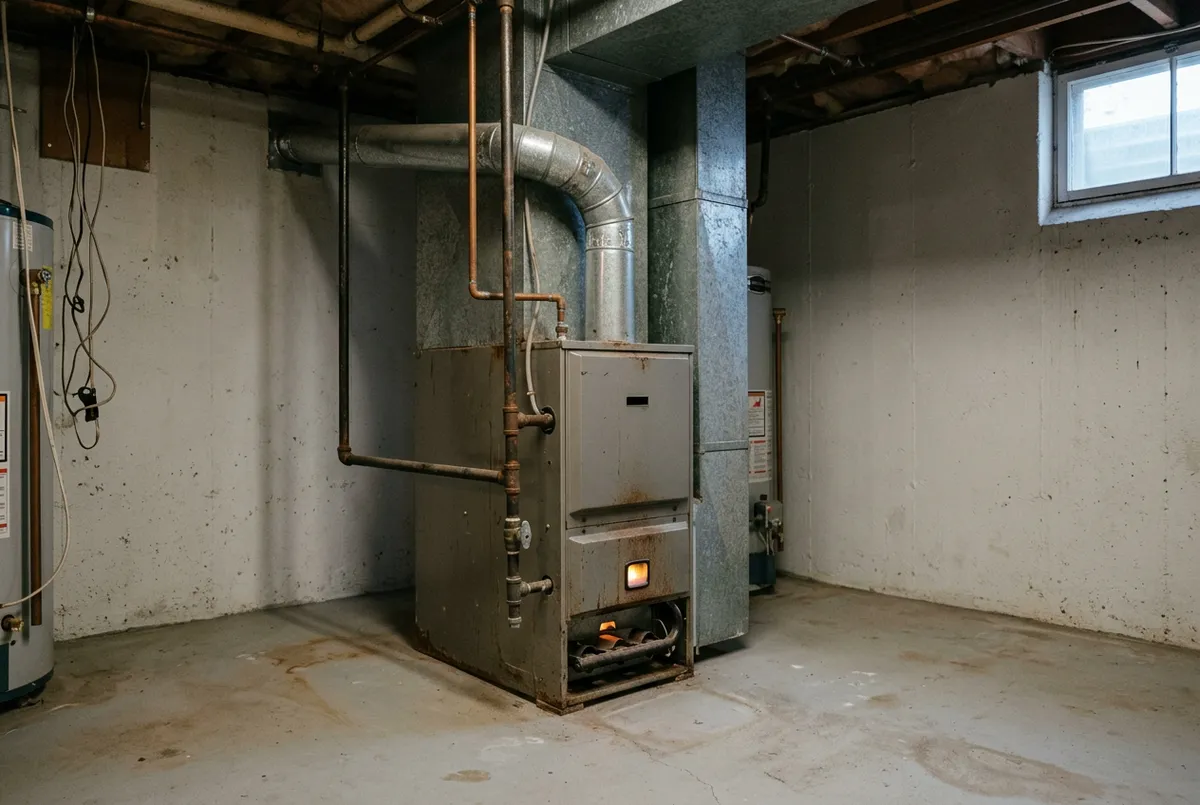
This is the smell of insulation or varnish cooking on a winding — classically the blower motor working against a clogged filter or a failing bearing. It can also be a cracked heat-exchanger area running hot. The physics is the same one our heating bill diagnostic covers: a loaded filter chokes airflow, heat builds in places designed to shed it, and components run outside their temperature design. Action: set the thermostat to OFF, check the filter — if it’s gray and packed, that’s your likely cause — and if the smell persists with a clean filter, call for service before running it again. Motors that smell like this while failing also draw more power; catching it early is a repair, catching it late is a motor plus a very cold night.
2. Burning plastic or rubber (sweet-sharp, unmistakable)
Three common sources, in order of frequency: a plastic item that fell into or was left on a floor register (a pen, a toy, a bottle cap — melts onto the heat exchanger or in the duct), wire insulation on a failing connection at the furnace control board, or a failing blower capacitor. Plastic on a heat exchanger usually announces itself dramatically and then smells progressively less; wiring smells persist and worsen. Action: turn the system off, inspect every floor register you can reach, and if nothing turns up, treat it as electrical and get it inspected. Persistent plastic smell + a breaker that trips is an immediate call.
3. Burning oil (oily, heavy, sooty — oil furnaces only)
Oil-fired furnaces have their own failure family: a cracked or misadjusted nozzle, a plugged nozzle spraying a coarse pattern, or a puffback (a small unburned-oil ignition event — sometimes with a distinct thump or soot near the burner). Any of these wants a burner technician, not a filter change — oil burners are tuned with instruments. If you see soot around the burner cabinet or smell oil strongly near the unit, shut it down at the service switch and call. (Oil-heat homes: this winter’s fuel costs are a bigger story than the smell — the winter heating forecast covers why oil bills are up sharply this year.)
4. Rotten eggs / sulfur (gas utility emergency)
Natural gas is odorless; the sulfur smell is the odorant utilities add so leaks are detectable. It is not subtle and it is not a furnace-maintenance topic. If you smell rotten eggs anywhere near the furnace or a gas appliance: don’t operate switches, don’t run the furnace, leave the house, and call your gas utility’s emergency line or 911 from outside. This is the one item on this page where the correct action is scripted and non-negotiable.
The Filter Connection (Why This Smell and Your Bill Are the Same Fix)
The dirty filter is the thread that runs through most non-dust versions of this smell: it’s the #1 cause of blower strain, the #1 cause of limit-switch cycling (covered in why your furnace keeps turning on and off), and the cheapest preventive fix in residential HVAC. A fresh pleated filter before each heating season costs about ten dollars and prevents the overheated-motor version of this article entirely. For most forced-air homes the site’s default is a pleated MERV 11; if your blower is older or marginal, check the what MERV rating do I need explainer first — higher capture means more resistance, and resistance is what cooks motors.
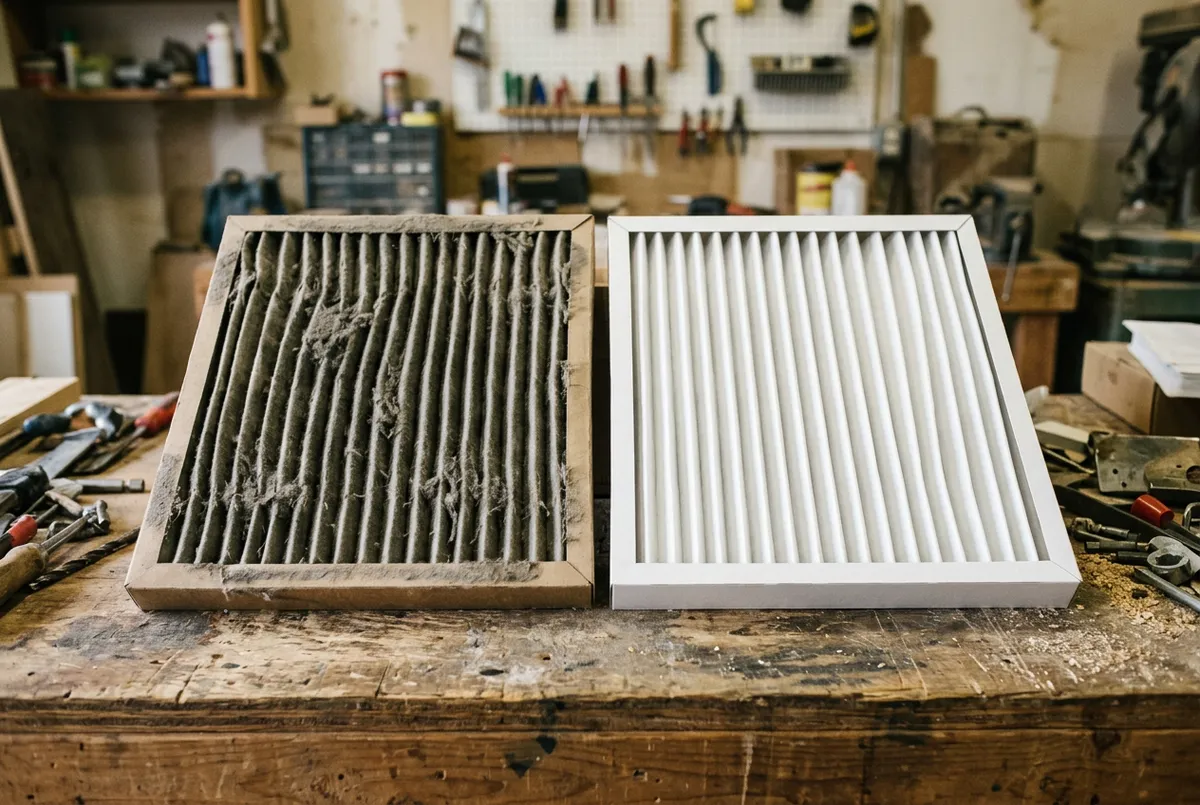
For most homes the seasonal swap looks like the Aerostar MERV 13 six-pack on Amazon or the MERV 11 equivalent, sized to your slot — buy the size printed on the old filter’s frame, not the nominal size on the shelf tag.
A Five-Minute First-Run Ritual for October
- Replace the filter before the first cold night, not after.
- Clear every floor register — rugs, furniture, and anything small enough to fall in.
- Run the heat to a modest setpoint (68°F) on a mild day while you’re home, windows openable.
- Watch the first cycle start-to-finish. Dust smell that fades: normal. Anything sharp, plastic, oily, or sulfur: the sections above.
- Note the runtime. A furnace that runs ~10-15 minutes per cycle at design conditions is healthy; one that runs 2 minutes and quits is short cycling and wants attention before January.
Where the Smell Is Coming From Matters (Vent vs. Utility Room)
The same “burning” descriptor covers two different diagnostic paths, and localizing it takes sixty seconds:
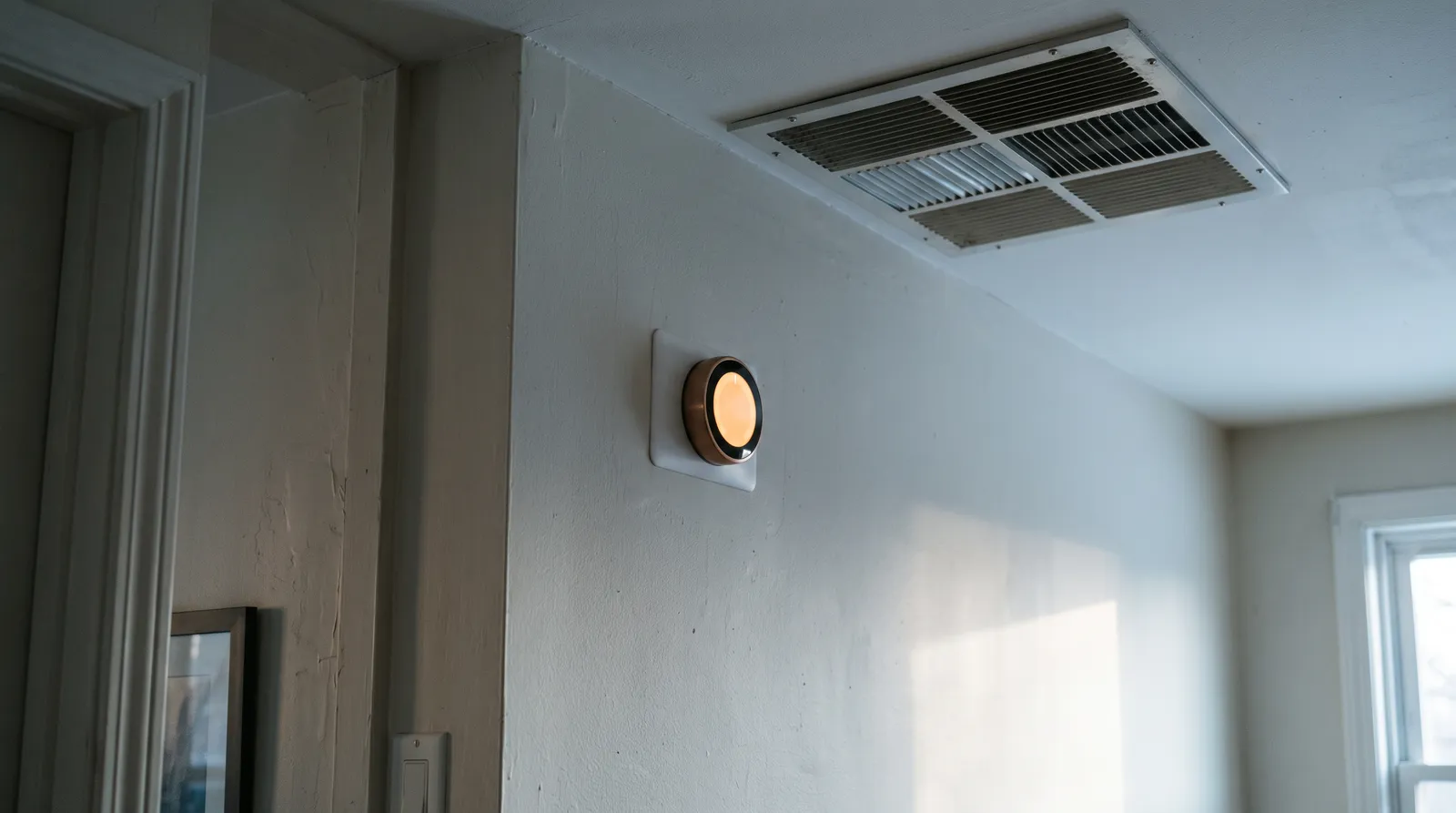
- Strongest at the registers, faint at the furnace: almost always the duct-system version — dust cooking off the exchanger and supply ducts, the normal pattern above. The smell travels with the delivered air, so the rooms announce it before the utility closet does.
- Strongest at the furnace itself, weak or absent at distant registers: points at components — blower motor windings, wiring connections, the control board, or (on oil units) the burner assembly. This is the version where “turn it off and look” earns its keep, because component smells don’t ride the airflow.
- One room only: the supply register in that room has something in or near it — a dropped pen, a hair tie, a plastic wrapper drawn against the grille by return airflow. Registry-level blockages also starve that room of heat, so a room that’s both cold and smelly has one suspect.
The distinction changes your first move: register-side smells get the window-open-and-monitor treatment; furnace-side smells get the switch-off-and-inspect treatment. When in doubt, treat it as furnace-side.
The Carbon-Monoxide Question (Because Someone Will Ask)
Burning smells make people think of CO, so the honest clarification matters: carbon monoxide is odorless. A smell is never your CO warning — a detector is. That said, two of the problems on this page (an overheating heat exchanger, an oil-furnace combustion fault) sit adjacent to the conditions that CAN produce CO, which is why the scripted response to persistent component smells is “off and inspected,” and why every fuel-burning home should carry working CO alarms regardless of how the furnace smells this week. Detectors alert; they don’t prevent — but a $25 alarm converts an invisible failure into a 2 a.m. warning instead of a statistic. If your home has fuel-burning appliances and no CO alarm, that purchase outranks every product on this page.
What a Fall Tune-Up Actually Covers (So You Know What You’re Buying)
The furnace tune-up is the preventive version of this entire article. A competent fall service call includes: combustion analysis (a calibrated instrument reading the burner’s efficiency and byproducts — not just “flames look blue”), heat-exchanger inspection, blower and motor check, flame-sensor cleaning (the #1 short-cycle cause in our short-cycling guide), safety-switch testing, and the venting and condensate path on high-efficiency units. Done in October, it converts this article’s November surprises into line items on a work order — and it’s the single best predictor of whether the first cold night smells like burnt dust or like an emergency call.
A Three-Smell Triage Table
| Smell | First response | If it persists |
|---|---|---|
| Dusty / burnt toast, first runs, fading | Window open, let it run, note it clears by cycle 3 | Returning mid-winter: check filter, check returns |
| Electrical / hot metal | Thermostat OFF, inspect filter | Service call before next run |
| Burning plastic | OFF, check registers for foreign objects | Treat as electrical: inspection |
| Oily / sooty (oil furnace) | OFF at service switch | Burner technician — instrument tuning |
| Rotten eggs | Leave, call gas utility emergency line | Nothing on this page outranks this |
Frequently Asked Questions
Is it normal for the furnace to smell like burning the first time you turn it on?
How long should the burning dust smell last?
Can a dirty filter cause a burning smell?
What does a furnace gas leak smell like?
Should I open windows when the furnace smells like burning?
Related: why your furnace keeps turning on and off, why your furnace is running constantly, and why your heating bill is so high.
Sources
- U.S. Fire Administration — Home Heating Fire Safety — heating-equipment maintenance and safety guidance.
- NFPA — Home Heating Safety — heating fire causes and prevention.
- U.S. DOE Energy Saver — Electric Resistance Heating (archived) — airflow, filter, and heat-exchanger fundamentals.
- Amazon — Aerostar pleated furnace filter listings — filter sizing/capture context (verified Oct 2026).