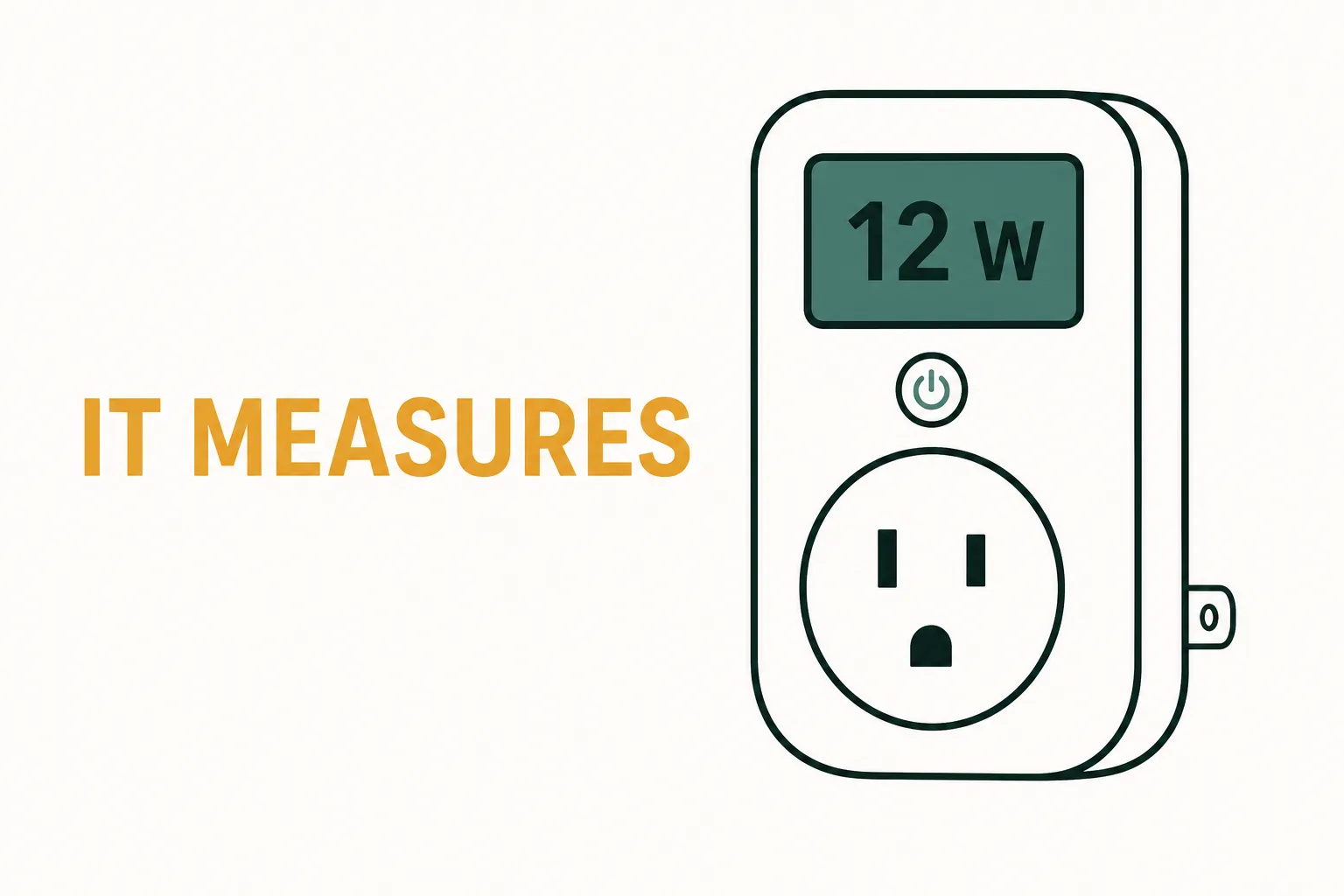
Quick Answer
The Emporia Vue 3 and the Sense monitor answer the same question — “where does my electricity go?” — with opposite methods. The Vue 3 clamps onto individual circuits in your panel and reports each one by name. Sense clamps only onto your mains and uses machine learning to infer which devices are running from the whole-home current signature. One thing has changed since this comparison first ran: Sense stopped selling its consumer monitor — hardware sales ended December 31, 2025 — though the app and existing monitors remain supported.[7] For a new buyer in 2026, that makes the Vue 3 the default whole-home choice unless you find remaining Sense stock secondhand.
Both are CT-clamp whole-home monitors: they measure current with clamp-on sensors around conductors in your electrical panel, and neither is a plug-in gadget. The difference is what happens after the clamps. The Vue 3 meters per-circuit directly — up to 16 clamp channels, so what you clamp is what you see. Sense meters only the mains and identifies devices over weeks, with no guarantee it will ever name every load.[4][5][7]
If you want named circuits on day one, the Vue 3 is the straightforward choice — and, post-Sense, the straightforward only mainstream choice at retail. If you already own a Sense, keep reading: your device is still supported, and the comparison below still explains what it does and where it falls short.
What Each Device Actually Does
The Vue 3 is a direct meter; Sense is an inference engine. This is the whole comparison in one sentence.
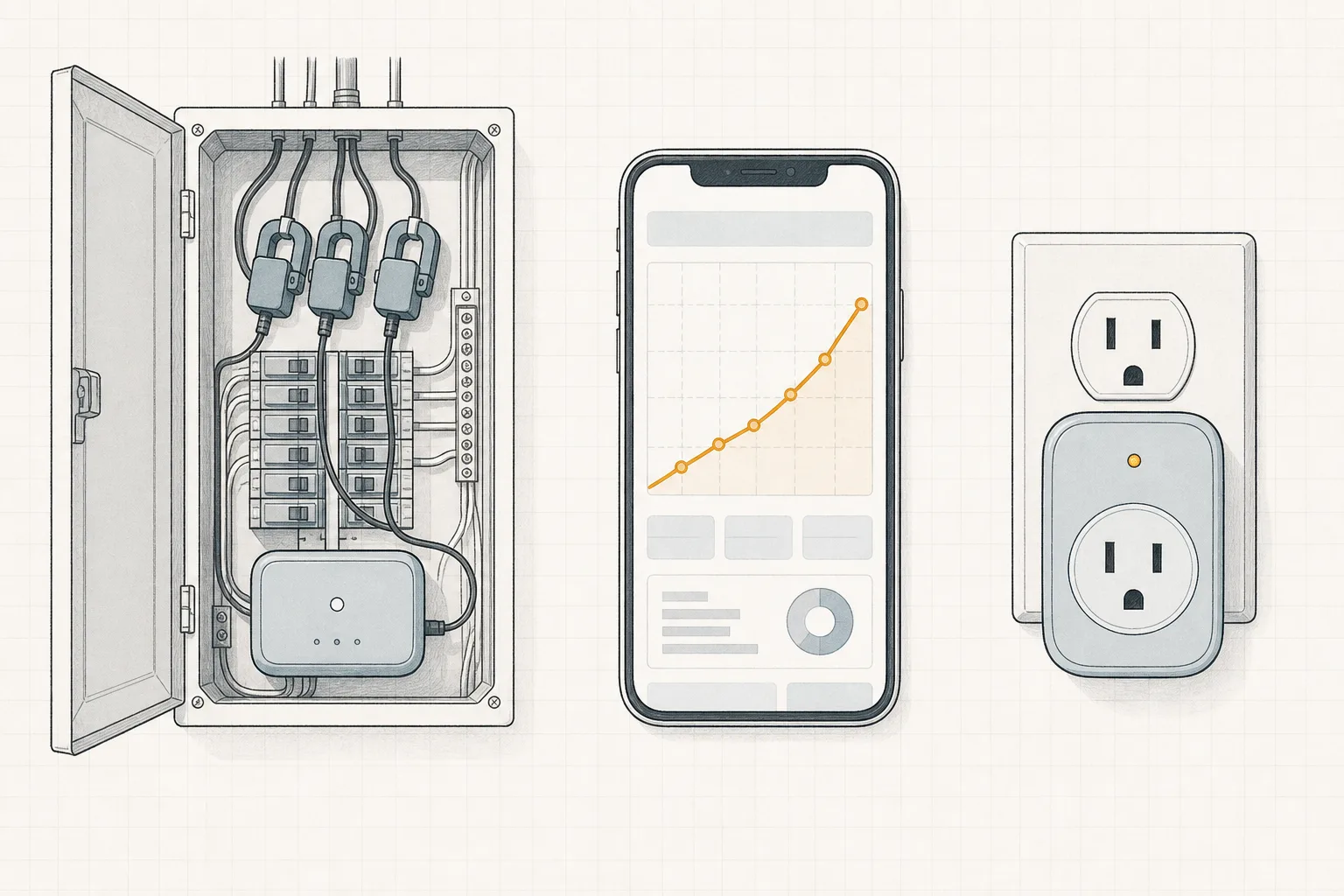
The Emporia Vue 3 ships with two large clamps for your main service legs plus eight 50A clamps for individual circuits, and it supports up to 16 circuit sensors total. Each clamped circuit reports its own real-time watts, kilowatt-hours, and history in the app. The device is UL certified and supports solar and net-metering configurations.[4][6]
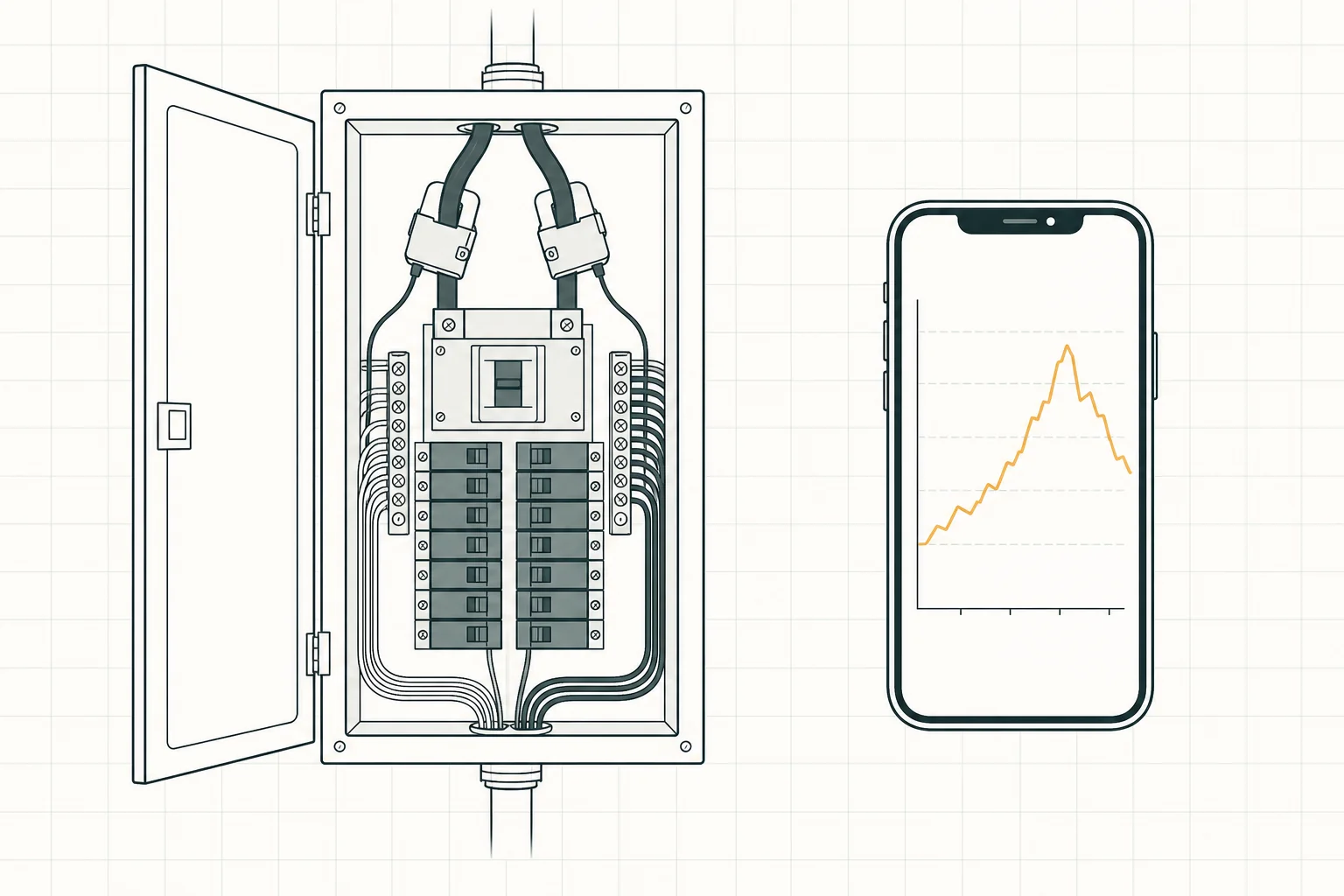
Sense ships with two clamps for the mains only. Its software samples the electrical current more than a million times per second and looks for the unique electrical signature of each appliance — the pattern a motor, a heater, or an electronic power supply draws when it turns on. Over time it identifies common devices that cycle on and off frequently, and it gets smarter the longer it watches.[5]
The practical difference: the Vue 3’s data is structural — it reflects the physical circuits you chose to clamp. Sense’s data is probabilistic — it reflects what the software believes it has recognized.
Side-by-Side Comparison
| Emporia Vue 3 | Sense | |
|---|---|---|
| Install | Panel work: clamps on mains + individual breakers | Panel work: clamps on mains only |
| Channels | Up to 16 circuit sensors + mains | Mains only (2 clamps) |
| Device-level data | Direct: each clamped circuit is named and metered | Inferred: machine learning identifies devices from whole-home signature |
| App reports | Per-circuit real-time watts, kWh, history | Whole-home real-time view; device detection builds over time |
| Solar | Yes — solar and net metering supported[4] | Yes — solar monitoring offered[5] |
| Price band | $100–180 on Amazon[6] | No longer sold new — hardware sales ended Dec 31, 2025[7] |
| Where to buy | Amazon (and Emporia’s own store) | Not sold new; existing owners keep app + firmware support[7] |
The Vue 3 hub plus 16 branch CT sensors and mains clamps — real-time, per-circuit use in the app. UL certified and solar-ready. Expect an electrician or experienced-DIY install inside the panel. Monitor-only and 8-sensor variants exist at lower prices.
Add to cart on Amazon Price & availability shown on Amazon.com — we may earn a commission.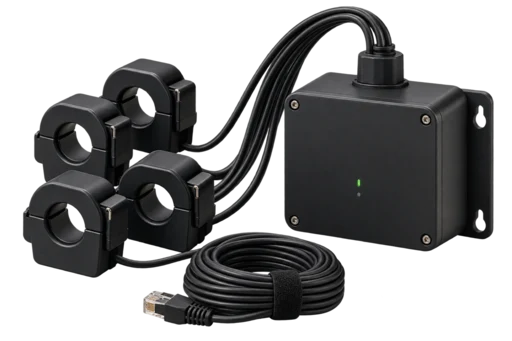
Install: Both Need Panel Work
Neither monitor is a renter’s device, and both should be installed with the panel treated as live until proven otherwise. The clamps attach around conductors inside your electrical panel — behind the main breaker. If you have never worked in a panel, an electrician is the recommended default for either unit. The labor is cheap against the mistake.
The Vue 3 hub plus 16 branch CT sensors and mains clamps — real-time, per-circuit use in the app. UL certified and solar-ready. Expect an electrician or experienced-DIY install inside the panel. Monitor-only and 8-sensor variants exist at lower prices.
Check price on Amazon As an Amazon Associate we earn from qualifying purchases. Price & availability shown on Amazon.com.The Vue 3’s install is the heavier one: you need physical space in the panel for each clamp you want to meter, and you have to route the sensor wires back to the monitor. If your panel is crowded, you may not be able to clamp every circuit you care about — that is a real constraint, not a marketing footnote.
Sense’s install is lighter: two clamps on the mains, no per-circuit wiring. That is the trade — less install work, but the device-level detail is software’s job, not yours.
Renters are excluded from both, because both require panel work. If you rent, the honest path is a plug-in meter or an energy-monitoring smart plug — see the renter’s section below.
The Honest Failure Modes
Every monitor has a failure mode; the two devices fail differently.
The Vue 3 fails on coverage. What you clamp is what you see. If you skip a circuit because the panel is full, that load is invisible. And the monitor reads circuits, not appliances: a water heater’s recovery shows up as a long bar on its breaker line, not as a labeled “water heater” event. You get the circuit name; you still have to know what is on that circuit.
Sense fails on certainty. Detection is probabilistic — the software may identify your refrigerator in a week and never identify your well pump. Some loads are simply hard to recognize: variable-speed devices, devices that run continuously, or anything with a signature that blends into the background. Sense’s own material says it identifies common devices that cycle on and off frequently, and that it gets smarter over time — which is an honest way of saying it may never name every load.[5]
Neither device lowers a bill by itself. A monitor finds the changes; behavior saves. The mechanism is the same for both: you see a circuit or a device that runs when it should not, and you change the schedule, the setpoint, or the habit. If nobody will act on the data, the right amount to spend is zero — the same logic this site applies in do home energy monitors save money.
Which One Fits Your Question
Choose by the question you are actually asking.
Ask “which circuit is eating my bill?” — the Vue 3. You clamp the circuits you suspect, and the answer is on the screen immediately. This is the strongest case for the Vue 3: direct, named, per-circuit data with no learning period.
Ask “what is my whole home doing, and can software name my devices for me?” — that was the Sense pitch, and it is why owners liked it. With new hardware sales ended, the successor to that pitch is utility-provided data: Sense is embedding its detection in utility smart meters, and your utility’s own app may eventually offer the same inference for free. Today, the buyable version of “software figures out my devices” is gone; the Vue 3’s named circuits are the reliable route.[7]
Ask “why is my bill so high at all?” — start with why your electric bill is so high before buying any hardware. A monitor names the load; it does not explain the rate, the weather, or the season.
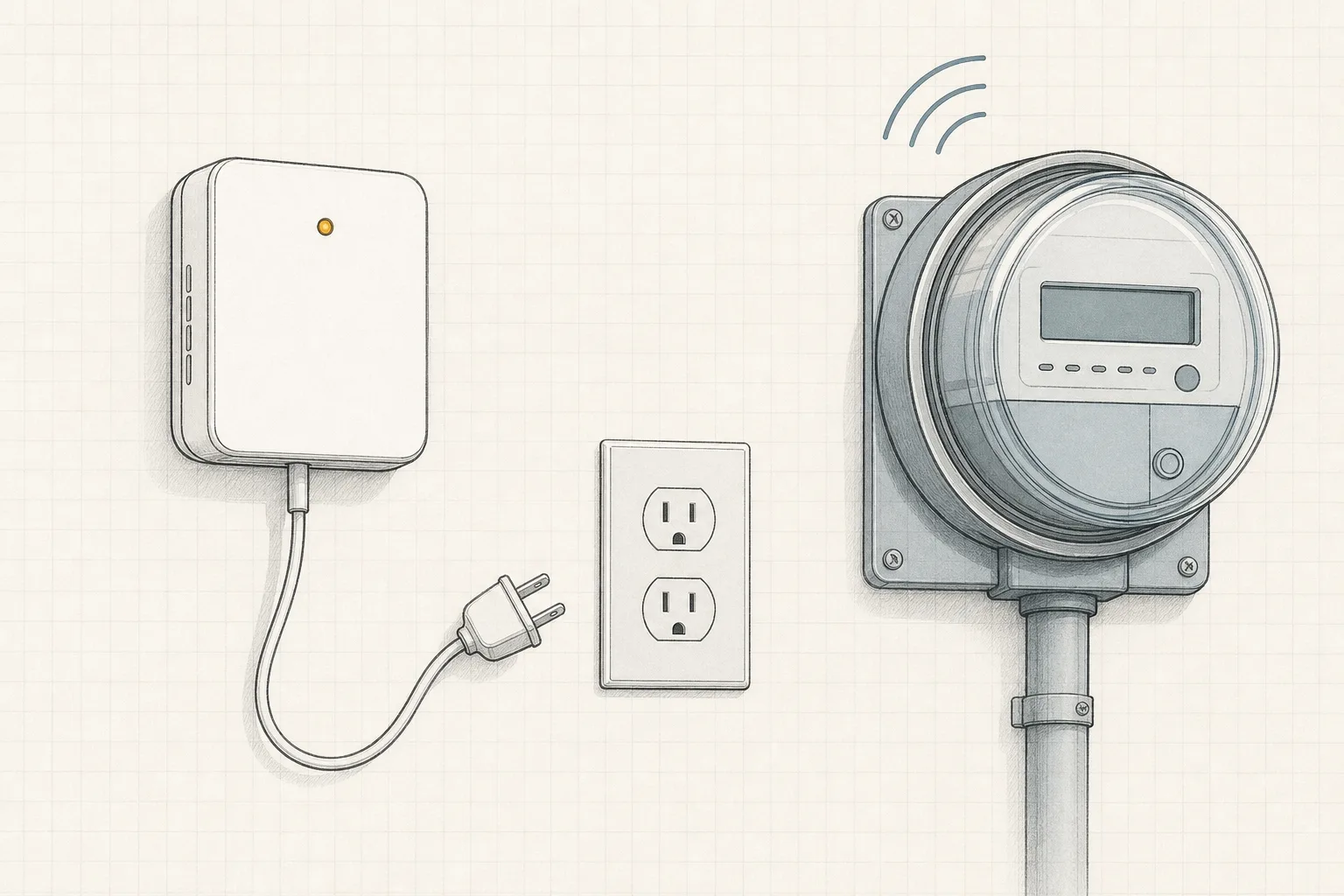
Ask “how does my smart meter’s data compare?” — your utility’s app already shows whole-house usage for free. The monitor’s value is the split: how smart meters work explains what the meter itself can and cannot tell you.
And if you are new to kilowatt-hours entirely, understanding kWh usage is the better first read. Context helps: the average U.S. household uses about 899 kWh/month, and the average residential price was about 18.34¢/kWh in June 2026 — the arithmetic behind a typical bill is worth doing before you spend on hardware.[2][3]
The Renter’s Path
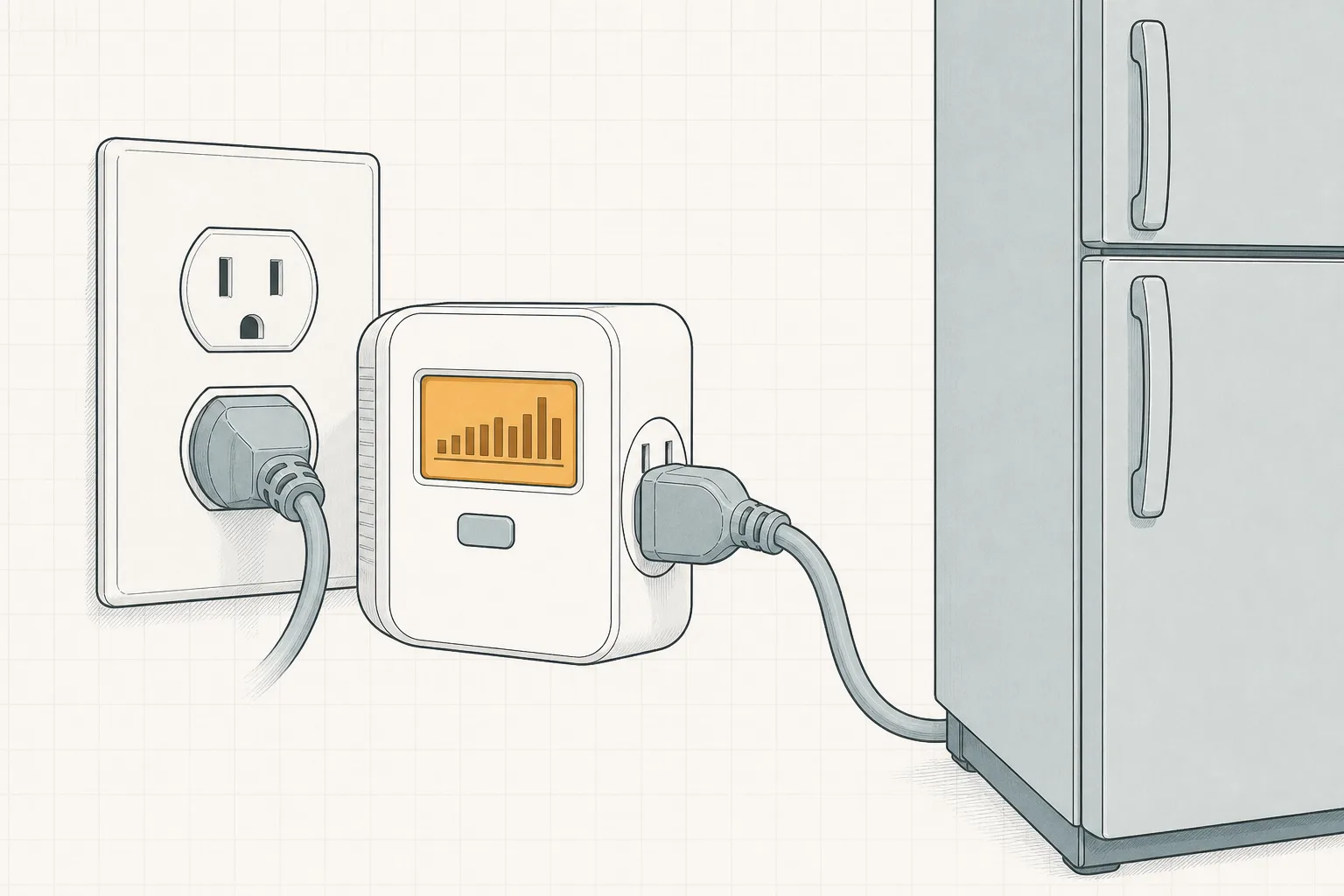
If you rent, skip both monitors and meter one appliance at a time. Plug-in meters and energy-monitoring smart plugs sit between an appliance and a standard outlet — no panel, no electrician, no landlord permission. They answer the plug-sized half of the bill: what does the spare freezer cost, what does the entertainment cluster draw overnight, which device is the overnight floor.
The broader toolbox for renters and owners alike is in gadgets that lower utility bills, which covers the plug-in and smart-plug classes in context. The rule is the same as for the big monitors: the gadget measures, the behavior saves.
Sources
- EIA Short-Term Energy Outlook — Electricity — U.S. residential electricity price forecast ~18.3 cents/kWh in 2026, up from ~17.3 in 2025. Retrieved 2026-08-31.
- EIA Electricity Monthly Update — End-Use Consumption — average residential revenue 18.34 cents/kWh in June 2026. Retrieved 2026-08-31.
- EIA FAQ — How much electricity does an American home use? — average 10,791 kWh/year, about 899 kWh/month. Retrieved 2026-08-31.
- Emporia Vue 3 product page — Emporia Energy — up to 16 circuit sensors, 8x 50A clamps included, solar and net metering. Retrieved 2026-08-31.
- Sense — Product — mains-only clamps, machine-learning device detection. Retrieved 2026-08-31.
- Emporia Vue 3 — Amazon listing — UL certified, in stock, price band $100–180. Retrieved 2026-09-06.
- Sense — Looking Ahead: The Next Chapter for Sense — “We’ll stop selling the Sense Monitor by December 31, 2025”; app, firmware, and existing-monitor support continue; detection moves into utility smart meters. Retrieved 2026-09-06.