Quick Answer
The classic moves are door-to-door agents claiming to be your utility or claiming your rate is expiring, urgent calls about a shutoff that is not real, and requests for your account number — which lets them switch your supplier without consent (slamming). Legitimate utilities do not send agents to demand payment on the spot, do not threaten same-day disconnection for immediate payment, and will not pressure you for your account number to “verify” a new plan. Hang up or close the door, then contact your utility using the number on your bill, not the number the caller gave you.
The Five Scam Patterns That Show Up at Your Door and on Your Phone
Most electric supplier scams fit into a small set of patterns that repeat across the country. Once you recognize the shape, you stop needing to judge each individual pitch — you can judge the structure instead.
| Scam pattern | What the scammer claims | What’s actually true | What you should do |
|---|---|---|---|
| Utility impostor call | “This is your electric company. Pay now or your power is shut off today.” | Real utilities won’t demand immediate payment to avoid same-day disconnection [1]. | Hang up. Call the utility using the number on your bill, not the number on your caller ID. [1] |
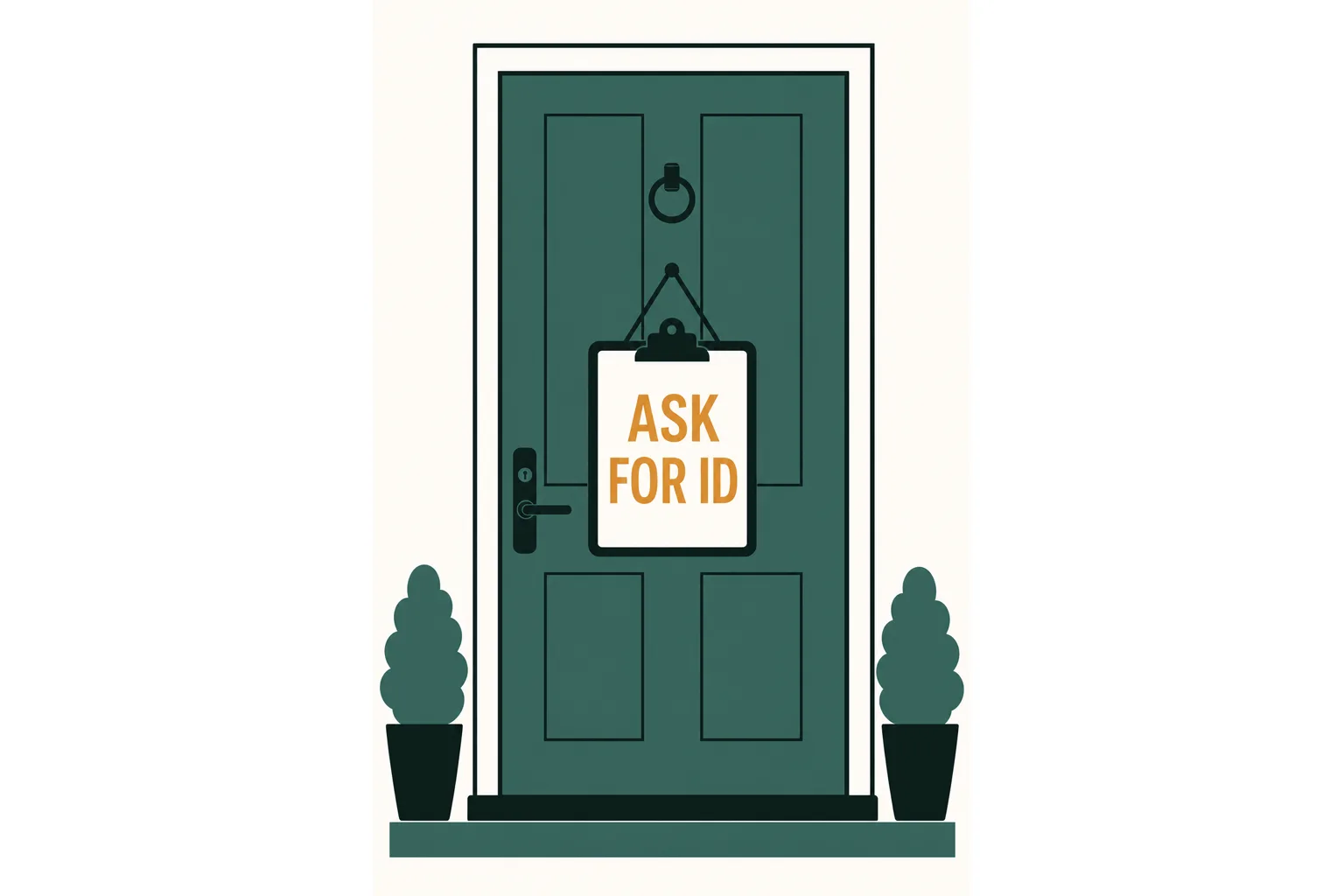
| Door-to-door “utility” agent | “I work for the power company and need to check your meter / your rate is being changed.” | Utilities rarely send unannounced door agents to demand account info; legitimate visits are scheduled [1]. | Ask for ID; don’t let them pressure their way in. Contact the utility yourself to confirm. [1] |
| Rate-expiration pitch | “Your current rate expires tonight. Sign with me now or you’ll be billed more.” | This is a sales pitch for a different supplier, not a notice from your utility. You are not under a deadline to decide. | Say no, ask for a written offer, and compare it against your current supplier rate before agreeing to anything. |
| Account “verification” request | “I just need your account number to check what plan you’re on.” | Your account number is the key that lets a supplier switch your service. Giving it out is how slamming happens. | Never share your account number with an unsolicited caller or door agent. Call your utility directly to verify. |
| Bill-pay impostor online | “Pay your utility bill through this ad / this site.” | Top search results are often paid ads, sometimes from dishonest businesses impersonating real utility companies [1]. | Scroll past the ads to find the real utility site, or type the URL directly from your paper bill. [1] |
Each of these patterns works the same way underneath: create urgency, get your account number or your money, and leave you to sort out the damage later. The FTC’s guidance is blunt about the core test: if an unexpected caller, text, email, or in-person visitor threatens to shut off your gas, electric, or water unless you pay immediately, it is a scam [1].
How Slamming Actually Works: Your Account Number Is the Key
Slamming is the unauthorized switch of your electricity supplier — the company that generates or sells you the energy — without your informed consent. It usually does not require a signature or a contract in your handwriting, and it does not require a phone call to your current utility. In most cases it just needs one piece of information: your account number.
Here is the usual sequence:
- A door-to-door agent or caller asks for your electric account number, claiming they need it to “check your current rate” or “verify your address,” often while saying your rate is expiring.
- That account number is used to submit a supplier switch request to the utility on your behalf.
- The switch request is processed, and your supplier changes — sometimes within one billing cycle — without a written agreement from you.
- Your next bill shows a new supplier line and possibly a higher rate, or you start receiving mail from a supplier you never chose.
Not every question about your account number is a scam — your real utility will occasionally ask for it when you call them for support. The difference is direction: you called them, you are on the utility’s published phone number, and you have already verified who you are talking to. An unsolicited caller or door agent who asks for your account number is the red flag. If they ask you to read the number off a bill you have in your hand, that is the moment to stop the conversation.
How to Check Whether You Were Switched
The most direct way to check for an unauthorized supplier switch is to read the supplier line on your electric bill. If your bill previously listed one supplier name and now lists a different company in the “supply” or “generation” section, your supplier changed — and unless you signed something knowingly, that change may have been a slam.
Look for three things on the bill:
- The supplier name on the supply portion of the bill — compare it to your previous bills.
- The stated rate in cents per kilowatt-hour — a sudden jump in the supply rate may signal you were moved to a more expensive plan.
- Mail from a new supplier — legitimate switches are usually accompanied by a confirmation letter; the absence of one you recall signing is a warning sign.
If you suspect a slam, call your utility directly using the number on your bill and ask: “What supplier is currently assigned to my account, and was there a recent switch request?” Keep a record of the date, time, and what they tell you. Do not call any number a door agent or caller gave you [1].
How to Lock It Down: Utility Passwords and Do-Not-Knock Lists
Once you have confirmed your supplier status, you can take steps to make future unauthorized switches much harder.
Ask your utility about a password or PIN on your account. Many utilities let you add a verbal password or account PIN that must be provided before any supplier switch, service change, or account-info request is processed. If your utility offers this, set one and never share it with unsolicited callers or door agents — the whole point is that only you know it.
Check whether your state or city has a do-not-knock registry. Some states and local governments maintain lists of homes where door-to-door solicitors — including energy suppliers — may not knock. If your area has one, add your address, and report violators to the agency that runs it. This does not stop phone calls or mail, but it removes the most common entry point for slamming.
Keep your bill and account number out of sight. Close garage doors, keep bills away from windows, and be careful who you share the number with over the phone. Your account number is the credential that makes a switch possible.
What to Do If You Were Slammed
If you discover your supplier was switched without your consent, do not ignore it. The process for disputing it usually starts with your utility, then moves to your state regulator and federal agencies.
- Call your utility on the number printed on your bill. Tell them you did not authorize a supplier change and ask what the dispute process is.
- File a complaint with your state public utility commission (PUC). State PUCs regulate energy suppliers and typically have a consumer-complaint process for unauthorized switches and deceptive marketing. Pennsylvania, for example, runs PAPowerSwitch as its official electric shopping site and directs consumers to its complaint process for supplier issues [2].
- Report the scam to the FTC at ReportFraud.ftc.gov. The FTC collects reports of utility imposter and slamming scams and uses them to pursue enforcement [1].
- Report to your state attorney general. State AGs also take utility-scam complaints and coordinate with PUC enforcement [1].
- Ask to be restored to your prior supplier. In many unauthorized-switch cases, the utility can reverse the change and restore your original supplier; confirm the restoration in writing and re-check the supplier line on the following bill.
If you paid a scammer — for example, by gift card or wire transfer — the FTC advises taking specific recovery steps quickly, because those payment methods are nearly impossible to reverse once sent [1].
Why This Happens: Deregulated Markets and the Supply/Delivery Split
Slamming is only possible in markets where you can choose your electricity supplier — that is, in states with retail electric competition. In those states, your bill is split between two pieces:
- Delivery — the wires, poles, meters, and billing infrastructure owned by the utility. You cannot shop for this; the utility provides it and the rate is regulated.
- Supply — the actual electricity itself. In deregulated states, competing suppliers can sell you this portion, and you can choose among them.
Both pieces appear on one bill from one utility, but they are separate buckets with separate prices [2]. The opportunity to choose suppliers is what attracts legitimate competition — Pennsylvania’s official electric shopping site reports that over 1.4 million residents have already switched suppliers [2]. It is also what attracts bad actors, because a supplier switch can be profitable even when it is made without consent.
If you are in a deregulated state, understand that your utility still owns the wires and still delivers your power — the supplier change only affects who sells you the energy, not whether your lights stay on. A scammer who claims your power will be shut off if you don’t switch suppliers is lying on both counts: switching suppliers does not disconnect your service, and only the utility (not a supplier) can disconnect for nonpayment. Real disconnection threats, when they happen, follow written notices and a billing history — not an on-the-spot demand [1].
Your supplier choice also interacts with your rate structure. A variable-rate supplier plan can swing with wholesale market prices, while a fixed-rate plan locks in a set price per kilowatt-hour for a term. Understanding which you are on — and what you were switched to — matters when you review a disputed bill; if a slam shows up as a charge you never agreed to, our guide to disputing a utility bill walks through the complaint path. For more on the supply/delivery split, read delivery charges vs. supply charges. If you are looking at a sudden jump in usage or price, our breakdown of why electric bills go high can help you untangle the cause. And if you are simply trying to compare offers, our fixed vs. variable rate comparison explains the trade-offs.
The Honest Bottom Line
Supplier scams are common enough that the FTC has a dedicated consumer alert, but they are also stoppable with a few habits: never pay an unsolicited caller who threatens immediate disconnection, never give your account number to a stranger, verify every contact using the number on your bill, and check the supplier line on every bill. If you are ever unsure whether a call is real, hang up and call your utility yourself — the minutes it takes are cheaper than the months it takes to reverse a slam.
The average U.S. household uses about 899 kilowatt-hours per month [3], and the average residential electricity price is around 18 cents per kilowatt-hour [4], so a typical monthly electric bill is roughly $160 — and a bad supplier switch can push that higher. Natural gas prices have recently ranged from about $1.35 to $1.92 per therm [5], which is a reminder that energy prices can move — but a legitimate price change never requires you to share your account number with a stranger at your door.
Sources
- Scammers Pretend To Be Your Utility Company — FTC Consumer Alert (retrieved 2026-08-30)
- PAPowerSwitch — Pennsylvania Public Utility Commission Electric Shopping Site (retrieved 2026-08-30)
- EIA — How much electricity does an American home use? (retrieved 2026-08-30)
- EIA — Electricity Data: Average U.S. Residential Price (retrieved 2026-08-30)
- EIA — Short-Term Energy Outlook: Natural Gas Prices (retrieved 2026-08-30)