Quick Answer
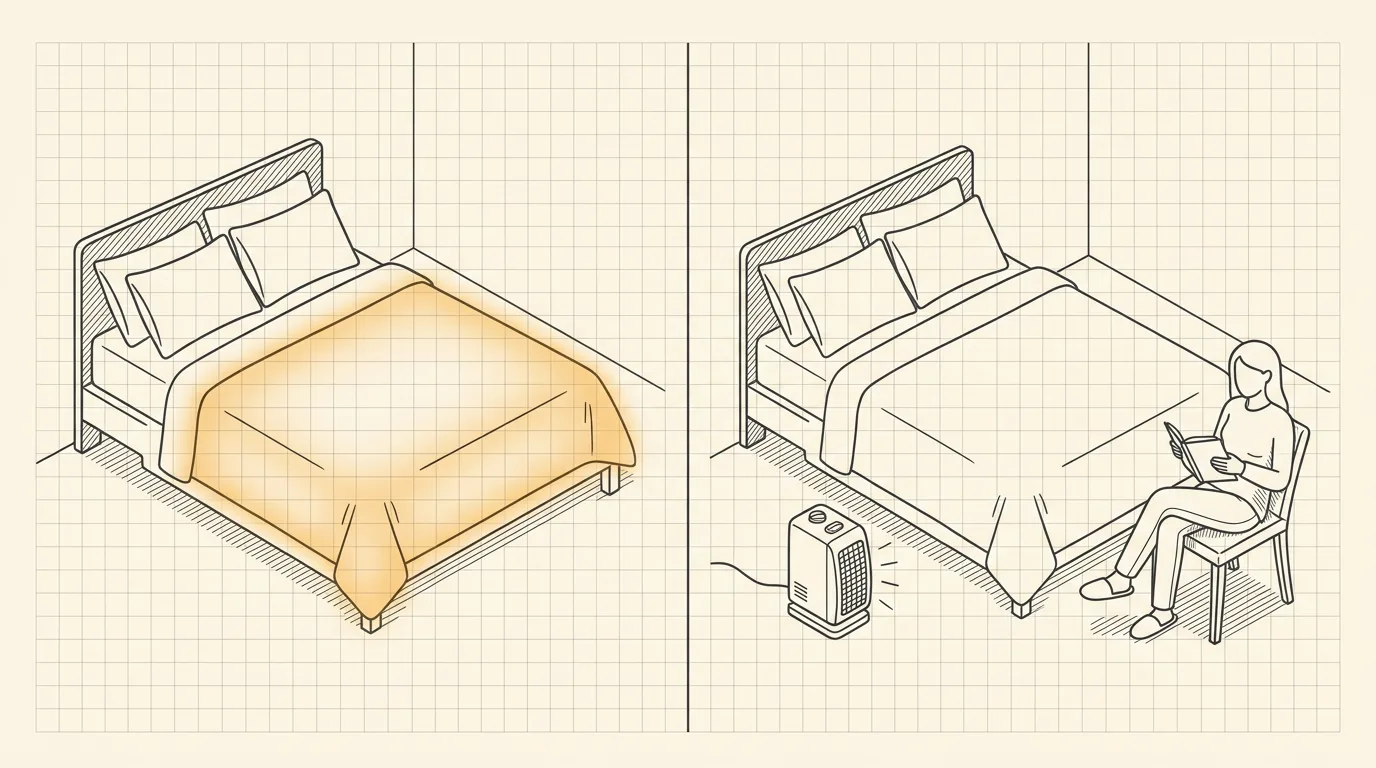
An electric blanket is dramatically cheaper to run than a space heater — roughly $6.60 a month for 8 hours a night, versus $25–66 for a heater doing the same job — because it heats the person instead of the room. The math is simple: a queen-size blanket draws about 150 watts on medium, while a 1,500-watt space heater draws ten times that. Our pick for the blanket side is the Westinghouse queen heated blanket, a 4.3-star, 7,300+ review model that runs the full night on a timer. The heater side of this comparison lives in our dedicated guide — the best energy-efficient space heaters — because the honest answer to “which heater” depends on room size, safety, and how you’ll use it. This page owns the blanket and the comparison.
If you’re new to the units, what a kilowatt-hour actually is is the two-minute primer, and do thermal curtains really work covers the other half of the “keep the room warm” equation. If you just want the blanket: the Westinghouse queen is on Amazon.
First, What Each One Actually Heats
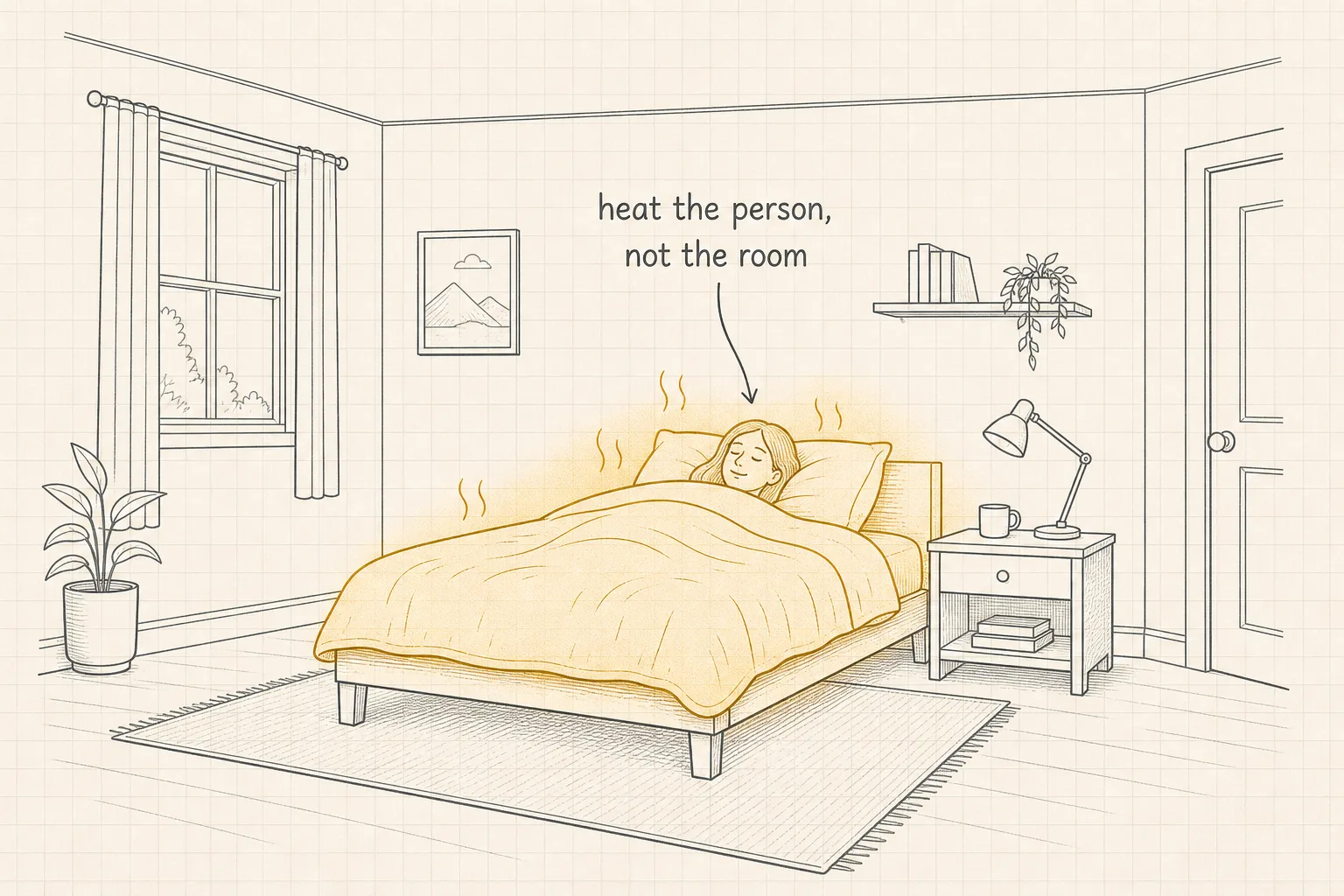
The entire cost difference comes down to one question: are you heating the person or the room?
- An electric blanket is a low-wattage heating element woven into fabric, in direct contact with your body. It heats you — a roughly 2-square-meter surface — not the air around you. Because it’s touching you, it can feel warm at a fraction of the wattage a room heater needs.
- A space heater is a resistance heater that dumps heat into the room’s air, which then has to warm you by convection and radiation. It’s heating thousands of cubic feet of air, walls, and furniture so that a small part of that warmth reaches you.
The U.S. Department of Energy’s guidance on electric resistance heating is blunt: it’s 100% efficient at converting electricity to heat, but that’s not the same as cheap — and the agency’s own framing is that zone heating — heating only the room you’re in — is where the savings come from.[1] An electric blanket is zone heating taken to its logical extreme: the zone is you.
The Blanket Side: What We Picked
Queen-size flannel heated blanket with 10 heat levels, a 1–12 hour auto-off timer, and dual-zone controls. Draws roughly 150 watts on medium — the number that makes the math below work. 4.3 stars across 7,300+ reviews at the time of writing.
Check price on Amazon Price & availability shown on Amazon.com — we may earn a commission.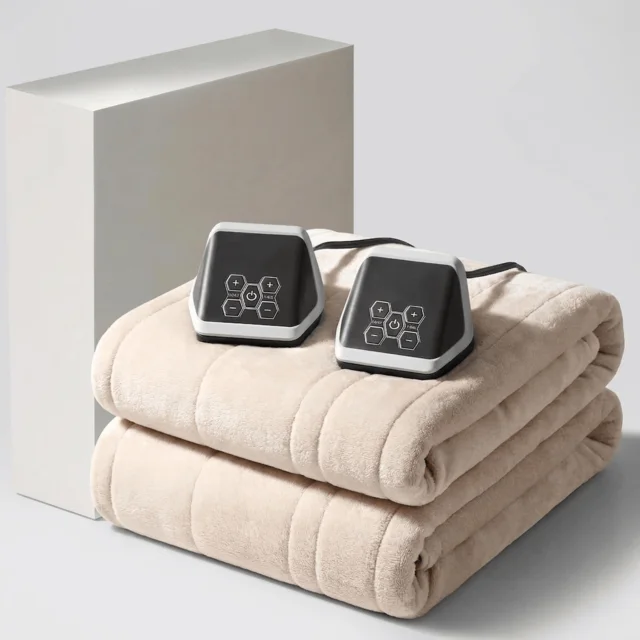
Best when: you’re heating a bed, a couch, or one person’s lap — and you want the lowest possible running cost. The auto-off timer matters more than it sounds: it’s the difference between “blanket on all night” and “blanket on until you’re asleep,” which is where the real-world cost lands even lower than the math below.
A note on wattage: blanket draw varies by size and setting. A queen on medium is roughly 150 W; a twin on low can be under 100 W; a king on high can approach 200 W. The math below uses the queen-on-medium figure as the honest middle.
What the blanket is not: it’s not a room heater, and it won’t keep a pipe from freezing or a bathroom warm before a shower. It also has a duty-cycle reality of its own — the auto-off timer is a safety feature, not a suggestion, and the manufacturer’s care instructions (no folding while on, no pets on high settings, follow the wash/dry guidance) are the difference between a decade of use and a warranty claim. The DOE’s small-space-heater guidance is blunt about the same safety discipline applying to any electric heating device: keep it away from combustibles and never run it unattended.[4]
Queen-size flannel heated blanket with 10 heat levels, a 1–12 hour auto-off timer, and dual-zone controls. Draws roughly 150 watts on medium — the number that makes the math below work. 4.3 stars across 7,300+ reviews at the time of writing.
Check price on Amazon As an Amazon Associate we earn from qualifying purchases. Price & availability shown on Amazon.com.The Math: Watts, Hours, and the Real Bill
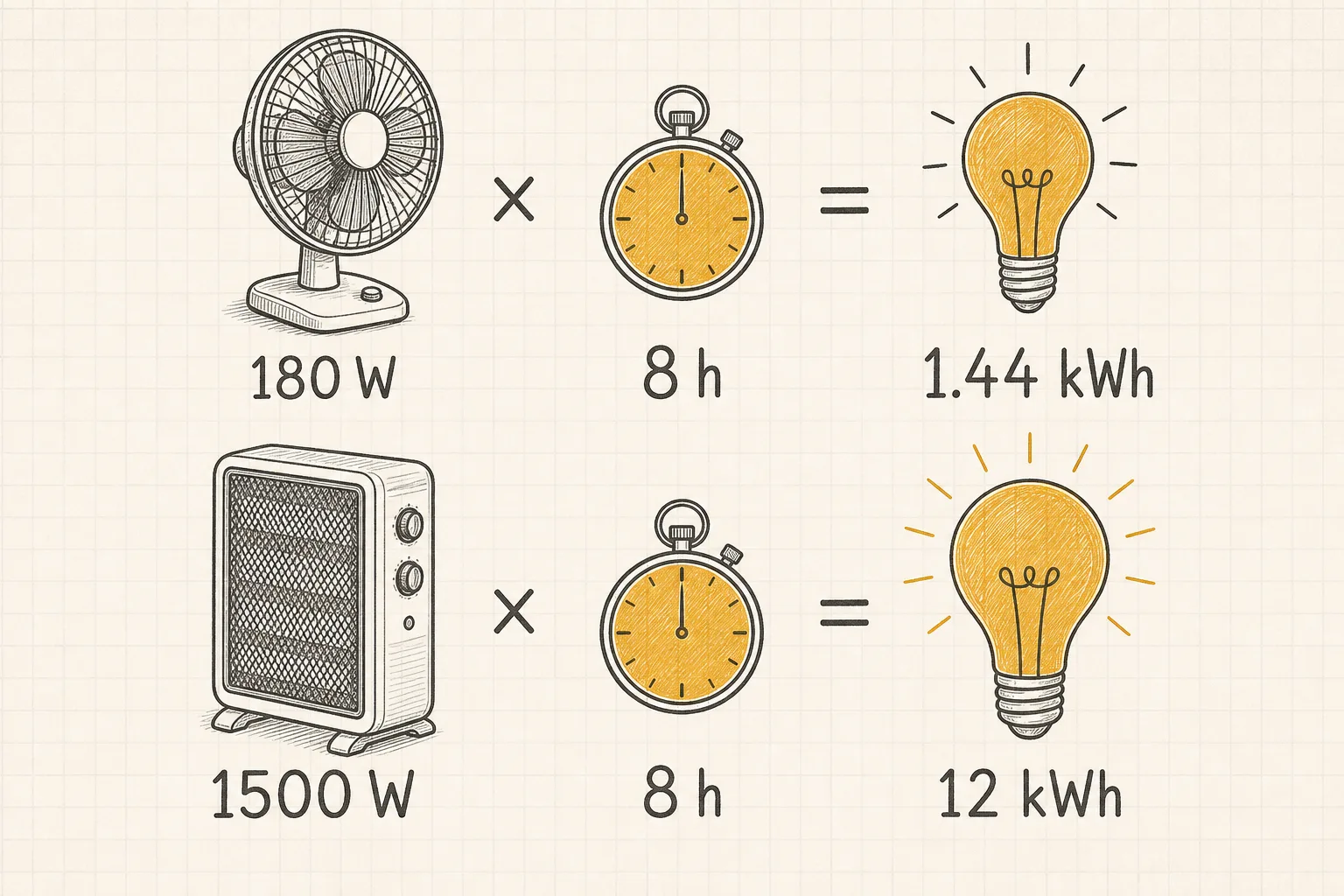
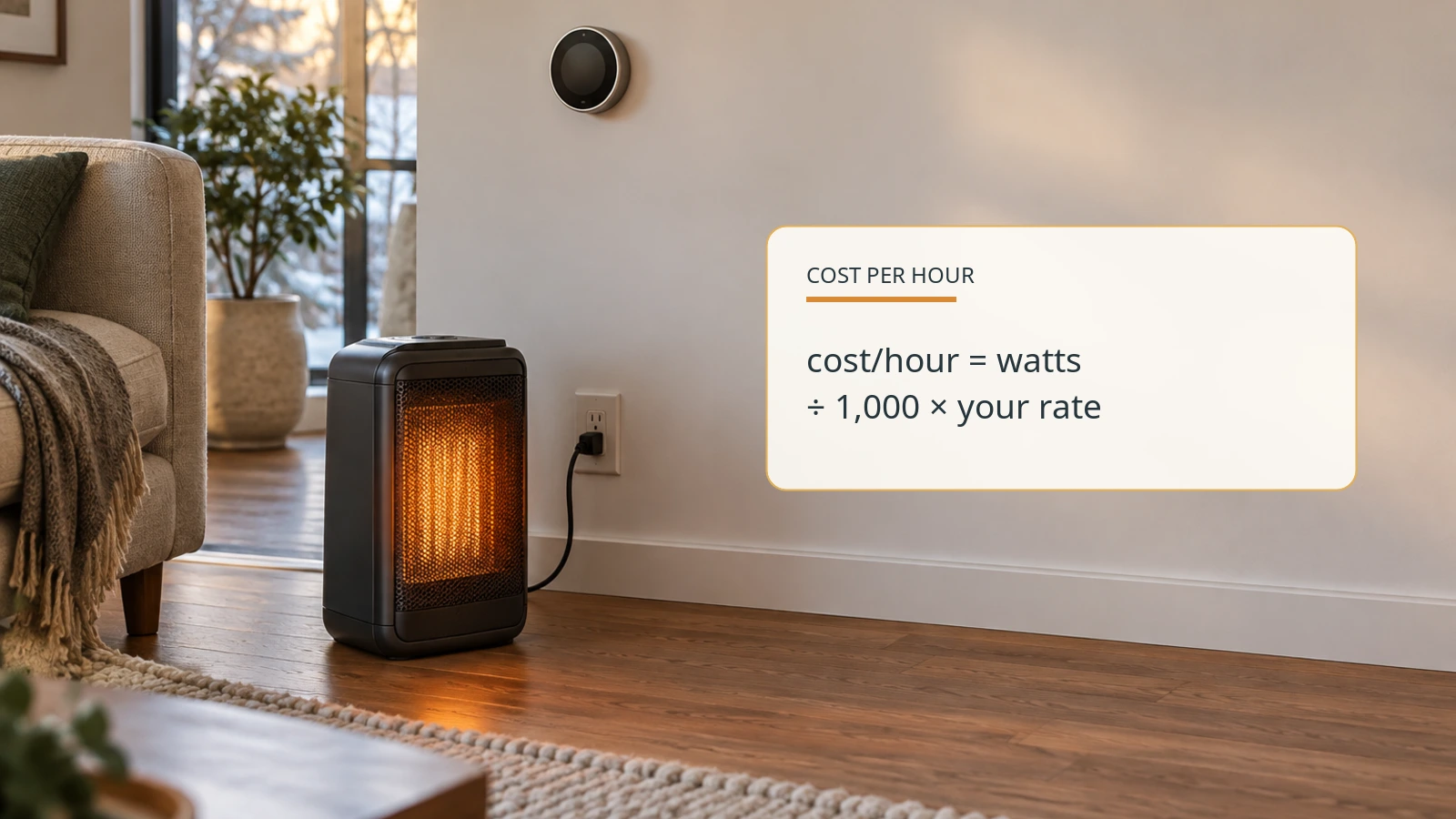
Here’s the canonical comparison, with every assumption stated. National average residential electricity is 18.34¢/kWh (EIA, June 2026),[2] and the average household uses about 899 kWh/month.[3]
The blanket:
- 150 W × 8 hours/night × 30 nights = 36,000 Wh = 36 kWh/month
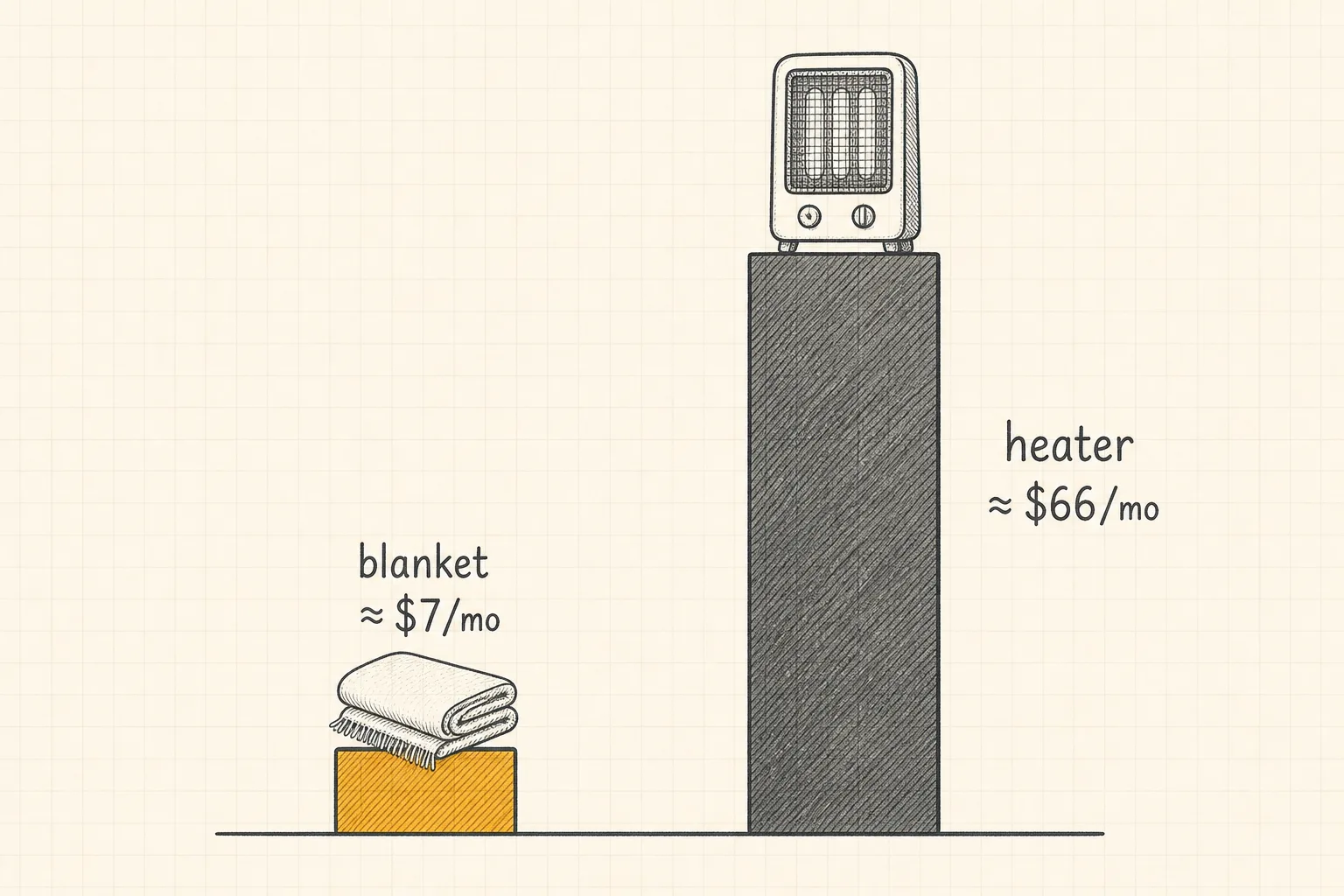
- 36 kWh × $0.1834 = $6.60/month
The space heater, run continuously:
- 1,500 W × 8 hours/night × 30 nights = 360,000 Wh = 360 kWh/month
- 360 kWh × $0.1834 = $66.02/month
That’s the worst case for the heater — and it’s worth being honest that most heaters don’t run continuously. A 1,500 W heater with a thermostat cycles on and off; in a well-insulated room it might run 40–60% of the time. So the realistic band is:
- Cycled heater (50% duty cycle): 360 kWh × 0.5 = 180 kWh × $0.1834 = ~$33/month
- Cycled heater (40% duty cycle): 360 kWh × 0.4 = 144 kWh × $0.1834 = ~$26/month
So the honest range is $25–40/month for a cycled heater versus $6.60 for the blanket — and the blanket number is already conservative, because the auto-off timer usually cuts it short.
The annual gap: over a 4-month heating season, the blanket costs about $26 total; a cycled heater costs $100–160. The difference is roughly $75–135 per season — which is the price of the blanket itself, every single winter.
And the thermostat play: the blanket’s real value isn’t just the $6.60 — it’s that it makes a lower whole-house setpoint tolerable. If the blanket lets you drop the thermostat from 70°F to 66°F at night, the furnace runs less, and that saving is often larger than the blanket’s own running cost. The DOE’s zone-heating guidance makes exactly this point: heating only the space you occupy — or the person in it — is where resistance-heating savings actually come from.[1] The blanket is the extreme case of that principle, and it compounds with the thermostat rather than competing with it.
Head-to-Head
| Electric blanket | Space heater (1,500 W) | |
|---|---|---|
| Typical draw | ~150 W (queen, medium) | 1,500 W |
| Monthly cost, 8 h/night | ~$6.60 | $25–40 cycled; ~$66 continuous |
| What it heats | The person | The room |
| Best for | Bed, couch, one person | A room you’re awake in |
| Safety notes | Follow care/timer instructions | Keep 3 ft from combustibles; never unattended |
| Upfront cost | ~$85–95 | ~$30–150 |
The upfront numbers invert the running costs: a heater is often cheaper to buy, but the blanket pays that difference back in the first season of use.
When Each One Is the Right Tool
The blanket wins when you’re stationary — sleeping, reading, watching TV. It’s the single cheapest way to stay warm at night, and it lets you drop the whole-house thermostat a degree or two without noticing. That’s the real play: the blanket isn’t just cheaper than a heater, it makes a lower thermostat setting tolerable, which cuts the furnace bill too.
The space heater wins when you’re moving around a room — a home office, a garage workshop, a bathroom before a shower. A blanket can’t follow you to a desk. But the heater recommendation itself — which model, what size, what safety features — is a separate question with a separate answer, and it lives in the best energy-efficient space heaters guide. That page owns the heater picks; this page owns the blanket and the comparison.
The honest middle: many households run both — a blanket in the bedroom, a heater in the office — and that’s fine, because they serve different zones. What doesn’t make sense is running a 1,500 W heater in a room where you’re sitting still under a blanket anyway.
A word on the “100% efficient” claim: resistance heating — both the blanket’s element and the heater’s — converts essentially all its electricity into heat, which is why you’ll see “100% efficient” marketing. The DOE’s own framing is that this is true but beside the point: a heat pump can deliver 2–3× more heat per watt, and the real lever for resistance heat is not efficiency but how much heat you actually need.[1] The blanket wins not because it’s more efficient per watt — it isn’t — but because it needs so many fewer watts to do the job. That’s the entire comparison in one sentence.
Which Should You Actually Buy?
- You sleep cold, or sit still for hours → the blanket. ~$6.60/month to run, pays for itself in one season versus a heater.
- You need to heat a room you’re active in → a space heater — but read the heater guide for the actual pick.
- You want both → blanket for the bed, heater for the desk, and let each one run only where it’s needed.
- You’re on a tight budget → the blanket is the cheaper buy twice over: lower upfront than a good heater and a tenth of the running cost.
And the standing rule: the cheapest heat is the heat you don’t generate. Before you buy either, check the room’s actual heat loss — do thermal curtains really work and what a kilowatt-hour is are the two reads that tell you whether the room is leaking the warmth you’re paying for. A blanket over a drafty window is still a drafty window.
Sources
- U.S. Department of Energy — Electric Resistance Heating (archived) — resistance heating is 100% efficient at converting electricity to heat; zone heating as the savings lever. Retrieved 2026-09-11.
- U.S. EIA — Electricity Monthly Update, End-Use Consumption — national average residential price 18.34¢/kWh, June 2026. Retrieved 2026-09-11.
- U.S. EIA — How much electricity does an American home use? — ~899 kWh/month average household use. Retrieved 2026-09-11.
- U.S. Department of Energy — Small Space Heaters (archived) — heater safety and sizing context for the comparison. Retrieved 2026-09-11.