Quick Answer
No — for the typical single-zone forced-air system, closing supply vents does not save money, and it can cost you more. The intuition is reasonable: don’t heat rooms you don’t use. But a furnace’s fuel burn follows the thermostat, not the number of open registers — and closing vents raises the static pressure the blower works against, which pushes the system toward longer run-times, leakier duct losses, and (in bad cases) blower and heat-exchanger strain. The vent-closing savings are mostly an illusion; the pressure cost is real physics. What actually works costs about the same effort: thermostat schedules, air sealing, and — if you truly want room-by-room control — proper zoning or a system designed for it.
The mechanism: why closing a vent backfires
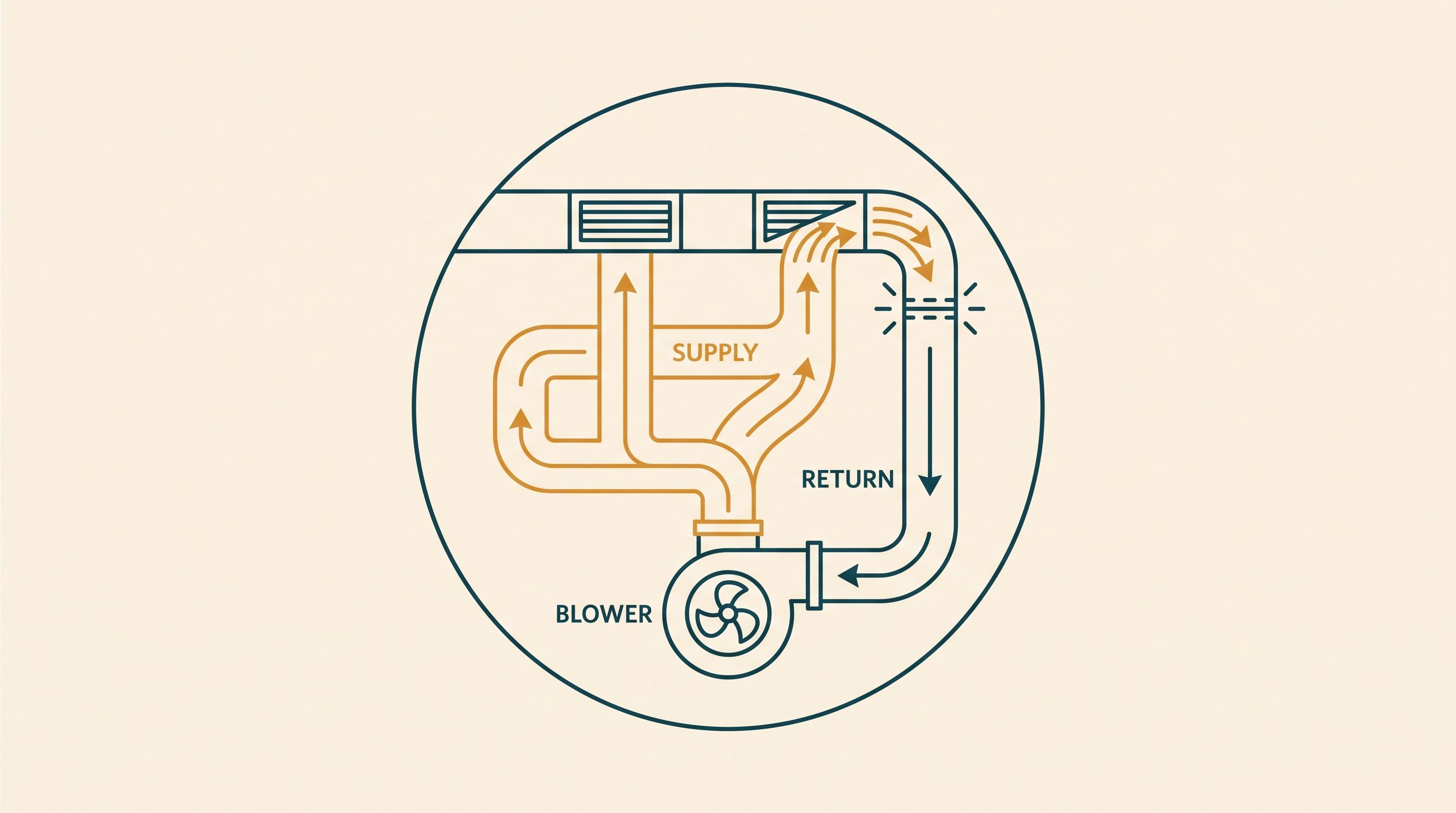
A forced-air system is a loop. The blower pushes conditioned air through supply ducts and out registers; return ducts pull room air back. Every closed register is a pinch point in that loop:
- The air doesn’t stop — it accelerates elsewhere. The blower moves (nearly) the same volume; with fewer exits, velocity and pressure rise in the remaining runs. You feel stronger flow at the open registers and think efficiency; what you’ve done is increase resistance.
- Duct leakage gets worse exactly where it hurts. Supply ducts sit in unconditioned space (attic, crawlspace). Higher static pressure forces more conditioned air out of every duct seam and joint — you’re paying to pressurize the attic. Leaky ducts already waste 20–30% of conditioned air per DOE[1]; closing vents raises the fraction.
- Delivered heat per cycle can drop. Restricted airflow across a furnace heat exchanger means hotter exchanger, less heat transferred to rooms per run-minute, longer run-times to satisfy the same thermostat. In cooling mode the parallel risk is a frozen coil; in heating, a repeatedly overheated exchanger ages early.
- The thermostat doesn’t know. Unless the closed room holds the only thermostat, the system keeps heating until the sensed space reaches setpoint. Fuel burn follows run-hours — see what a run-hour actually costs.
When closing vents is actually okay
Honesty cuts both ways — the practice isn’t universally harmful:
- A room with no return path but a supply you don’t need — a storage room, a workshop — a moderately closed register (not taped shut) changes little on a system with headroom.
- Brief, targeted moderation — nudging a register halfway in a room that over-heats — is room-balancing, which HVAC techs do too.
- Systems designed for it: zoned systems with bypass dampers, and ductless mini-splits where each head has its own thermostat, handle “don’t heat this room” correctly by design. A single-zone central system does not.
The pattern in the okay-cases: a little restriction on a system with margin, or a system built for it. The pattern in the bad case: many registers sealed on a single-zone system — the internet’s favorite “hack.”
What actually cuts the bill (ranked, with the math pages)
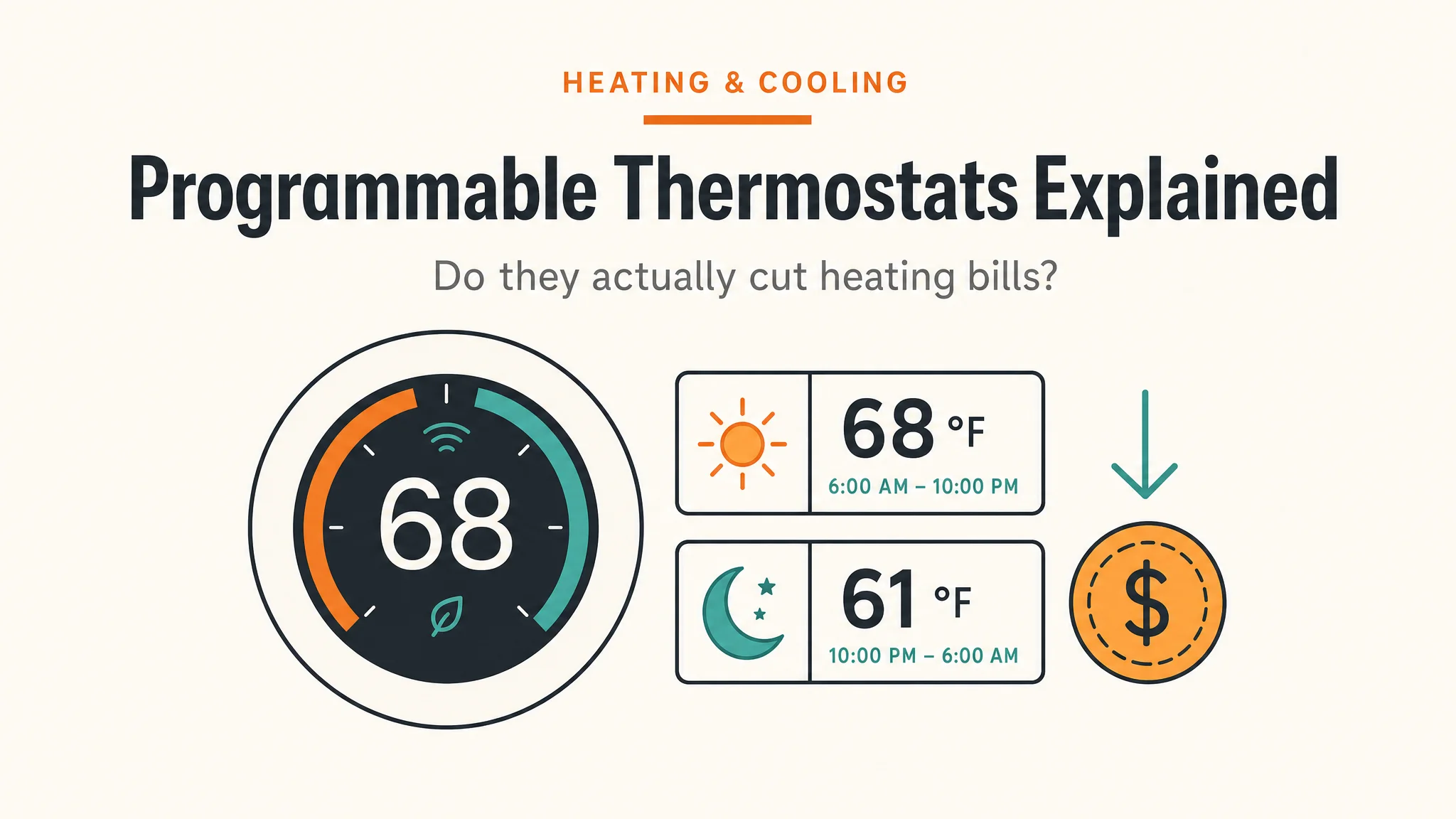
- Thermostat schedule. A 7–10°F setback for 8 hours saves up to 10% on heating/cooling per DOE[1]. This is the closest real-world equivalent to “don’t heat rooms you’re not using” — applied to time instead of space. The honest comparison of thermostat types: do programmable thermostats cut heating bills, and smart thermostat time-of-use savings if your utility prices by hour.
- Air sealing and insulation. The heat you’re pressurizing into the attic is leaving through leaks that caulk fixes for dollars. Start with how to check for energy leaks and how to find and seal drafts.
- Duct sealing. If the ducts leak 20% — common — sealing them returns more delivered heat than any register trick[1]. Symptoms and fixes: duct leaks: HVAC running all day.
- Right-sizing at replacement. An oversized furnace short-cycles and a variable-speed system runs efficiently at partial load — single-stage vs two-stage vs variable-speed explains why the cheapest upfront system often costs the most to run.
The net-bill reality
People who close vents and see a lower bill usually changed something else at the same time — the season turned, or the thermostat got nudged. Controlled comparisons are scarce (ESTIMATE: any specific percent you’ve read online for vent-closing “savings” is almost certainly unsourced), but the physics direction is well-established: restricted airflow on a central system trades a small (maybe zero) fuel reduction for higher static pressure, more duct losses, and component stress. When the risk is asymmetric and the reward is speculative, the verdict writes itself.