Quick Answer
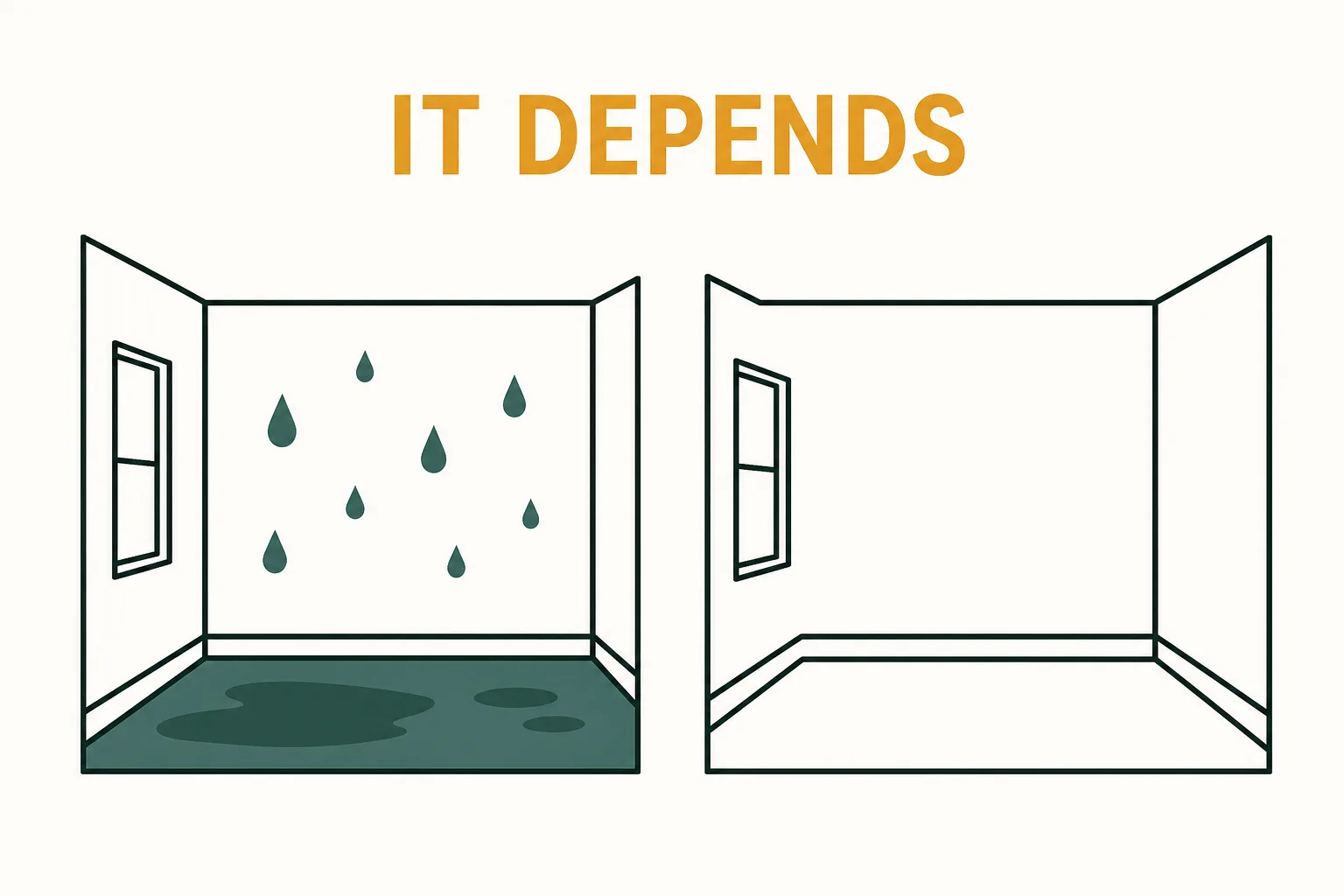
It depends on your climate and your air conditioner. In a humid summer that is only mildly hot, a dehumidifier can let you feel comfortable at a higher AC setpoint — drier air evaporates sweat more effectively, so a 74°F room at 40% relative humidity can feel cooler than a 72°F room at 65% RH. That is the one honest way a dehumidifier helps your cooling bill: not by cooling the air, but by letting you run the AC less while still feeling comfortable. In a genuinely hot climate, where the thermostat stays low all day for temperature rather than humidity, a portable dehumidifier usually adds cost instead — it dumps heat back into the room and draws its own electricity.
The answer has three moving parts: what your indoor relative humidity actually is, how your air conditioner is sized and running, and how much electricity the dehumidifier itself draws. This article walks all three and gives you a plain math template to run with your own rate and spec sheet.
What a Dehumidifier Actually Does (and the Heat It Dumps)
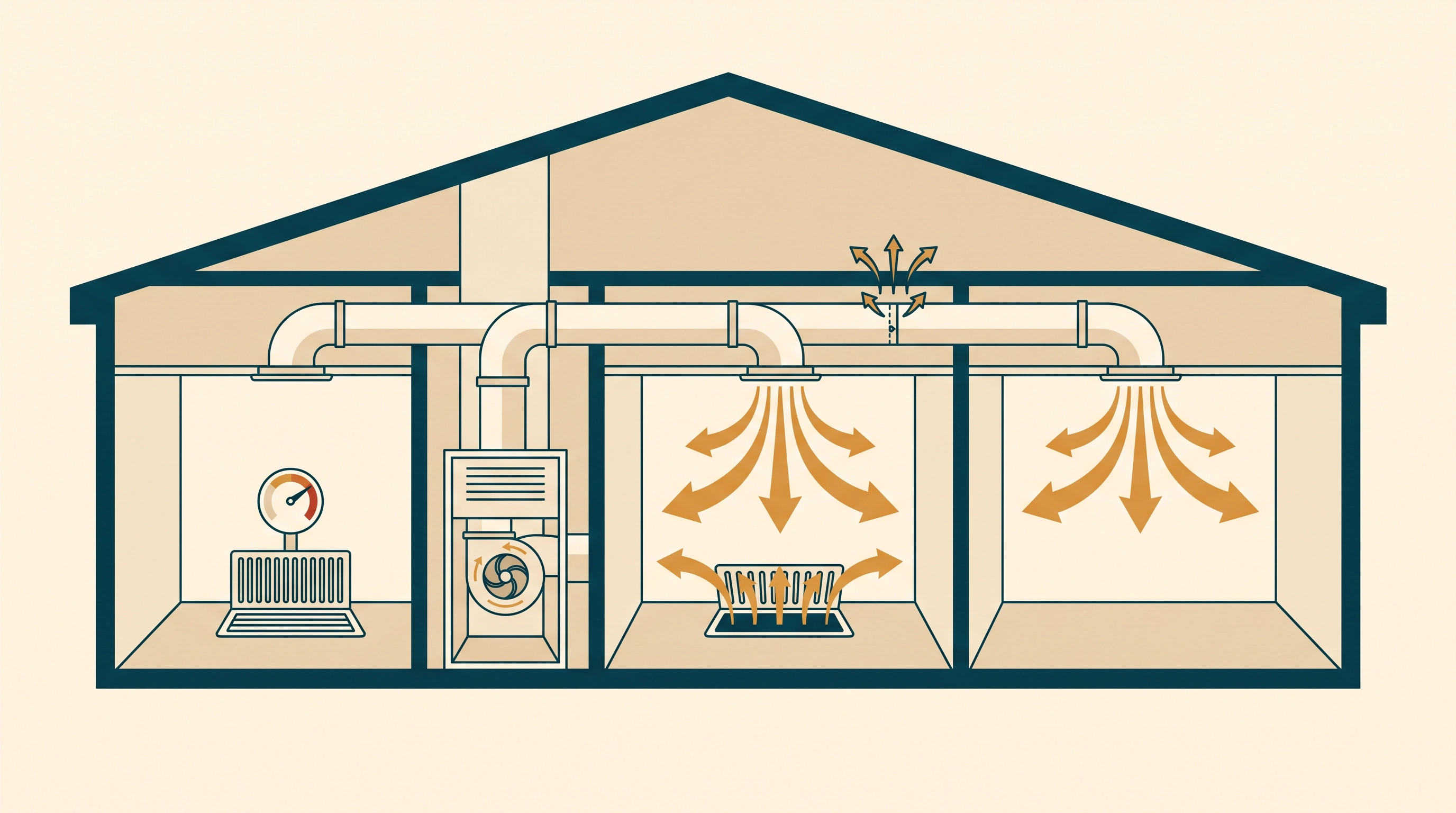
A portable dehumidifier removes moisture, not heat — and its operation adds a little heat to the room. Compressor-style units work like a small air conditioner with both coils in one box: air passes across a cold coil, moisture condenses into a bucket or drain, then re-enters the room across a warm coil. The job is latent load — energy locked in water vapor — not sensible load, the temperature you feel. That distinction is the whole story of whether this helps your bill.[2]
Because every watt the unit consumes becomes heat, and condensing changes air to a warmer state, the air leaving a dehumidifier is warmer than the air entering it — ENERGY STAR’s guidance notes the unit slightly warms the space around it.[2] In a mild, humid summer where you run the AC for comfort rather than raw heat, that warmth is a rounding error against the comfort gained from drier air. In a hot room already struggling to keep heat down, it fights the AC while drawing its own power.
How to Know Your Indoor Relative Humidity
You cannot decide whether a dehumidifier helps until you measure relative humidity — and the instrument is inexpensive. A hygrometer reads the percentage of moisture in the air relative to what the air can hold at that temperature. A basic indoor hygrometer runs in the $10–25 range; digital models with high/low memory cost a little more. Hang it away from direct heat or steam — not above a stove, vent, or shower — and read it mid-afternoon and again in the evening.
The EPA’s guidance recommends keeping indoor humidity below 60 percent, with the ideal band at 30–50 percent;[1] ENERGY STAR states the same 30–50% optimum and notes anything above may promote mold growth.[2] Two practical readings:
- Above 60% RH in a mild summer: your AC is probably sized or set so that it is not running long enough to wring the moisture out. This is the setting where a dehumidifier can plausibly help.
- At or below 50% RH already: a dehumidifier has nothing left to do, and every watt it draws is pure extra cost.
If you find your humidity sits high all the time, an ENERGY STAR certified unit’s built-in humidistat lets you set a target (say 50%) and the unit cycles on and off to hold it, rather than running around the clock. Units with a built-in humidistat make external hygrometry mostly optional — but the $10–25 instrument is the honest first purchase for everyone else, because it tells you whether you have a humidity problem at all before you spend on an appliance.[2]
50-pint unit with a built-in pump for draining uphill to a sink or drain, Wi-Fi control, and a cube body that expands for a larger bucket when you do want portability. Match the spec sheet against the Energy Star certified list before buying any unit.
Check price on Amazon As an Amazon Associate we earn from qualifying purchases. Price & availability shown on Amazon.com.When AC Alone Already Dehumidifies
A right-sized central air conditioner dehumidifies as a side effect of cooling — and often handles both jobs together. Air conditioning removes moisture every time it runs: warm air passes over the cold evaporator coil, water condenses out, and the resulting dry air re-enters the room. A properly sized system cycles just long enough to both cool and dry, and when it does, it carries that condensed water away through the condensate drain. In that case, a separate dehumidifier is duplicating the AC’s own work at additional cost.
The failure mode is an oversized or short-cycling AC — it hits the setpoint quickly, shuts off, and never runs long enough to pull moisture out. The room feels cold-but-clammy because the sensible load is satisfied while the latent load is untouched. If you suspect this, our sudden-spike checklist and why your electric bill is so high walk through the runtime-and-cycling diagnosis without buying anything.
Another sign: the condensate drain barely produces water or the drip pan stays dry, yet the room feels damp at setpoint. That points at short-cycling, not a humidity-only problem. And if the AC runs constantly yet still cannot keep up, the issue is heat load or sizing, not humidity — a dehumidifier only adds heat to that fight.[2]
The Honest Math Template
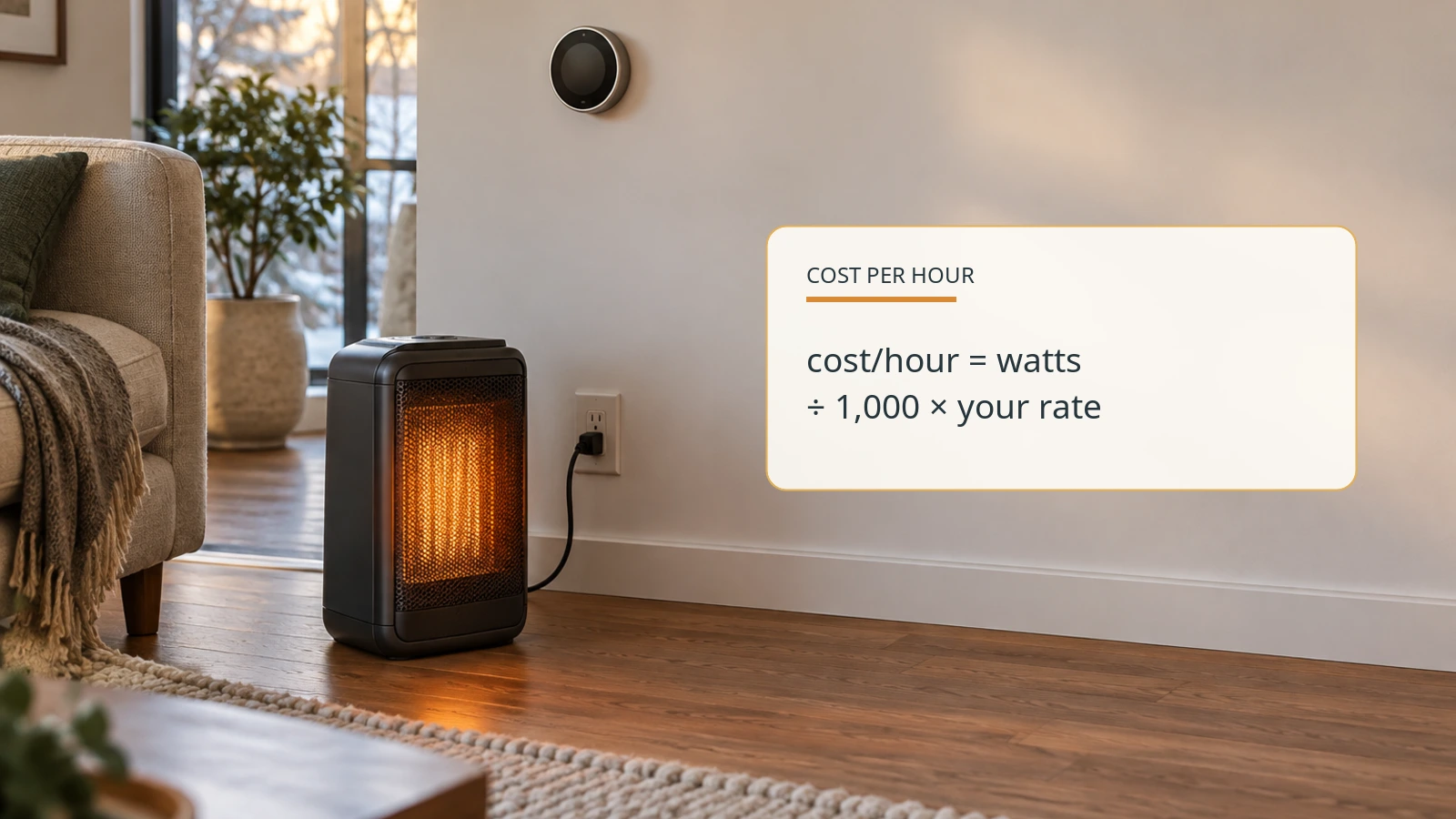
The only durable number is your unit’s own electricity draw — read its spec sheet, multiply by your rate, and decide with real arithmetic. ENERGY STAR certified data is the cleanest source because it is a public third-party database. For the certified 50-pint class, reported annual energy consumption runs roughly 444 to 512 kilowatt-hours per year.[3] Here is how you turn that into a cost range of your own:
- Find your unit’s draw. Look on the unit or its spec sheet for rated watts while the compressor runs — a common class range for a 35–50 pint portable is roughly 300 to 700 W during operation. (That spec is manufacturer-class data; Energy Star’s annual kWh is the independently verified anchor.)
- Or use the verified annual figure. For a certified 50-pint unit at the EIA’s June 2026 average residential rate of 18.34 cents per kWh, the arithmetic is: annual kWh × $0.1834. At 444 kWh that is about $81 per year; at 512 kWh, about $94 per year.[3] Those are running costs averaged over a full year of typical duty cycling, not a promise about your home.
- Decide against your actual AC behavior. The question is whether running it lets you meaningfully raise the AC setpoint — for example, from 72°F to 75°F on a mild but humid evening — without losing comfort. If you will not change the setpoint, the dehumidifier’s cost is pure addition and its heat makes the AC work harder. If you do raise it, the comparison is the dehumidifier’s measured kWh against the AC runtime it replaces.
The template is deliberately mechanical: monitors and spec sheets measure, behavior saves. The dehumidifier only “pays for itself” if it lets you run the AC less — and that is a behavior change only you can make and only a plug-in meter or your utility’s hourly data can confirm.
Dehumidifier vs. AC: When Each Makes Sense
| Condition | AC alone | AC + portable dehumidifier | The deciding factor |
|---|---|---|---|
| Mild summer, RH above 60%, AC seldom runs | Cold-but-clammy; short cycles leave humidity high | Drier air → comfort at a higher setpoint | Latent load is the problem; dehumidifier targets it directly[1][2] |
| Hot summer, thermostat low all day | Runs constantly on sensible (temperature) load | Adds heat + its own 300–700 W draw | Humidity is not the bottleneck; dehumidifier adds cost[2] |
| RH already at 30–50% | Comfortable; AC dewaters as it cools | Nothing to remove; pure extra draw | No latent load to solve[2] |
| Oversized AC that short-cycles | Feels damp; little condensate | May help if AC never runs long enough to dehumidify | Consider fixing the AC sizing/cycling first[2] |
The column that matters is the last one: the dehumidifier only earns its electricity when the latent load is the problem. When the sensible (temperature) load dominates — the climate case — the dehumidifier is an extra appliance competing with the AC. In very humid regions like the Gulf Coast, ENERGY STAR notes that a whole-home dehumidifier is often the better fit for consistently high humidity, because a portable unit’s heat output becomes a real drawback in later summer heat.[2]
The Climate-Dependent Bottom Line
Frame it by your climate, not by a rule of thumb. The humid-and-mild case is where the physics genuinely works: coastal summers that feel sticky at 70°F, basements that sit at 65–70% RH while the thermostat is satisfied, spring and fall shoulder seasons when the AC barely runs but the air stays damp. There, drier air raises the setpoint you can tolerate, and the measured kWh of a certified unit (roughly 444–512 kWh/year for the 50-pint class at typical duty cycling) can be less than the AC runtime it replaces — a comparison your utility’s portal can actually confirm.[3]
The very-hot case is where the same appliance loses money: a Southern summer at 95°F where the AC runs flat out on temperature alone. Adding a 300–700 W dehumidifier raises the indoor heat load and adds a second bill line for moisture that was never the problem.[2] The RH instrument decides it before you spend anything.
Practical notes before you buy: set the humidistat to 50%, not the lowest setting — over-drying wastes electricity and gains nothing below 30–50%. Run it only in rooms that actually feel damp, close that door, and drain to a floor drain or sink so you are not emptying a bucket daily.[2] If your goal is a lower bill across the board rather than a humidity fix, how to lower utility bills is the broader toolbox, and gadgets that lower utility bills covers the cost-first measuring approach. Humidity that drives one for a weekend a month is normal; humidity that runs one all summer is a reason to look at sealing and ventilation before adding an appliance.
If the Math Says Buy: What to Look For
For the humid-mild case this article describes, the spec details that actually matter: a built-in humidistat (set 50% and let it cycle), a drain option — pump or gravity hose (bucket-emptying kills basement installs), and a low-temperature operating rating if it lives in a basement that drops below 65°F, where cheap units ice up. The 50-pint class covers a typical basement; the ENERGY STAR certified list is the efficiency check worth running before purchase.[2][3] One example from the category so you can anchor specs while comparing (the Midea Cube line — a pump-equipped, Wi-Fi-capable 50-pint unit — is the style of machine that fits the drain-to-sink basement use case):
50-pint unit with a built-in pump for draining uphill to a sink or drain, Wi-Fi control, and a cube body that expands for a larger bucket when you do want portability. Match the spec sheet against the Energy Star certified list before buying any unit.
Check price on Amazon Price & availability shown on Amazon.com — we may earn a commission.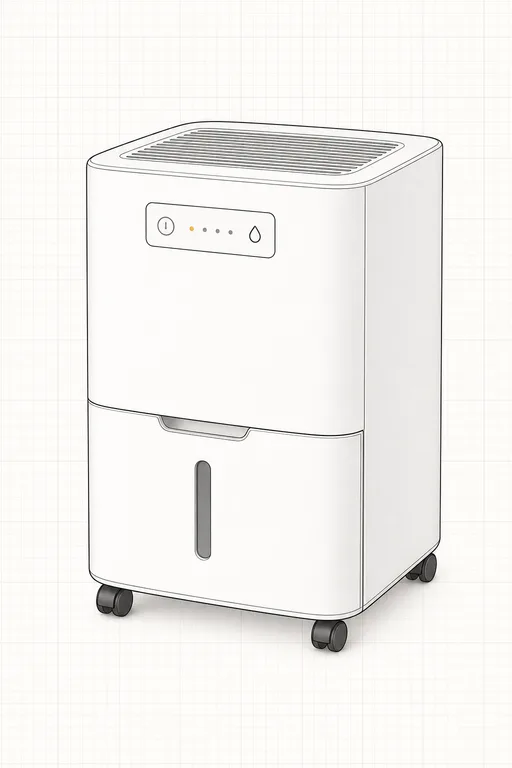
Whatever brand you compare it against, run the same three checks: humidistat, drain method, and the certified annual kWh figure — that last number is what feeds the cost template above.
If you are already on a humidity fix and the water angle is part of the story — leaking fixtures and drainage are a common hidden cause of indoor damp — how to lower your water bill is the companion piece, and it is worth tackling those before sizing any dehumidifier.
Sources
- EPA — A Brief Guide to Mold, Moisture and Your Home — keep indoor humidity below 60%, ideal 30–50%. Retrieved 2026-08-31.
- ENERGY STAR — Dehumidifiers — optimum RH 30–50%; certified units 20% more efficient; dehumidifiers slightly warm the space around them; humidistat/hygrometer guidance; whole-home units for humidity above 55%. Retrieved 2026-08-31.
- ENERGY STAR Certified Dehumidifiers dataset — 50-pint certified class annual energy consumption roughly 444–512 kWh/yr at ~2.0–2.24 L/kWh. Retrieved 2026-08-31.
- Midea Cube 50-Pint with Pump — Amazon listing — example pump-equipped 50-pint unit, in stock, sold by Amazon. Retrieved 2026-09-06.