Rate basis: U.S. EIA national average through July 2026 · Wattages from manufacturer listings
Quick Answer
One 25-bulb incandescent C9 string costs about $8.65 to run for a 45-day season at 6 hours a day; the LED equivalent costs about ten cents. That’s the entire LED argument in one line: not “better for the planet” abstractions — an ~85× difference in the electric bill for the same lights. A ten-string roofline display costs roughly $1 per season on LED versus $87 on incandescent. The catches: LED strings cost more upfront (they repay that in one to two seasons at display scale), the savings only materialize on the hours a timer actually controls, and — the part most people skip — a schedule that turns the display off at midnight saves more than any bulb choice does.
The math below uses the July 2026 national average of 18.3¢/kWh. If you’re in a high-rate state the gap widens proportionally; your actual per-kWh rate is on your bill’s electric charges page (how to read it).
The Two Wattage Worlds
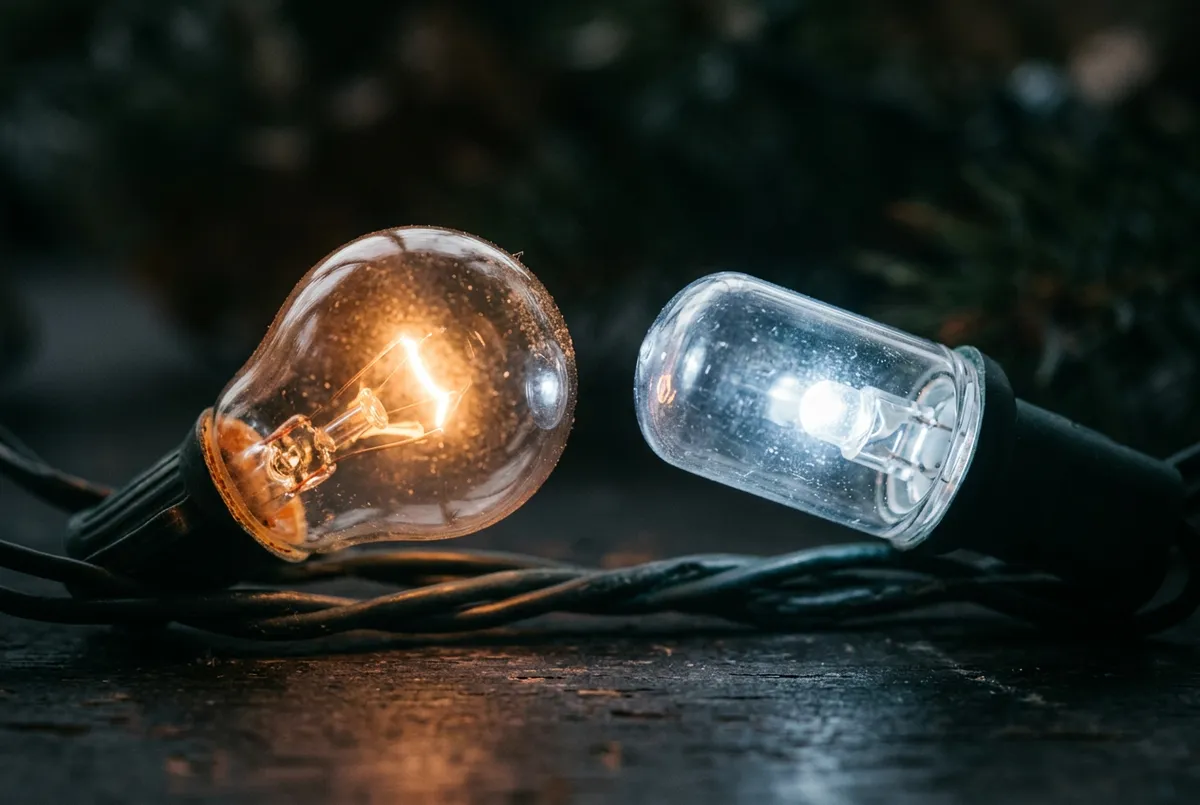
Holiday lights come in two bulb economies, and they’re not close:
| Incandescent C9 | LED C9 (ENERGY STAR-class) | |
|---|---|---|
| Watts per bulb | ~7W | ~0.06W (a 35-count GE string draws ~2W total) |
| Watts per string (25-bulb) | ~175W | ~1.5-2W |
| kWh per season (6h × 45 days) | 47.25 kWh | ~0.5-0.6 kWh |
| Cost per string per season | $8.65 | ~$0.10 |
| Heat output | Hot — each bulb a small space heater | Cool to the touch |
| Lifespan (manufacturer-rated) | ~1-3 seasons of bulb losses | ~20,000-hour rated, multi-decade seasonal use |
| Connectable strings per outlet run | Max 3 (safety listing) | Dozens — the draw is negligible |
The incandescent figure is the standard 7-watt C9 bulb; the LED figure comes from GE’s ENERGY STAR-class C9 listings (the 35-count string is rated at 2 watts for the whole set — about six hundredths of a watt per bulb). Mini-lights follow the same ratio in both technologies at lower absolute numbers; a 100-bulb incandescent mini set runs roughly 40W against a few watts for the LED version. Whatever your display, the pattern holds: incandescent holiday lighting is electric resistance heat that happens to glow.
The Season Math (Check It Yourself)
The arithmetic is deliberately boring so you can reproduce it with your own display size and rate:
- Assumptions: 45-day season (Thanksgiving to early January), 6 hours per evening, $0.183/kWh national average.
- One incandescent C9 string: 175W × 6h × 45d = 47.25 kWh × $0.183 = $8.65
- One LED C9 string: 2W × 6h × 45d = 0.54 kWh × $0.183 = $0.10
- Roofline (10 strings): $86.53 incandescent vs $0.99 LED
- Full display (30 strings — roofline, bushes, trees): $259.57 incandescent vs $2.97 LED
That last row is why the incandescent-to-LED switch shows up on December electric bills as a visible spike — a big display on old bulbs is quietly one of the largest plug-in loads in the house, right behind the space heater. If your bill jumps every December and you’ve never known why, this is usually the whole story; the broader spike diagnosis is in why is my electric bill so high, and the season-wide picture — what every fuel is forecast to cost this winter, by region — is the 2026-27 winter heating bill forecast.
ENERGY STAR-class LED C9s on a storage reel — the bulb size with the classic holiday look, at the wattage class that makes a 10-string roofline cost about a dollar a season instead of $87. Connect up to 25 sets, indoor/outdoor rated, replacement bulbs and fuses included.
Check price on Amazon As an Amazon Associate we earn from qualifying purchases. Price & availability shown on Amazon.com.What Your Display Actually Costs (Three Profiles)
| Display | Strings | Incandescent season | LED season | LED payoff |
|---|---|---|---|---|
| Indoor tree + windows | 3 | $25.96 | $0.30 | 2-3 seasons |
| House roofline | 10 | $86.53 | $0.99 | 1 season |
| Roofline + bushes + walkway | 30 | $259.57 | $2.97 | First season |
The payoff column assumes LED strings at roughly $20-40 more per batch than incandescent equivalents — at roofline scale the electricity savings recover the premium within the first season, and every season after is a 97-99% discount on the lighting line item. At three-strings-on-the-tree scale, the payback is leisurely; buy LED for the cool-running safety and the no-more-dead-bulbs convenience, not the dollars.
ENERGY STAR-class LED C9s on a storage reel — the bulb size with the classic holiday look, at the wattage class that makes a 10-string roofline cost about a dollar a season instead of $87. Connect up to 25 sets, indoor/outdoor rated, replacement bulbs and fuses included.
Check price on Amazon Price & availability shown on Amazon.com — we may earn a commission.The Timer Saves More Than the Bulbs (and It’s Not Close)
Here’s the part that out-ranks the LED decision: the hours. Every number above assumes 6 hours a night. A display that runs from dusk to whenever someone remembers to unplug it is often 10-12 hours — doubling or tripling either column. The Electrical Safety Foundation’s holiday guidance is blunt: turn all indoor and outdoor decorative lighting off when leaving the house or going to bed.
Two ways to make that automatic, both cheaper than a single LED string:
- A dumb outlet timer — the $10 mechanical dial — caps the display at whatever window you set. Done.
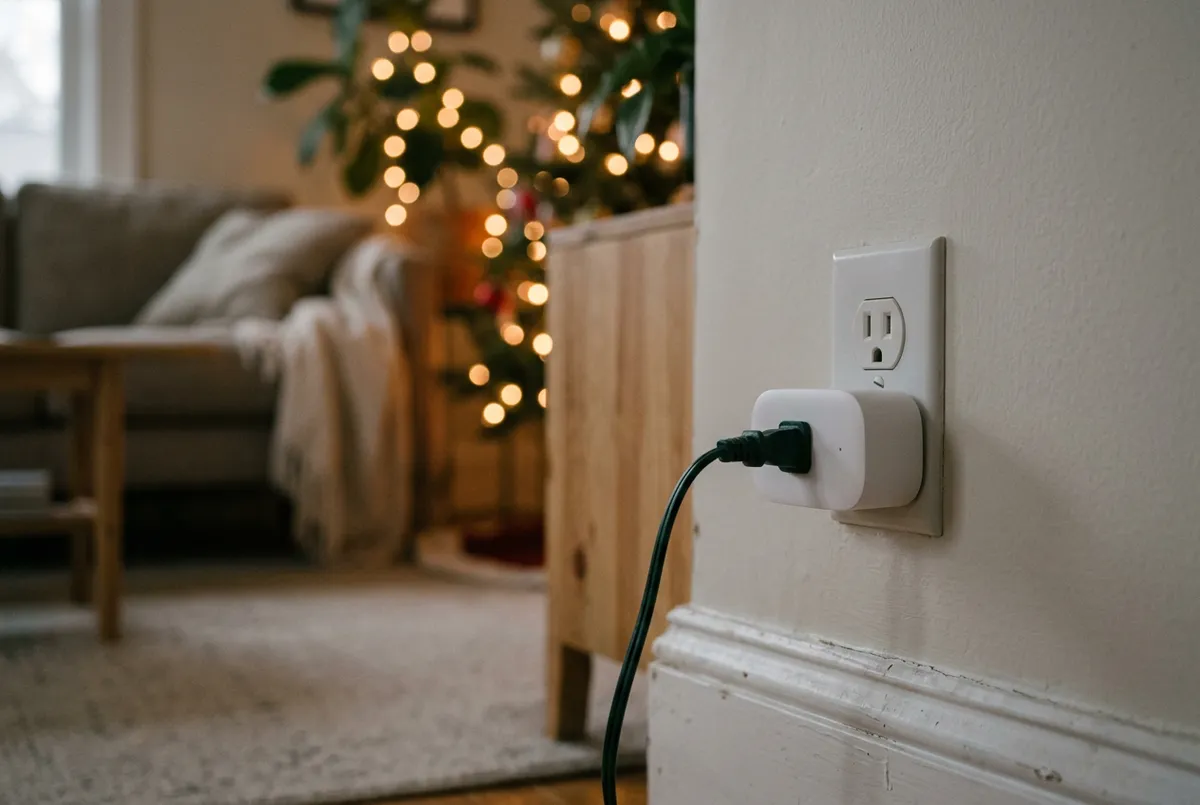
- A monitoring smart plug, which adds the measurement layer this site loves: see the display’s actual kWh in an app, schedule sunrise/sunset offsets, and kill it remotely when you’re away.
Schedules your display on/off window from your phone — and its energy-monitoring app shows the actual kWh your lights draw, so the cost table above becomes YOUR numbers instead of national averages. The same plug spends the rest of the year catching phantom loads; it's the $15 device our [lower-your-bill guide](/blog/how-to-lower-electric-bill-complete-guide/) recommends for measuring anything that plugs in.
Check price on Amazon Price & availability shown on Amazon.com — we may earn a commission.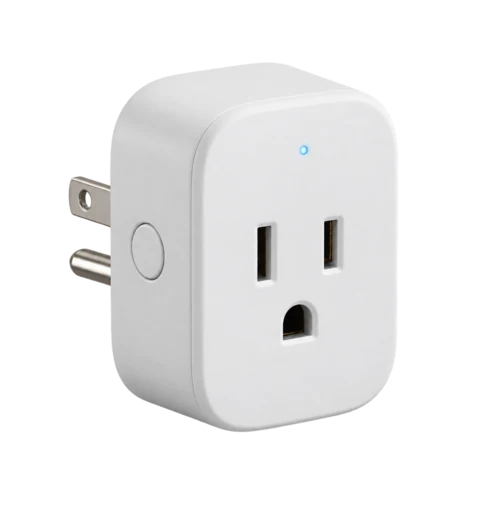
The Safety Numbers That Should Shape the Purchase
The Electrical Safety Foundation International (ESFI), citing NFPA data, counts about 860 home fires a year started by holiday decorations and another 210 begun by Christmas trees. The wattage table above is also a fire-safety table:
- Never connect more than three incandescent strings end-to-end — ESFI’s explicit rule. More than three strands can blow fuses or start fires. LED strings, drawing 1-2W per set, sidestep the limit entirely.
- LEDs run cool; incandescents run hot. A C9 bulb at 7W is a small heater — that’s the physics making them expensive — and hot bulbs against dry branches, paper decorations, or curtains are the classic ignition path. “Consider LED lights, which use less energy and run cooler” is ESFI’s own phrasing.
- Outdoor displays belong on GFCI-protected circuits, cords rated for outdoor use, clear of standing water and snow.
- Inspect before you hang. Cracked sockets, bare wires, loose connections — shock or fire, straight from the attic storage season.
- Water the tree daily and keep all decorations three feet from heat sources.
None of this is decoration-shaming — it’s that the fire statistics concentrate exactly where incandescent wattage and dry winter interiors overlap.
Schedules your display on/off window from your phone — and its energy-monitoring app shows the actual kWh your lights draw, so the cost table above becomes YOUR numbers instead of national averages. The same plug spends the rest of the year catching phantom loads; it's the $15 device our [lower-your-bill guide](/blog/how-to-lower-electric-bill-complete-guide/) recommends for measuring anything that plugs in.
Check price on Amazon As an Amazon Associate we earn from qualifying purchases. Price & availability shown on Amazon.com.If You Already Own Incandescent Strings
Don’t landfill working strings tonight; the honest sequencing is:
- Put everything on a timer now — biggest single saving available to any display, LED or not.
- Replace at the front of the house first — the highest-hour, most-visible strings are where LED pays back fastest.
- Retire strings as they die — incandescent bulb losses are constant; each dead string is a natural upgrade point.
- Never mix old and new on the same connectable run unless the ratings say you can.
And when January comes: the same wattage discipline applies year-round to everything with a plug. The complete guide to lowering your electric bill starts with a meter and works through every load in the house; if your utility bills by time of day, the time-of-use playbook shifts any load — holiday or otherwise — to cheap hours.
The Hidden December Load Nobody Counts: Inflatables
Yard inflatables are the sleeper line item in holiday electric bills. Each one runs a continuous internal blower motor — typically 50 to 100+ watts depending on size, running the entire display window, every night, wind or calm. The math on a modest six-inflatable yard at the same 6h × 45d convention:
- Six inflatables at ~75W average = 450W continuous
- 450W × 6h × 45 days = 121.5 kWh
- At 18.3¢/kWh: ~$22 for the season — more than a 10-string LED roofline, and roughly matching the entire incandescent roofline it’s standing next to
A big display (twelve inflatables, larger motors) can reach $50-75 for the season in blower motors alone. Unlike bulbs, there’s no LED-style upgrade path — the motor is the product. The mitigations are honest and limited: put inflatables on the same timer as the lights (a blower running from dusk-til-midnight-forgotten is the classic waste), size down the count, and retire ones with tired motors (they draw more as bearings wear). If the December bill mystery persists after auditing lights AND inflatables, the remaining suspects are heating runtime and guests — the full ranked list is in why is my electric bill so high.
Outdoor Power Done Right (Cords, Outlets, Capacity)
The electrical infrastructure of a display is where safety and cost overlap:
- Outdoor-rated cords only, sized for the load — a thin 100-foot household extension cord feeding a roofline is both a fire risk and a voltage-drop that shortens bulb life. Match cord gauge to total wattage and length (the cord’s packaging has the table).
- One high-wattage device per outlet, per ESFI — don’t stack power strips on a single exterior receptacle. Modern exterior outlets should be GFCI-protected (test the button); older homes without GFCI exterior outlets are the display worth upgrading before expanding.
- Total the display before plugging in: add the watts on every string label plus inflatables. A standard 15-amp circuit at 120V supplies 1,800W safely — the incandescent display from the table above (30 strings ≈ 5,250W) literally cannot run on one circuit, which is why big old-bulb displays trip breakers on Thanksgiving night; the LED version (under 100W of lights plus blowers) fits trivially.
- Keep connections out of standing water and snow, elevate cord joins, and seal them with listed weatherproof covers — moisture ingress at a plug junction is a shock path ESFI specifically flags.
Frequently Asked Questions
How much does it cost to run Christmas lights for a month?
Do LED Christmas lights really save money?
How many watts do C9 Christmas lights use?
Why did my electric bill go up in December?
Can I connect more than three strings of Christmas lights?
Are LED Christmas lights as bright as incandescent?
Next: how to read your electric bill line by line, or the complete lower-your-bill guide for everything else with a plug.
Sources
- U.S. EIA — Electricity Monthly, Table 5.03 — residential rate basis (18.3¢/kWh national average, July 2026).
- ESFI — In The Right Light: Decorate Your Home Safely During the Holidays — NFPA decoration-fire statistics (860/yr; 210 tree fires), GFCI and inspection guidance.
- ESFI — Top 10 Holiday Safety Tips — the three-string incandescent limit, LED run-cooler guidance, turn-off-when-sleeping rule.
- Amazon — GE StayBright LED C9 75-count listing — ENERGY STAR-class C9 LED string specs and connectivity ratings (verified Oct 2026).
- Amazon — GE StayBright LED C9 35-count listing — the 2-watts-per-set LED C9 rating used in the wattage table (verified Oct 2026).
- Amazon — Kasa KP115 listing — energy-monitoring smart plug specs (verified Oct 2026).